
Poonhill Trip
Helena W
Australia
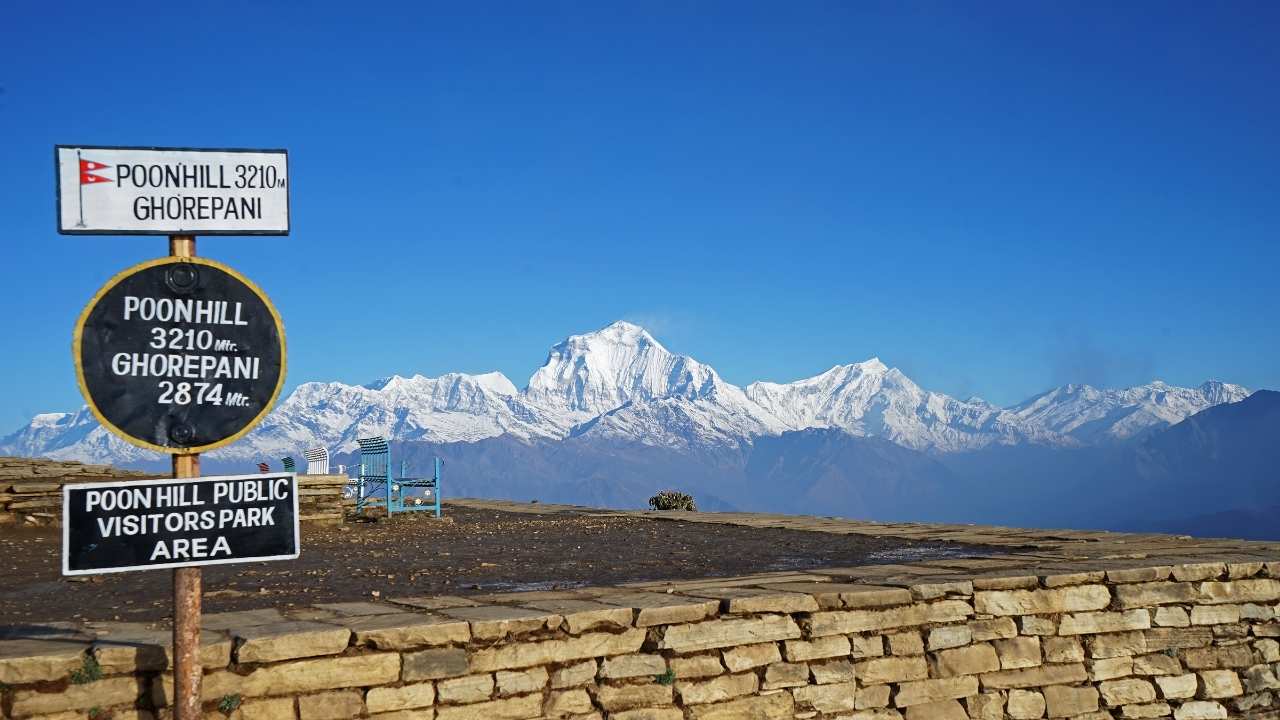
The Ghorepani Poon Hill Trek is a 7-day itinerary with 3 days of walking through the lower Annapurna region. Along the way are Dhaulagiri and Annapurna views, hill villages, rhododendron forests, and teahouse stays without the demands of high-altitude trekking.
The trip begins with a drive from Pokhara to Ulleri, where the trek starts. Stone staircases climb through forest to Ghorepani, the overnight stop below Poon Hill.
The next morning starts before dawn with a climb to Poon Hill (3,210 m). As daylight reaches the mountains, Dhaulagiri, Annapurna South, Annapurna I, Machhapuchhre (Fishtail), Hiunchuli, and Nilgiri stand out across the skyline. Six named summits can be seen from one point, with no technical climbing required.
From Poon Hill, the trail descends through woodland and along ridges to Tadapani, passing moss-covered trees, streams, and open sections where the mountains appear between the trees.
The final walking day takes you down to Ghandruk, a Gurung village known for its stone houses and narrow lanes on a ridge facing the Annapurna range. After lunch, you drive back to Pokhara.
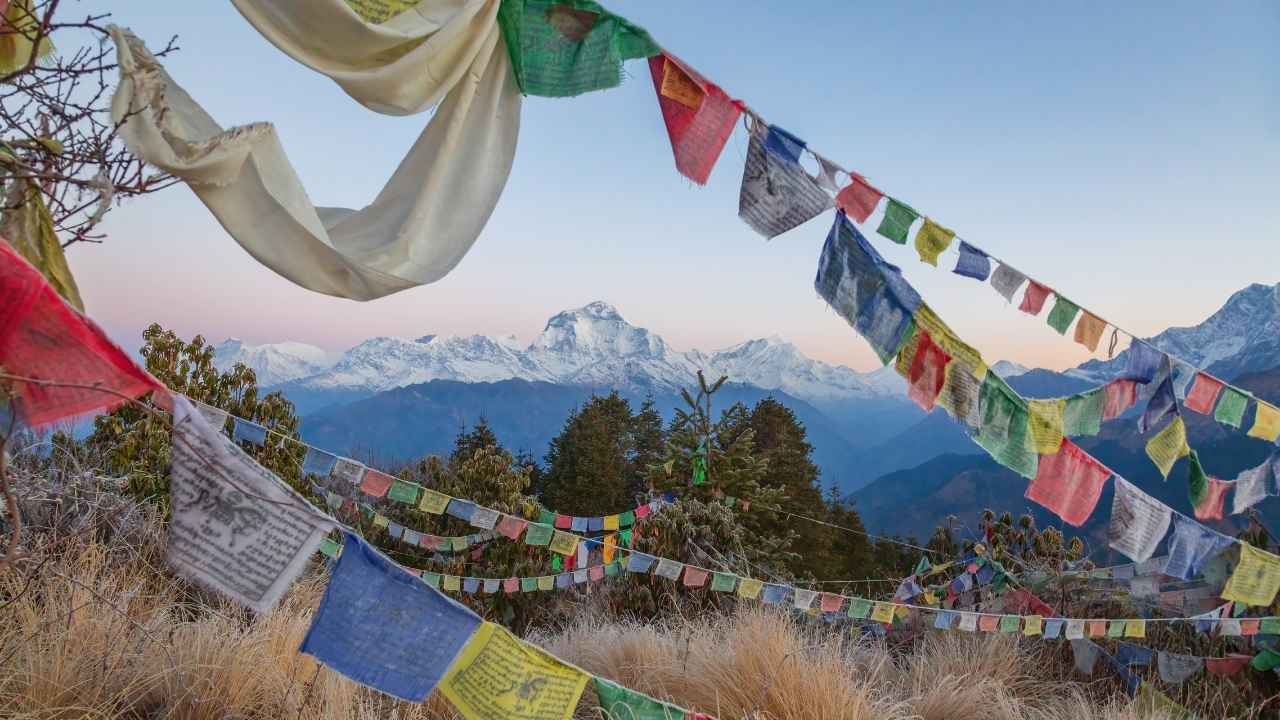
Magar settlements also line the route, while family-run teahouses provide accommodation each night. Prayer flags, terraced fields, and working farms are part of everyday life along the trail.
The trek is within the Annapurna Conservation Area, where oak, pine, and rhododendron forests provide habitat for Danphe (Himalayan Monal), deer, and langurs. In spring, rhododendrons colour the hillsides. An ACAP permit is required, and Mountain World Treks arranges it before departure.
With 4–6 hours of walking per day, this trek suits beginners, families, and travellers with limited time. The climb to Ulleri and the pre-dawn ascent to Poon Hill are the steepest sections, but the route remains at moderate elevations.
It is also one of Nepal’s popular short treks for family groups, with manageable walking days, comfortable teahouse stays, and plenty to see along the trail. At 3,210 m, the highest point is well below longer Himalayan treks.
Ready to go?
Download Day-by-Day Itinerary
Your Ghorepani Poon Hill Trek begins with a road journey from Kathmandu to Pokhara. From Pokhara, you travel by jeep or bus toward Nayapul or another trailhead used by your itinerary. The road section usually takes you through the lower hills before the walking starts.
After completing the trek, you descend toward Ulleri, Ghandruk, or another road-accessible village depending on your route. From there, a local jeep or private vehicle takes you back to Pokhara.
There is no flight to the Ghorepani trailhead. Pokhara is the nearest airport, with regular flights from Kathmandu when operating. From Pokhara, you can fly, take a tourist bus, or use a private vehicle to return to Kathmandu.
Total Distance
Walking Days
Accommodation
Meals
Transportation
Group Size
Guide
Porter
Best Season
Fitness Level
Permit
Trip Style
Starts
Ends
Poon Hill is a short trek through the Annapurna foothills without spending several days at high altitude. In three days on foot, you pass through forest, farms, Magar and Gurung villages, teahouses, and the Poon Hill viewpoint.
The climb to Poon Hill starts before dawn. You reach the viewpoint in the dark, then watch the first light reach Dhaulagiri, Annapurna South, Annapurna I, Machhapuchhre, Hiunchuli, and Nilgiri.
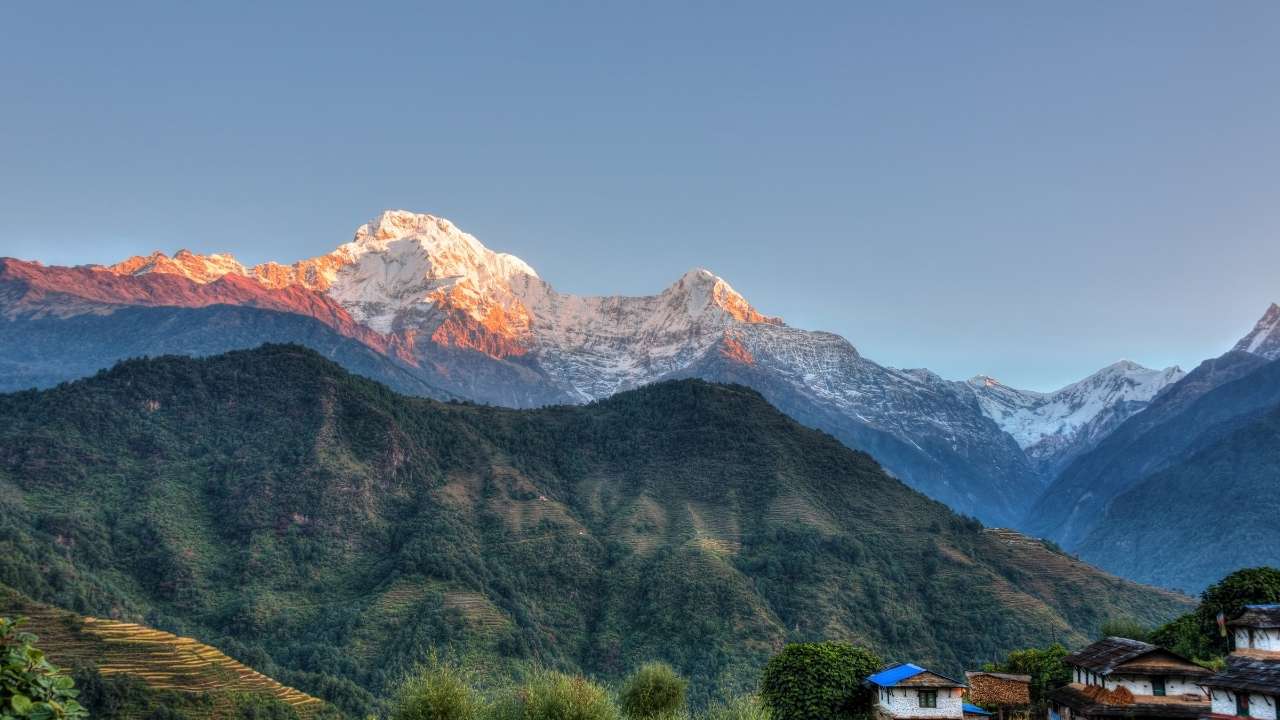
The trail passes through rhododendron and oak forest, terraced fields, working villages, and stone-built settlements. At Ghandruk, you can walk through traditional Gurung houses and narrow stone lanes before continuing back toward Pokhara.
The walking starts at Ulleri and continues through Ghorepani, Poon Hill, Tadapani, and Ghandruk. After lunch in Ghandruk, you drive back to Pokhara, so the trek does not require a long stay in the mountains.
Poon Hill is one of Nepal’s popular short treks for families. The walking days are manageable, teahouses are available each night, and children have forests, villages, farms, and mountain views along the way.
Poon Hill was my first trek as a porter in 1996. I carried other people’s loads from Ulleri through Ghorepani and toward Poon Hill, long before I became a guide or started Mountain World Treks. I still know these paths from those early days. I became a licensed guide in 2000 and have worked on trekking routes throughout Nepal ever since. Today, I still lead treks myself, while our other experienced guides take many of our groups. We remain a small company, and I know the people guiding our guests.
Saligram Started as a Trekking Porter
Became a Licensed Guide
Founded Mountain World Treks
Still Actively Guiding Treks in Nepal
Trekkers Guided by Saligram to Poon Hill
Trekkers Guided by Our Team to Poon Hill
Years of Experience, from Porter to Founder
All our guides are licensed by the Government of Nepal and have 10+ years of Himalayan trekking experience.
We provide support before and during your trek, assisting with planning, logistics, and emergencies.
We provide fair wages and better working conditions for porters while following responsible trekking practices.
Our prices are clearly explained from the start, including and excluding without hidden charges.
We limit groups to 12 trekkers, allowing guides to provide better attention, support, and a more personal trekking experience.
Emergency support and helicopter evacuation assistance when needed during high-altitude treks.
Choose the Ghorepani Poon Hill Trek for a short Annapurna route with Poon Hill sunrise, rhododendron forests, mountain villages, and views of Annapurna and Dhaulagiri. At 3,210 m, Poon Hill gives you a high Himalayan viewpoint without several nights at extreme altitude. For first-time trekkers, see our Beginner’s Guide to Trekking in Nepal.
From my experience guiding this trail, stone steps are the main physical challenge. Ulleri has a long staircase, while the pre-dawn climb to Poon Hill requires an early start. Simple teahouses and uneven trails are part of the route.
Hike before dawn and reach Poon Hill in time to watch the first light spread across the Dhaulagiri and Annapurna ranges.
The route passes through stone houses, terraced fields, working farms, and local teahouses. Ghandruk is the largest village along the route.
The trail between Ghorepani and Tadapani passes through oak and rhododendron forest, with red and pink blooms covering the hillsides in spring.
Ghandruk sits above the Modi Khola valley, with stone-paved lanes, closely built houses, and a strong Gurung character.
From terraced farmland around Ulleri, the trail climbs through villages and forest before reaching the more open slopes around Ghorepani and Poon Hill.
The highest point is 3,210 m, with three days of walking. It avoids the higher elevations and longer walking schedules of treks such as Everest Base Camp.
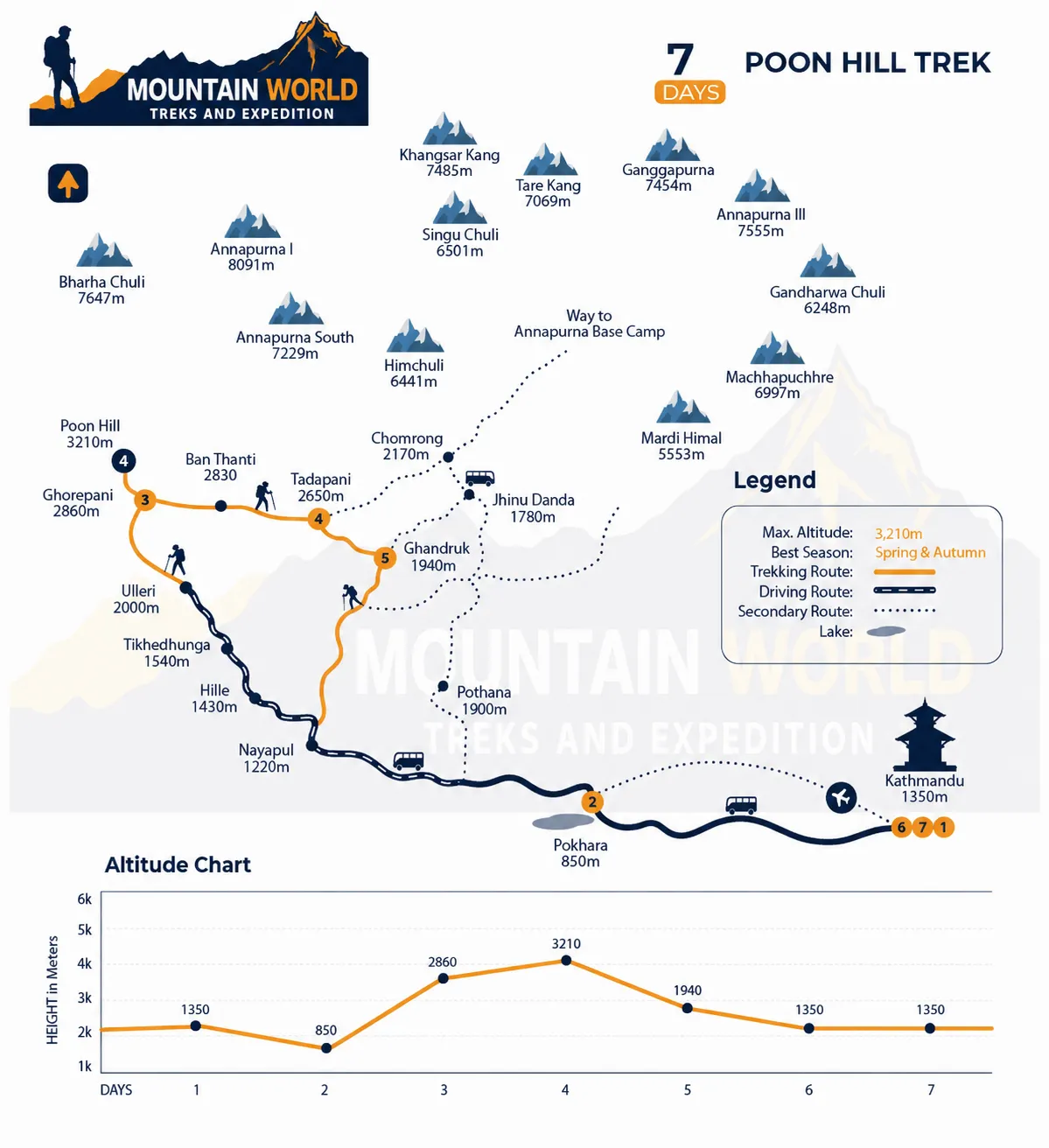
This is the exact 7-day itinerary I follow on every Ghorepani Poon Hill trek I run. Starting in Kathmandu, we travel to Pokhara, then drive to Ulleri and trek through Ghorepani, catching sunrise at Poon Hill before descending through Tadapani and Ghandruk, then driving back to Pokhara and on to Kathmandu. Below, you’ll find the daily itinerary, overnight elevations, walking times, and practical advice based on my years leading treks in the Annapurna region.
The 7-day Ghorepani Poon Hill Trek costs USD 555 per person. The price includes hotel accommodation in Kathmandu and Pokhara, transportation between Kathmandu, Pokhara, and the trek starting and ending points, teahouse accommodation during the trek, three meals a day while trekking, a licensed guide and porter, required trekking permits, airport and ground transfers, government taxes, and service charges.
Trek with like-minded adventurers. Departures every spring and autumn season.
7-day package, your own dates and pace. Licensed guide and porter for your group.
Extension your treks to Annapurna base Camp or Mardi Hima or Sightseeing tour to Pokhara or Kathmandu.
Once you share your plans, we arrange the transport, trek, accommodation, and guide for your trip.
Send your dates, group size, and preferred trek details.
We’ll send the itinerary, price, inclusions, and travel details.
Pay the required deposit and receive your booking confirmation.
Receive packing guidance, arrival details, and final trek information.
Important: Travel insurance is not included in the package. We recommend purchasing a policy that covers trekking in Nepal and emergency evacuation.
You’ll spend each trekking night in family-run lodges, with twin rooms and shared bathrooms. Facilities vary between villages. Kathmandu and Pokhara include a private hotel room. See our Ghorepani Poon Hill Trek Accommodation Guide for room and facility details.
Your lodge prepares meals during the trek. Dal bhat, momo, noodles, pasta, rice, potatoes, soups, eggs, pancakes, and bread are common on the menu. Smaller villages may have fewer choices. See our Ghorepani Poon Hill Trek Food & Drinks Guide for more about meals along the route.
For this 2-night, 3-day trek in the mountains, pack according to the season. Comfortable trekking shoes, a fleece or warm jacket, waterproof jacket, gloves, woollen hat, sunglasses, sunscreen, personal medication, and a refillable water bottle are useful year-round. Poon Hill can be very cold before sunrise in winter, so add warmer layers when temperatures drop.
Keep your daypack simple with water, snacks, rain protection, and personal items. A warm sleeping bag can be useful in colder months, while lighter bedding is usually enough in warmer seasons. See our Ghorepani Poon Hill Trek Packing List for the items we recommend.

The Ghorepani Poon Hill Trek is a short trek with moderate walking demands. Since the drive takes you to Ulleri, you skip the long staircase from lower villages. From Ulleri, the trail continues through forest and stone sections toward Ghorepani, followed by the early-morning climb to Poon Hill at 3,210 m.
Where You’ll Feel the Effort
See our Ghorepani Poon Hill Trek Difficulty Guide for walking times, elevation, terrain, and the Poon Hill climb.
You do not need intensive training for this 2-night, 3-day trek. Regular walking, stairs, and hill sessions will prepare your legs for the route. Add a few longer walks before departure and use the same trekking shoes and daypack you plan to take.
Useful Preparation
See our Ghorepani Poon Hill Trek Fitness & Training Guide for a practical preparation plan.
March to May and October to November are the most suitable months for the Ghorepani Poon Hill Trek. Spring is known for rhododendron forests in bloom, while autumn usually brings sharper views of the Annapurna and Dhaulagiri ranges. Winter is colder but quieter, and the monsoon months can make the forest sections wet and slippery. For a month-by-month breakdown, see our Best Time to Trek Ghorepani Poon Hill guide.
Spring brings color to the trail as rhododendrons bloom around Ghorepani and Tadapani. March is cooler, April is often at its most colorful, and May tends to feel warmer during the day.
The monsoon reaches the Poon Hill area during these months. Rain can arrive during the day, while clouds often sit over the surrounding peaks. Wet stone steps and muddy forest paths require more care, particularly after heavy rain.
After the monsoon, the air becomes drier and mountain views usually improve. October is the busiest month, while November brings cooler temperatures and quieter trails. Clear mornings are especially rewarding around Poon Hill.
Winter brings cold mornings and nights at Ghorepani and Tadapani. Snow can occasionally cover the higher sections of the trail, but the route remains quieter than in spring and autumn. On clear days, the cold air can give you sharp Himalayan views.
Not sure whether to choose Ghorepani Poon Hill or Annapurna Base Camp? Compare the main differences before deciding.
| Feature | Ghorepani Poon Hill Trek | 7 Days, Cost & Itinerary | Annapurna Base Camp Trek | 10 Days, Cost and Itinerary |
|---|---|---|
| Duration | 7 Days | 10 Days |
| Highest Point | 3,210 m | 4,130 m |
| Difficulty | Easy to moderate | Moderate |
| Best For | Shorter holidays & first-time trekkers | A longer trek with a higher mountain destination |
| Mountain Highlights | Annapurna, Dhaulagiri & Machhapuchhre | Annapurna I, Machhapuchhre & Annapurna South |
| Landscape | Rhododendron forests, villages & mountain viewpoints | Forests, villages, waterfalls & alpine landscapes |
| Culture | Gurung & Magar villages | Gurung & Magar communities |
| Crowds | Moderate -High | Moderate |
| Trek Experience | Shorter, lower altitude & easier to manage | Longer, with more elevation gain and walking time |
The Ghorepani Poon Hill Trek follows the lower Annapurna hills through terraced farmland, forest, stone stairways, and mountain villages. The route climbs from Ulleri to Ghorepani, then reaches Poon Hill at 3,210 m on an early morning walk. The following guides cover the practical side of the trek, including training, permits, weather, packing, food, accommodation, costs, electricity, internet, family trekking, and solo travel.
Poon Hill is 3,210 m, so altitude sickness is less of a concern here than on higher treks such as the Annapurna Circuit or Everest Base Camp. Still, some trekkers may get a headache, feel dizzy, sleep poorly, lose their appetite, or feel unusually tired after gaining altitude. If you notice these signs, tell your guide, slow down, and give yourself time to adjust. If you start feeling worse, do not continue higher.
In an emergency: Your guide will check your condition and decide what needs to be done. If you need medical attention, we can arrange transport from the trail and help you reach a suitable medical facility.
For more information about symptoms, prevention, and what to do if you feel unwell, see our Ghorepani Poon Hill Altitude Sickness Guide.
The trek starts with a drive from Pokhara to Ulleri at 1,960 m. From Ulleri, the trail climbs through terraced hills and forest to Ghorepani at 2,850 m. The next morning, the trail leads to Poon Hill at 3,210 m before returning to Ghorepani for breakfast. From there, it continues through forest to Tadapani at 2,610 m and descends to Ghandruk at 1,940 m, followed by the drive back to Pokhara. The Ghorepani Poon Hill Trek guide covers the itinerary, best time to trek, difficulty, altitude, food and accommodation, trekking gear, permits, transport, electricity and internet, family and solo trekking, and costs.
Helena W
Australia
Sandy
Singapore
Kin Teo
Singapore


Ghorepani Poon Hill Trek | 7 Days, Cost & Itinerary