The best time to trek in Nepal is generally spring and autumn, but the right month depends on the trek you choose. March to May brings warmer days, spring flowers and good conditions on many trails, while September to November usually brings drier weather and clearer mountain views.
If you are planning your first trek in Nepal, I would normally recommend April, October or November. These months offer a good balance of weather, trail conditions and mountain visibility.
You do not need to limit your trip to these months. Winter works well for several lower-altitude routes, while the dry areas of Mustang, Manang and Dolpo can be good choices during the monsoon.
The important thing is to choose the season according to your trekking route, not simply the calendar.
Best Trekking Seasons in Nepal at a Glance
| Season |
Months |
Main Conditions |
| Spring |
Mar–May |
Warm, flowers, good visibility |
| Monsoon |
Jun–Aug |
Rain, wet trails |
| Autumn |
Sep–Nov |
Dry, clear views |
| Winter |
Dec–Feb |
Cold, snow at altitude |
Nepal has major differences in rainfall and temperature between regions. Around 80% of the country’s rainfall occurs during the June to September monsoon period, while areas north of the main Himalayan range receive much less rain.
When Is the Best Time to Trek in Nepal?
For most popular trekking routes, spring and autumn are the main trekking seasons.
If clear mountain views are your priority, I would choose October or November. The monsoon has normally cleared much of the dust and haze, and mountain visibility is often at its best during these months.
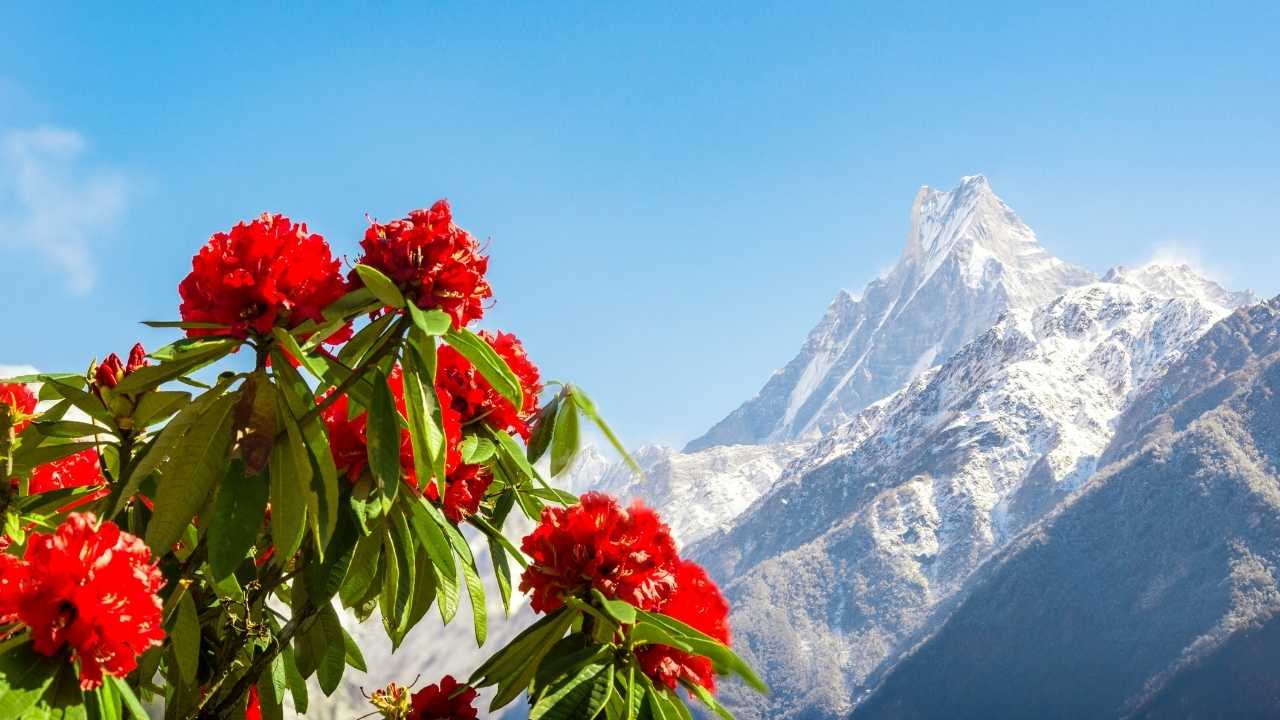
If you prefer warmer conditions and want to see rhododendrons flowering along the trail, April is a strong choice.
For fewer trekkers, look at March, late November or winter, depending on the route. The trade-off is colder weather or a greater chance of snow at higher elevations.
There is no single month that is best for every trek in Nepal.
Is Spring Best time to Trek in Nepal: March to May
Spring is one of the two main trekking seasons.
Temperatures rise after winter, daylight increases and forests begin to flower. Rhododendrons are particularly noticeable on routes through the Annapurna, Langtang and Mardi Himal regions.
At higher elevations, winter snow can remain early in the season, especially around high passes.
March
March marks the start of the spring trekking season.
Lower elevations become more comfortable during the day, while high-altitude sections can still be cold. Snow may remain on some passes.
If you want spring conditions without the busiest April crowds, March can be a good time to travel.
April
April is one of the strongest months for trekking in Nepal.
Daytime temperatures are generally comfortable for walking, rhododendrons are flowering on many forest trails, and mountain visibility can be good.
It is also a busy month on popular routes, so flights, teahouses and trekking services should be arranged in advance.
May
May remains suitable for many treks, particularly during the first part of the month.
Temperatures become warmer at lower elevations, while afternoon cloud and rain become more likely as the monsoon approaches.
If your dates are flexible, early May is preferable to late May for most popular trekking routes.
Monsoon Trekking in Nepal: June to August
The monsoon brings most of Nepal’s annual rainfall between June and September. Many popular trekking areas become wetter, cloudier and muddier during this period.
That does not mean trekking stops throughout Nepal.
The Himalayas create rain-shadow areas where much less rain reaches the northern side of the mountains. Upper Mustang, Manang and Dolpo are among the better choices during the monsoon.
For standard routes such as Everest Base Camp and Annapurna Base Camp, I would not choose the monsoon unless your dates are fixed and you are prepared for changing conditions.
June
June is when the monsoon begins affecting more of Nepal.
Rain becomes increasingly common, especially at lower elevations. Trails can become slippery and mountain views less reliable.
If you want to trek during June, look at rain-shadow destinations rather than choosing a route exposed to the monsoon.
July
July is one of the wettest months for many parts of Nepal.
Road travel can be affected by rain and landslides, while cloud can interfere with mountain flights and views.
For trekking, Upper Mustang, Manang and Dolpo are much more suitable than most routes exposed to the monsoon.
August
August remains within the main monsoon period.
The same route considerations apply as in July. If you want to trek, choose a dry-region itinerary rather than expecting autumn-like conditions on the main Himalayan trails.
Autumn Trekking in Nepal: September to November
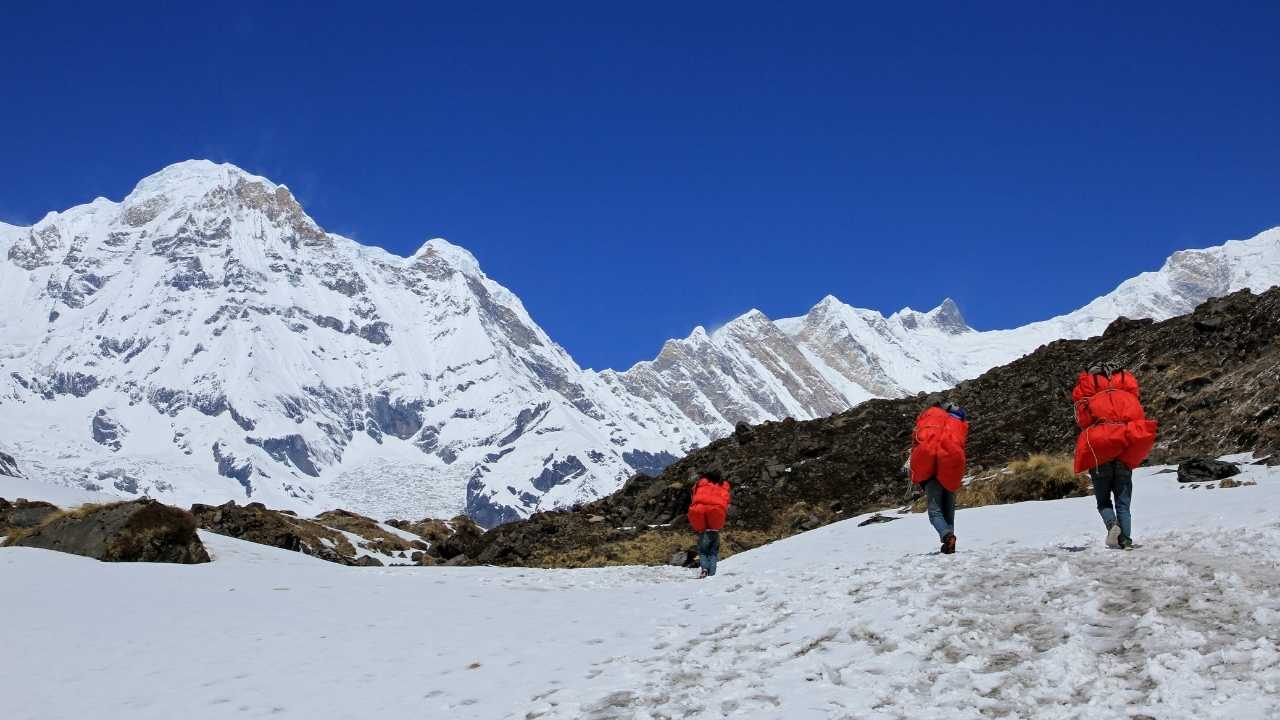
Autumn is the other major trekking season and is particularly popular for high-altitude routes.
After the monsoon, trails generally become drier and mountain visibility improves. October and November are usually the strongest months for clear mountain views.
September
September is a transition month.
Early September can still have monsoon rain, especially in lower regions. Conditions normally become more reliable later in the month.
If you want to travel in September, late September is a better choice for most high-altitude treks.
October
October is usually the busiest trekking month.
The combination of dry trails, comfortable walking temperatures and clear mountain views attracts trekkers to Everest, Annapurna, Manaslu, Langtang and other popular routes.
If October fits your schedule, book your flights, accommodation and trek early.
November
November is another excellent month for trekking.
The weather is generally dry and mountain visibility can be very good. Temperatures become colder, especially at higher elevations and after sunset.
The later November becomes, the more winter-like conditions can feel at altitude.
Winter Trekking in Nepal: December to February
Winter is colder but does not make every trekking route unsuitable.
Lower routes can have clear, dry days, while high-altitude areas can experience snow and freezing temperatures.
For high passes, snow and cold temperatures need to be taken seriously. For lower routes, winter can provide quiet trails and good daytime walking conditions.
December
December usually brings cold mornings and nights with many dry days.
Lower and mid-altitude treks can work well, particularly if you prefer fewer trekkers.
At higher elevations, check snow conditions before crossing any pass.
January
January is generally the coldest part of the trekking year.
High-altitude routes can be difficult because of snow, freezing temperatures and shorter daylight hours.
I would choose lower routes unless you have experience with winter trekking and are properly equipped.
February
February remains cold at altitude but conditions begin moving toward spring.
Lower elevations become more comfortable during the day, while high passes can still have significant snow.
Late February is a useful option if you want quieter trails and can handle cold mornings.
Month-by-Month Guide to Trekking in Nepal
| Month |
Conditions |
Crowds |
| Jan |
Cold, mostly dry |
Low |
| Feb |
Cold, warming |
Low |
| Mar |
Spring begins |
Moderate |
| Apr |
Warm, settled |
High |
| May |
Warm, cloud later |
Moderate–High |
| Jun |
Monsoon begins |
Low |
| Jul |
Wet |
Very Low |
| Aug |
Wet, cloudy |
Very Low |
| Sep |
Monsoon retreats |
Moderate |
| Oct |
Dry, clear |
Very High |
| Nov |
Clear, colder |
High |
| Dec |
Cold, mostly dry |
Low |
These are seasonal planning guidelines rather than a daily weather forecast. Conditions can change between valleys and elevations, so check the current forecast before starting your trek.
Best Time for Popular Treks in Nepal
The right trekking season in Nepal changes slightly according to the route, altitude and pass crossings.
Everest Base Camp
March to May and late September to November are the main periods I recommend.
For a first Everest Base Camp trek, April, October and November are particularly practical choices.
Winter brings colder conditions and possible snow, while monsoon brings more cloud, rain and possible flight disruption.
Annapurna Base Camp
March to May and September to November are the preferred periods.
April is a good month for rhododendron forests, while October and November are generally better for clear mountain views.
Annapurna Circuit
March to May and September to November are the main trekking periods.
The route crosses Thorong La at 5,416 metres, so snow conditions around the pass are more important than they are on lower routes.
Manaslu Circuit
March to May and September to November are the main seasons.
Autumn is particularly useful if crossing Larkya La is a priority. Winter snow can make the pass more demanding.
Langtang Valley
March to May and October to November are strong choices.
Spring brings flowering forests, while autumn is usually better if your priority is clear mountain visibility.
Mardi Himal
March to May and September to November are the preferred months.
April is particularly good for rhododendron forests. October and November generally offer drier trails and clearer mountain views.
Upper Mustang
Upper Mustang is different from most of Nepal’s trekking regions.
Because it lies in the Himalayan rain shadow, it is one of the main areas where trekking during the monsoon is practical.
If your only opportunity to visit Nepal is June, July or August, Upper Mustang is worth considering.
Best Time for Clear Mountain Views
For clear Himalayan views, I normally recommend October and November.
The period after the monsoon often brings cleaner air and better visibility.
April can also provide good visibility, but conditions become less predictable as May progresses.
One practical point: start your walking day early.
Mountain clouds often build later in the day, so an early departure can give you better conditions at viewpoints.
Best Time to See Rhododendrons
Choose March to May, especially April.
Rhododendrons flower at different elevations at different times, so the flowering period is not exactly the same along the entire route.
Annapurna, Langtang and Mardi Himal are among the routes where spring forests are especially noticeable.
Best Time for Fewer Trekkers
If you want quieter trails, avoid the busiest periods of October and April.
You can consider:
- March
- Late November
- December to February
- Late September
There is a trade-off.
January can be peaceful but very cold at altitude. Late September can be quieter than October, but the monsoon may not have completely withdrawn.
Choose the quieter month only after checking the conditions for your particular trek.
Best Time for High-Altitude Passes
High passes need more careful planning than valley treks.
Important examples include:
- Thorong La: 5,416 m
- Larkya La: about 5,160 m
- Cho La: about 5,420 m
For these crossings, autumn is usually the first season I would consider because the trails are normally dry and the weather is more settled.
Spring can also work, but early-season snow may remain around the passes.
Winter crossings require appropriate equipment, experience and current information about trail conditions.
How Altitude Affects Trekking Weather
Do not use the weather in Kathmandu or Pokhara to judge conditions on a high-altitude trek.
Temperature generally drops as elevation increases, so conditions at 4,000 or 5,000 metres can be very different from those in the cities.
A sunny morning in Kathmandu can therefore tell you very little about conditions higher in the mountains.
When planning your trek, check the weather according to the altitude of your overnight stops and the highest points you will cross.
Can You Trek During the Nepal Monsoon?
Yes, but you need to choose the region carefully.
The southern side of the Himalayas receives most of the monsoon rain, while areas behind the main mountain ranges can remain much drier.
Manang, Mustang and Dolpo are the main examples.
Upper Mustang is particularly suited to this period because of its location north of the main Himalayan barrier.
Does the Weather Change From Year to Year?
Yes.
The general trekking seasons remain useful for planning, but the start and end of rainfall, snowfall and temperature patterns vary from year to year.
Nepal’s Department of Hydrology and Meteorology publishes seasonal forecasts and climate information.
Use seasonal information when choosing your travel month, then check the current forecast and local trail conditions before beginning your trek.
What Should You Pack for Each Season?
Your equipment should match both the season and altitude.
Spring: Bring warm layers for high elevations, rain protection, sun protection and clothing that can be adjusted as temperatures change.
Autumn: Pack warm layers for mornings and evenings, a suitable sleeping bag and good sun protection.
Winter: Take a warmer sleeping bag, insulated jacket, gloves, hat and additional cold-weather layers. High passes may require extra equipment depending on snow conditions.
Monsoon: Waterproof protection for yourself and your backpack is important. Quick-drying clothing and suitable footwear are useful on wet trails.
Should You Choose the Trek or the Season First?
I recommend choosing the trek first.
Then look at its highest altitude, pass crossings, access roads, flight connections and expected conditions during your available travel dates.
For example:
July + Upper Mustang: sensible combination.
July + Annapurna Base Camp: expect wetter trails and more cloud.
October + Everest Base Camp: one of the strongest combinations.
January + Thorong La: possible for experienced winter trekkers, but snow and cold require careful planning.
Your travel month should fit the route rather than the other way around.
My Advice on the Best Time to Trek in Nepal
If you have flexible dates and this is your first Himalayan trek, I would choose spring or autumn.
Choose October or November if clear mountain views are your priority.
Choose April or early May if you want spring temperatures and rhododendron forests.
Choose late September if you want to start the autumn season and can accept some remaining monsoon uncertainty.
Choose winter for lower-altitude routes if you prefer quieter trails and can handle cold conditions.
Choose June to August mainly for rain-shadow destinations such as Upper Mustang, Manang and Dolpo.
The best time to trek in Nepal depends on where you are going, how high you will go and what conditions you are prepared to handle.
Frequently Asked Questions
What is the best month to trek in Nepal?
October is generally the strongest month for many popular trekking routes because of dry conditions and clear mountain views. April is another strong choice, particularly for spring landscapes.
What are the best trekking seasons in Nepal?
The main trekking seasons are spring, from March to May, and autumn, from September to November. Trekking is also possible outside these months when the route is chosen according to seasonal conditions.
Can I trek in Nepal in winter?
Yes. Lower and mid-altitude routes can be suitable in winter, but high passes can have snow and freezing temperatures.
Can I trek in Nepal during the monsoon?
Yes. Choose a rain-shadow route such as Upper Mustang, Manang or Dolpo rather than assuming all of Nepal has the same weather.
Is September a good month for trekking in Nepal?
Late September is generally a better choice than early September because the monsoon may still be active at the beginning of the month.
Is October crowded in Nepal?
Yes. October is one of the busiest trekking months. Book popular routes and mountain flights in advance.
Is November good for trekking in Nepal?
Yes. November generally brings dry trails and good mountain visibility, although temperatures become colder at higher elevations.
Is April good for trekking in Nepal?
Yes. April is one of the main trekking months and is particularly good for spring flowers and comfortable daytime temperatures.
Which season is best for Everest Base Camp?
Spring and autumn are the main seasons. April, October and November are particularly good choices for most trekkers.
Which treks are best during the monsoon?
Upper Mustang, Manang and Dolpo are among the better options because they are influenced by the Himalayan rain-shadow effect.
Which month has the fewest trekkers?
Winter and monsoon generally have fewer trekkers on the main routes. December to February can be quiet, while June to August is quieter because of rainfall.
Can weather affect flights to trekking regions?
Yes. Rain, cloud, wind and poor visibility can affect flights to mountain airports.
If your international departure is shortly after your trek, I recommend leaving some extra time in Kathmandu rather than arranging a tight same-day connection.
Does the best trekking season apply to every trek in Nepal?
No.
Nepal has major differences in altitude, rainfall and terrain between regions. The season that works well for Everest Base Camp may not be suitable for a monsoon trek in Upper Mustang.
Check the conditions for the specific route before fixing your travel dates.
Plan Your Trekking Season
If you already know which trek you want to do, start with the route and highest altitude, then choose the month.
For most high-altitude treks, spring and autumn remain the safest starting point for planning. If your dates fall outside these seasons, that does not automatically mean you should cancel the trek. It means you need to choose the route and prepare according to the conditions.
If you are planning to trek with us, see our Nepal Trekking Packages and choose a route based on your available travel dates.