
ABC – Mardi Himal Trip
Badrul H
Malaysia
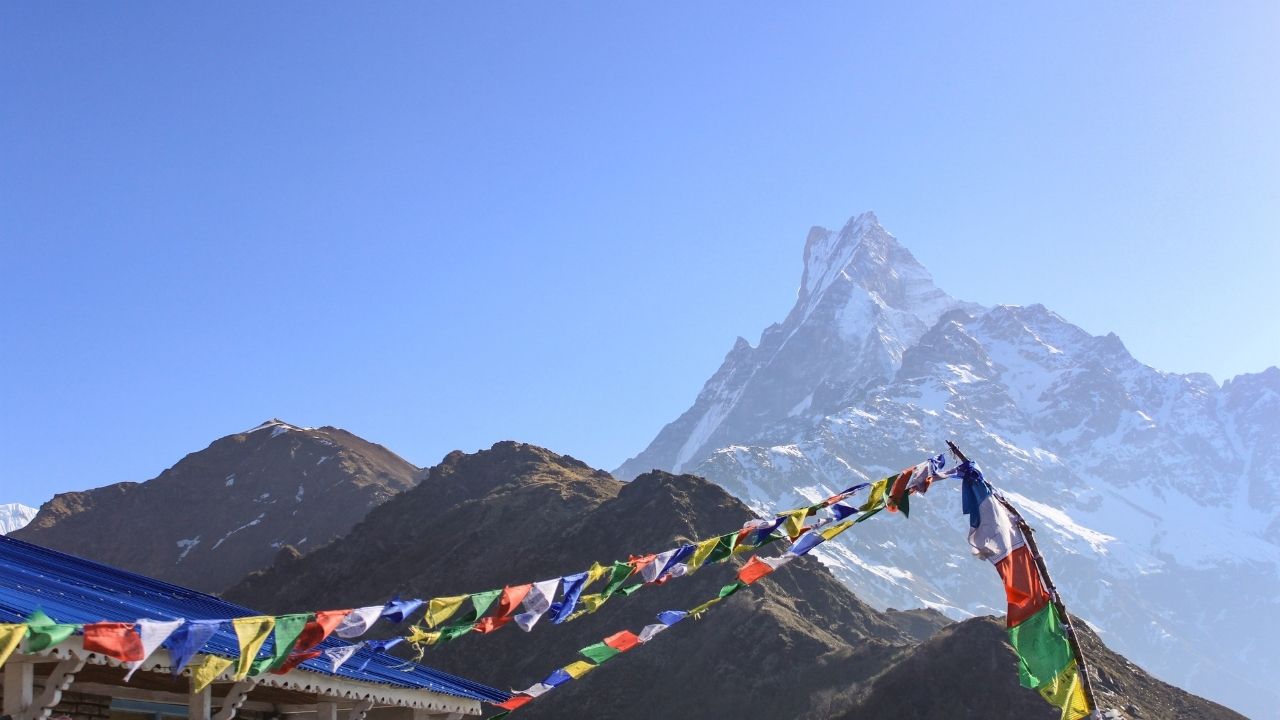
From Mardi Himal to Annapurna Base Camp, two different trails in one trek.
The Mardi Himal and Annapurna Base Camp Trek starts at Deurali and climbs through Forest Camp, Low Camp, and High Camp to Mardi Himal Base Camp at around 4,500 m. You then descend through Landruk and Chhomrong before continuing to Annapurna Base Camp at 4,130 m.
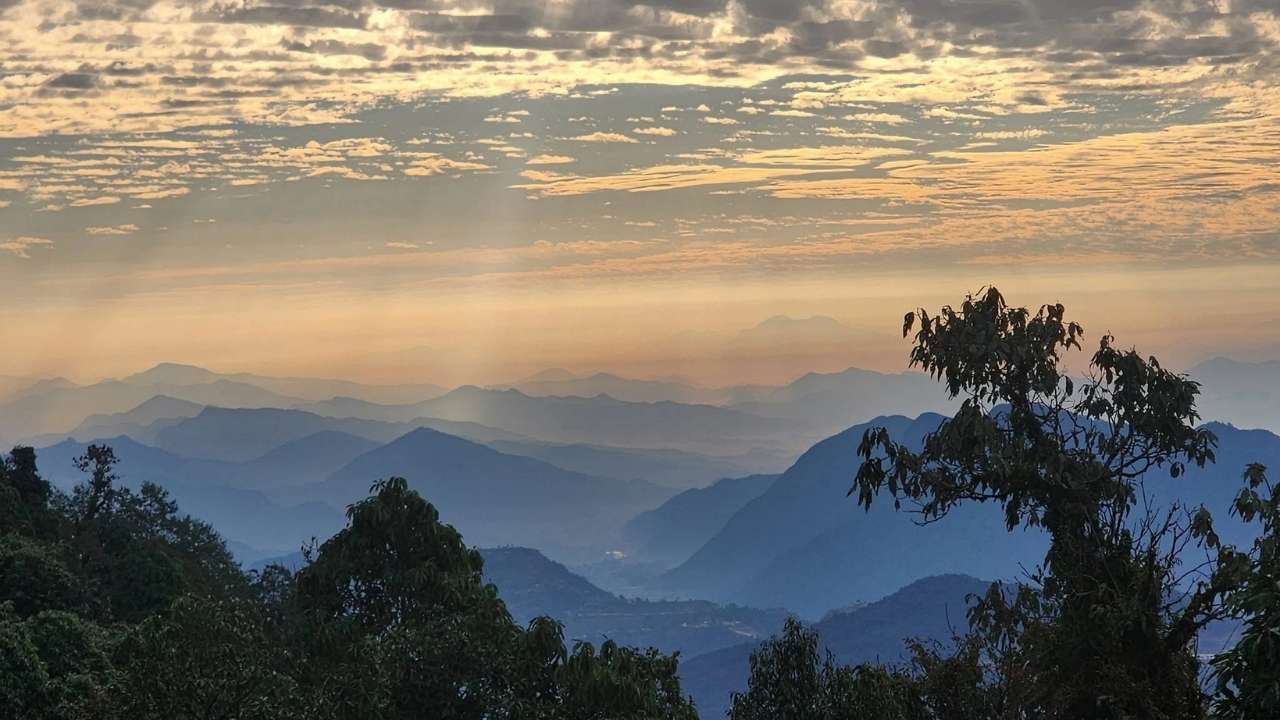
The Mardi Himal section moves through oak and rhododendron forest before opening onto the ridge above High Camp. From the ridge, Machhapuchhre stands close ahead, with views of Annapurna South and Hiunchuli.
After Mardi Himal Base Camp, the trail drops to Landruk and continues through Chhomrong, Bamboo, and Deurali toward Machhapuchhre Base Camp and the Annapurna Sanctuary.
Along the route, you’ll see Gurung villages, terraced fields, waterfalls, stone stairways, small temples and shrines, and the natural hot springs at Jhinu Danda.
At Annapurna Base Camp, 4,130 m, you enter the Annapurna Sanctuary, surrounded by Annapurna I, Annapurna South, Hiunchuli, and Machhapuchhre. You complete both routes without returning to Pokhara between them.
There is no technical climbing, but frequent uphill and downhill sections can put pressure on your knees, especially during descents. The approaches to both base camps are the hardest sections, so prepare your legs before the trek, use trekking poles, and take care on steep downhill trails.
Since 2019, Mountain World Treks has organized this combined trek. We have arranged many trips on this route, and trekkers like the combination because you can experience both Mardi Himal and Annapurna Base Camp within two weeks without returning to Pokhara between the two sections.
Ready to go?
Download Day-by-Day Itinerary
Our Mardi Himal and Annapurna Base Camp Trek package includes tourist bus transportation between Kathmandu and Pokhara. You can upgrade to a domestic flight or private vehicle at an additional cost.
Pokhara to Trailhead & Return:
Transportation between Pokhara and the trailheads is by jeep or bus, based on your group size and itinerary. After the trek, the road transfer takes you back to Pokhara.
Total Distance
Walking Days
Accommodation
Meals
Transportation
Group Size
Guide
Porter
Best Season
Fitness Level
Permit
Trip Style
Starts
Ends
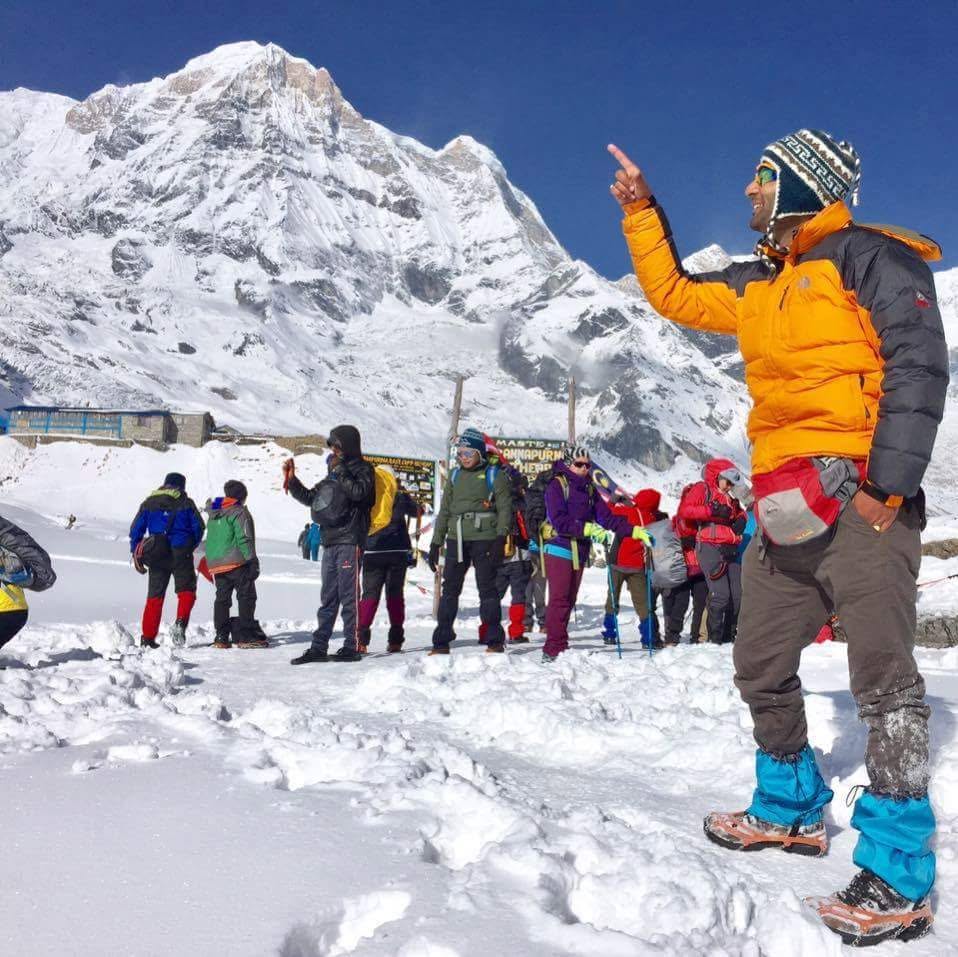
The main reason to choose this trek is the route itself. You spend the first part of the journey on the Mardi Himal trail, then return to the lower hills and continue toward Annapurna Base Camp. This gives you two different trekking routes in one trip, with Mardi Himal before the Annapurna Sanctuary.
The first part of the trek takes you from Deurali through Forest Camp, Low Camp, and High Camp. The trail gradually opens up as you leave the lower forest behind, with Machhapuchhre becoming a constant reference point along the ridge.
After the Mardi Himal section, the route drops back toward Landruk before joining the trail toward Chhomrong and the Annapurna Sanctuary. The second half feels different from the first, with the Modi Khola valley guiding the way toward Annapurna Base Camp.
Mardi Himal and Annapurna Base Camp do not feel like the same trek. Mardi Himal gives you ridge walking and a more open route, while the ABC section follows the valley deeper into the mountains. Putting them together makes the journey varied without needing two separate trips.
Choose Mountain World Treks for the Mardi Himal and Annapurna Base Camp Trek for our decades of experience on both routes and knowledge of the local trails. We handle the itinerary, permits, teahouses, transportation, guides, and porters for the complete trek.
Started as a Trekking Porter
Became a Licensed Trekking Guide
Founded Mountain World Treks
Saligram Still Actively Guiding Treks in Nepal
Years from Porter to Founder
All our guides are licensed by the Government of Nepal and have 10+ years of Himalayan trekking experience.
We provide support before and during your trek, assisting with planning, logistics, and emergencies.
We provide fair wages and better working conditions for porters while following responsible trekking practices.
Our prices are clearly explained from the start, including and excluding without hidden charges.
We limit groups to 12 trekkers, allowing guides to provide better attention, support, and a more personal trekking experience.
Emergency support and helicopter evacuation assistance when needed during high-altitude treks.
If you can handle several hours of walking with regular uphill and downhill sections, you can take on the Mardi Himal and Annapurna Base Camp Trek. No climbing experience is required, but the route reaches around 4,500 m at Mardi Himal Base Camp, so some preparation is important.
The trek suits first-time trekkers, couples, families, and anyone comfortable with basic teahouse accommodation. If this is your first trek in Nepal, see our Mardi Himal and Annapurna Base Camp Trek for Beginners Guide.
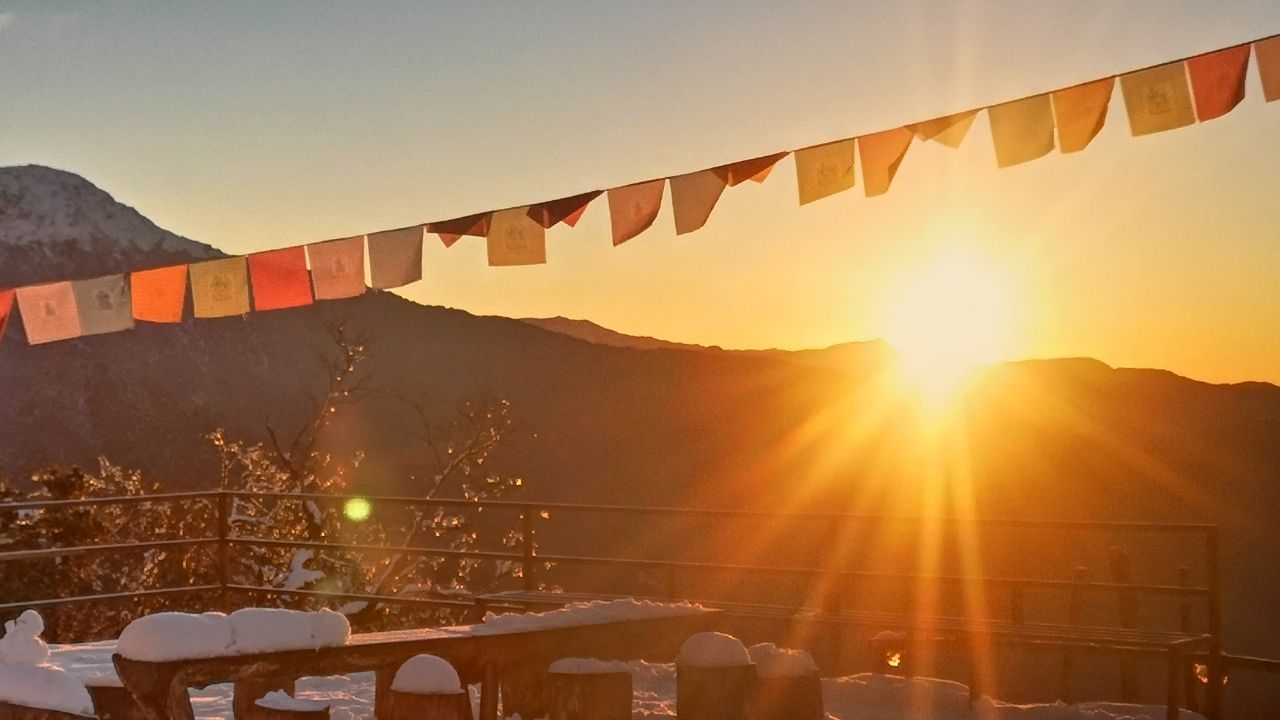
Start early for sunrise and watch Machhapuchhre and the Annapurna range change as the light reaches the peaks.
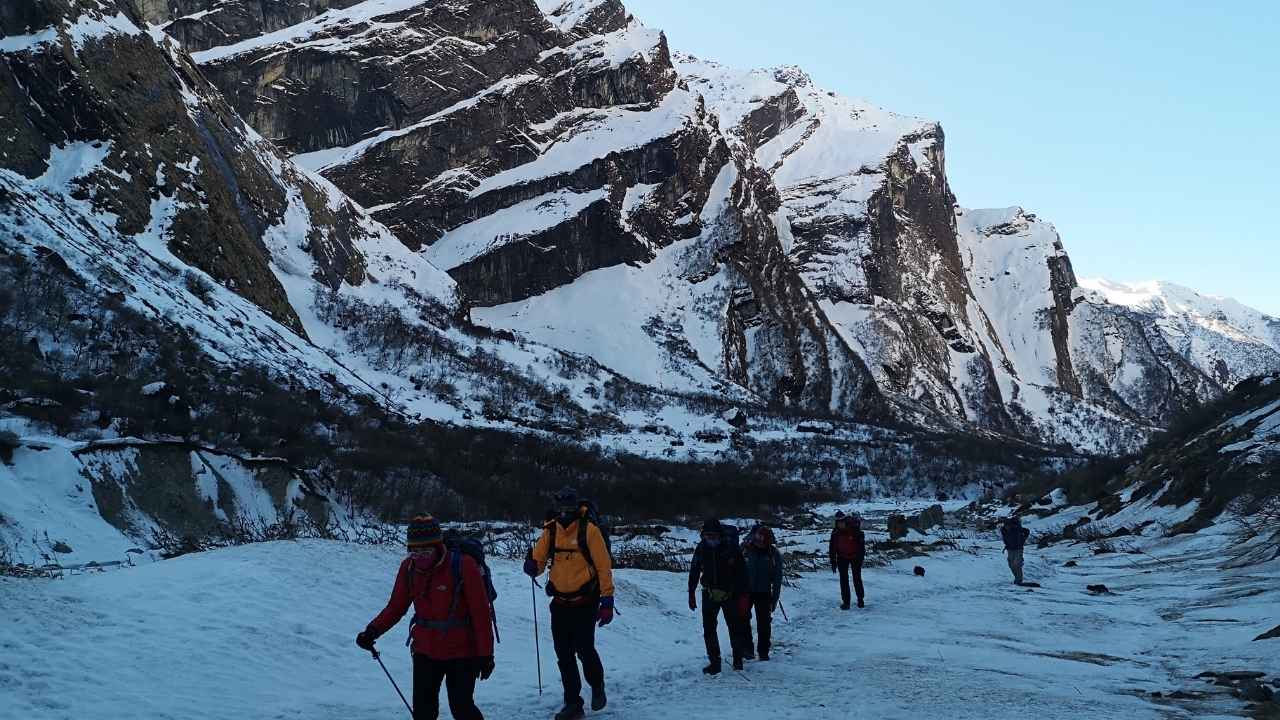
From Deurali, the trail follows the Modi Khola valley toward the Annapurna Sanctuary, with the mountains getting closer as you walk toward Annapurna Base Camp.
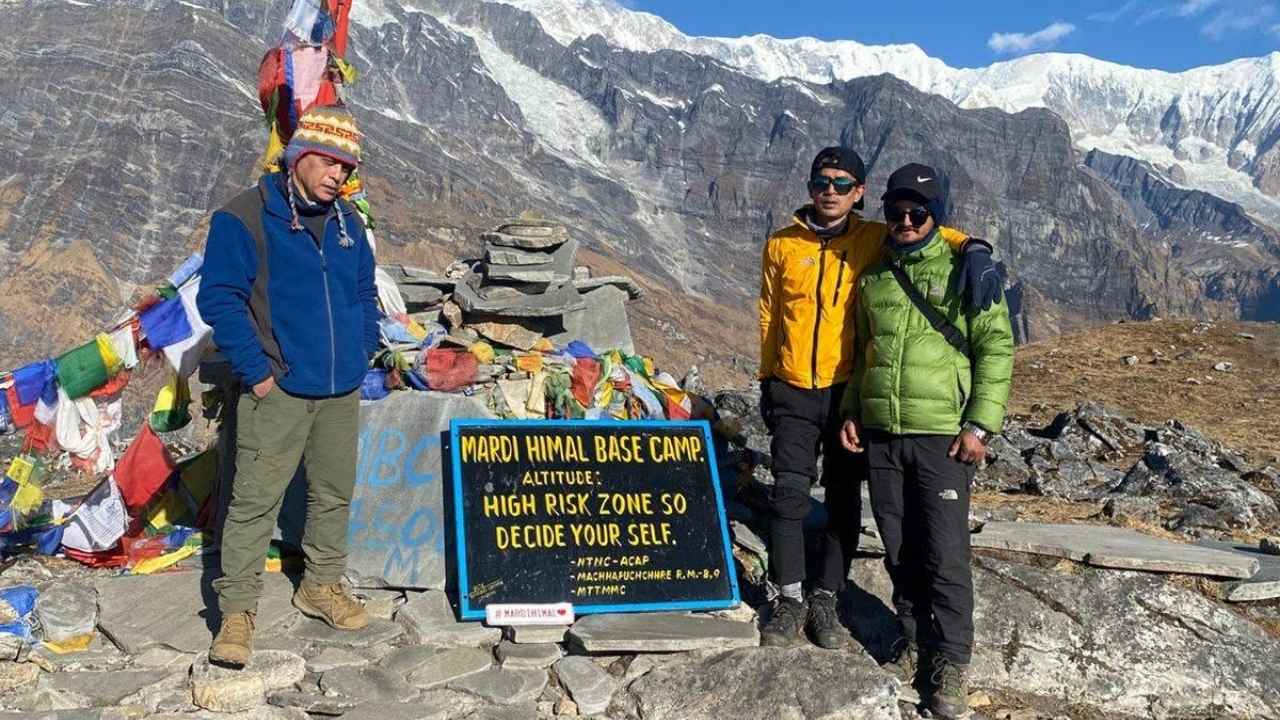
Reach both Mardi Himal Base Camp and Annapurna Base Camp on the same trek, with the route connecting the two sections through lower villages and forest trails.
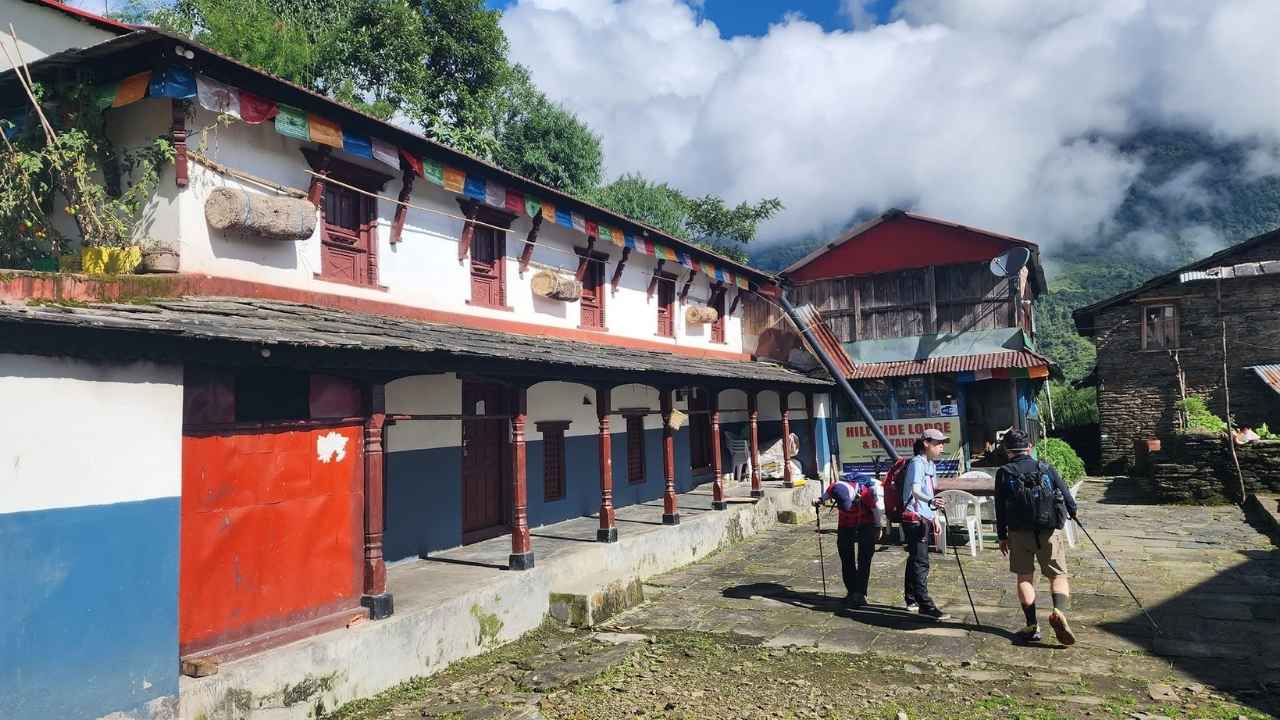
Stay in Landruk, Chhomrong, and other hillside villages, where homes, farms, lodges, and everyday village life are part of the trail.
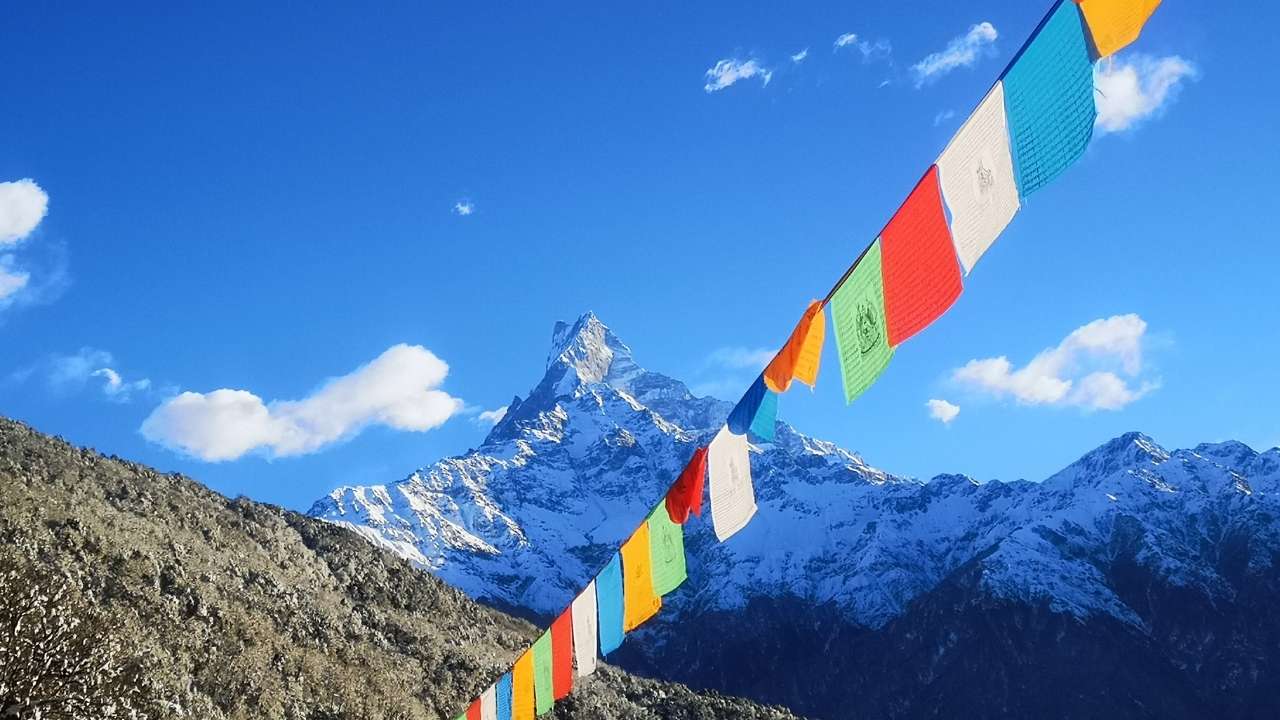
The view of Machhapuchhre keeps changing along the route. From around Landruk it sits beyond the hills; at Annapurna Base Camp, it rises much closer above the sanctuary.

Walk through rhododendron and bamboo forests between Chhomrong and Bamboo, a very different trail from the open ridges of the Mardi Himal section.
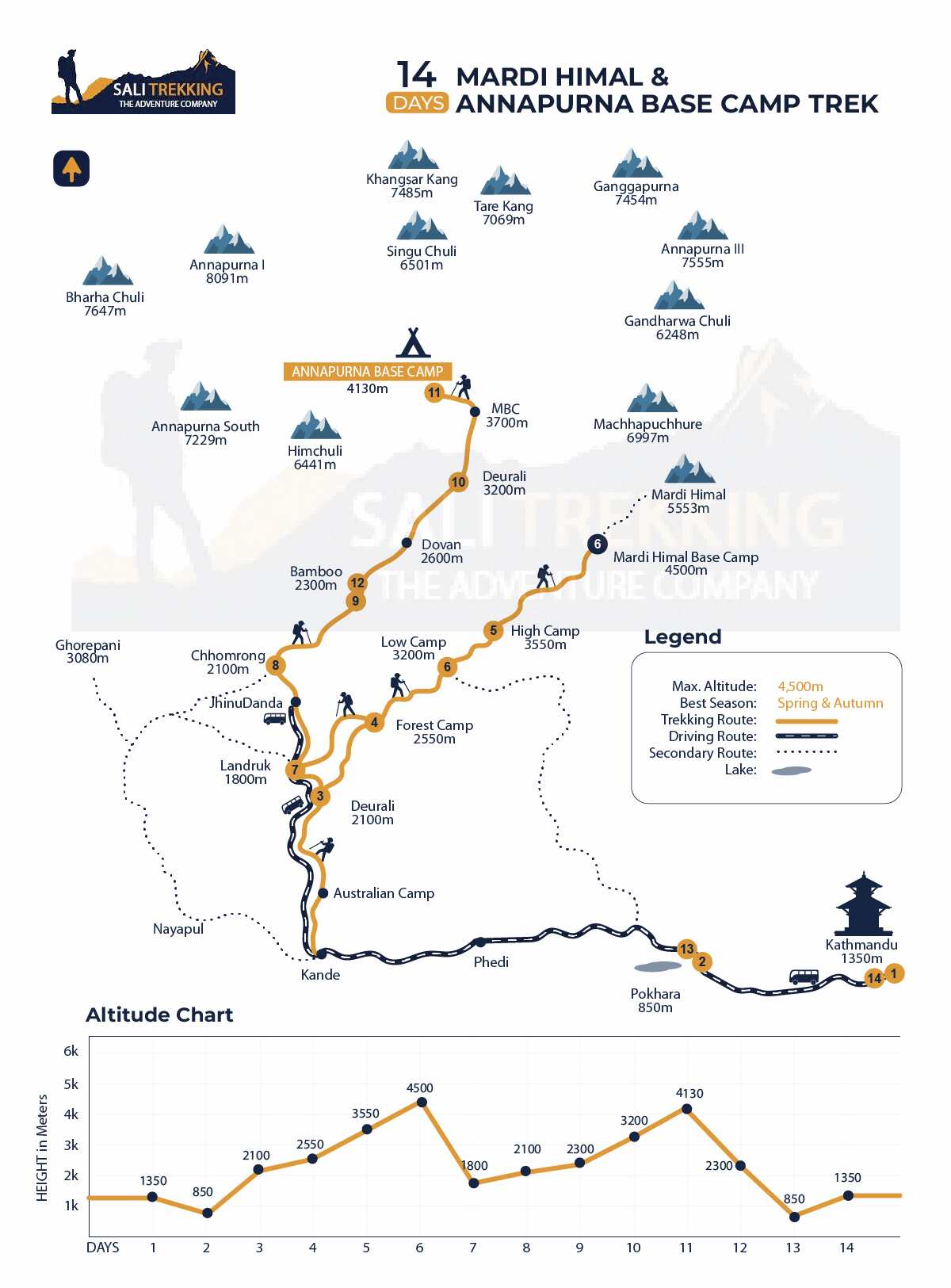
This is the exact 15-day itinerary I follow on every Annapurna Base Camp and Mardi Himal combined trek I run. Starting in Kathmandu, we travel to Pokhara, then trek up to Mardi Himal Base Camp before descending through Landruk and Chomrong to join the Annapurna Base Camp trail, reaching ABC before returning via Jhinu Danda to Pokhara and Kathmandu.
Our 14-day Mardi Himal & Annapurna Base Camp Trek costs USD 999 per person for both group joining and private departures. The price stays the same because both options use the same teahouses, meals, permits, guide and porter services, and standard transportation. With the private option, only your group, departure date, and walking pace are private.
Trek with like-minded adventurers. Departures every spring and autumn season.
14-day package, your own dates and pace. licensed guide and porter for your group.
Add helicopter returns, extension treks, Sightseeing or Jungle safari.
Booking the Mardi Himal and Annapurna Base Camp Trek starts with your dates and group size. We then arrange the itinerary, transport, permits, and other trek details.
Share your dates, group size, and what you want from the trek.
We’ll prepare the itinerary, transport details, and total price.
Approve the plan and pay the required deposit to confirm your place.
We’ll take care of permits, teahouses, guides, porters, and transport.
Important: Travel insurance is not included in the package. Before your trek, you must purchase a policy that covers high-altitude trekking up to at least 4,500 m and emergency helicopter evacuation.
During the trek, you’ll stay in family-run teahouses and mountain lodges. Kathmandu and Pokhara use hotel accommodation. Rooms are basic, with shared bathrooms becoming more common around the higher overnight stops. See our Mardi Himal & Annapurna Base Camp Trek Accommodation & Food Guide for details.
Each trekking day includes meals at local teahouses along the route. Breakfast and dinner are taken at your overnight lodge, while lunch is served at a teahouse during the walk.
For the Mardi Himal and Annapurna Base Camp Trek, pack for forest trails, exposed ridges, and cold conditions above 4,000 m. Bring a fleece or down jacket, waterproof shell, trekking trousers, sturdy boots, warm socks, sleeping bag, sunglasses, sunscreen, personal medication, trekking poles, and a reusable water bottle.
Keep your main gear in a duffel bag and carry water, snacks, an extra jacket, sunscreen, and personal items in your daypack. See our
Mardi Himal & Annapurna Base Camp Trek Packing List for clothing, footwear, and other required gear.

There are no technical climbing sections, but the trek has plenty of uphill walking, stone steps, and descents. The Mardi Himal section has steady climbs toward High Camp and Mardi Himal Base Camp. After joining the ABC route, the climb from Bamboo to Annapurna Base Camp gets harder as you gain altitude. The long descents can also be tiring on the knees.
What Makes the Trek Challenging?
For training plans, walking distances, and preparation, see our Mardi Himal and Annapurna Base Camp Trek Difficulty Guide.
You do not need previous trekking experience, but you should be comfortable walking for several hours and going uphill and downhill. Being able to walk 5–7 hours on hilly terrain is a good starting point. Regular hill walks, stairs, and leg-strength exercises before the trek will make the longer days easier.
You’re Ready for the Mardi Himal and ABC Trek If You
For a detailed training plan and preparation tips, see our Complete Trek Fitness & Training Guide.
March–May and September–November are the strongest months for combining Mardi Himal with Annapurna Base Camp. June–August brings monsoon rain, while December–February brings colder nights and possible snow around the higher sections. See our Best Time to Trek to Annapurna Base Camp Guide for month-by-month conditions.
Rhododendrons are in bloom, and the trails usually have clear mornings with comfortable temperatures.
Rain affects the lower forest trails, with muddy sections and leeches common during wet periods.
Dry trails and clear mountain views make autumn the most reliable period for both Mardi Himal and Annapurna Base Camp.
While snow and icy conditions can occur around the higher parts of Mardi Himal and Annapurna Base Camp.
The Mardi Himal and Annapurna Base Camp Trek combine the Mardi Himal route with the trail into the Annapurna Sanctuary. You climb to Mardi Himal Base Camp before descending to Landruk and joining the ABC route at Chhomrong. The guides below cover training, insurance, permits, weather, Mardi Himal, Annapurna Base Camp, packing, costs, and trekking with family.
Altitude sickness happens when your body struggles to adjust to lower oxygen levels at higher elevations. It can affect anyone, with symptoms such as headache, nausea, dizziness, tiredness, or poor sleep. Climb gradually and give your body time to adjust. If symptoms appear or worsen, tell your guide and stop ascending.
In an emergency: Your guide will help coordinate the appropriate response, including contacting your insurance provider and arranging evacuation when required. If you need medical care in Kathmandu, we can help you reach an appropriate medical facility.
Learn how to recognize, prevent, and respond to altitude sickness in our Mardi Himal and Annapurna Base Camp Altitude Sickness Guide.
The trek starts from Pokhara and drives to Kande, then climbs through Deurali, Forest Camp, and Low Camp to High Camp at around 3,550 m. An early hike reaches the Mardi Himal viewpoint at around 4,500 m before descending to Landruk and climbing to Chhomrong. From there, the route enters the Annapurna Sanctuary, passing Bamboo, Deurali, and Machhapuchhre Base Camp before reaching Annapurna Base Camp at 4,130 m. The return goes through Bamboo and Jhinu Danda, with its hot springs, before driving back to Pokhara. The guide covers the itinerary, best time, difficulty, altitude and acclimatization, food, accommodation, gear, permits, transport, and costs.
Badrul H
Malaysia
Hizuan H
Malaysia
Jazmi
Kepala Batas, Malaysia


Mardi Himal and Annapurna Base Camp Trek: 14-Day Plan & Cost