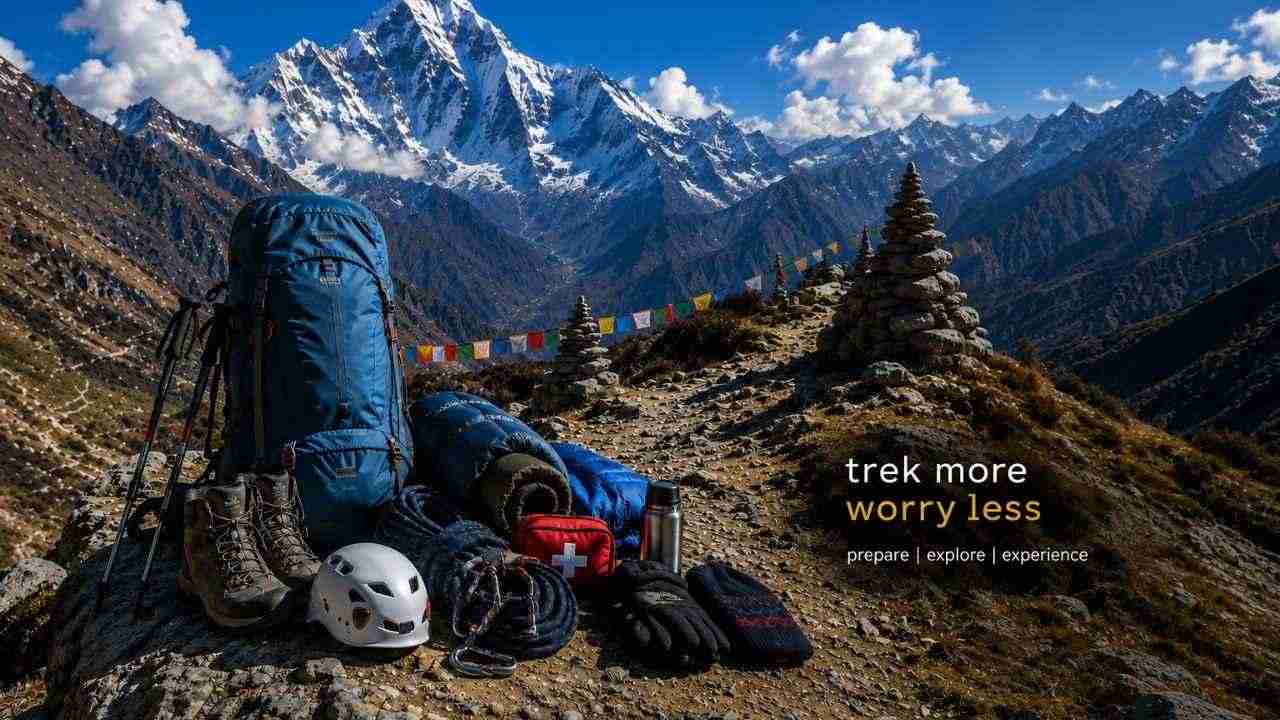
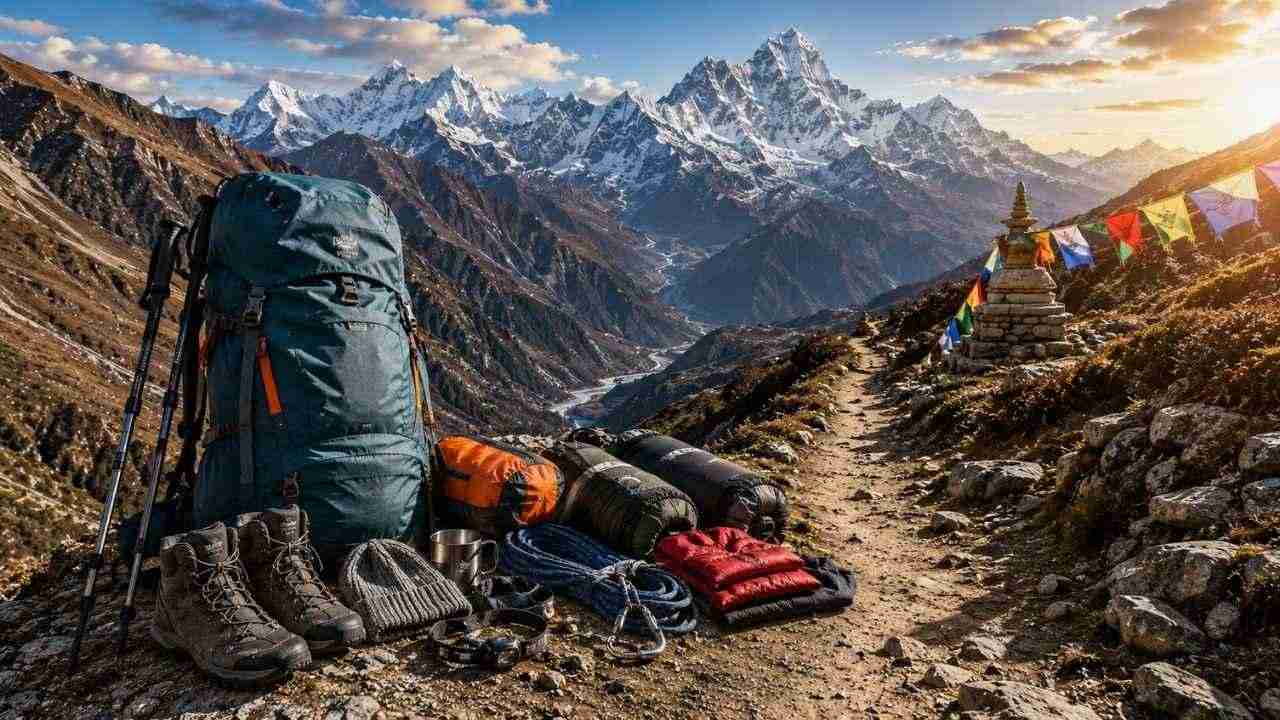
What to pack for Nepal trekking and peak climbing depends on the route, altitude, season and type of trip. A week on a lower-altitude trail does not require the same gear as a trek to Everest Base Camp or a climb above 6,000 metres.
I have worked in the Nepal Himalayas for more than 30 years, first as a porter and later as a government-licensed trekking guide. Over the years, I have seen what trekkers use, what stays at the bottom of the duffel, and what people wish they had brought when the weather turns cold.
The biggest mistake I see is not always forgetting something. It is bringing too much.
For a normal teahouse trek, you can keep your luggage fairly simple. Peak climbing is different because snow, ice, cold temperatures and technical sections require specialist equipment.
This packing list covers both, with the technical equipment separated from the standard trekking kit.
Nepal Trekking Packing List
For a standard teahouse trek, organize your luggage around these areas:
- Clothing
- Footwear
- Sleeping gear
- Daypack
- Water
- Personal and medical items
- Electronics and documents
You do not need a separate outfit for every day. A small wardrobe is easier to carry and manage.
Clothing for Nepal Trekking
Base Layers
Take one or two moisture-wicking base-layer tops and thermal bottoms for colder sections of the trek.
Avoid relying only on cotton. Once cotton becomes wet from sweat or rain, it dries slowly and can leave you cold.
Trekking Shirts
Two or three lightweight shirts are enough for most multi-day treks.
There is no need to pack a fresh shirt for every walking day.
Fleece or Mid-Layer
A fleece or similar mid-layer works well over a base layer when mornings and evenings are cold.
It also gives you another layer to add when temperatures drop during the day.
Down or Insulated Jacket
For high-altitude routes, carry a warm insulated jacket.
You may not wear it while walking at lower elevations, but it becomes valuable during early starts, rest stops and cold evenings at higher villages.
For a trek reaching around 5,000 metres, I would not leave a proper warm jacket behind simply to reduce luggage.
Waterproof Jacket
A waterproof shell protects your other layers from rain, snow and wind.
Choose one that fits comfortably over your base and mid-layers.
Waterproof Trousers
These are particularly useful during rainy periods and on routes where snow or wet conditions are possible.
Trekking Trousers
Two pairs are generally enough.
Choose comfortable trousers that allow you to move freely rather than bringing several different styles.
Underwear
Pack enough for the length of the trek without filling your bag with unnecessary extras. Quick-drying underwear is convenient because washing and drying clothes becomes harder higher up.
Footwear
Trekking Boots
Your boots deserve more attention than almost any other item in your bag.
They should fit properly, provide enough support for the terrain and be broken in before you arrive in the mountains.
Do not buy new boots in Kathmandu the day before departure and expect them to be comfortable immediately.
Blisters and pressure points become much harder to deal with after several consecutive walking days.
Trekking Socks
Bring several pairs of wool or synthetic hiking socks.
Keep at least one dry pair available for the next walking day.
Camp Shoes
A lightweight pair of sandals or trainers is useful after you finish walking.
Your feet will appreciate changing out of trekking boots at the lodge.
Head, Hands and Sun Protection
Pack:
- Warm hat
- Sun hat
- Lightweight gloves
- Warmer gloves for higher elevations
- Sunglasses
- Neck gaiter or buff
- Sunscreen
- Lip balm with sun protection
At higher elevations, sunlight can be intense even when the air feels cold.
Sleeping Bag
For high-altitude trekking, take a sleeping bag suitable for the lowest temperatures expected on your route.
For many high-altitude Nepal treks, a bag rated around -10°C to -20°C can be appropriate, depending on the season, route and accommodation.
If your trekking company supplies one, check its temperature rating before deciding whether you need your own.
A sleeping bag liner is optional but can add warmth and helps keep the inside of the bag clean.
Backpack and Duffel Bag
If you have porter support, use two bags for different purposes.
Daypack
Your daypack should contain only what you may need while walking:
- Water
- Snacks
- Extra layer
- Rain protection
- Sunscreen
- Sunglasses
- Camera or phone
- Personal medication
- Small personal items
Keep it comfortable and avoid filling it just because there is spare space.
Duffel Bag
The larger duffel holds your clothing, sleeping bag, toiletries and items you do not need during the day.
Use waterproof bags or packing cubes inside the duffel to keep clothing organized and protected.
Check your trekking company’s luggage allowance before packing.
Water and Water Treatment
Carry reusable water bottles or a hydration bladder.
On longer treks, you may refill at lodges or designated water points. If you plan to use untreated water, carry a method of making it safe to drink.
Options include:
- Water purification tablets
- Water filters
- UV purification devices
I also like having a backup method in case one system fails.
Trekking Poles
Poles are particularly helpful on steep descents, loose ground and uneven stone trails.
You do not need expensive poles. A comfortable, adjustable pair that suits your height is enough.
If you do not normally use poles, practise with them before the trek.
Headlamp
Bring a reliable headlamp and spare batteries, or make sure your rechargeable model is fully charged.
It is useful for early departures, moving around the lodge at night and dealing with power cuts.
For peak climbing, a dependable headlamp is essential because summit starts often begin before sunrise.
Personal Medical Kit
Your personal medical kit should contain medicines and supplies you normally use.
Depending on your circumstances, this may include:
- Prescription medication
- Basic pain relief
- Blister treatment
- Plasters
- Small first-aid supplies
- Oral rehydration supplies
- Any altitude medication prescribed for you
Keep prescription medicines in your daypack rather than in the luggage carried by a porter.
If you are considering medication for altitude illness, discuss it with a qualified medical professional before travelling.
Toiletries
Keep this bag small.
Bring:
- Toothbrush and toothpaste
- Small soap
- Hand sanitizer
- Quick-drying towel
- Toilet paper or tissues
- Wet wipes
- Sunscreen
- Lip balm
- Small moisturizer if needed
There is no reason to carry full-size bottles.
Electronics
Depending on what you use:
- Phone
- Camera
- Charging cables
- Power bank
- Universal travel adapter
- Spare batteries
Charging availability becomes less predictable as you move higher and into more remote areas, so a power bank is worth carrying.
Documents and Money
Keep your important documents dry and accessible.
Carry:
- Passport
- Travel insurance information
- Required permits or documentation
- Emergency contact details
- Nepalese rupees
- Copies or secure digital backups of important documents
Keep your passport, money and essential documents with you rather than in the porter bag.
Snacks
Food is available along the major trekking routes, so you do not need to carry a large supply.
A few personal snacks can be handy during long walking days:
- Nuts
- Chocolate
- Energy bars
- Dried fruit
- Biscuits
If you have specific dietary requirements, bring additional food that you know you can eat.
What I See Trekkers Overpacking
After years of checking luggage before departures, I see the same unnecessary items again and again.
People often bring:
- Too many shirts
- Too many trousers
- Several pairs of shoes
- Large toiletry bags
- Full-size bottles
- More casual clothes than they will wear
- Large quantities of snacks
You do not need a suitcase full of clothes for a teahouse trek.
Pack for the conditions, not for every possible situation.
Nepal Peak Climbing Packing List
Peak climbing requires a different approach.
If you are climbing Mera Peak, Island Peak, Lobuche East or another Himalayan peak, your standard trekking kit forms the base, but you also need equipment for snow, ice, cold and technical sections.
The exact list depends on the mountain and route.
Some operators provide technical equipment, so check what is included before buying or carrying duplicate items.
Mountaineering Boots
A suitable pair of mountaineering boots is required for high-altitude peak climbing.
They must fit correctly and work with the crampons you will use.
Do not wait until the expedition to discover that your boots cause pressure or discomfort.
Crampons
Crampons provide traction on snow and ice.
Learn how to fit and adjust them before reaching the mountain.
I have seen climbers struggle with equipment simply because they had never put it on while wearing their actual mountaineering boots.
Ice Axe
An ice axe may be required depending on the route and current conditions.
It is a technical tool, not simply another piece of equipment to attach to your backpack.
You should know how to carry and use it before entering terrain where it is needed.
Mountaineering Helmet
A properly fitted helmet is required on routes where there is exposure to falling ice, rock or other climbing hazards.
Harness and Carabiners
A climbing harness and appropriate connectors may be required when using fixed ropes.
Your climbing guide should explain the system and check that the equipment is fitted correctly before you enter the technical section.
Ascender and Rope Equipment
Some peak routes use fixed ropes and require an ascender or other rope equipment.
The exact setup depends on the climbing route and expedition system.
Follow the equipment list supplied by your climbing operator rather than buying a generic collection of hardware.
Climbing Gloves and Mittens
Take gloves suited to different conditions.
A useful system can include:
- Thin liner gloves
- Insulated climbing gloves
- Warm mittens for very cold conditions
A spare dry pair can be valuable if your gloves become wet.
Mountaineering Goggles
Good goggles can protect your eyes from wind, blowing snow and intense cold.
They become particularly useful in poor weather and on exposed sections.
Face Protection
A buff, balaclava or similar covering can protect your face from cold wind and sun.
Summit-Day Clothing
Summit day requires more protection than an ordinary trekking day.
A layering system may include:
- Base layer
- Warm mid-layer
- Insulated jacket
- Windproof or waterproof outer layer
- Thermal lower layer
- Insulated trousers when required
- Warm gloves or mittens
- Hat or balaclava
The amount of insulation needed depends on the mountain, season, weather and summit elevation.
Trekking and Peak Climbing: What Is Different?
| Equipment |
Trekking |
Peak climbing |
| Trekking boots |
Yes |
No, suitable mountaineering boots required |
| Insulated jacket |
High-altitude routes |
Yes |
| Sleeping bag |
Yes |
Yes |
| Trekking poles |
Useful |
Useful on approach |
| Headlamp |
Yes |
Essential |
| Helmet |
Usually not required |
Route dependent |
| Harness |
No |
Route dependent |
| Crampons |
Usually not required |
Route dependent |
| Ice axe |
No |
Route dependent |
| Mountaineering boots |
No |
Required |
| Goggles |
Usually not needed |
Recommended for high-altitude climbing |
| Ascender |
No |
Route dependent |
This table is a guide, not a substitute for the equipment list for your particular peak.
Packing for Different Seasons
Your equipment should change with the season as well as the altitude.
Spring: March to May
Spring days can be relatively warm at lower elevations while nights remain cold higher up.
Light layers work well because you can add or remove clothing during the day.
For climbing peaks, snow and ice conditions should be checked for the actual climbing period.
Monsoon: June to August
Rain becomes a major consideration on many trekking routes.
A waterproof jacket, rain trousers, pack protection and dry storage become more valuable.
Conditions are not the same throughout Nepal. Some Himalayan areas receive much less monsoon rain because they lie in rain-shadow regions.
Autumn: September to November
Autumn is a popular trekking season.
Lower elevations can still be comfortable during the day, while temperatures drop considerably after sunset as you gain altitude.
By late autumn, warmer sleeping gear and insulation become increasingly important.
Winter: December to February
Winter brings colder temperatures, snow on some routes and shorter daylight hours.
For higher-altitude trekking, pack accordingly rather than assuming conditions will be the same as during autumn.
Winter peak climbing requires careful attention to the specific mountain, forecast and climbing conditions.
How Heavy Should Your Luggage Be?
There is no single weight that suits every trek.
A trekker travelling with a porter can place most equipment in a duffel and keep the daypack light.
Your daypack should contain the things you may need during the day’s walk, not your entire wardrobe.
For peak climbing, technical equipment naturally increases the load.
This is where careful packing matters. Remove duplicate items and things that are unlikely to be used, but do not leave out equipment required for safety or for the route.
If your trekking company has a porter weight limit, follow that limit rather than trying to squeeze everything into the bag.
How I Organize a Trekker’s Bag
I prefer to organize luggage so that the things needed most often are easy to reach.
Keep:
During the day: rain jacket, warm layer, water, snacks, sunscreen and personal items in the daypack.
At the lodge: spare clothes, sleeping gear and toiletries in the duffel.
For emergencies: medication, documents and essential valuables with you.
Use separate waterproof bags for clothing and electronics.
Even if your duffel has a waterproof cover, an extra layer of protection inside is worthwhile during wet weather.
What I Check Before a Trek Starts
Before leaving Kathmandu, I would rather discover a problem with someone’s equipment there than several days into the mountains.
I pay particular attention to:
- Boots
- Daypack fit
- Warm jacket
- Sleeping bag
- Rain protection
- Headlamp
- Personal medication
- Water system
For peak climbing, I also want to know that the climber is comfortable with the technical equipment before we reach the higher section.
A piece of equipment is only useful if you know how to use it.
What You Can Buy or Rent in Kathmandu
You do not have to bring every item from home.
Kathmandu has trekking shops where travellers can buy or rent various items.
However, I would be more careful with items that depend heavily on personal fit.
I prefer trekkers to arrive with properly fitted boots and any personal equipment they already know works for them.
For technical climbing gear, confirm quality, fit and suitability rather than choosing equipment simply because it is available.
My Advice on Packing
After more than 30 years in the mountains, I have found that the best packing list is not the longest one.
For trekking, carry enough clothing to stay warm and dry, comfortable boots, a suitable sleeping bag and the personal items you genuinely need.
For peak climbing, add the technical equipment required by the mountain and make sure you have practised with it before the climb.
Pack for the highest and coldest part of your itinerary, but do not carry equipment you have no reason to use.
That balance makes the journey easier from the first walking day to the final descent.
Nepal Trekking & Peak Climbing Packing Checklist
Clothing
- Base-layer tops
- Thermal bottoms
- Trekking shirts
- Fleece or mid-layer
- Insulated jacket
- Waterproof jacket
- Trekking trousers
- Waterproof trousers
- Underwear
- Warm hat
- Sun hat
- Gloves
- Neck gaiter
Footwear
- Broken-in trekking boots
- Trekking socks
- Camp shoes
Sleeping
- Suitable sleeping bag
- Sleeping bag liner if desired
Trekking Equipment
- Daypack
- Duffel bag
- Water bottles or hydration bladder
- Water treatment
- Trekking poles
- Headlamp
- Spare batteries or charging method
Personal Items
- Prescription medication
- Basic first-aid supplies
- Toiletries
- Sunscreen
- Sunglasses
- Quick-drying towel
Documents and Electronics
- Passport
- Insurance details
- Permits or required documents
- Money
- Phone
- Charging cables
- Power bank
- Camera if required
Peak Climbing
- Mountaineering boots
- Crampons
- Ice axe
- Helmet
- Harness
- Carabiners
- Ascender
- Climbing rope equipment as required
- Mountaineering goggles
- Warm climbing gloves
- Mittens
- Face protection
Always confirm the technical equipment list with your climbing operator before departure. Requirements differ between peaks and routes.
Frequently Asked Questions
What should I pack for trekking in Nepal?
Bring layered clothing, broken-in trekking boots, suitable socks, a warm jacket, waterproof protection, sleeping gear, a daypack, water bottles, headlamp, personal medication, toiletries, documents and basic trekking equipment.
How many clothes should I take for a Nepal trek?
For most teahouse treks, two or three trekking shirts and two pairs of trekking trousers are enough. Layering is more useful than carrying many separate outfits.
Do I need a sleeping bag for Nepal trekking?
For higher-altitude treks, a suitable sleeping bag is recommended. If your trekking company provides one, check its temperature rating before deciding whether to bring your own.
Do I need crampons for Nepal trekking?
Most standard teahouse treks do not require technical crampons. Peak climbing and routes with significant snow or ice may require them.
What equipment do I need for Mera Peak?
Mera Peak requires standard trekking equipment plus mountaineering equipment appropriate to the route and conditions. This may include mountaineering boots, crampons, helmet, harness, ice axe and rope equipment.
What equipment do I need for Island Peak?
Island Peak requires trekking gear plus technical climbing equipment appropriate to the route. Confirm the exact list with your climbing operator because equipment requirements can change with route and conditions.
Can I rent trekking equipment in Kathmandu?
Yes. Various trekking and climbing items can be bought or rented in Kathmandu. For personal-fit items such as boots, however, I prefer trekkers to use equipment they have already tested.
Can I buy trekking clothes in Nepal?
Yes. Kathmandu has many shops selling trekking clothing and equipment. Buying locally can be useful if you forget something or discover that you need an additional item.
How much luggage can I take on a Nepal trek?
Your allowance depends on the trekking company, porter arrangement and domestic flight rules. Check the exact allowance before departure.
Do I need different equipment for winter trekking?
Yes. Winter trekking can require additional insulation and protection from snow and freezing temperatures, particularly at higher elevations.
What is the most important item for Nepal trekking?
There is no single item that replaces everything else, but properly fitted footwear, suitable clothing layers and adequate protection from cold and wet weather should be priorities.
Should I pack differently for Everest Base Camp?
Yes. Everest Base Camp reaches high altitude, so your packing needs to account for cold nights and changing temperatures. A suitable warm jacket, sleeping bag, layers, gloves and sun protection become increasingly important as you gain elevation.
Do I need technical climbing equipment for Everest Base Camp?
No. The standard Everest Base Camp trek does not require technical mountaineering equipment such as crampons, harnesses or ice axes.