Travel Guide
Everest Base Camp Trek Packing List: The Complete Gear Guide
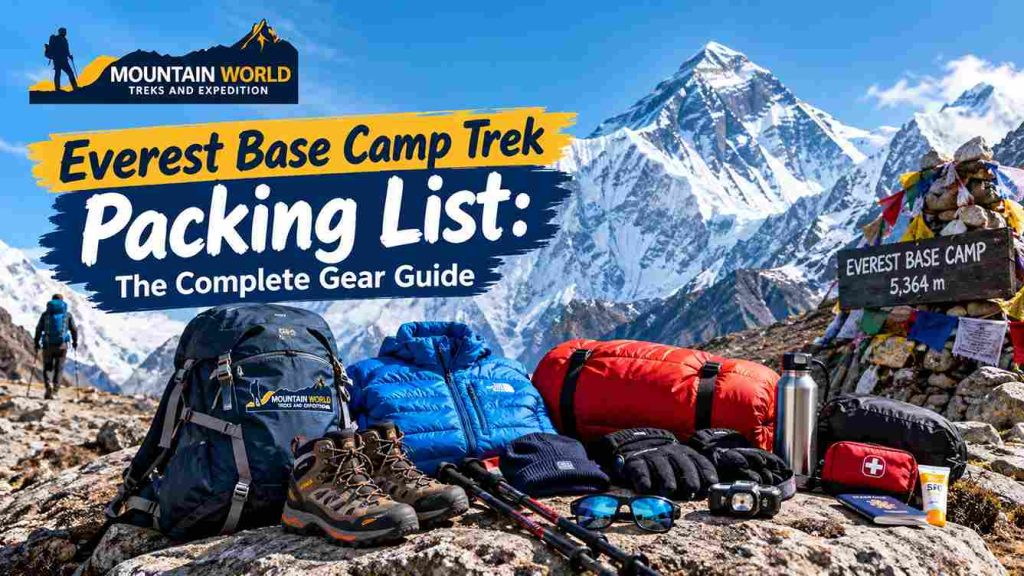
For the Everest Base Camp Trek, you need a reliable layering system, broken-in trekking boots, warm insulation, waterproof protection, a suitable sleeping…
S
Saligram
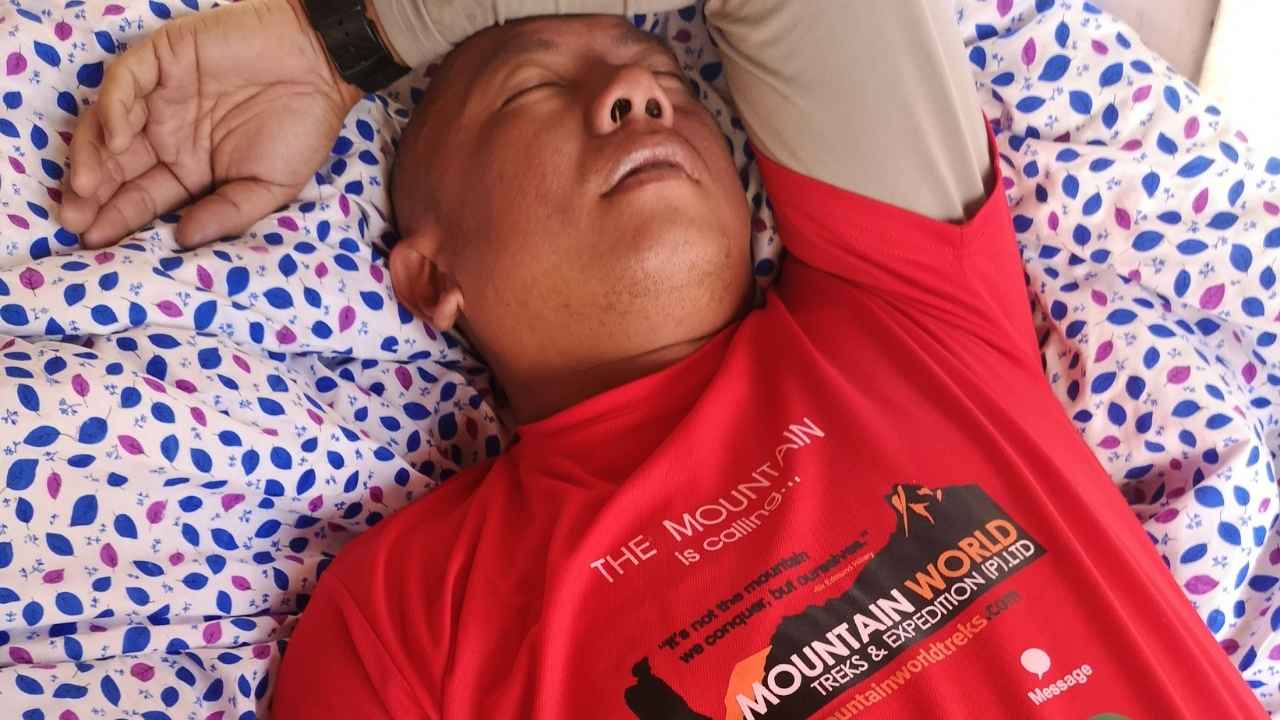
Planning the Everest Base Camp trek? Learn the causes and symptoms of altitude sickness, how to prevent AMS, and what to do if it strikes on the EBC trail.
Altitude sickness is one of the main health concerns on the Everest Base Camp trek. The route rises from Lukla at about 2,860 metres to Everest Base Camp at 5,364 metres and Kala Patthar at approximately 5,545 metres. Anyone can develop altitude illness regardless of age, fitness, or previous trekking experience.
The most effective ways to reduce the risk are gradual ascent, proper acclimatization, sensible pacing, adequate food and fluids, and reporting symptoms early.
There is one thing every trekker should understand before entering the Khumbu: do not try to prove that you are stronger than the altitude.
Fitness helps you handle long walking days, steep climbs, and rough trails. It does not make you immune to reduced oxygen at high elevations.
A very fit runner or experienced mountaineer can still develop acute mountain sickness, commonly called AMS. Someone with less trekking experience may acclimatize well by ascending slowly, resting properly, eating enough, and following a sensible itinerary.
The Everest Base Camp trek is not technically difficult in the mountaineering sense. The standard route does not require ropes or previous climbing experience.
The challenge comes from spending several days walking and sleeping at increasingly high elevations.
At altitude, ordinary things become harder. A short uphill section can leave you breathing heavily. Sleep may become disturbed. Appetite can decrease, and recovery after a long walking day takes longer.
Some of these changes are normal parts of acclimatization. The important skill is recognizing when they are becoming signs of altitude illness.
This guide explains what altitude sickness on Everest Base Camp trek is, when it can occur on the EBC route, the symptoms to watch for, how acclimatization works, how to reduce your risk, and what to do if symptoms become serious.
If you are currently trekking and experiencing serious symptoms, do not rely on this article for treatment. Tell your guide immediately and seek appropriate medical assistance.
Altitude sickness occurs when the body has not adapted adequately to the reduced oxygen available at higher elevations. The risk becomes relevant from around 2,500 metres and increases with elevation and rapid ascent.
The percentage of oxygen in the atmosphere remains roughly the same at altitude. What changes is atmospheric pressure. As atmospheric pressure decreases, each breath provides less available oxygen.
Your body responds by breathing more and making other physiological adjustments that help it function in thinner air. This process is known as acclimatization.
Altitude illness can develop when you ascend faster than your body can adapt.
That is why fitness and acclimatization are different things. You can be an experienced runner, cyclist, or mountaineer and still develop AMS.
Previous Himalayan experience may help you understand pacing and mountain conditions, but it does not guarantee protection on your next trip.
The EBC route gradually takes you from Lukla through Namche Bazaar, Dingboche, Lobuche, and Gorak Shep before reaching Everest Base Camp.
Because sleeping elevations become progressively higher, the itinerary and acclimatization days are an important part of altitude management.
Altitude illness can occur from around 2,500 metres, although the risk becomes more significant as you climb higher and ascend quickly.
Trekkers should pay particular attention to symptoms from Namche Bazaar onward.
Lukla sits at approximately 2,860 metres, so the trek begins at an elevation where altitude can already affect some people.
For many trekkers, the first noticeable change comes during or after the climb toward Namche Bazaar. A section of trail that would normally feel easy at home can suddenly leave you breathing heavily.
The effect becomes more obvious as the trail climbs toward Dingboche, Lobuche, Gorak Shep, and Everest Base Camp.
| Location | Approximate elevation |
| Lukla | 2,860 m |
| Namche Bazaar | 3,440 m |
| Dingboche | 4,410 m |
| Lobuche | 4,910 m |
| Gorak Shep | 5,164 m |
| Everest Base Camp | 5,364 m |
| Kala Patthar | 5,545 m |
Walking slowly at these elevations is completely normal.
The more important question is whether your body is adapting normally or whether symptoms are developing that require attention.
Common AMS symptoms include headache, fatigue, dizziness, loss of appetite, nausea, vomiting, and feeling generally unwell.
Symptoms developing after gaining altitude should be reported rather than ignored.
AMS can begin gradually.
You may wake up with a headache and assume you slept badly. Unusual tiredness may seem like the result of the previous day’s walking.
Sometimes those explanations are correct. Sometimes they are early signs of altitude illness.
Common symptoms include:
The overall pattern matters more than one symptom by itself.
A headache can have many causes during a trek, including dehydration, sun exposure, poor sleep, cold temperatures, or physical exertion. It can also be associated with AMS.
Rather than trying to diagnose yourself, tell your guide what you are experiencing.
Early reporting gives your guide more options when deciding whether you should rest, remain at the same elevation, continue, or descend.
A headache at altitude does not automatically mean you have AMS.
However, a headache that develops after gaining elevation, particularly when accompanied by nausea, dizziness, fatigue, or feeling unwell, deserves attention.
Headache is an important symptom when assessing AMS, but it is not specific to altitude. Dehydration, sunlight, poor sleep, cold weather, and exertion can also cause headaches.
A mild headache may improve after rest and stopping further ascent. A worsening headache or one accompanied by additional symptoms requires greater attention.
If you are unsure, tell your guide instead of trying to make the diagnosis yourself.
AMS is the most common form of altitude illness. HAPE and HACE are more serious conditions that can become life-threatening and require urgent descent and medical attention.
AMS is the most common altitude illness.
It generally develops after gaining altitude and commonly involves headache together with symptoms such as nausea, fatigue, dizziness, or loss of appetite.
HAPE occurs when fluid accumulates in the lungs. It can progress rapidly and become life-threatening. Serious breathing difficulty at altitude requires urgent action.
HACE is a severe neurological form of altitude illness involving brain dysfunction. Confusion, severe loss of coordination, and reduced consciousness are major warning signs.
You do not need to become an altitude medicine expert before trekking to Everest Base Camp.
You do need to recognize when symptoms have moved beyond ordinary tiredness or mild altitude discomfort.
Breathlessness at rest, worsening breathing difficulty, persistent cough, weakness, and a significant decline in physical ability can indicate HAPE and require urgent descent and medical attention.
Being short of breath while walking uphill at 5,000 metres is expected.
Being seriously short of breath while sitting still is not.
Possible warning signs include:
If HAPE is suspected, do not wait until the next morning to see whether the person improves.
Descent is a priority.
Oxygen and other medical treatment may also be required depending on the circumstances and available medical support.
Serious altitude illness requires appropriate medical assessment rather than simply waiting for symptoms to disappear.
Confusion, severe coordination problems, difficulty walking normally, unusual behavior, extreme drowsiness, or reduced consciousness can indicate HACE and require immediate descent and medical attention.
HACE is rare but can deteriorate quickly.
One particularly important warning sign is loss of coordination, medically known as ataxia.
A tired trekker may walk slowly, but someone experiencing serious neurological symptoms may struggle to walk normally or maintain balance.
Other warning signs include:
A person showing these symptoms should not remain at the same elevation waiting for improvement.
Immediate descent and medical attention are required.
Acclimatization gives your body time to adapt to reduced oxygen before you continue to higher elevations.
Planned acclimatization at places such as Namche Bazaar and Dingboche is a central part of a sensible EBC itinerary.
When choosing an Everest Base Camp itinerary, trekkers often focus on walking distance and daily hours.
At high altitude, sleeping elevation matters particularly because the body spends many hours adapting while you sleep.
Namche Bazaar is a major acclimatization stop, followed by Dingboche on many standard itineraries.
An acclimatization day may involve hiking to a higher elevation during the day and returning to the same village to sleep. This is commonly described as “climb high, sleep low.”
The exact acclimatization hike depends on weather, trail conditions, group ability, and your guide’s assessment.
The principle is straightforward: give your body enough time to adjust before asking it to sleep higher.
If you want to see where you sleep each night and how acclimatization fits into the route, the Everest Base Camp Trek Itinerary provides the complete day-by-day schedule, elevations, and rest days.
Gradual ascent and adequate acclimatization are the most important ways to reduce the risk of altitude illness.
Sensible pacing, regular meals, appropriate hydration, avoiding alcohol while acclimatizing, and reporting symptoms early also help.
There is no method that guarantees you will avoid altitude sickness. Risk can be reduced by making the ascent as gradual as practical.
Avoid unnecessarily fast itineraries. Once you are above 3,000 metres, established altitude-medicine guidance recommends limiting increases in sleeping elevation and incorporating regular rest days.
Rest days at Namche Bazaar and Dingboche are not wasted time.
They give your body additional time to adapt before you sleep at a higher elevation.
A slow, consistent pace is more appropriate at high altitude than trying to keep up with the fastest person in the group.
Long walking days require energy. Reduced appetite is common at altitude, but your body’s energy demands do not disappear.
Hydration supports normal body function, but forcing excessive amounts of water does not prevent AMS.
Alcohol can interfere with sleep and make it harder to judge changes in how you feel.
The CDC also advises avoiding alcohol during the early period after arriving at higher elevations.
Do not wait until symptoms become severe before telling your guide.
Proper hydration is important, but drinking excessive amounts of water does not prevent altitude sickness.
The Khumbu is cold and dry, while long walking days increase fluid loss through breathing and physical activity.
Drink regularly and replace fluids lost during the day.
There is no fixed number of litres that guarantees protection from AMS. Forced or excessive hydration should not be treated as an altitude-sickness prevention strategy.
Good hydration is part of sensible trekking. It does not replace gradual ascent and acclimatization.
Regular meals containing carbohydrates, protein, and enough calories can help support long walking days. Smaller meals and snacks may be easier when appetite decreases.
Many trekkers notice reduced appetite at Dingboche, Lobuche, and higher elevations.
Common teahouse meals such as dal bhat, rice, potatoes, noodles, pasta, soup, eggs, and porridge can provide practical fuel during the trek.
If you repeatedly vomit or cannot eat properly, tell your guide. That situation deserves more attention than simply having a smaller appetite than usual.
Altitude affects more than your breathing.
Sleep disturbance is common as elevation increases. You may wake repeatedly during the night or feel as though you never reached deep sleep.
Cold rooms, physical fatigue, unfamiliar surroundings, and altitude can all contribute. Poor sleep by itself does not necessarily mean you have AMS.
However, sleep problems combined with headache, nausea, dizziness, unusual weakness, or a noticeable decline in your condition should be reported.
Alcohol is best avoided while acclimatizing, particularly at higher elevations. It can interfere with sleep and make it harder to judge changes in your condition.
At high altitude, your body is already dealing with reduced oxygen, physical exertion, cold, and disrupted sleep. There is little benefit to adding alcohol to that combination.
Acetazolamide, commonly known as Diamox, has an established role in preventing AMS for some travelers, but it is not suitable for everyone.
Discuss it with a doctor familiar with altitude medicine before your trek.
Acetazolamide is included in current Wilderness Medical Society guidance as a medication for AMS prevention.
It can be particularly useful when gradual ascent is difficult or when a traveler has a higher risk profile. Medication does not replace acclimatization.
Taking Diamox does not make a rushed itinerary safe, and it does not mean you should continue climbing when symptoms are worsening.
Acetazolamide can also cause side effects and may not be appropriate for everyone.
Your doctor should advise you about whether it is suitable, when to take it, and what dose is appropriate for you.
Do not begin prescription altitude medication solely because another trekker is taking it.
No. Fitness can make the physical walking easier, but it does not make you immune to altitude sickness.
Training before EBC remains valuable.
Strong legs, cardiovascular fitness, endurance, and experience walking uphill can make long trekking days more manageable. They do not replace acclimatization.
Physical preparation and altitude adaptation solve different problems.
If you are preparing for the trek, the Everest Base Camp Trek Fitness and Training Guide explains how to build endurance, leg strength, uphill walking ability, and stamina before arriving in Nepal.
No. Previous high-altitude trekking experience can help with pacing and preparation, but it does not guarantee protection on a future trip.
Every ascent is different.
Your fitness may have changed. The ascent rate may be different. Weather and itinerary conditions can vary.
Most importantly, your body’s response to altitude can differ from one trip to another.
Previous experience is useful. It is not immunity.
A good guide monitors symptoms, observes changes in walking ability and behavior, manages the pace, and makes decisions about rest, continued ascent, or descent based on the trekker’s condition.
A high-altitude guide does more than lead the trail.
They need to notice meaningful changes in the group:
Trekkers sometimes hide symptoms because they are afraid of missing Everest Base Camp.
That makes communication especially important.
If you develop a headache, nausea, unusual weakness, dizziness, breathing difficulty, or another concerning symptom, tell your guide.
Reporting a symptom is not failing the trek. It gives the person responsible for your safety the information needed to make a better decision.
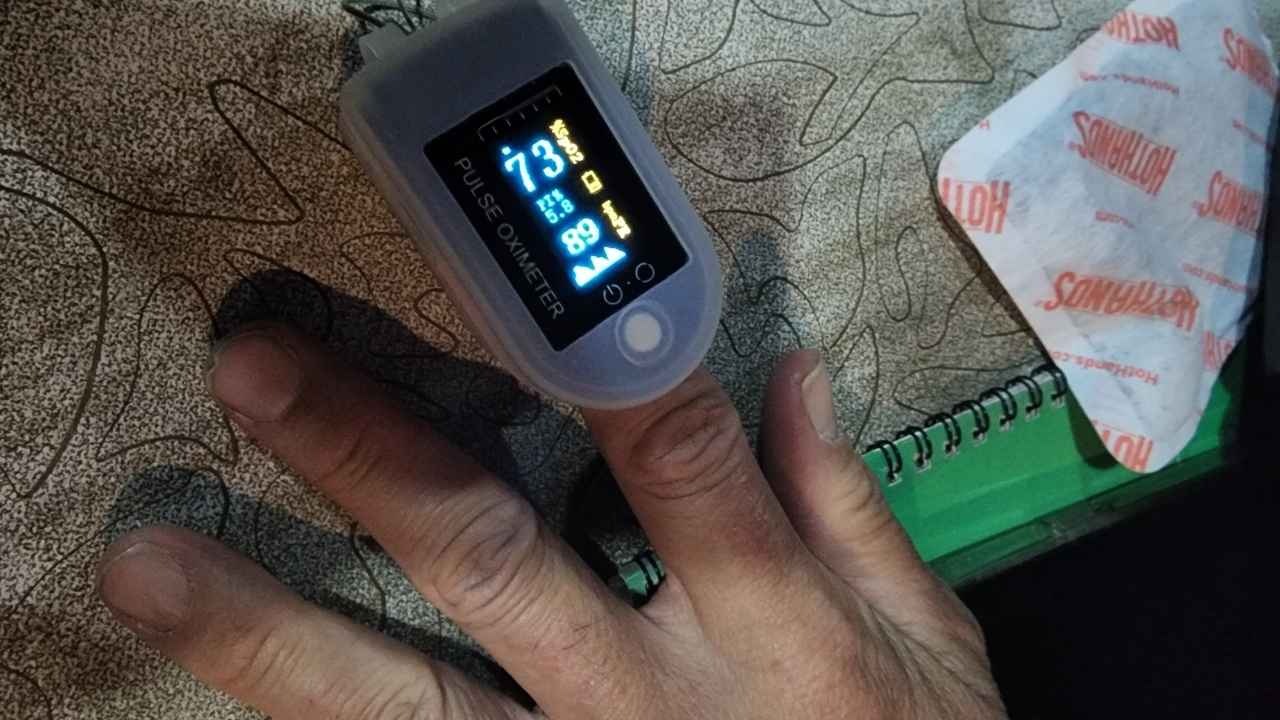
Some guides use pulse oximeters as an additional observation at higher elevations, but an oxygen-saturation reading should not be treated as a standalone diagnosis.
A pulse oximeter estimates blood oxygen saturation and pulse rate.
At altitude, readings naturally differ from sea-level values. Cold fingers, poor circulation, movement, and device limitations can also affect measurements.
A responsible assessment considers the entire situation rather than relying on one number.
Symptoms, breathing, walking ability, behavior, appetite, sleep, and changes from the previous day all provide useful information.
A pulse oximeter can provide additional information.
It should not replace clinical judgment.
Tell your guide, stop gaining altitude, rest, eat and drink appropriately, and monitor your symptoms. Do not continue to a higher sleeping elevation while symptoms are worsening.
Imagine arriving in Dingboche with a mild headache while still eating, walking normally, and feeling otherwise stable.
Your guide may recommend rest and avoiding further gain in sleeping altitude while your condition is monitored.
If the symptoms improve, the trek may continue according to the guide’s assessment.
If they worsen, the plan needs to change.
Current altitude guidance emphasizes that a person with altitude illness should not continue to higher elevations while symptomatic.
Worsening symptoms while resting are a reason to descend.
Worsening symptoms should be taken seriously. Stop ascending and, depending on the severity, descend to a lower elevation and seek medical assistance.
One of the most dangerous thoughts on EBC is:
“We have come this far.”
It often appears around Lobuche or Gorak Shep, when Base Camp feels close.
Altitude illness does not care how close you are to your destination.
If someone is becoming seriously unwell, the itinerary needs to change.
Missing Base Camp is disappointing.
Ignoring serious altitude illness can be life-threatening.
Serious altitude illness requires urgent descent and appropriate medical treatment.
Depending on the condition, a person may require supported descent, oxygen, medical care at a lower elevation, or emergency evacuation.
If HAPE or HACE is suspected, the priority is to get the person to a lower elevation and obtain medical assistance.
Descent is a central treatment for serious altitude illness. Supplemental oxygen may also be used when available and medically appropriate.
The exact response depends on the person’s condition, location, weather, communication, and available medical resources.
The Everest region is remote, particularly above the main settlements, so emergency planning should be considered before the trek begins.
Your trekking operator should have procedures for communication, medical assistance, and evacuation.
Your travel insurance should also specifically address high-altitude trekking and emergency evacuation.
Helicopter evacuation may be used for serious medical problems, but it depends on the medical situation, weather, visibility, location, aircraft availability, and operational conditions.
Helicopter evacuation in the Everest region should never be treated as an automatic service that arrives on demand.
Mountain weather can change quickly. Wind, visibility, landing conditions, aircraft availability, communication, and the patient’s condition can all affect an evacuation.
In some situations, a trekker may first need to descend on foot to a lower location while evacuation arrangements are made.
Before travelling, check that your insurance covers:
Never assume that standard travel insurance automatically covers trekking above 5,000 metres.
Our Nepal Travel Insurance Guide explains what to check before travelling, including high-altitude trekking and emergency evacuation.
The most avoidable mistakes include ascending too quickly, hiding symptoms, skipping acclimatization, comparing yourself with other trekkers, drinking alcohol while acclimatizing, and not eating enough.
Rushing the ascent
Walking faster does not make your body acclimatize faster.
Hiding symptoms
A headache, nausea, dizziness, or unusual weakness is information your guide needs.
Skipping acclimatization
Rest days are part of the altitude strategy, not wasted days.
Comparing yourself with other trekkers
Altitude affects people differently. Another trekker’s pace tells you very little about how your body is adapting.
Drinking alcohol
Alcohol can interfere with sleep and make it harder to judge how you are feeling.
Not eating
Appetite may decrease at altitude, but your body still needs energy for long walking days.
Assuming every symptom is AMS
Not every headache means altitude sickness. Not every tired day is an emergency. Report symptoms and let your guide consider the overall situation.
Altitude sickness is influenced mainly by elevation, ascent rate, acclimatization, and individual response rather than the trekking season.
Spring and autumn are the main trekking seasons in the Everest region, but clear weather does not make high altitude harmless.
Winter brings greater cold exposure, while monsoon brings different weather and trail conditions.
If you are deciding when to trek, the Best Time to Trek Everest Base Camp guide explains the seasonal differences in weather, visibility, trail conditions, and trekking experience.
Descending generally reduces altitude stress because oxygen availability increases at lower elevations, but serious symptoms still require proper monitoring and medical care.
Descent is an important response to serious altitude illness because moving lower provides greater oxygen availability.
Reaching a lower village does not automatically mean the problem is completely resolved.
Someone who has experienced serious altitude illness may still require monitoring and medical evaluation.
You do not need to be afraid of altitude sickness on the Everest Base Camp trek, but you do need to respect it.
Gradual ascent, proper acclimatization, sensible pacing, adequate food and fluids, and honest communication with your guide form the foundation of a safer trek.
The strongest approach to altitude is not trying to prove that you can push through everything.
Slow down when your body needs it. Take acclimatization days seriously. Keep eating even when your appetite drops.
Drink normally. Tell your guide when something feels wrong.
A trekker can spend months preparing for Everest Base Camp, arranging flights, buying equipment, training, and travelling halfway around the world, only to arrive in Dingboche with a headache.
The temptation may be to hide it because Base Camp is still ahead.
Do not.
If your body needs more time, give it more time. If your guide recommends staying at the same elevation, stay.
If symptoms are getting worse, descend. If there are signs of serious altitude illness, treat the situation as an emergency.
That is not giving up.
It is the correct decision in the mountains.
Altitude sickness is a real risk on the Everest Base Camp trek, but understanding the symptoms, respecting acclimatization, and knowing when to stop makes the risk easier to manage.
The goal is not to beat the altitude.
The goal is to reach Everest Base Camp safely and return home healthy.
Connect with an expert - real trek leaders in Kathmandu, free advice, no pressure.
For the Everest Base Camp Trek, you need a reliable layering system, broken-in trekking boots, warm insulation, waterproof protection, a suitable sleeping…
Saligram
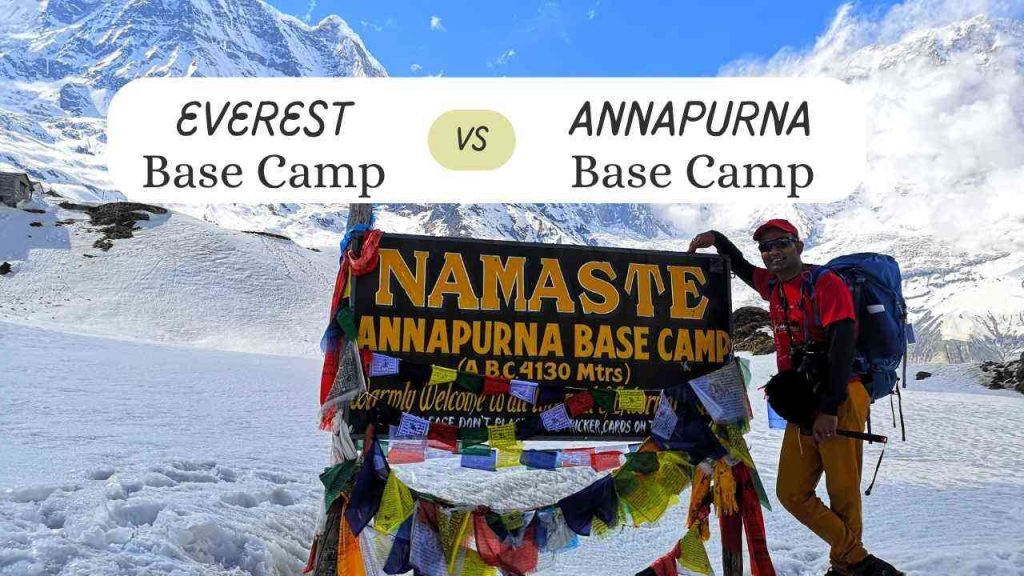
The Everest Base Camp Trek and Annapurna Base Camp Trek suit different types of trekkers. EBC takes you through the Khumbu region…
Saligram
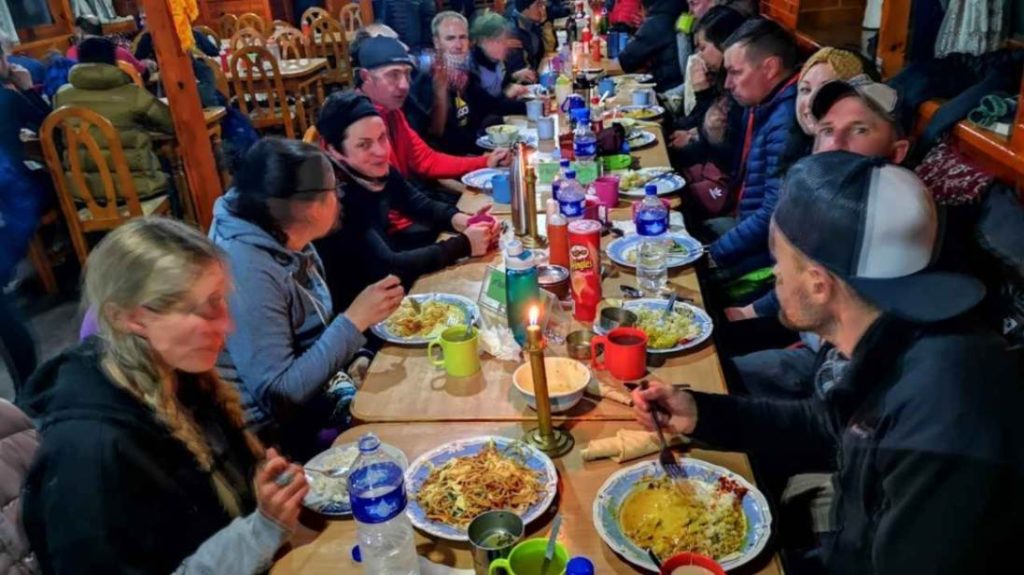
Everest Base Camp Trek food and drinks are mostly served in teahouses, with dal bhat, noodles, soup, momos, pasta, rice dishes, and…
Saligram
Here are the questions trekkers ask me most often before starting the Everest Base Camp trek, from first-timers wondering if they are fit enough to experienced hikers getting ready for the journey.
Altitude illness can occur from around 2,500 metres, although risk increases with elevation and ascent speed.
On the EBC trek, paying closer attention to symptoms becomes particularly important as you climb above Namche Bazaar.
Headache is one of the main symptoms of AMS. Fatigue, dizziness, nausea, vomiting, loss of appetite, and feeling generally unwell can also occur. Symptoms developing after gaining altitude should be reported to your guide.
Gradual ascent and proper acclimatization are the most important preventive measures.
A sensible pace, regular meals, appropriate hydration, avoiding alcohol while acclimatizing, and reporting symptoms early also help.
Yes. Fitness can make the physical demands of trekking easier, but it does not guarantee protection from altitude illness.
Acclimatization depends on how your body responds to reduced oxygen and how quickly you ascend.
Do not continue to a higher sleeping elevation while altitude symptoms are present or worsening.
Tell your guide, stop gaining altitude, and follow the appropriate medical advice. Worsening symptoms while resting require descent.
HAPE may cause severe breathlessness at rest, worsening breathing difficulty, cough, weakness, and reduced physical ability.
HACE may cause confusion, severe coordination problems, unusual behavior, extreme drowsiness, or reduced consciousness. Both require urgent descent and medical attention.
Acetazolamide, commonly known as Diamox, has an established role in AMS prevention.
Whether it is appropriate for you depends on your medical history and itinerary, so discuss it with a qualified doctor before the trek.
Yes. Everest Base Camp is approximately 5,364 meters, and Kala Patthar reaches about 5,545 metres. These elevations are high enough for altitude illness to remain a significant concern.
Your guide may arrange a lower sleeping elevation, supported descent, medical assessment, or evacuation depending on the severity of your symptoms and the situation on the trail.
Serious altitude illness requires urgent descent and medical attention.
Coverage depends on the policy. Before travelling, check that your insurance specifically covers high-altitude trekking to the maximum elevation of your itinerary, emergency medical treatment, and helicopter evacuation where applicable.
Still have questions? Our team responds within 24 hours.
Inquire Now


