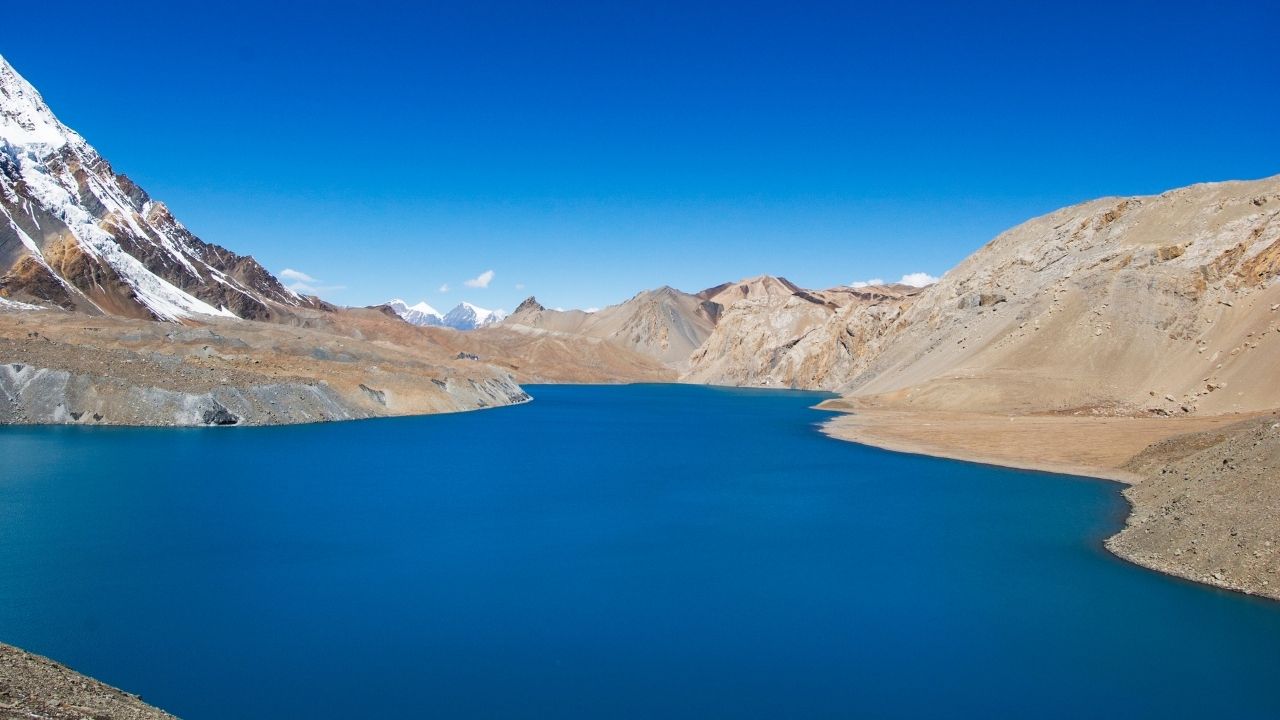
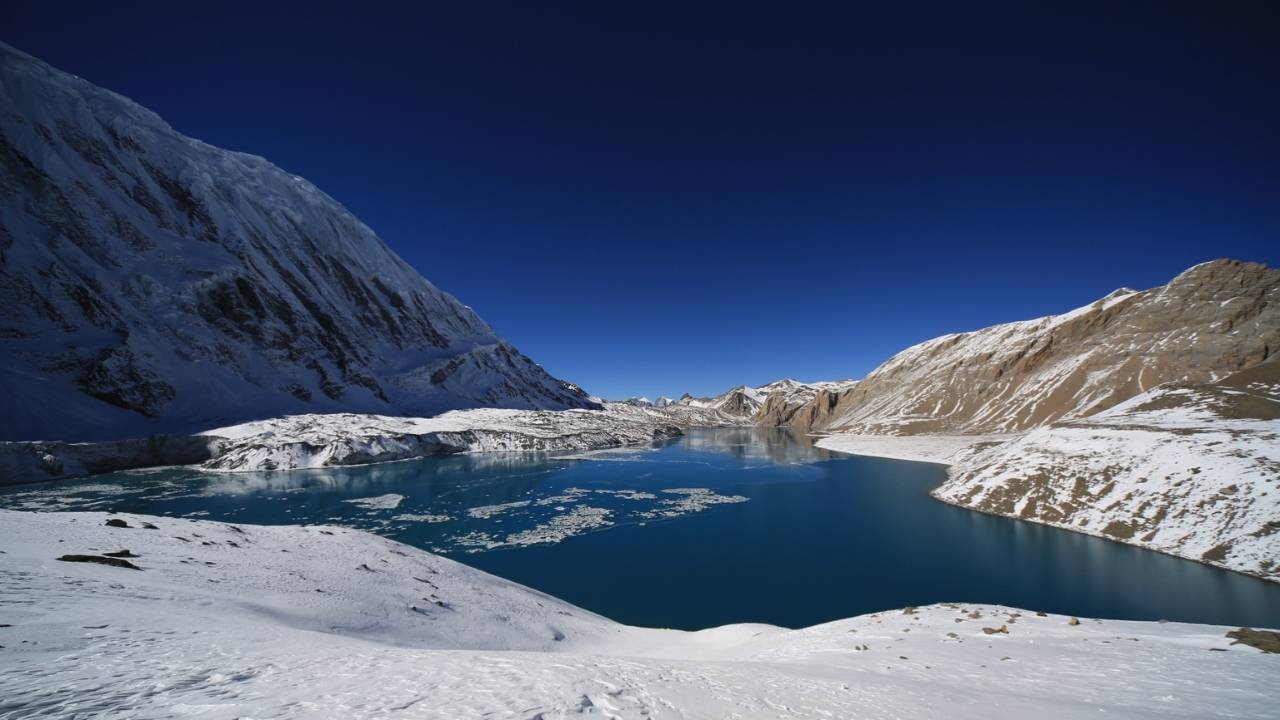
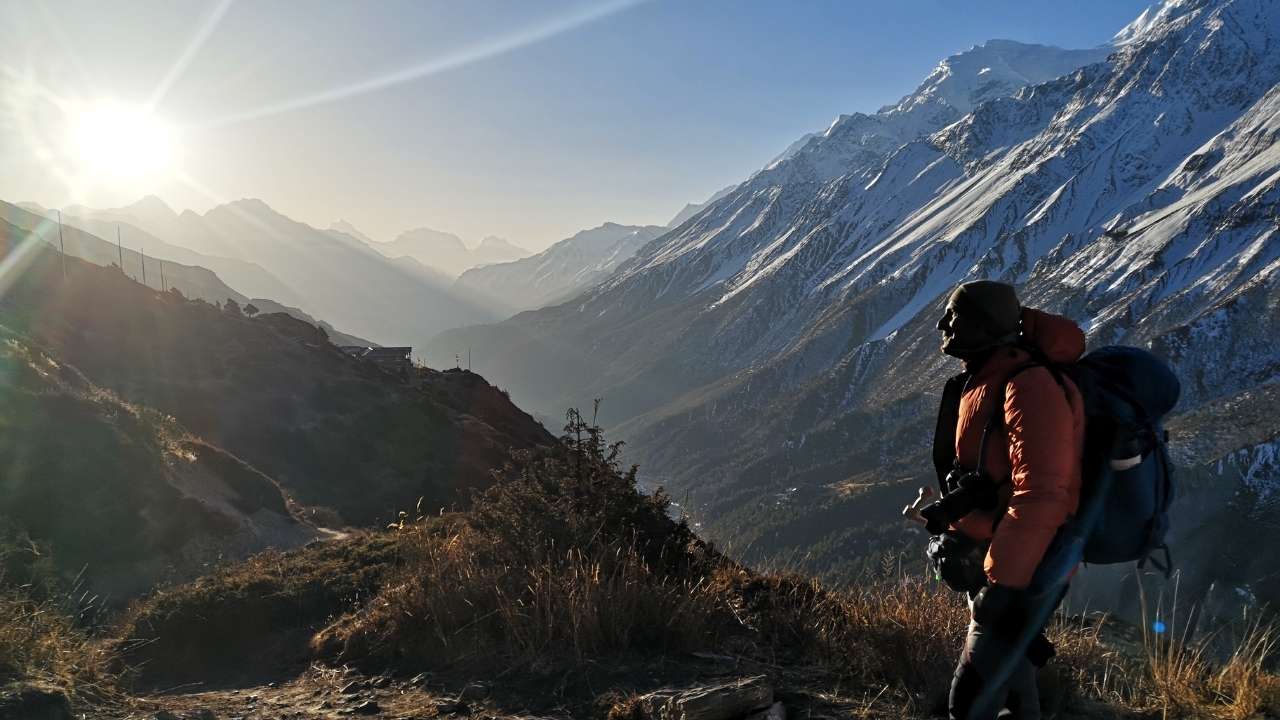
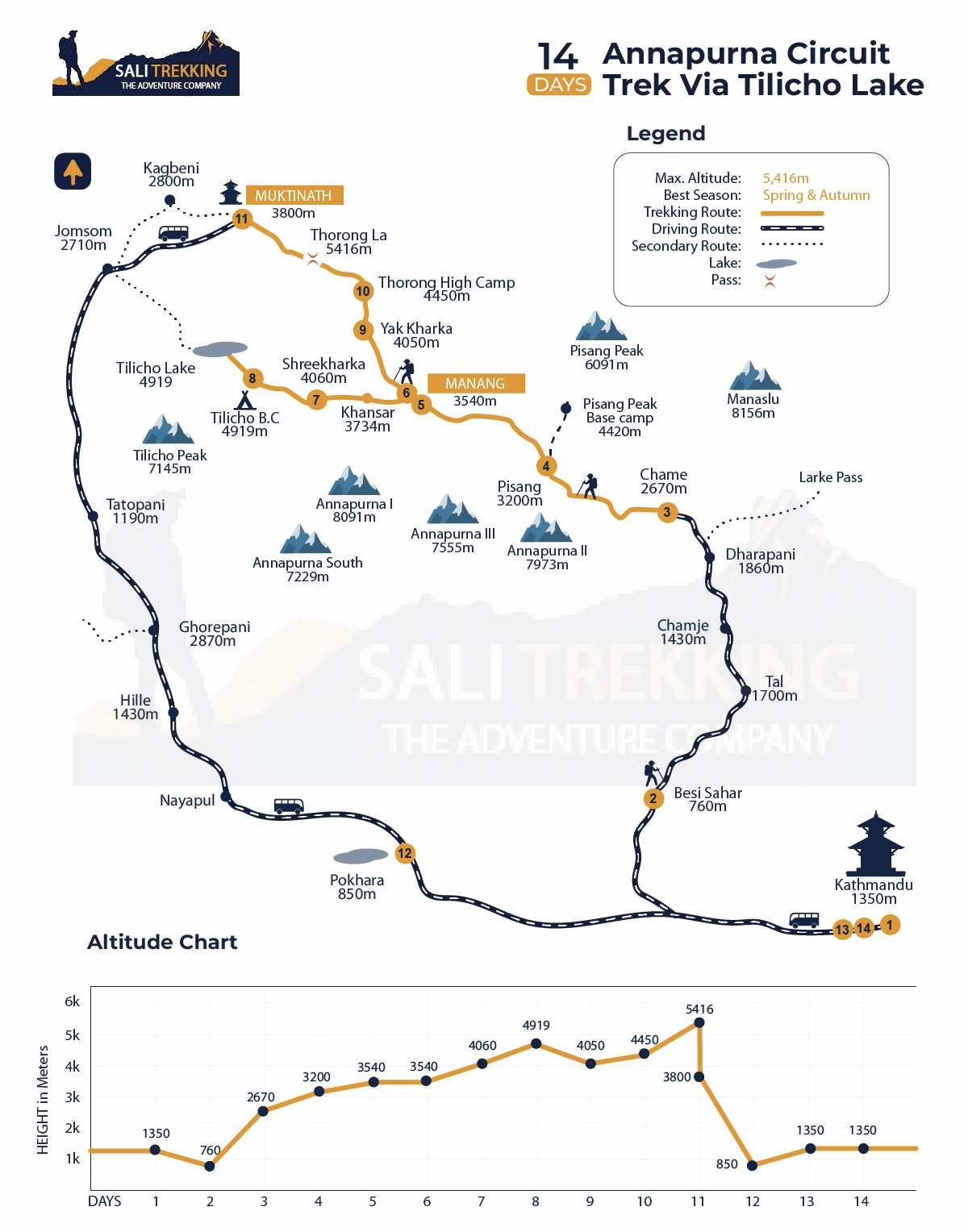
The Annapurna Circuit Trek with Tilicho Lake is a 14-day trekking route that combines the Annapurna Circuit with a visit to Tilicho Lake (4,919 m). The trail circles the Annapurna Massif and crosses Thorong La Pass (5,416 m) before descending into Mustang.
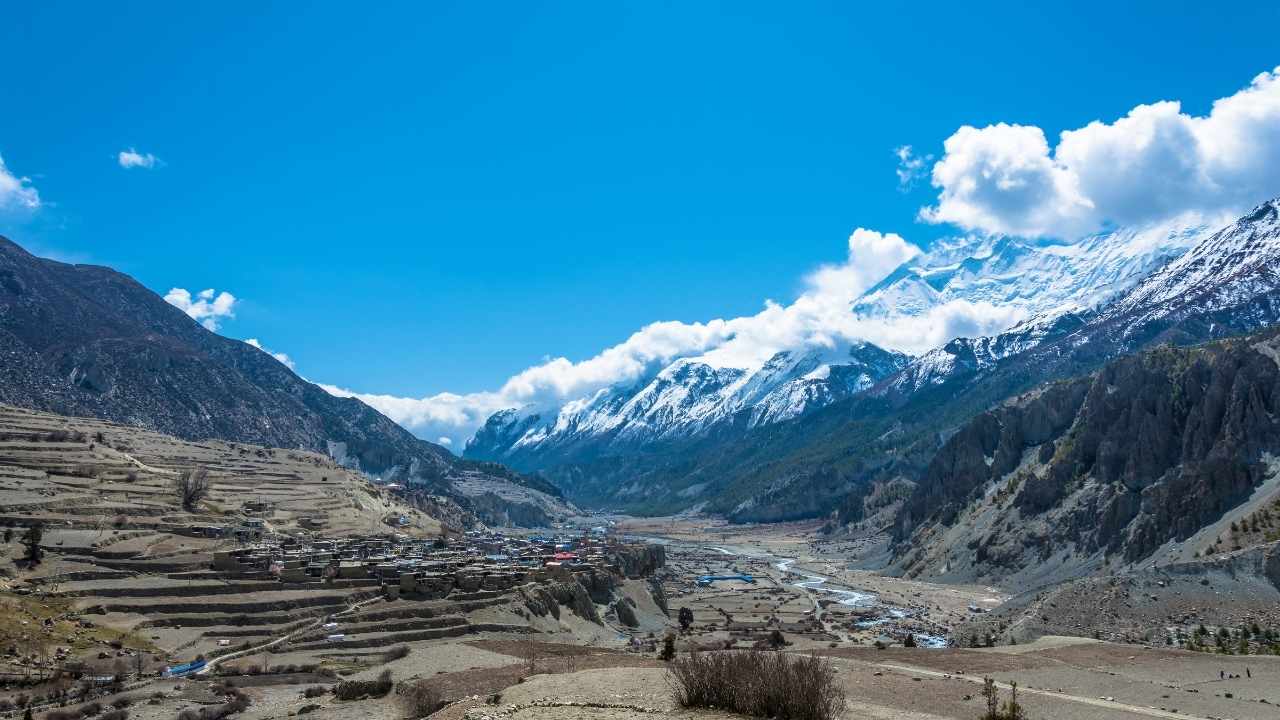
The trek begins with a drive from Kathmandu to Dharapani, where the walking starts. The trail follows the Marsyangdi River through forests, waterfalls, farmland, and villages. Around Chame and Pisang, the scenery changes from green hills to dry valleys and rocky slopes as the route approaches Manang.
Manang is the main acclimatisation stop. At more than 3,500 metres, the increase in altitude becomes noticeable. Time here allows your body to adjust before continuing toward the higher sections of the trek.
From Manang, the route turns toward Khangsar and Tilicho Base Camp. The trail becomes rougher as it climbs through rocky alpine terrain to Tilicho Lake at 4,919 metres. After returning from the lake, you rejoin the Annapurna Circuit and continue toward Thorong La.
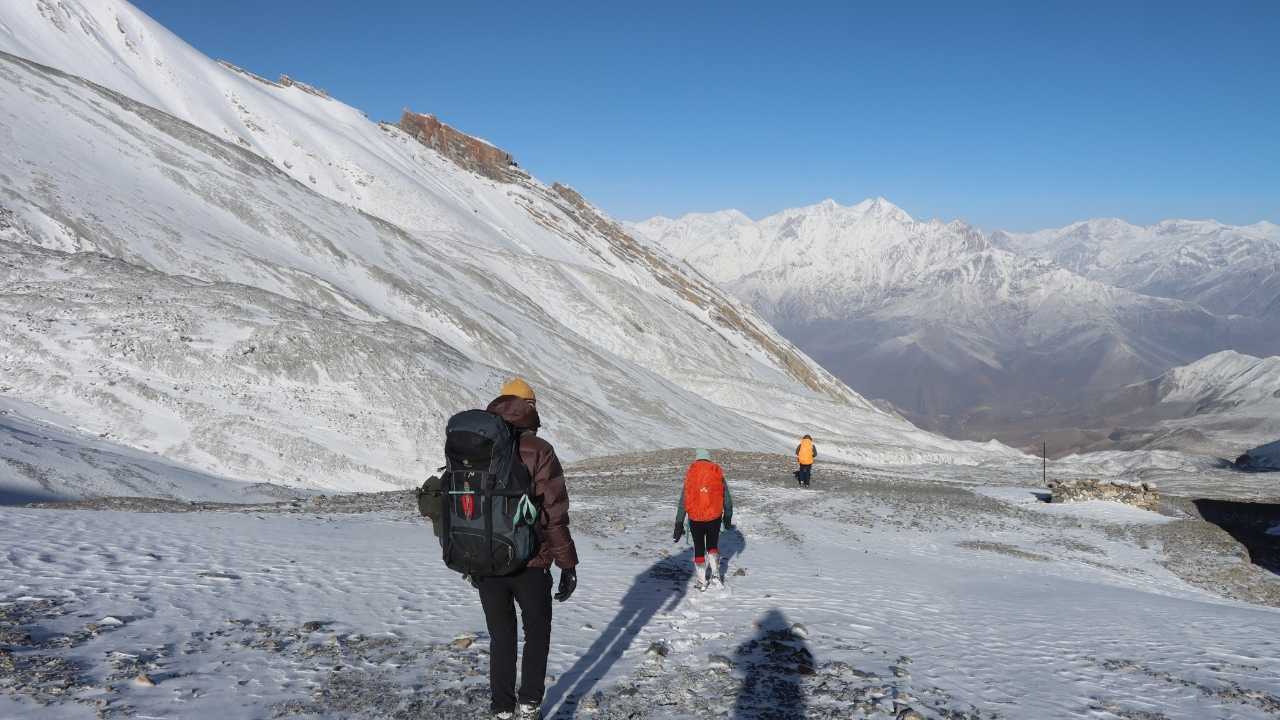
The Thorong La Pass crossing is normally made early in the morning. At 5,416 metres, it is the highest point of the trek. The descent from the pass takes you into Mustang, where the landscape becomes much drier. The route then continues to Muktinath, an important pilgrimage site for Hindus and Buddhists.
From Muktinath, the trail follows the Kali Gandaki area through stone villages and settlements associated with Manangi and Thakali communities. Along this section, you pass Buddhist monasteries, chortens, prayer wheels, and traditional houses.
Accommodation is mainly in local teahouses, with meals served at the lodges along the route. The trek also passes through villages associated with Gurung and Magar communities during the lower sections of the circuit.
You need an Annapurna Conservation Area Permit (ACAP) and TIMS card for the trek. I arrange both before you start. No climbing permit is required.
Most days involve around 5–7 hours of walking. The Tilicho Lake and Thorong La sections require more effort than the regular walking days. The main concerns are altitude, long walking hours, and changing trail conditions, so a steady pace and proper acclimatisation are important throughout the trek.