
Annapurna Base Camp – Sept 16
Devendra
Malaysia
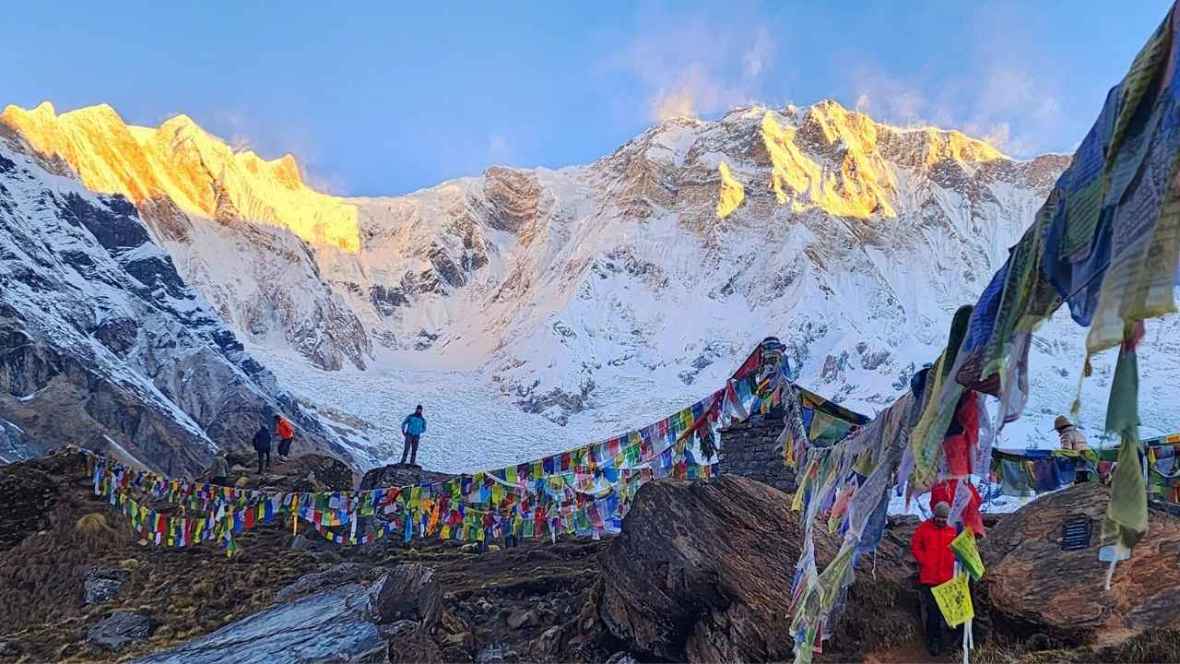
From Poon Hill to the Annapurna Sanctuary, through mountain villages and forest trails to Annapurna Base Camp at 4,130 m.
The Annapurna Base Camp Trek via Poon Hill adds Poon Hill to the beginning of the ABC route. It takes more days than the direct route and involves plenty of uphill and downhill walking. If you are comfortable walking 5–7 hours a day, it can be a good first Himalayan trek. No climbing experience or technical equipment is needed.
The trek begins with a drive from Pokhara to Ulleri, followed by trekking to Ghorepani. The next morning, you walk to Poon Hill before sunrise and return to Ghorepani for breakfast. From there, the trail continues to Tadapani before heading toward Chhomrong.
From Chhomrong, you descend into the Modi Khola valley and follow the river through Bamboo, Himalaya, and Deurali. The forest becomes thinner as you gain height. At Machhapuchhre Base Camp (3,700 m), you are already above the tree line, with the surrounding peaks filling the valley.
The trail then enters the Annapurna Sanctuary and continues to Annapurna Base Camp (4,130 m). Annapurna I, Annapurna South, Hiunchuli, Gangapurna, and Machhapuchhre surround the basin. You spend the night here before beginning the descent.
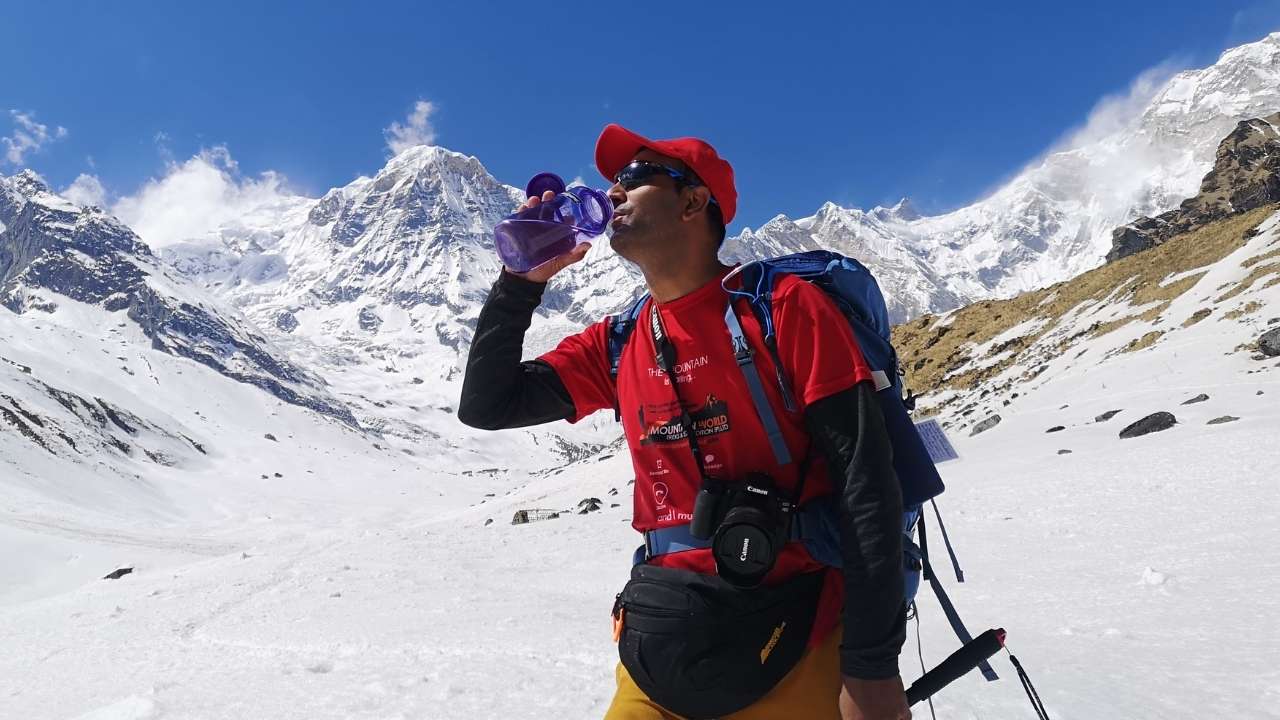
The higher days need a steady pace. Drink enough water, take breaks when needed, and let your guide know if you feel unwell. The trail does not require technical skills, but the altitude and long walking days can still be tiring.
I recommend this route when someone wants to see more of the Annapurna region rather than take the shortest way to Base Camp. The route gives you time in the lower villages before moving into the higher valley, so you see the area change step by step.
Ready to go?
Download Day-by-Day Itinerary
Our Annapurna Base Camp Trek via Poon Hill package includes tourist bus transportation between Kathmandu and Pokhara. The journey takes around 7–8 hours, depending on road and traffic conditions.
You can upgrade to a domestic flight or private vehicle instead of the standard tourist bus. Let us know before booking if you prefer a different transport option, and we’ll confirm the additional cost.
Pokhara to Trailhead & Return:
Transportation between Pokhara and the trailhead is arranged by jeep or bus, depending on the group size and itinerary. After completing the trek, the same road transfer brings you back to Pokhara.
Total Distance
Walking Days
Accommodation
Meals
Transportation
Group Size
Guide
Porter
Best Season
Fitness Level
Permit
Trip Style
Starts
Ends
The Annapurna Base Camp Trek via Poon Hill starts with a drive from Pokhara to Ulleri, saving your legs from the long stone staircase from Tirkhedhunga. From Ulleri, you trek to Ghorepani (2,850 m) and make an early morning climb to Poon Hill (3,210 m). The trail then continues through Tadapani and Chhomrong before entering the Annapurna Sanctuary. Along the way, you pass terraced fields, forests, rivers, and mountain settlements as the landscape changes with altitude.
Poon Hill is known for its early morning mountain view. From the viewpoint, you can see Annapurna South, Dhaulagiri, Machhapuchhre, and other peaks as the first light reaches the mountains. The climb starts before sunrise, followed by breakfast back in Ghorepani.
Adding Poon Hill gives you another side of the Annapurna region before you enter the Sanctuary. After the viewpoint, the route takes you through Tadapani and Chhomrong and later to Annapurna Base Camp at 4,130 m.
The trail changes as you climb. Lower down, you walk through farmland and forest. Higher up, bamboo and rhododendron line the trail near the Modi Khola. Above Deurali, the trees thin out and the valley becomes rocky.
The route passes through Gurung and Magar communities, including Ghorepani, Tadapani, and Chhomrong. Teahouse stays give you time to see how people live and work in these mountain villages.
Choose Mountain World Treks for the Annapurna Base Camp Trek via Poon Hill for guides who know the route, its altitude changes, and trail conditions. We arrange your permits, teahouses, transportation, guide, and porter, including the Kathmandu–Pokhara transfer and trailhead transport. Our team also keeps track of weather and trail conditions during the trek and adjusts plans when required.
Started as a Trekking Porter
Became a Licensed Guide
Founded Mountain World Treks
Still Actively Guiding Treks in Nepal
Years from Porter to Founder
All our guides are licensed by the Government of Nepal and have 10+ years of Himalayan trekking experience.
We provide support before and during your trek, assisting with planning, logistics, and emergencies.
We provide fair wages and better working conditions for porters while following responsible trekking practices.
Our prices are clearly explained from the start, including and excluding without hidden charges.
We limit groups to 12 trekkers, allowing guides to provide better attention, support, and a more personal trekking experience.
Emergency support and helicopter evacuation assistance when needed during high-altitude treks.
Yes, if you are happy walking several hours a day and want to see the sunrise from Poon Hill, walk through villages and forests, and reach Annapurna Base Camp on the same trek. You do not need climbing experience, but the route includes long stair sections and uneven mountain trails. Annapurna Base Camp sits at 4,130 m, so you need to be prepared for the change in altitude.
It suits first-time trekkers, couples, families, and travelers who enjoy staying in mountain villages and teahouses. If you have never trekked in Nepal before, our [Annapurna Base Camp Trek for Beginners Guide] explains how to prepare. This route is not a good match if you want an easy trip with short walking days and hotel accommodation throughout.
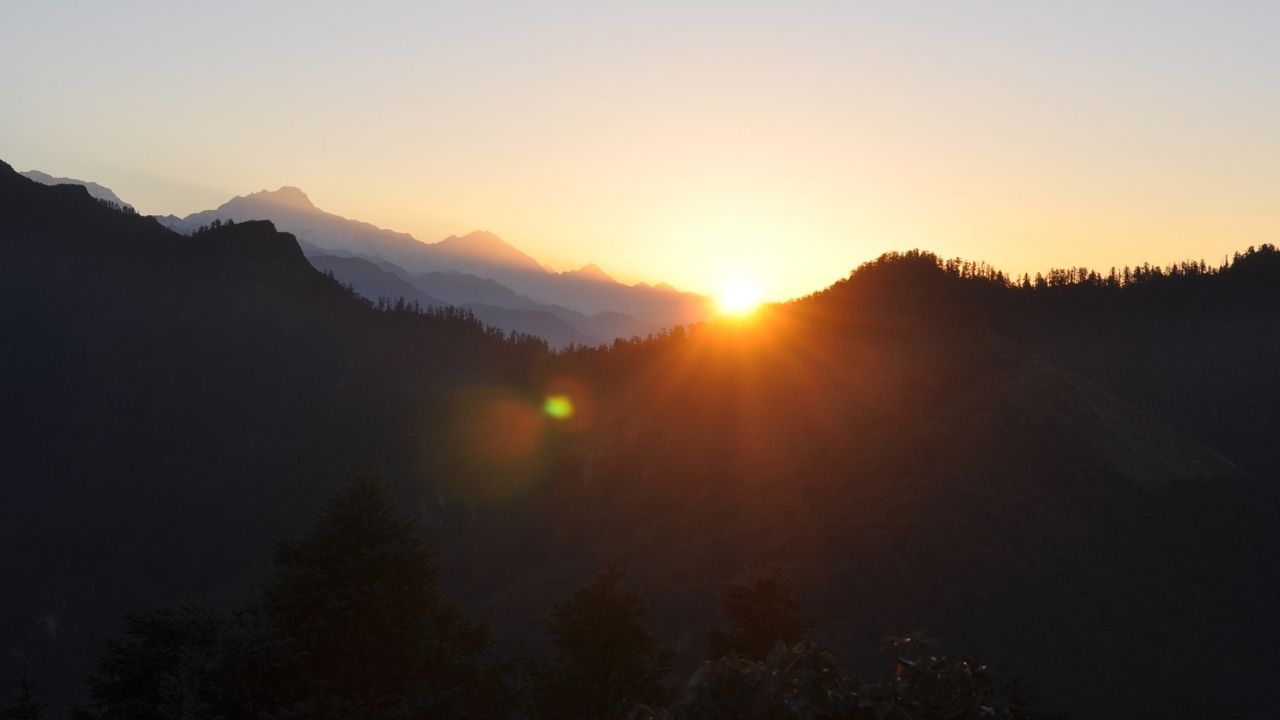
Start early for the sunrise and mountain views before continuing toward Tadapani.

Walk through forests that are especially colorful in spring.

Cross several suspension bridges over rivers and gorges along the route.
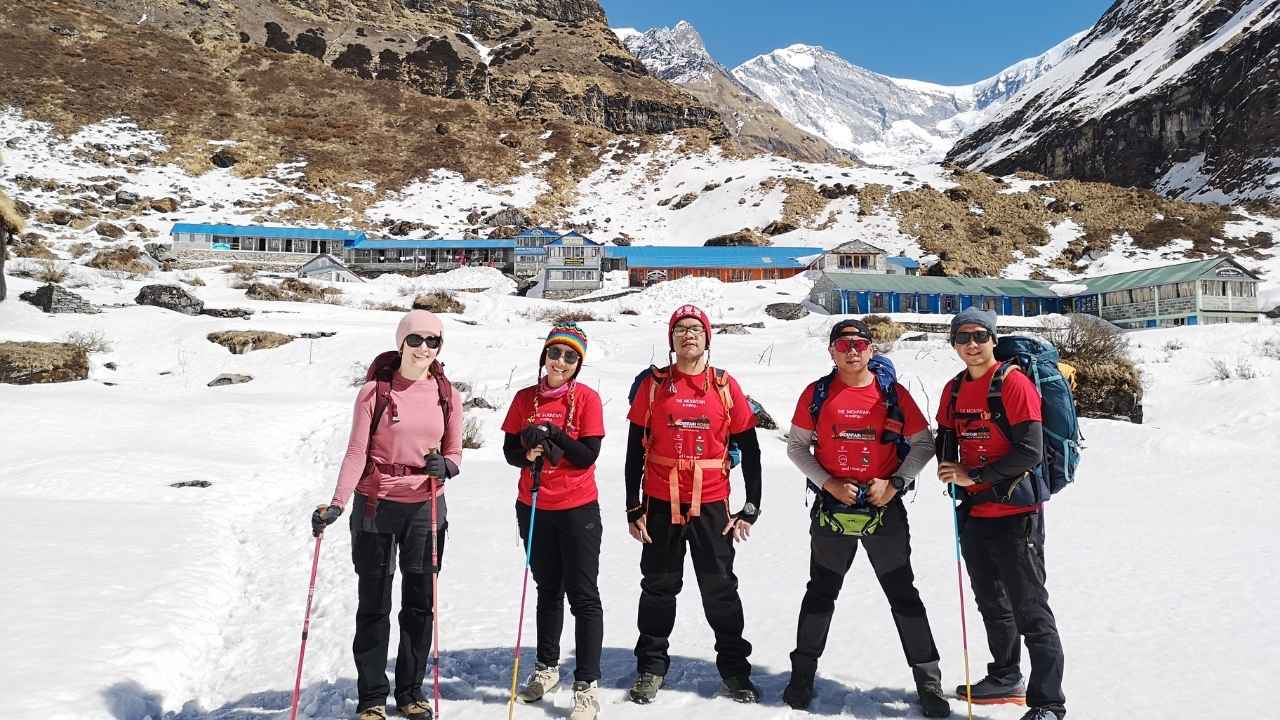
Reach the base camp below Machhapuchhre before entering the Annapurna Sanctuary.
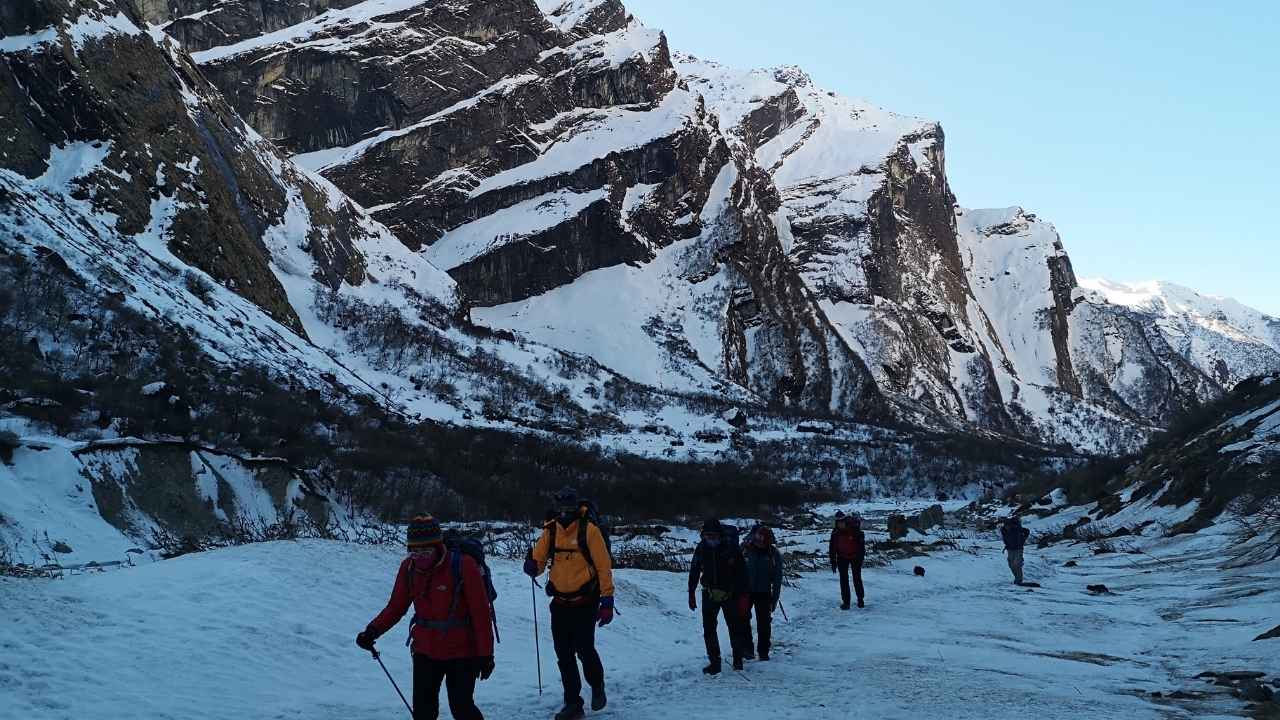
Follow the Modi Khola valley deeper into the mountains, surrounded by high peaks.

Reach the base camp at 4,130 m, surrounded by the peaks of the Annapurna range.
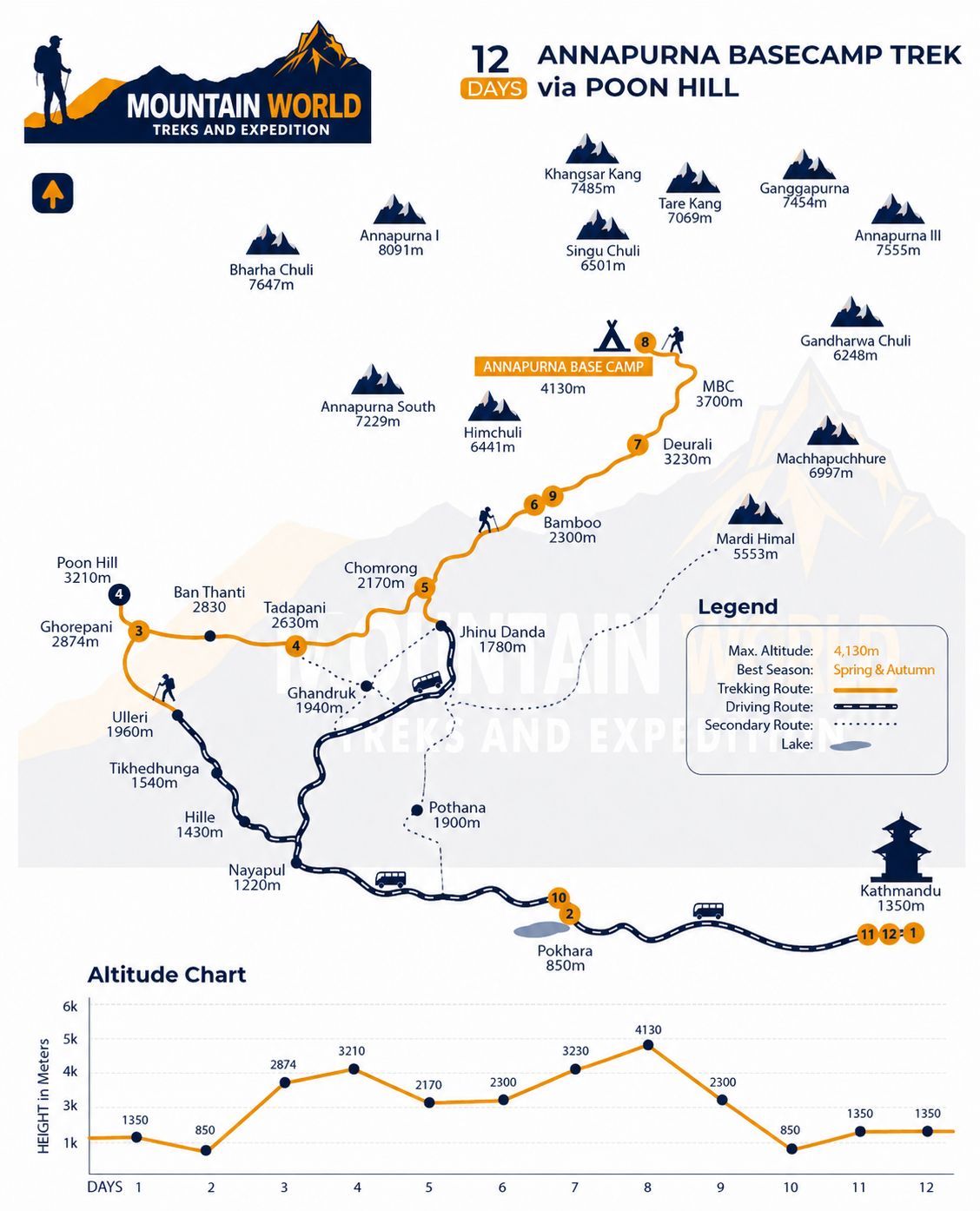
This is our 12-day Annapurna Base Camp Trek via Poon Hill itinerary. From Kathmandu, we travel to Pokhara, drive to Ulleri, and trek through Ghorepani, Poon Hill, Tadapani, Chhomrong, Bamboo, and Deurali to Annapurna Base Camp. We then descend via Jhinu Danda and return to Pokhara and Kathmandu. Each day includes the route, overnight elevation, walking time, and key trail details.
For a 12-day private trek, the package price is USD 799 per person. It includes the main costs along the route, from Kathmandu accommodation and road transfers to teahouse stays, meals, guide and porter services, permits, airport transfers, taxes, and service charges.
Booking your Annapurna Base Camp Trek via Poon Hill starts with a few simple details. Tell us your dates and group size, and we’ll arrange the rest.
Share your preferred dates, group size, and any specific requests.
We’ll prepare the itinerary, explain the route, and send your quote.
Approve the plan and pay the required deposit to secure your booking.
We’ll arrange Everything and send the information you need before arrival.
Important: Travel insurance is not included in the package. Before your trek, you must purchase a policy that covers high-altitude trekking up to at least 4,500 m and emergency helicopter evacuation.
Nights on the trail are spent in local teahouses, while Kathmandu and Pokhara use hotel accommodation. Rooms become simpler as you gain altitude, with shared bathrooms at many mountains stops. Our Annapurna Base Camp Trek via Poon Hill Accommodation Guide has more details.
Meals are prepared at the teahouses along the trail. Breakfast and dinner are served at your overnight stop, while lunch is taken at a teahouse along the day’s route. For more details, see our [Annapurna Base Camp Trek Food & Drinks Guide] to learn what to eat, where meals are served, and how food and drinks work in mountain teahouses.
The trail starts in warmer lower villages and reaches cold conditions near Annapurna Base Camp. Bring layered trekking clothes, a waterproof jacket, sturdy trekking shoes, a sleeping bag, sunglasses, sunscreen, personal medication, trekking poles, and a reusable water bottle.
Keep your main gear in a duffel bag and carry daily items in your daypack. Take water, snacks, an extra layer, sunscreen, and personal items with you each day. See our Annapurna Base Camp Trek via Poon Hill Packing List for the complete checklist.

Moderate: There are no technical climbing sections, but the trail has plenty of stone steps, climbs, and descents. The section from Bamboo to Annapurna Base Camp feels harder as the altitude increases, while the descent can be tiring on the knees.
What Makes the Trek Challenging?
For training plans, walking distances, and preparation, see our Annapurna Base Camp Trek via Poon Hill Difficulty Guide.
You do not need previous trekking experience, but you should be used to walking for several hours and going uphill and downhill. Being able to walk 5–7 hours on hilly terrain is a good starting point. Regular hill walks, stairs, and leg-strength exercises before the trek will help you handle the longer days.
You’re Ready for the ABC Trek If You
For a detailed training plan and preparation tips, see our Complete Trek Fitness & Training Guide.
March to May and September to November are the most suitable months for the Annapurna Base Camp Trek via Poon Hill. The monsoon runs from June to August, bringing rain to the lower trail, while December to February brings colder temperatures and possible snow around the higher sections.
Rhododendrons bloom across the hills, and mornings are usually clear for mountain views.
Rain is frequent around Poon Hill and the lower forest, with muddy paths and leeches on some sections.
October and November usually bring dry trails, stable conditions, and sharp views of the Annapurna range.
Lower villages remain accessible, but temperatures drop sharply at night and snow can affect the upper trail.
The Annapurna Base Camp Trek via Poon Hill starts in the lower hills around Pokhara and climbs through Ghorepani and Tadapani before entering the Annapurna Sanctuary. The route reaches Poon Hill at 3,210 m and Annapurna Base Camp at 4,130 m, with a mix of stone steps, forest trails, village paths, and higher mountain terrain. The guides below cover training, permits, weather, Poon Hill, packing, costs, and trekking without a group.
Altitude sickness can occur when your body does not adjust to reduced oxygen levels at higher elevations. It can affect anyone, regardless of age or fitness. Common signs include headache, nausea, dizziness, tiredness, and difficulty sleeping. Gradual ascent and proper acclimatization help reduce the risk. If symptoms develop or worsen, tell your guide and stop ascending until you have been assessed. For symptoms, prevention, and treatment, see our Altitude Sickness on the Annapurna Base Camp Trek Guide.
In an emergency: Your guide will help coordinate the appropriate response, including contacting your insurance provider and arranging evacuation when required. If you need medical care in Kathmandu, we can help you reach an appropriate medical facility.
For symptoms, prevention, and what to do if altitude sickness develops, see our full Altitude Sickness on the Everest Base Camp Trek Guide.
The trek starts in Pokhara and drives to Ulleri, then climbs through forest and terraced hills to Ghorepani and Poon Hill at 3,210 m. The route continues through Tadapani and Chhomrong into the Annapurna Sanctuary, passing Sinuwa, Bamboo, Dovan, Himalaya, Deurali, and Machhapuchhre Base Camp at 3,700 m before reaching Annapurna Base Camp at 4,130 m. The return descends through Bamboo to Jhinu Danda, with its hot springs, before the drive back to Pokhara. The Annapurna Base Camp Trek via Poon Hill guide covers the itinerary, best time, difficulty, altitude and acclimatization, Poon Hill, food and accommodation, gear, permits, transport, and costs.
Devendra
Malaysia
Kreity
Malaysia
Rose Anderson
London, United Kingdom


Annapurna Base Camp Trek via Poon Hill | 12 Days Plan & Cost