Trekkers do not normally sleep at Everest Base Camp itself. The usual final overnight stop is Gorak Shep, from where trekkers walk to Everest Base Camp and return to the lodge.
The experience changes as the trail climbs. Lukla and Namche Bazaar offer the greatest choice, while accommodation becomes simpler around Debuche, Dingboche, Lobuche, and Gorak Shep.
This guide covers the practical side of staying in EBC teahouses, including rooms, bathrooms, heating, showers, charging, Wi-Fi, booking, and what changes as you reach higher villages.
What Is Everest Base Camp Accommodation Like?
Accommodation on the Everest Base Camp Trek consists mainly of locally operated teahouses and mountain lodges. Most provide twin rooms, basic bedding, a communal dining room, and bathroom facilities, with additional services such as showers, Wi-Fi, and charging available at many lodges.
Along the EBC route, a teahouse is essentially a mountain guesthouse. Some are small family-run buildings with only a few rooms. Others have several floors and a surprisingly large number of beds.
The facilities depend heavily on the village.
Most EBC teahouses have:
- Twin rooms with basic beds and bedding
- A Communal dining room
- Shared toilets, with private bathrooms available at some lodges
- Hot showers at many lower and middle-altitude lodges
- Electricity for lighting and charging
- Wi-Fi at many lodges, although reliability varies
Facilities vary considerably between villages. A lodge in Namche Bazaar should not be used as your benchmark for what you will find in Gorak Shep.
As you move farther into the Khumbu, the buildings, services, and room choices reflect the remoteness of the area.
What Are the Rooms Like?
Most teahouse rooms are basic twin rooms with two beds, mattresses, pillows, and blankets. Bedrooms generally have little furniture and are normally not heated.
A typical room has two single beds positioned against the walls, with a small gap between them. Some rooms have simple hooks or a small table. Others provide very little storage at all.
Privacy is therefore more limited than in a standard hotel.
You may hear someone closing a door in the corridor or getting ready for an early departure. This is particularly common when many trekkers are leaving before sunrise.
Temperature becomes more noticeable after sunset. A room that feels comfortable when you arrive in the afternoon can be much colder by bedtime.
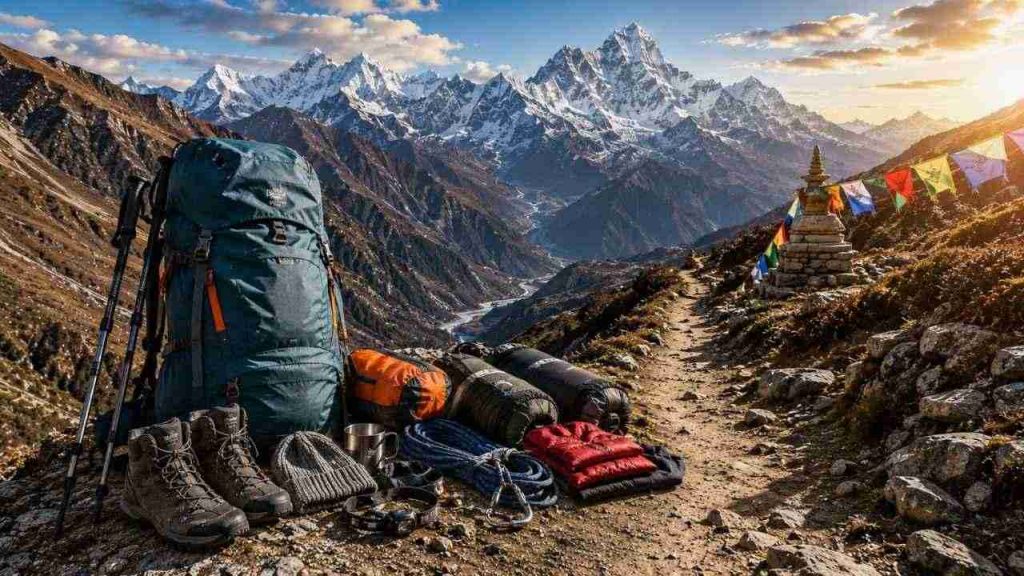
The right sleeping bag, dry layers, and a few small items make a noticeable difference on cold nights. Our Everest Base Camp Trek Packing List covers what to bring for the whole trek.
Are Private Rooms Available on the Everest Base Camp Trek?
Private rooms are available at some lodges, particularly in Lukla and Namche Bazaar, but twin-sharing rooms are the normal arrangement, and private rooms cannot be guaranteed throughout the trek.
If two people are travelling together, sharing a twin room is the standard setup.
Single rooms are easier to find in larger settlements because there are more lodges and more rooms to choose from. The selection becomes narrower at higher overnight stops.
If a village has many trekkers arriving on the same afternoon, the priority is getting everyone a bed. You may have fewer choices regarding room type.
If a private room is important to you, request it when booking and confirm which nights it can realistically be provided. Availability becomes more limited at higher elevations and during busy periods.
Are EBC Teahouse Bathrooms Private or Shared?
Both are available. Attached bathrooms are more common in better-equipped lodges at lower elevations, while shared bathrooms become the more typical arrangement farther along the route.
A room in Lukla or Namche may have its own toilet and sink. Another lodge in the same village may have shared facilities along the corridor.
Higher on the route, shared bathrooms are increasingly common.
You may encounter both Western-style toilets and squat toilets depending on the lodge.
Two lodges in the same village can have different bathroom arrangements, so check the lodge details if a private bathroom matters to you.
If having a private bathroom matters to you, ask about it when arranging your accommodation rather than assuming it will be available.
Do Everest Base Camp Teahouses Have Heating?
The communal dining room is normally the warmest area of the lodge, while bedrooms are generally unheated.
After dinner, trekkers sit around the heat with cups of tea, finish organizing their bags, and talk before heading to their rooms.
Individual bedrooms are rarely heated, particularly at higher elevations, so trekkers normally rely on their sleeping bags and warm layers once they leave the dining room.
How Cold Are EBC Teahouse Rooms?
Teahouse bedrooms become noticeably colder as you gain altitude, with the coldest nights normally occurring around the highest overnight stops such as Lobuche and Gorak Shep.
The temperature inside your room depends on the season, altitude, weather and the construction of the lodge.
The room may not feel particularly cold when you first arrive because the day’s remaining warmth is still inside the building.
At Gorak Shep, which sits at approximately 5,164 metres, you should be prepared for a genuinely cold bedroom during colder periods.
A warm sleeping bag and dry sleepwear are far more useful than expecting a comfortable heated bedroom.
Room temperatures also vary by season, so check our Everest Base Camp Trek Weather and Temperature Guide before choosing your sleeping bag and clothing.
Do You Need a Sleeping Bag for EBC Teahouses?
Yes. A suitable sleeping bag is strongly recommended for the EBC Trek.
Most teahouses provide blankets, but their thickness and availability vary. Your sleeping bag should be your main source of insulation, with blankets used as an extra layer when needed.
The appropriate rating depends on the season and the temperatures you expect.
If your trekking company supplies a sleeping bag, check its temperature rating before departure rather than assuming that any sleeping bag will be suitable.
A liner is optional. Some trekkers use one for cleanliness and a little additional warmth.
How Can You Make Teahouse Nights More Comfortable?
Keeping your sleepwear dry, preparing your morning gear early and using the dining room’s warmth efficiently can make cold teahouse nights much easier.
Keep one set of clothes dry for sleeping.
Don’t wear your cleanest warm layers during the day and then use them as sleepwear at night.
Take everything you need to bed.
Pack your headlamp, water bottle, phone and morning clothes before leaving the dining room.
Charge when power is available.
If you find an open outlet, use it rather than waiting until later.
Keep valuables with you.
Store your passport, money, electronics and important medication in your daypack or another secure place.
Prepare for an early start.
At Gorak Shep, having your headlamp, boots, and warm layers ready can save you from searching through your bag in a cold room.
What Is the Teahouse Dining Room Like?
The dining room is the main communal area of an EBC lodge and usually the warmest place to spend the evening.
The stove is usually the centre of the room, especially after sunset. Trekkers gather there for dinner, tea and conversation before heading to their rooms.
In smaller high-altitude lodges, the dining room can become crowded because there are fewer indoor spaces available.
Is Food Included with EBC Accommodation?
Whether meals are included depends on your trekking package. Guided EBC packages commonly include accommodation and meals, while independent trekkers normally pay the lodge separately for their room and food.
Before your trek, check exactly what your package covers. Showers, Wi-Fi, charging, drinks, and snacks are often paid separately.
Is Wi-Fi Available at Everest Base Camp Teahouses?
Many teahouses provide Wi-Fi, but availability and connection quality vary between villages and individual lodges.
You are more likely to find dependable connectivity in larger settlements such as Namche Bazaar than at the highest overnight stops.
At higher elevations, the connection may be slower or less reliable, and access can cost extra.
For a closer look at mobile networks, Wi-Fi, and internet access along the route, see our Everest Base Camp Wi-Fi and Internet Guide.
Can You Charge Your Phone at EBC Teahouses?
Many lodges offer charging, but outlets may be shared and charging commonly costs extra.
Electricity is generally easier to access in the lower settlements.
As you climb, the power supply and charging arrangements can become more limited. Charge your devices whenever power is available, especially before the higher villages.
A power bank is useful when the lodge has limited outlets or charging is temporarily unavailable.
How Much Does Everest Base Camp Accommodation Cost?
Accommodation prices vary by village, lodge, season, and booking arrangement. The room is only one part of what you may spend at a teahouse because showers, Wi-Fi, charging, drinks, and other services can cost extra.
A tea house bill can involve the following:
| Service |
Usually included? |
| Room |
Depends on booking |
| Breakfast |
Depends on package |
| Lunch |
Depends on package |
| Dinner |
Depends on package |
| Hot shower |
Often extra |
| Wi-Fi |
Often extra |
| Charging |
Often extra |
| Drinks |
Usually extra |
| Snacks |
Usually extra |
Prices generally rise as you gain altitude because food, fuel, and other supplies have to reach increasingly remote villages.
Ask what your package includes before the trek, especially meals, showers, Wi-Fi, and charging.
For a full breakdown of daily expenses and package costs, see our Everest Base Camp Trek Cost Guide.
Should You Book EBC Teahouses in Advance?
Booking in advance is most useful during the main trekking seasons, particularly if you want a specific lodge or private room.
Independent trekkers have more flexibility in quieter periods, but arriving late can reduce the available choices.
During busy periods, a guide or trekking company can arrange the lodge before you arrive, which saves you from searching for a room after a long day on the trail.
What Happens if Your Teahouse Is Full?
If your preferred lodge is full, you will normally need to use another teahouse in the same village.
This situation is easier to handle when travelling with an experienced guide.
Local guides generally know the accommodation options and can contact or approach another lodge if the first choice has no room.
Independent trekkers should avoid arriving very late during busy periods if possible.
A full lodge does not necessarily mean the entire village is full. It simply means you may have to compromise on the property, room type, or facilities you originally wanted.
Your guide can usually help you find another lodge nearby rather than making you search from one property to the next.
Everest Base Camp Accommodation by Village
Your accommodation changes noticeably as you move from Lukla toward Gorak Shep. Here is what you can generally expect at the main overnight stops.
Lukla Accommodation
Lukla has one of the widest ranges of accommodation on the EBC route, including basic teahouses, comfortable lodges and hotels with better bathroom and electricity facilities.
Lukla is the main gateway for trekkers flying into the Everest region.
Because Lukla is the main arrival and departure point, it is one of the few places where you can choose between a basic teahouse and a more hotel-like stay.
You can find simple rooms as well as properties offering private bathrooms, hot showers and more developed common areas.
If your itinerary includes an overnight stay in Lukla, this is one of the easiest places on the trek to find a little extra comfort.
It is also a useful point to check your equipment before heading deeper into the Khumbu.
Phakding Accommodation
Phakding has a good selection of teahouses and lodges with simple rooms, dining rooms and a mixture of shared and private bathroom facilities.
Phakding is a common first overnight stop after Lukla.
The village sits at a considerably lower elevation than the later stages of the trek, so the accommodation does not need to deal with the same cold conditions found farther north.
For most trekkers, Phakding is the first night of getting used to the teahouse routine.
The rooms are basic, but the lower elevation means you generally have more comfortable sleeping conditions than you will later in the trek.
Namche Bazaar Accommodation
Namche Bazaar offers the greatest variety of accommodation on the main EBC route, from traditional teahouses to more comfortable lodges and hotels.
Namche is where the accommodation options expand significantly.
You will find properties with different room standards, bathrooms, and common areas, giving trekkers more opportunity to choose according to their budget and comfort preferences.
The town also has restaurants, bakeries, shops, and trekking stores, so the overall experience feels more developed than the smaller villages.
Many EBC itineraries spend two nights here for acclimatization.
If you have an acclimatization day in Namche, accommodation choice matters a little more because you will spend two nights in the same lodge. Our Everest Base Camp Trek Acclimatization Guide explains why this stop is important.
Debuche Accommodation
Debuche has simpler teahouse accommodation, with basic rooms and shared facilities common among the lodges.
The village is best known for its monastery and its mountain setting rather than a wide choice of accommodation.
Accommodation here is more about location and atmosphere than facilities. The village is quieter than Namche and Dingboche, and most trekkers spend little time in their rooms before moving to the dining area for the evening.
You arrive after walking, settle into your room, spend the evening in the dining area, and prepare for the following day.
Once temperatures drop after sunset, the warm communal room becomes much more appealing than the bedroom.
Dingboche Accommodation
Dingboche has established teahouses offering basic rooms and communal dining, with bathroom and shower facilities varying between lodges.
Dingboche is a common acclimatization stop, so many trekkers spend two nights here. It is worth choosing a lodge where you are comfortable spending an extra evening because the accommodation is simpler than in Namche.
Compared with Namche, the choice is narrower.
The lodges are also beginning to reflect the colder environment and greater altitude.
For the full day-by-day route and overnight stops, use our Everest Base Camp Trek Itinerary Guide.
Lobuche Accommodation
Lobuche has some of the most basic accommodation on the EBC route, with small rooms, shared facilities, and limited lodge choices.
By the time you reach Lobuche, the accommodation feels noticeably more functional.
There are fewer choices and less emphasis on additional comforts.
The dining room becomes particularly important because it provides the main indoor area for eating and staying warm.
By this point, most trekkers are less concerned about hotel-style comfort and more concerned with eating well, staying warm, and getting enough rest.
Gorak Shep Accommodation
Gorak Shep is the highest regular overnight stop on the standard EBC route at approximately 5,164 metres, and its accommodation is among the most basic of the trek.
Gorak Shep is a very different environment from Lukla or Namche.
There are fewer accommodation choices, the rooms are simple, and the cold becomes a much bigger part of the experience.
Most lodges are designed around the needs of trekkers visiting Everest Base Camp and Kala Patthar rather than providing comfort for its own sake.
If you are starting early for Kala Patthar, prepare everything before getting into bed. Keep your headlamp, gloves, warm layers, and boots where you can reach them easily.
You do not want to empty a duffel onto the floor of a freezing room before sunrise.
Which Village Has the Best EBC Accommodation?
Namche Bazaar generally offers the best overall accommodation choice because it combines the widest selection of lodges with better facilities and more services.
A simple comparison:
| Village |
Choice |
What to expect |
| Lukla |
Wide |
Teahouses, lodges and more comfortable hotels |
| Phakding |
Good |
Basic rooms with a reasonable choice of lodges |
| Namche Bazaar |
Widest |
More lodge choices and better facilities |
| Debuche |
Limited |
Basic accommodation and shared facilities |
| Dingboche |
Moderate |
Comfortable enough but increasingly basic |
| Lobuche |
Limited |
Small rooms and fewer facilities |
| Gorak Shep |
Very limited |
Basic rooms, shared facilities and cold conditions |
What Should You Pack for Teahouse Nights?
You only need a small number of accommodation-specific items, with a suitable sleeping bag being the most important.
Rather than repeating your entire packing list here, focus on the things that directly affect your nights:
- Sleeping bag: Main source of nighttime insulation.
- Dry sleeping clothes: Keep one set separate from your daytime clothes.
- Headlamp: Useful for bathrooms, power cuts, and early departures.
- Earplugs: Helpful in lodges with thin walls and early-rising trekkers.
- Small towel: Useful for showers and basic washing.
- Wet wipes: Useful for a quick wash when you skip the shower.
- Power bank: Useful when charging options are limited.
- Water bottle: A bottle filled with hot water can provide useful warmth on cold nights.
For the complete equipment list, direct readers to the Everest Base Camp Trek Packing List rather than turning this accommodation article into another packing guide.
What Is a Typical Night in an EBC Teahouse Like?
A typical night starts when you arrive tired from the trail and drop your pack in your room.
After washing or showering, you will usually spend the evening in the dining room, where most trekkers eat, talk, and sit around the stove.
Before going to bed, prepare your clothes and gear for the next morning. Keep your headlamp, water bottle, and warm layers within reach. Then get into your sleeping bag and try to rest before the next day’s walk.
How Does EBC Accommodation Change With Altitude?
The biggest change is the reduction in available facilities. Higher lodges generally have fewer room choices, fewer private bathrooms, less reliable hot water, limited charging, and colder bedrooms.
| Feature |
Lower route |
Higher route |
| Room choices |
More |
Fewer |
| Private bathrooms |
More private options |
Shared facilities more common |
| Hot showers |
More available |
More limited |
| Wi-Fi |
Generally better |
Less reliable |
| Charging |
More readily available |
More limited |
| Bedroom warmth |
Usually comfortable |
Usually colder |
| Lodge choice |
Wider |
Narrower |
The change is gradual rather than dramatic. Each day farther into the Khumbu usually means fewer choices and fewer conveniences.
Is Everest Base Camp Accommodation Suitable for First-Time Trekkers?
Yes. First-time trekkers regularly use the teahouse system on the EBC route, and you do not need previous teahouse experience.
The adjustment is mainly about expectations. You need to be comfortable with a simple room, shared facilities, and a colder sleeping environment than you may be used to at home.
If you bring a suitable sleeping bag, keep one set of clothes dry, and accept that facilities become more basic higher up, the teahouse system is straightforward even for first-time trekkers.
Final Thoughts: What Should You Expect from EBC Accommodation?
Everest Base Camp accommodation is simple, practical, and designed around the realities of trekking in the Khumbu.
The biggest change comes with altitude. Lukla and Namche offer the widest choice, while accommodation becomes progressively simpler through Debuche, Dingboche, Lobuche, and Gorak Shep.
Teahouses are built around the basic needs of trekkers: a bed, food, warmth, and a place to recover before the next day’s walk.
If you are prepared for basic rooms, colder bedrooms, and changing facilities, Everest Base Camp accommodation is unlikely to be a major problem.
It is simply another part of learning how to live at trekking altitude.