Last updated: 30 August 2026
Planning a trek in Nepal means more than choosing a route and booking flights. Before you leave, check the latest Nepal Travel Advisories & Safety Updates, weather conditions, trekking regulations, flight and road conditions, and any local disruptions along your route.
Most trekking routes continue to operate normally, but conditions can change quickly in the mountains. Weather, landslides, snowfall, flight delays, local protests, and altitude-related problems can all affect a trekking itinerary.
This guide covers the main Nepal trekking safety information to check before travelling and what to pay attention to once you are on the trail.
Nepal Travel Advisories & Safety Updates
Travel advisories are issued by individual governments and can change independently of conditions on trekking trails.
Before travelling, check the travel advisory issued by your own government. The U.S. Department of State and the UK’s Foreign, Commonwealth & Development Office both maintain current Nepal travel guidance.
A travel advisory can cover much more than trekking. It may include demonstrations, crime, health services, entry requirements, local laws, transportation, and natural hazards.
Do not rely on an old blog post or travel forum when making a decision about your trip. Check an official source close to your departure date.
Is Nepal Safe for Trekking?
Nepal remains a major trekking destination, but no mountain trek is completely risk-free.
The main concerns for trekkers are usually altitude, changing weather, difficult terrain, road conditions, flight disruptions, landslides, and other natural hazards.
The current U.S. travel advisory places Nepal at Level 2: Exercise Increased Caution, citing the possibility of civil unrest. The advisory notes that nationwide demonstrations that began in September 2025 have stopped and that the security situation is stable, while demonstrations and local unrest can still occur, particularly in cities.
For trekkers, it is sensible to keep an eye on local developments, especially when travelling through Kathmandu or other urban areas. Avoid demonstrations and large gatherings, and follow instructions from local authorities.
Conditions in Kathmandu do not automatically mean that trekking routes in the mountains are unsafe. Check the situation for the area you are actually travelling through.
Trekking Restrictions and Guide Requirements
Trekking regulations in Nepal depend on the route.
The Nepal Tourism Board states that specific protected areas require trekkers to be accompanied by a licensed trekking guide and to carry a trekking-agency-issued TIMS card.
The UK government travel advice also states that foreign independent trekkers must use a local guide or porter while trekking in Nepal’s national parks and protected areas.
Restricted areas have additional permit requirements. Special trekking permits are required for areas designated as Restricted Areas, and these permits are handled through the Department of Immigration.
Before your trek, confirm the current Nepal trekking permits and guide requirements for your exact route.
Weather and Trekking Safety Updates
Mountain weather can change much faster than conditions in Kathmandu.
A clear morning in the lower valleys does not guarantee good weather higher on the trail. Rain, snow, strong winds, poor visibility, and freezing temperatures can affect walking conditions and mountain flights.
Nepal’s Department of Hydrology and Meteorology provides current weather information and warnings covering hazards such as rainfall, snowfall, lightning, landslides, cold weather, and avalanches.
Check the forecast before starting each day’s walk, especially if your route crosses a high pass or reaches elevations above 4,000 metres.
During the monsoon, rainfall can affect roads and lower trekking trails through landslides and flooding. In winter, snow and freezing temperatures become more important at higher elevations.
Altitude Safety on Nepal Treks
Altitude sickness is one of the main safety concerns on high-altitude treks in Nepal.
The risk increases as you gain elevation, particularly above 3,000 metres. UK travel guidance also identifies altitude sickness as a risk in Nepal’s tourist and trekking areas.
Do not treat a headache, dizziness, unusual tiredness, nausea, or loss of appetite as something you simply have to push through.
Tell your guide if you feel unwell.
If altitude symptoms are getting worse, the safest response is often to stop gaining altitude and, when necessary, descend. Your itinerary should allow enough time for gradual acclimatization rather than trying to reach a high destination too quickly.
Experienced guides pay attention to walking pace, sleeping altitude, rest days, and changes in symptoms throughout the trek.
Do Not Trek Alone on High or Remote Routes
Walking alone may seem simple on a well-used trail, but remote mountain routes can become difficult when weather changes or an injury occurs.
Nepal Tourism Board warns about problems that can arise during major storms, poor visibility, and very low temperatures at high altitude.
A guide can help with route decisions, accommodation, weather changes, altitude symptoms, and communication when something goes wrong.
On routes where a guide is mandatory, travelling without one can also create problems with permits and access.
Landslides and Rockfall
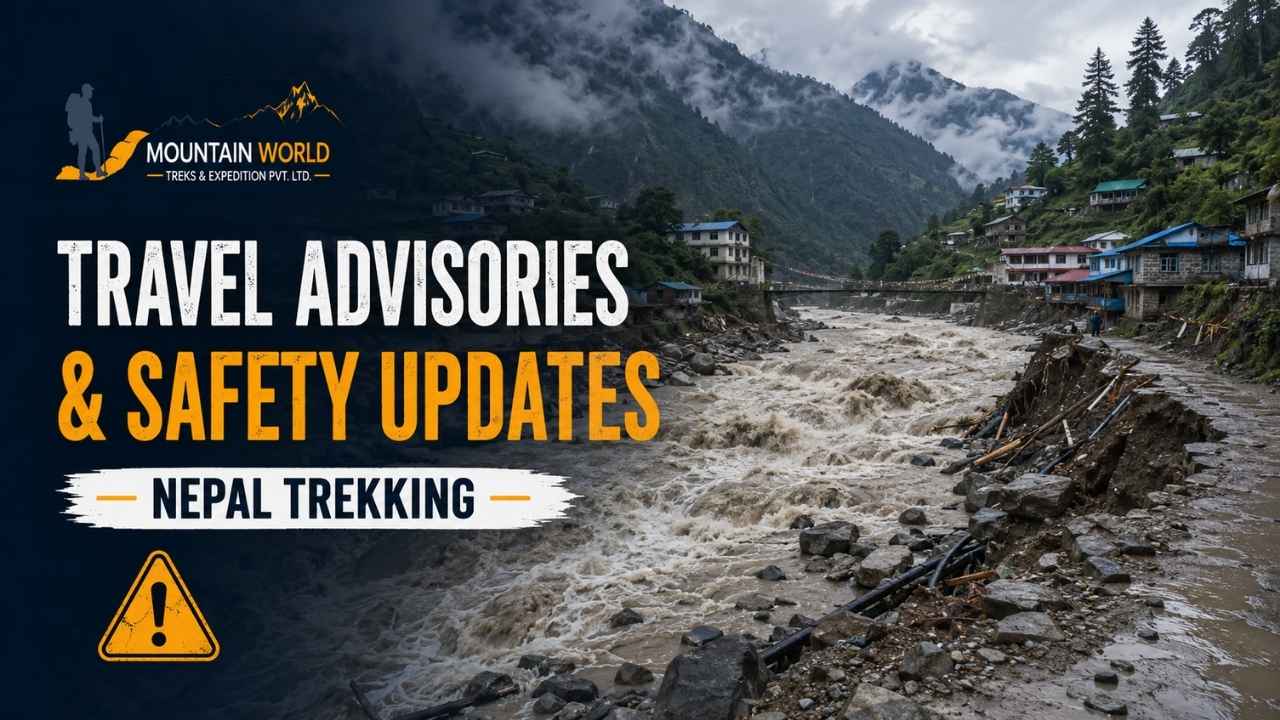
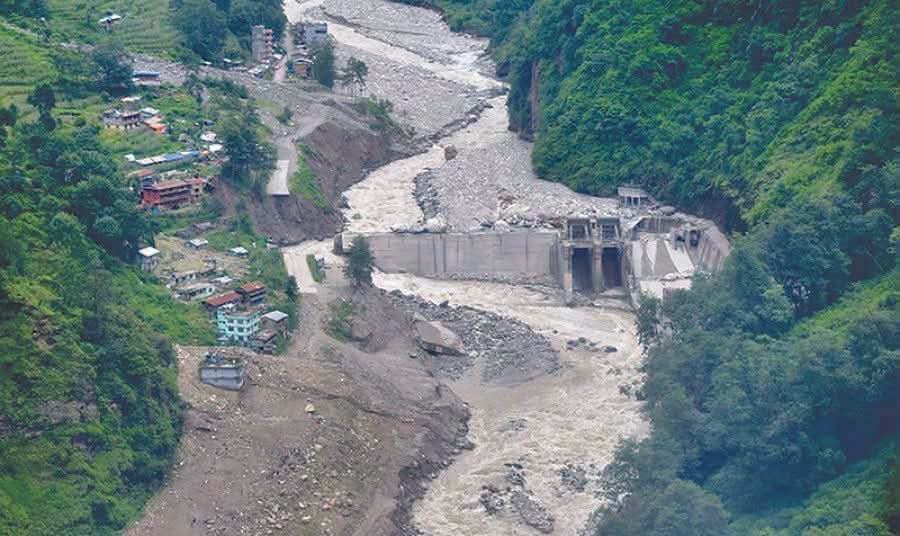
Landslides are particularly important during and after periods of heavy rain.
They can affect trekking trails, bridges, and the roads used to reach trailheads. A road that was open when you started your journey may not remain open after heavy rainfall.
If your itinerary includes road travel to or from a trekking route, allow some flexibility rather than planning every connection with only a few hours between them.
On the trail, do not cross an unstable slope simply because other people are doing so. If your guide considers a section unsafe, follow the alternative route or wait until conditions improve.
Nepal Mountain Flight Updates
Flights to mountain airports such as Lukla are strongly affected by weather and visibility.
A flight delay does not necessarily mean there is a serious problem. Sometimes an aircraft cannot operate because conditions at the airport or along the flight route are unsuitable.
Build some flexibility into your itinerary, particularly at the beginning and end of a trek.
If your return flight from the mountains is delayed, your trekking agency or guide should help arrange the next available option and accommodation when required.
Avoid booking an international departure immediately after a mountain flight if you have no backup time.
Nepal Road Conditions
Many trekking itineraries now involve road travel before or after the walking section.
During the rainy season, heavy rainfall can lead to landslides, muddy roads, and delays. Roads in mountain districts can also be narrow and rough even when weather conditions are good.
Use authorized tourist transportation and keep your itinerary flexible when travelling during periods of heavy rain.
Nepal Tourism Board advises visitors to use authorized tourist vehicles and to note the vehicle number.
Keep Your Passport and Documents Safe
Carry your passport and trekking documents securely.
It is useful to keep digital copies of your passport, travel insurance policy, flight information, and important contact numbers separately from the originals.
Nepal Tourism Board also advises tourists to carry certified copies of documents while keeping the originals secure.
Do not hand your passport to an unknown person or leave important documents unattended in a lodge or vehicle.
Travel Insurance for Trekking
Travel insurance should be arranged before starting a high-altitude trek.
Check the policy carefully rather than assuming that any standard travel insurance covers trekking.
Depending on your route and activities, you may need cover for:
- High-altitude trekking
- Emergency medical treatment
- Helicopter evacuation
- Trip cancellation or interruption
- Flight delays
- Lost or delayed baggage
Pay particular attention to the maximum altitude covered by the policy. If your trek reaches Everest Base Camp, a high pass on the Annapurna Circuit, Manaslu, or another high-altitude destination, the policy needs to match the actual itinerary.
Keep the insurance company’s emergency contact details with you during the trek.
What to Do If You Become Sick on the Trail
Tell your guide as soon as you notice a problem.
Do not wait until symptoms become severe before asking for help.
For altitude-related symptoms, the decision may be to rest, stop climbing higher, or descend. For an injury or serious illness, your guide and trekking agency can help arrange medical assistance and evacuation where appropriate.
Remote trekking areas do not have the same medical facilities available in Kathmandu. The U.S. travel advisory notes that medical services in Nepal have limited ability to handle regular and emergency care, while hospitals in Kathmandu are generally better equipped than those outside the capital.
Keep an Eye on Local Conditions
A national travel advisory gives you a broad picture, but it cannot tell you exactly what is happening on your trekking route today.
Before departure, check:
- Your government’s latest Nepal travel advisory.
- Nepal Tourism Board updates.
- Current weather and warnings from the Department of Hydrology and Meteorology.
- Flight conditions if you are flying to or from a mountain airport.
- Road conditions if your itinerary includes mountain roads.
- Current permit and guide requirements for your route.
- Local information from your trekking agency or guide.
Your trekking agency should also check conditions before the trek and make changes when necessary.
What to Check Before Travelling to Nepal
About a week before your trip, check your government’s latest travel advisory and Nepal’s current entry requirements.
A day or two before leaving, check the weather forecast and any major travel disruptions.
After arriving in Kathmandu, confirm your trekking permits, transportation, accommodation, and the latest conditions on your route with your guide or trekking agency.
If your trek starts with a mountain flight, check the flight status again on the morning of departure.
Conditions can change after you have already checked them, so do not rely on information you received several weeks earlier.
Nepal Trekking Safety Checklist
Before leaving Kathmandu, make sure you have:
- Passport and copies of important documents
- Travel insurance details
- Emergency contact numbers
- Appropriate trekking clothing
- Good walking shoes or trekking boots
- Headlamp and spare batteries
- Water bottle or hydration system
- Personal medication
- Basic first-aid supplies
- Phone and power bank
- Required permits and TIMS documentation
- Enough flexibility in your itinerary for delays
For high-altitude treks, make sure your clothing and sleeping system are suitable for the lowest temperatures expected on your route.
When Should You Change or Delay Your Trek?
Changing an itinerary is sometimes the right decision.
You should seriously consider delaying, shortening, or changing a trek when there is a significant weather warning, dangerous trail condition, major landslide, unsafe road access, serious illness, or another situation that makes continuing unreasonable.
A trekking itinerary should be flexible enough to change when conditions require it.
Your guide should explain the reason for any change and discuss the safest available option with you.
Where to Check Nepal Travel Advisories & Safety Updates
For current information, use official sources rather than relying only on social media or old travel articles.
Nepal Tourism Board provides information about trekking, permits, TIMS, climate, and tourist services.
Department of Hydrology and Meteorology provides weather information and current warnings for hazards including rainfall, snowfall, landslides, lightning, cold weather, and avalanches.
Department of Immigration provides current information about trekking permits for Restricted Areas.
Nepal Police Tourist Police provides tourist safety assistance and emergency contacts.
You should also check the travel advisory issued by your own government before travelling.
Emergency Contacts in Nepal
Save important numbers before leaving Kathmandu.
Tourist Police: 1144
Nepal Police: 100
Traffic Police: 103
Nepal Police’s Tourist Police service operates in Kathmandu and major tourist and trekking areas, including Lukla, Namche Bazar, Pokhara, Manang, Mustang, Ghorepani, and other destinations.
If you lose your passport, have a security problem, or need assistance, contact the Tourist Police or your trekking agency.
Always check the latest information from the relevant official source before travelling, as advisories, regulations, weather conditions, and transport information can change.
Frequently Asked Questions
Is Nepal safe for trekking in 2026?
Nepal continues to welcome international trekkers, but conditions vary by location and season. Check your government’s latest travel advice before departure. The U.S. currently advises travellers to exercise increased caution because of the possibility of civil unrest, while noting that the security situation is stable following the nationwide demonstrations of 2025.
Is it safe to trek in Nepal during the monsoon?
Trekking is possible on some routes during the monsoon, but heavy rainfall can create landslides, muddy trails, flooding, and road delays. Check the weather and local trail conditions before setting out.
Is a guide required for trekking in Nepal?
Guide requirements depend on the route and protected area. Nepal Tourism Board states that specific protected areas require a licensed trekking guide and agency-issued TIMS card.
What is the biggest safety concern at high altitude?
Altitude sickness is one of the main concerns on high-altitude treks. Symptoms should be reported early, and trekkers should not continue gaining altitude when they are becoming seriously unwell.
What should I do if my Lukla flight is cancelled?
Stay in contact with your trekking agency or airline and wait for the next safe flight option. Weather-related delays are part of mountain travel, so keeping one or more buffer days in your itinerary is useful.
What is the Tourist Police number in Nepal?
The Tourist Police can be reached at 1144. Nepal Police can be reached at 100, and Traffic Police at 103.