Island Peak Climbing: 15 Days Itinerary, Cost and Guide
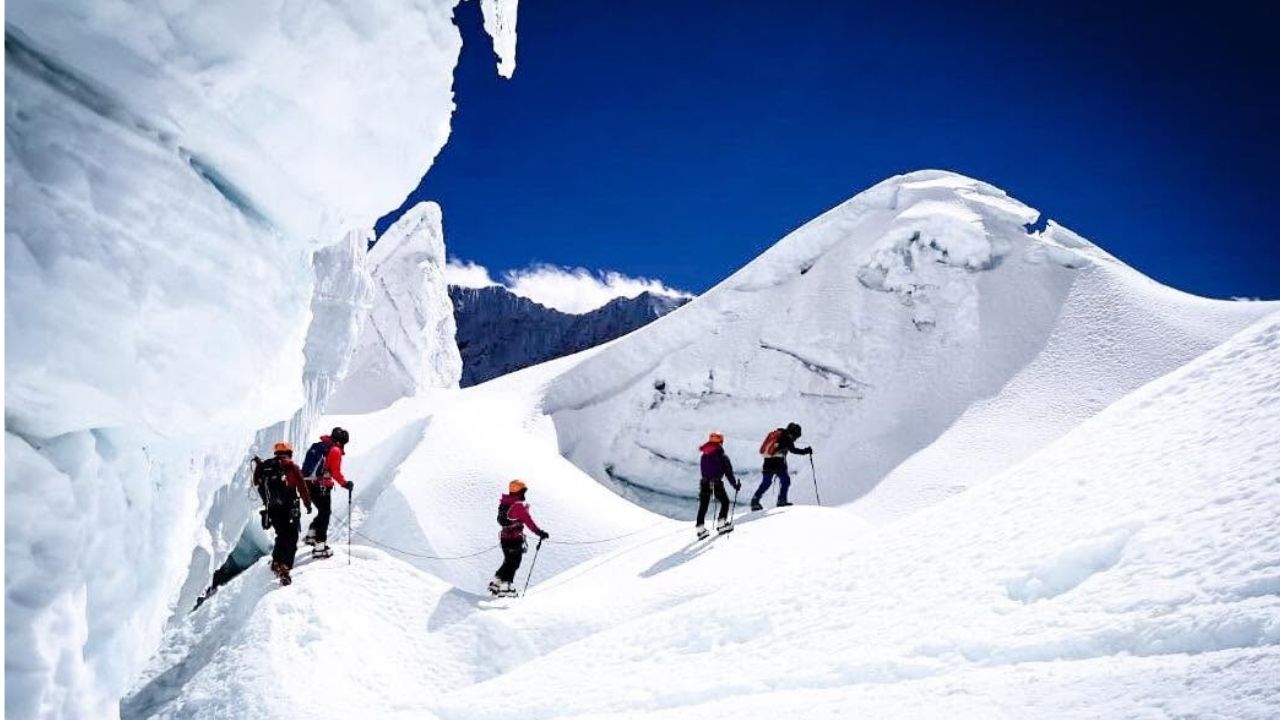
Island Peak Climbing combines high-altitude trekking with a technical climb to the 6,189 m summit. The route passes through Namche, Dingboche, and Chhukung before the glacier, fixed ropes, and steep headwall leading to the summit.

Island peak Climbing - 14 days
The 14-day Island Peak Climbing itinerary takes you from Lukla through Namche Bazaar, Dingboche, and Chhukung to the 6,189 m summit. You gain altitude gradually, with acclimatization stops in Namche and Dingboche before entering the Imja Valley.
After flying from Kathmandu to Lukla, you walk through pine and rhododendron forests along the Dudh Koshi River to Phakding. The trail then climbs through several suspension bridges and forests to Namche Bazaar at 3,440 m.
After acclimatizing in Namche, you continue through Tengboche and Debuche to Dingboche at 4,360 m. The landscape opens into stone-walled fields and yak pastures, with Ama Dablam, Lhotse, and Island Peak becoming more prominent.
From Dingboche, you can hike toward Nangkartshang Peak at about 5,050 m before continuing east into the Imja Valley. You reach Chhukung at 4,730 m, where Island Peak rises above the valley.
The route from Chhukung climbs over rocky and moraine terrain to Island Peak Base Camp at about 5,100 m. Your guide checks your equipment and provides practical training with crampons, ice axe, harness, rope techniques, and a jumar ascender before you move onto the glacier for the summit climb.
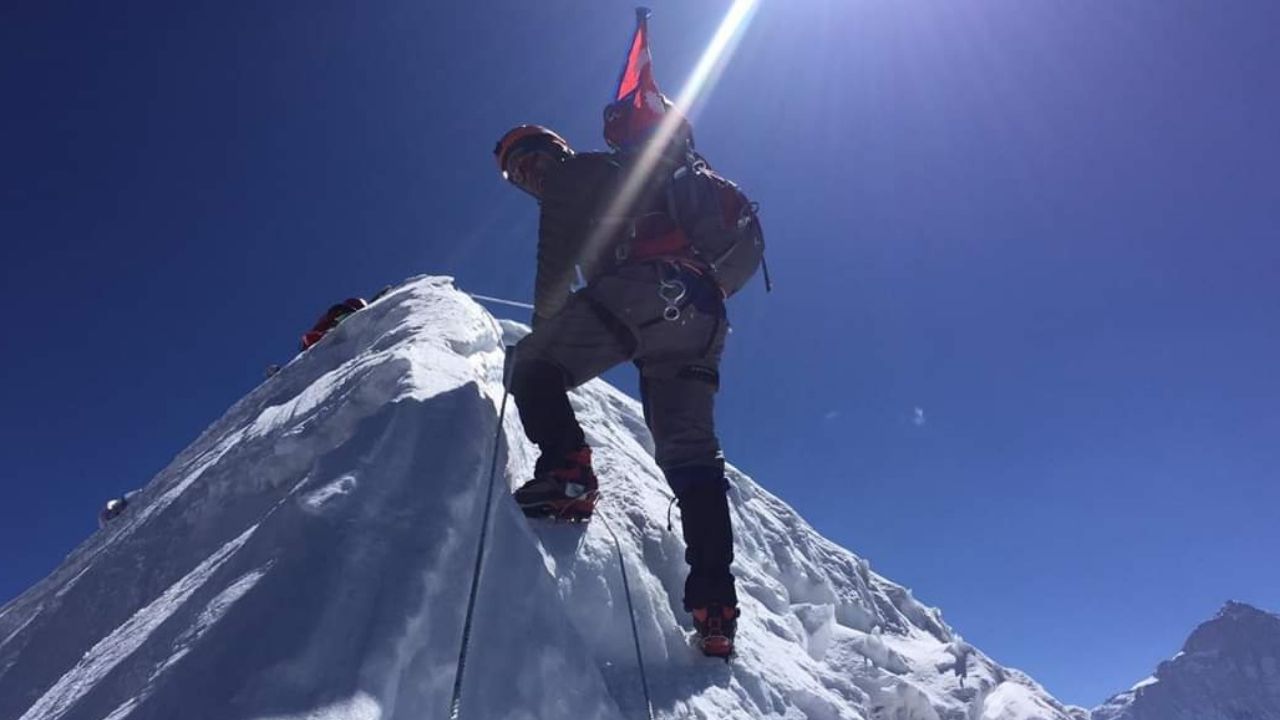
The summit push starts around midnight or 1:00 AM. You climb rocky terrain before reaching the glacier, then cross it with crampons and ropes. The route continues up the 50–60° headwall, rising about 150 m, using fixed ropes and a jumar before reaching the exposed summit ridge.
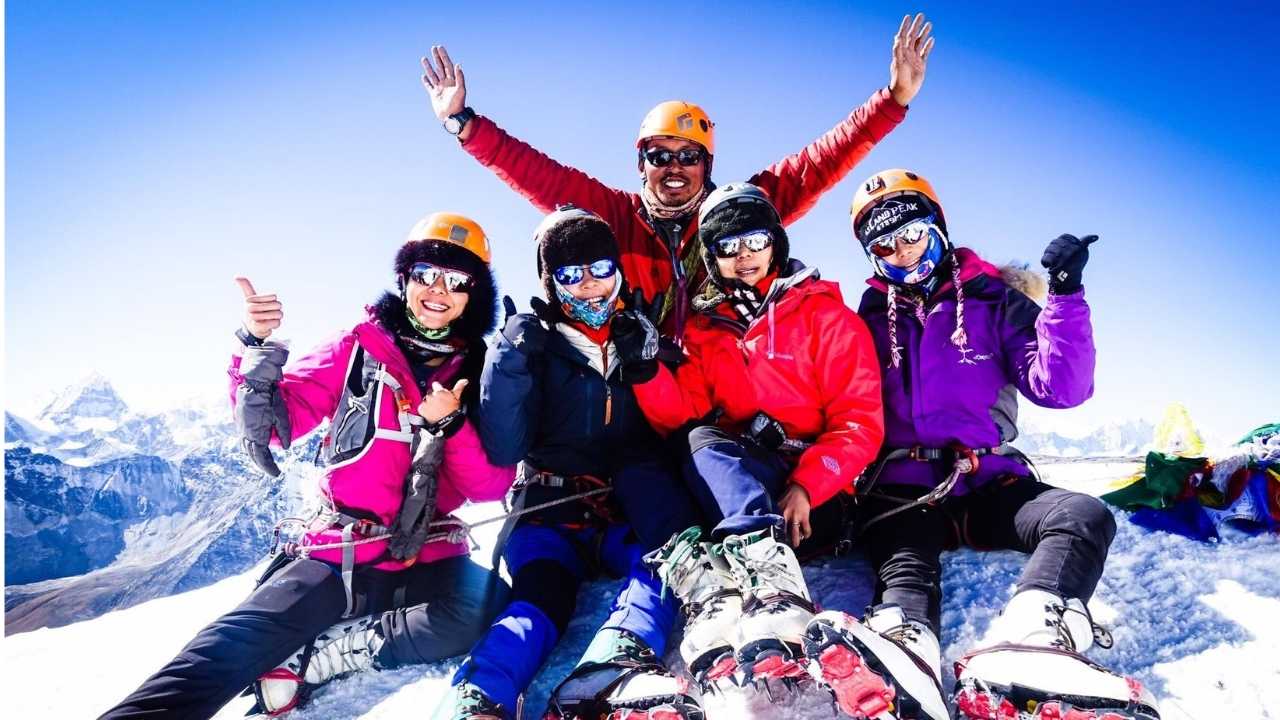
After several hours, you reach Island Peak at 6,189 m, with views of Lhotse, Nuptse, Baruntse, Makalu, Ama Dablam, and, on clear days, Everest. You descend through the same climbing sections to Base Camp and continue to Chhukung.
You then retrace the route through Dingboche, Tengboche, and Namche before continuing to Lukla for your flight back to Kathmandu.
Ready to go?
Download Day-by-Day Itinerary
Flights to the Everest region, including Island Peak Climbing, operate from Kathmandu or Ramechhap. During the main trekking seasons, flights usually depart from Ramechhap, about a 4–5-hour drive from Kathmandu. The flight takes around 15–20 minutes from Ramechhap or 30–35 minutes from Kathmandu. Weather can delay or cancel flights. See our Lukla Flight Guide for baggage limits, flight schedules, and route information.
Road Option to Lukla
For Island Peak Climbing, you can travel by road from Kathmandu to Salleri, then continue toward Kharikhola and Surke. The journey takes about 2 days by road, depending on road conditions. From Surke, you continue trekking toward Phakding, where you join the main Everest trail.
Quick Trip Facts
Total Distance
115 km
Walking Days
12
Accommodation
Hotel/Teahouse/Tented Camp
Meals
B+L+D
Transportation
Car/van/Flight
Group Size
Max. 12
Guide
Government Licensed guide
Porter
1 porter for 2 clients
Best Season
March-May/Sep-Nov
Fitness Level
Good Fitness Required
Permit
Included
Trip Style
Guided Trek & Climb
Starts
Kathmandu
Ends
Kathmandu
Why Choose the Island Peak Climbing?
If your goal is to gain practical mountain climbing experience, Island Peak Climbing takes you from the established Khumbu trekking route into the Imja Valley, then onto a glacier, fixed ropes, steep snow and ice, and an exposed summit ridge. It gives you a clear progression from trekking to technical climbing in one trip.
To Enter the Imja Valley
Turn east from Dingboche toward Chhukung and leave the main Everest Base Camp trail behind. The valley opens toward Lhotse, Ama Dablam, Baruntse, and Island Peak.
To Learn Climbing Skills
At Base Camp, practise crampon movement, ice axe use, rope handling, and jumar ascender use before these skills are needed higher on the mountain.
To Climb Fixed Ropes
The summit route includes a 50–60° headwall, where you climb approximately 150 m on fixed ropes using a jumar. This gives you direct experience with steep snow and ice climbing.
To Reach a 6,189 m Summi
Island Peak takes you onto an exposed summit ridge above the headwall before reaching the 6,189 m summit, where the surrounding Himalayan peaks open up around you.
Why Choose Mountain World Treks For Island Peak Climbing
Because our team has direct, repeated experience on Island Peak. I first summited Island Peak in 2016 and have now reached the summit three times. Our main guides, Fura Sherpa and Dilip Tamang, have also summited Island Peak many times and spend around two months at Base Camp during the main season, leading clients to the summit repeatedly. They know the glacier, headwall, fixed ropes, and summit ridge from firsthand experience.
1996
Saligram Started as a Trekking Porter
2002
Became a Licensed Mountain Guide
2010
Founded Mountain World Treks
Today
Still Guiding Treks and Climbs in Nepal
30+
Years Working in the Himalayas
Experienced Climbing Team
Our guides know the Island Peak route from the trekking section through Chhukung, Base Camp, glacier, headwall, and summit ridge.
Training Before the Climb
At Base Camp, your guide goes through crampons, ice axe, harness, ascender, and fixed-rope techniques before the summit attempt.
We Monitor You at Altitude
Guides carry a pulse oximeter and first-aid kit and keep track of how you are responding as the altitude increases.
Small Groups, Closer Support
Groups are limited to 12 trekkers, allowing the guide to manage different walking speeds and give more attention during climbing preparation.
Direct Advice Before You Book
Ask us about the headwall, glacier crossing, summit start, fitness, equipment, or altitude before you commit. We will explain everything.
Fair Treatment for Our Porters
Saligram started his own Himalayan career as a trekking porter, so he understands the physical demands of carrying loads.
Is the Island Peak Climb Right Option For You?
Island Peak Climbing is a good choice if you want to go beyond trekking and try real mountain climbing. You need to handle long uphill walks, high altitude, an overnight summit start, glacier travel, crampons, fixed ropes, and steep snow and ice. Previous peak-climbing experience is not required, but you should be fit, comfortable walking at altitude, and ready to learn basic climbing skills.
If this is your first peak climb, read our Beginner’s Guide to Climbing in Nepal to understand the skills, equipment, and preparation required.
Ideal for You If
- You want to move from trekking into glacier and fixed-rope climbing.
- You want to learn crampon, ice axe, harness, and ascender techniques.
- You want to climb a 50–60° snow and ice headwall.
- You can handle long uphill days at high altitude.
- You are comfortable with a midnight or 1:00 AM summit start.
- You are new to peak climbing but ready to learn with a climbing guide.
Not Ideal for You If
- You want a trek without technical climbing.
- You do not want to use climbing equipment or fixed ropes.
- You are uncomfortable on snow, glaciers, or steep terrain.
- You are not prepared for long days at high altitude.
- You do not want an overnight summit attempt.
Island Peak Climb Highlights
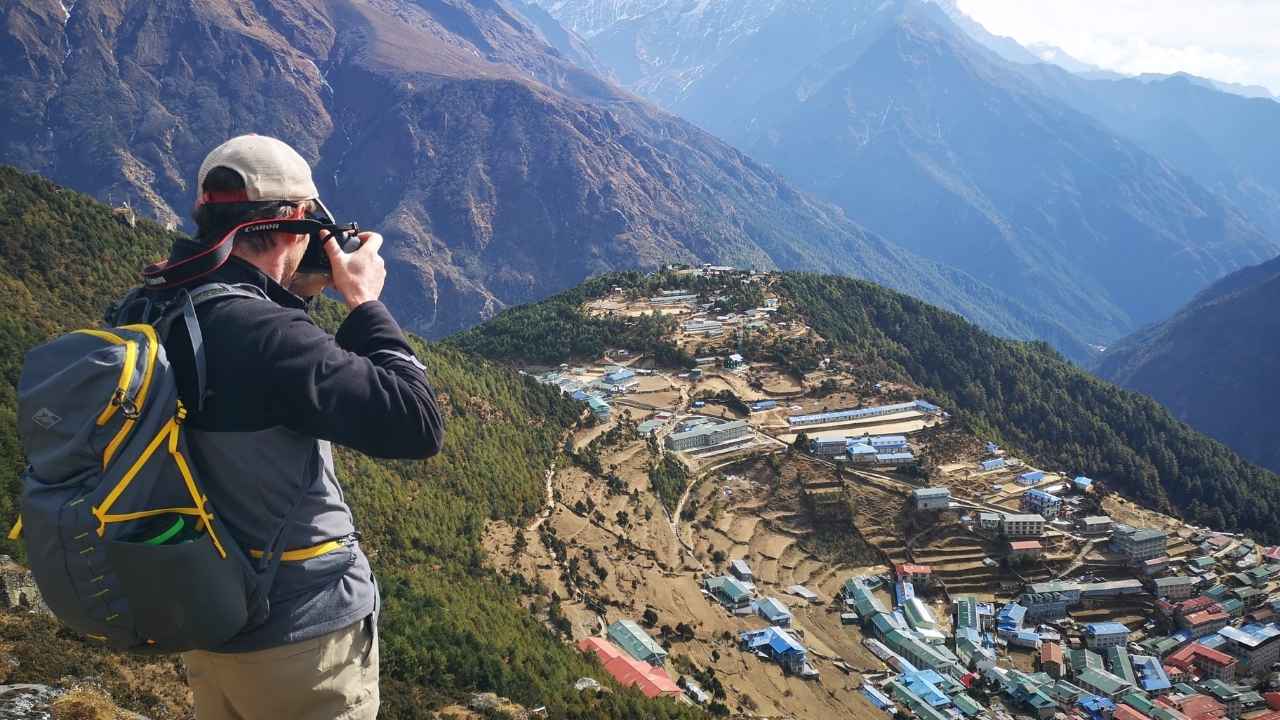
Namche Bazaar - 3,440 m
Spend an acclimatization day in the Sherpa town before heading higher.
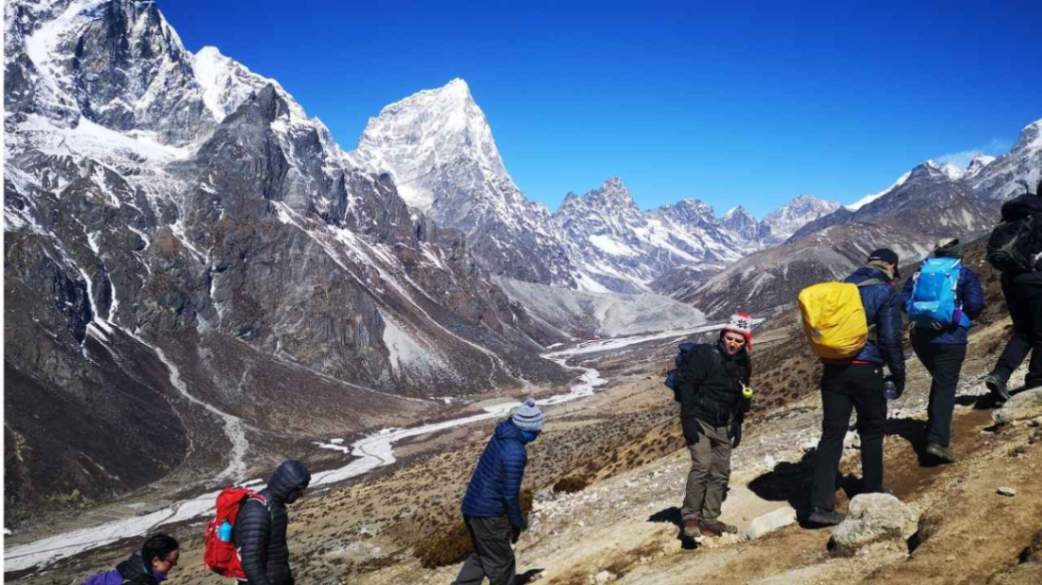
Nangkartshang Hike - 5,050 m
Climb above Dingboche during the acclimatization day before returning to sleep lower.
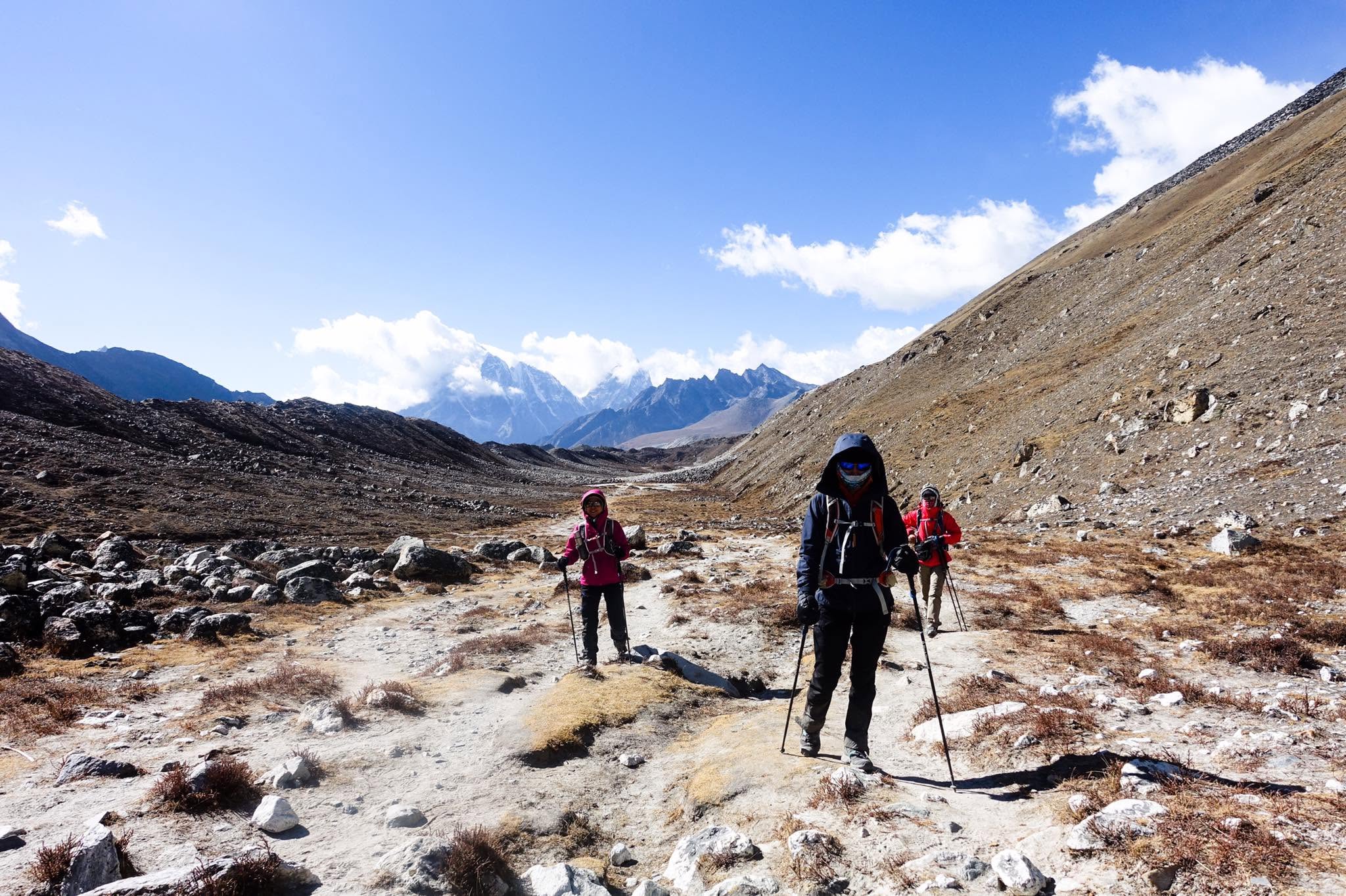
Chhukung - 4,730 m
Enter the Imja Valley and reach the small settlement beneath the Island Peak massif.
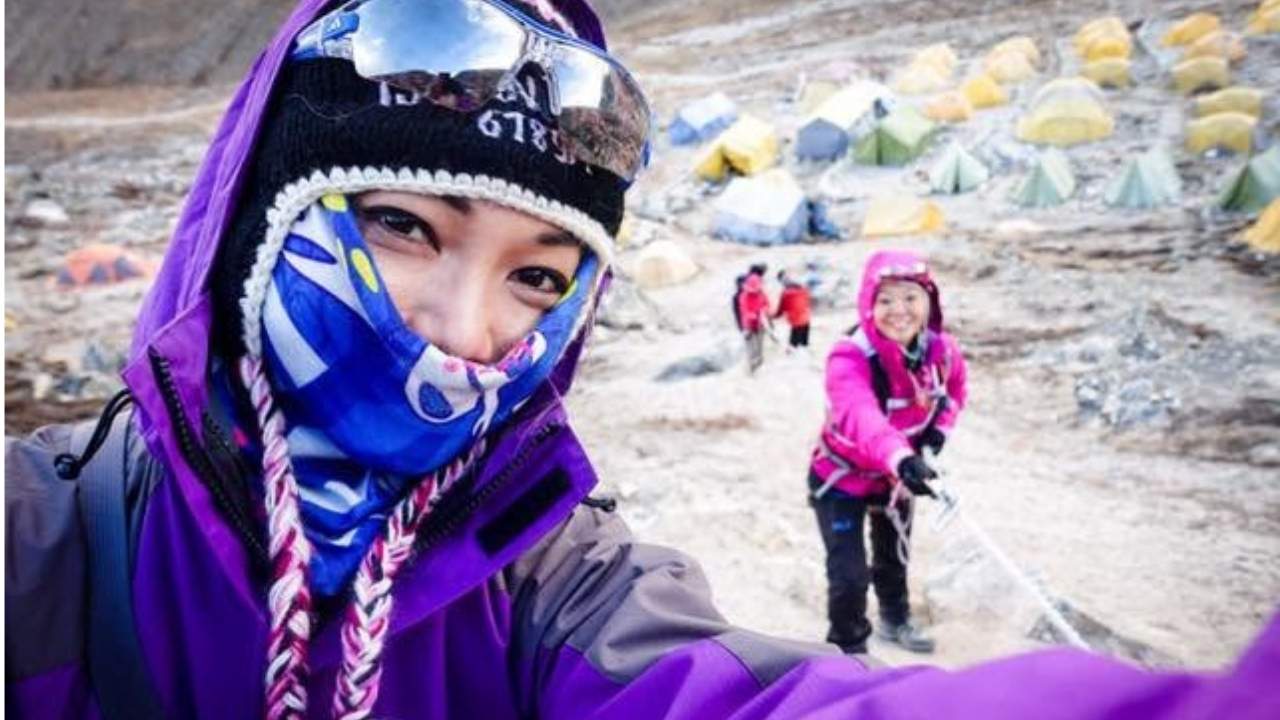
Island Peak Base Camp - 5,100 m
Reach the climbing camp below the peak before the summit attempt.
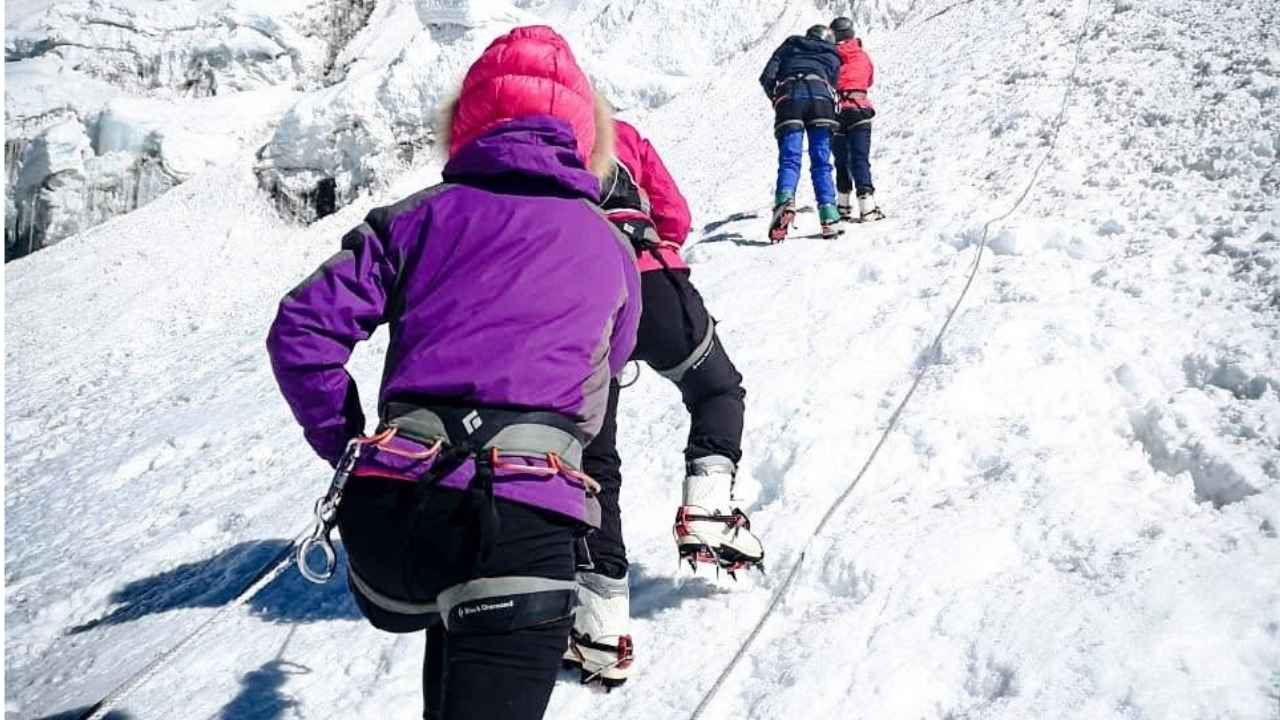
50–60° Headwall
Climb the approximately 150 m steep snow and ice section using fixed ropes and a jumar.
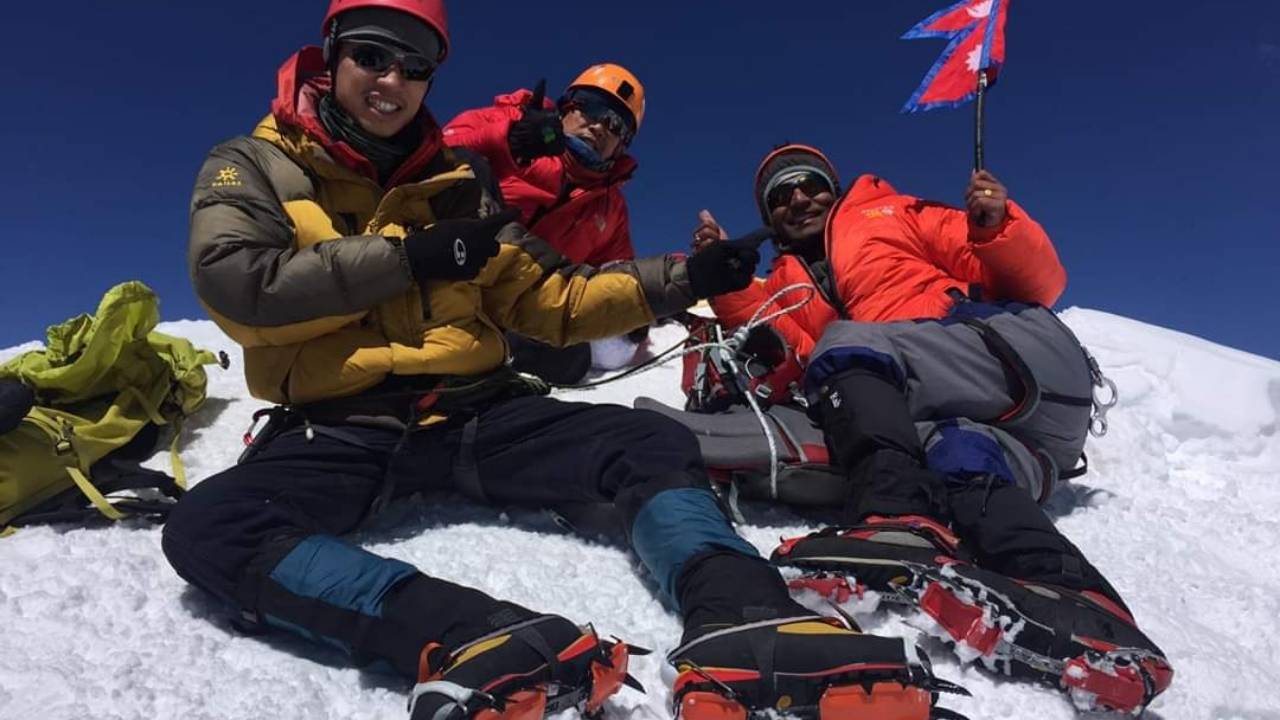
Island Peak Summit - 6,189 m
Reach the summit with views of Lhotse, Nuptse, Baruntse, Makalu, and Ama Dablam.
Island Peak Climbing Itinerary
We designed this 15-day Island Peak climbing itinerary with two acclimatization stops in Namche and Dingboche before you move higher into the Imja Valley. You then continue through Chhukung to Island Peak Base Camp, with time to prepare for the summit before the early-morning climb. The day-by-day itinerary below gives you the route, altitude, walking time, and key activities for each day.
Island Peak Climbing Cost
Our 15-day Island Peak Climbing package costs USD 2199 per person. The price is the same for group joining and private trips. With a private climb, you choose your dates and climb with your own group.
Group Joining Climb
Join a fixed departure and climb Island Peak with other climbers.
Private Climb
Same price, your own dates and private group.
- Your departure date
- Private group
- Flexible itinerary
Customize My Climb
Need extra acclimatization days, a different itinerary, or additional services? We can arrange it.
- Custom itinerary
- Private climbing arrangements
- Helicopter options
How We Arrange Your Island Peak Climb
From your first inquiry to your arrival in Nepal, we handle the arrangements step by step.
Send an Inquiry
Tell us your preferred dates, group size, and climbing plans.
Receive Your Itinerary & Quote
We’ll send your 15-day itinerary, cost, inclusions, and answers to your questions.
Confirm Your Booking
Pay the required deposit to confirm your climb. We then arrange the required services for your trip.
Prepare for Island Peak
We’ll send your packing list, climbing gear advice, preparation tips, and other information before you arrive.
Island Peak Climb Cost Includes and Excludes
The Cost Includes
- Airport pick-up and drop-off in Kathmandu
- 3 nights hotel accommodation in Kathmandu with breakfast, including before and after the trek
- Domestic flights (Kathmandu–Lukla–Kathmandu)
- Sagarmatha National Park Entry Permit
- Khumbu Pasang Lhamu Rural Municipality Entry Permit
- Island Peak climbing permit
- Government-licensed English-speaking trekking and climbing guide
- Porter service (1 porter shared between 2 trekkers, maximum combined luggage weight of 25 kg)
- 9 nights teahouse accommodation during the trek
- 1 night tented accommodation at Island Peak Base Camp
- Three meals a day during the trek and climb (breakfast, lunch, and dinner with a cup of tea or coffee)
- Necessary camping arrangements at Island Peak Base Camp
- Climbing equipment required for the Island Peak summit, including ropes and other technical equipment provided by the climbing team
- Climbing training and basic technical instruction before the summit attempt
- Comprehensive first-aid kit and pulse oximeter carried by your guide
- Sleeping bag and duffel bag (available on request)
- Free luggage storage at our Kathmandu office during the trek
- Company T-shirt, climbing completion certificate, and medal
- All government taxes and agency service charges
The Cost Excludes
- International flights to and from Nepal
- Nepal tourist visa fee
- Personal trekking and climbing gear and equipment
- Personal expenses (snacks, drinks, bottled or boiled water, laundry, souvenirs, etc.)
- Hot showers, Wi-Fi, and device charging at teahouses
- Alcoholic beverages and soft drinks
- Tips for your trekking guide, climbing guide and porter (optional but always appreciated)
- Extra accommodation, meals, or transportation in Kathmandu due to flight delays, early arrival, late departure, or changes to the itinerary
- Any costs arising from itinerary changes caused by weather, natural disasters, government restrictions, flight cancellations, or personal emergencies
- Personal climbing insurance or rescue costs
- Any additional climbing equipment required because of individual needs or changing route conditions
Travel insurance is not included in the package. Before your climb, you must purchase a policy that specifically covers high-altitude trekking and climbing up to at least 6,200 m, along with emergency helicopter evacuation and medical treatment.
Where Do You Sleep During the Island Peak Climb?
You stay in teahouses from Lukla through Chhukung, with twin-sharing rooms and shared bathrooms. Facilities become more basic at higher villages. At Island Peak Base Camp, you sleep in tents with a separate dining and toilet setup.
For more information, see our Island Peak Climb Accommodation Guide.
- Twin-sharing rooms & Shared bathrooms
- Heated dining rooms at higher villages
- Two-person sleeping tents at Base Camp
- Separate dining and toilet tents at Base Camp
- Wi-Fi and charging on Trek with extra cost
- Hote Shower on trekking section
What Do You Eat During the Island Peak Climb?
Teahouses serve dal bhat, noodles, pasta, soups, fried rice, eggs, pancakes, and bread during the trekking section. Food choices become simpler higher up, while meals at Base Camp are prepared in the camp dining tent.
- Dal bhat and rice
- Noodles and pasta
- Soups and fried rice
- Eggs and potatoes
- Pancakes and bread
- Tea, coffee, and hot drinks
- Warm camp meals at Base Camp
See our Island Peak Climb Food & Drinks Guide for more information about meals along the route.
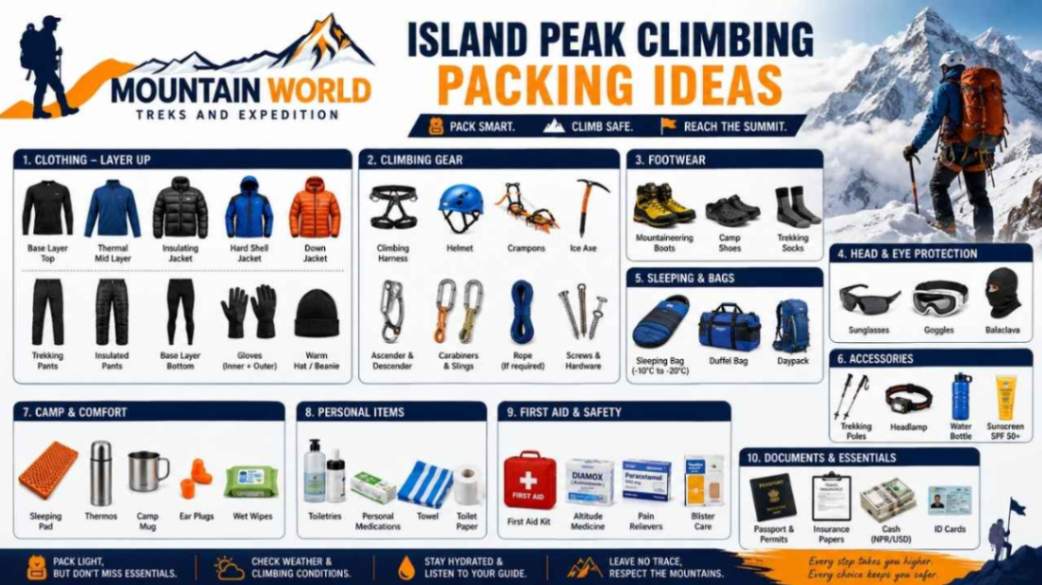
Packing for Island Peak Climbing
Pack trekking clothes, warm layers, a waterproof jacket, trekking boots, a sleeping bag, sunglasses, sunscreen, personal medication, trekking poles, and a water bottle. For the summit, you need mountaineering boots, crampons, a harness, helmet, ice axe, ascender, and warm climbing layers, and we provide the required climbing equipment as part of the package. Keep your main gear in your duffel bag and essentials such as water, a jacket, snacks, and personal items in your daypack.
Our Island Peak Climbing Packing List covers trekking clothing, climbing gear, footwear, sleeping equipment, personal items, and travel documents.
Island Peak Climbing Difficulty
Island Peak is a strenuous technical climb.
Island Peak Climbing is a strenuous technical climb at 6,189 m. The route includes long high-altitude trekking, glacier travel, crampons, fixed ropes, and a 50–60° headwall. The summit climb starts around midnight and requires good fitness, acclimatization, and basic climbing skills..
Why Is Island Peak Challenging?
- Long Approach: Several days of walking can leave you tired before summit day.
- High Altitude: At 6,189 m, reduced oxygen makes every effort harder.
- Night Start: The summit push begins around midnight or 1:00 AM in darkness and cold.
- Glacier Crossing: You cross glaciated terrain while roped up and need careful foot placement.
- Steep Headwall: A 50–60° snow and ice slope rises about 150 m and is climbed on fixed ropes.
- Exposed Ridge: The narrow sections require balance, focus, and controlled movement.
Fitness & Preparation
You need good fitness and proper preparation for Island Peak Climbing. Train with uphill hiking, stairs, cardio, and strength exercises while carrying a backpack. Practice basic crampon, ice axe, and fixed-rope techniques before summit day, and allow enough time for acclimatization at high altitude.
For a detailed training plan, see our Island Peak Fitness & Preparation Guide.
Your training should include:
- Long hikes: Gradually increase distance and elevation.
- Uphill training: Use stairs, steep trails, or hill repeats.
- Back-to-back hikes: Train on consecutive days.
- Leg strength: Squats, lunges, step-ups, and calf raises.
- Cardio: Brisk uphill walking, running, or cycling.
- Pack training: Gradually carry the daypack you will use.
- Boot training: Break in your actual trekking boots before departure.
During the final 2–3 weeks, reduce the training load and let your body recover. Arrive with broken-in boots and enough endurance to walk uphill for several hours.
Best Time for Island Peak Climbing
The best time for Island Peak Climbing is March to May and late September to November. Spring and autumn usually bring stable weather, clear mountain views, and better conditions for the glacier, headwall, and summit climb. April, May, and October are among the most popular months.
Spring Season
Mar · Apr · MaySpring offers good climbing conditions, with April and May being popular months for Island Peak.
- Weather: Mild days, cold nights
- Crowds: High
- Visibility: Usually clear
Summer Season
June · July · AugustMonsoon brings rain and cloud to the lower Khumbu, while conditions higher on Island Peak can be less predictable.
- Weather: Rain, cloud, and humid
- Crowds: Very Low
- Visibility: Variable
Autumn Season
Sep · Oct · NovAutumn is one of the most popular periods for Island Peak, with October usually offering the most stable conditions.
- Weather: Cool and generally dry
- Crowds: High
- Visibility: Excellent
Winter Season
Dec · Jan · FebWinter brings much colder temperatures and harder snow and ice conditions on the higher sections.
- Weather: Very cold, possible heavy snow
- Crowds: Low
- Visibility: Often very good
Island Peak vs Mera Peak Climbing
Not sure which peak is right for you? Compare Island Peak and Mera Peak by altitude, difficulty, climbing terrain, duration, and technical requirements.
| Feature | Island Peak Climbing: 15 Days Itinerary, Cost and Guide | Mera Peak Climbing | 15 Days Itinerary, Cost & Best Time |
|---|---|---|
| Duration | Days | Days |
| Highest Point | ||
| Difficulty | ||
| Best For | ||
| Mountain Highlights | ||
| Landscape | ||
| Culture | ||
| Crowds | ||
| Trek Experience |
What Do You Need to Know Before Island Peak Climbing?
Island Peak is more than a high-altitude trek. You will cross a glacier, climb snow and ice on fixed ropes, and tackle a 50–60° headwall before reaching the 6,189 m summit. These guides cover the practical details you need before leaving Kathmandu.
What is altitude sickness on Island Peak Climbing?
Altitude sickness can occur as you climb above 2,500 m, and the risk increases as you approach Island Peak at 6,189 m. Headache, nausea, dizziness, tiredness, and poor sleep are common early signs. Tell your guide if you feel unwell. If symptoms worsen, stop ascending and descend.
In an emergency: Your guide will assess the situation and arrange the next steps, including evacuation if needed. If medical treatment is required, our team can coordinate your return to Kathmandu and help arrange a suitable hospital or clinic.
For early signs, prevention, acclimatization, and what to do if symptoms appear, see our Island Peak Altitude Sickness Guide.
What do I need to plan before the climb?
Before the climb, we arrange your climbing permits, Lukla flights, accommodation, guide, porter, and required climbing equipment included in the package. You need to arrange your travel insurance, Nepal visa, personal clothing, travel documents, and personal expenses before arriving in Nepal.
Island peak climbing Video Guide
Island Peak Climbing FAQS
Still have questions? Our team responds within 24 hours.
info@mountainworldtreks.comOur Registrations & Memberships

Government of Nepal

TAAN

Nepal Tourism Board

NMA

TripAdvisor Excellence

45+ Countries
Island Peak Climbing: 15 Days Itinerary, Cost and Guide