Drinking water needs more attention. Trekkers usually use boiled, filtered, or treated water rather than drinking directly from taps, streams, or other natural sources. Your appetite may also change as you gain altitude. Some days you may want a full plate, while on others a bowl of soup, noodles, or porridge may be easier to manage. Carrying a few familiar snacks is useful for those days.
Everest Base Camp Trek Food and Drinks: What Is It Like?
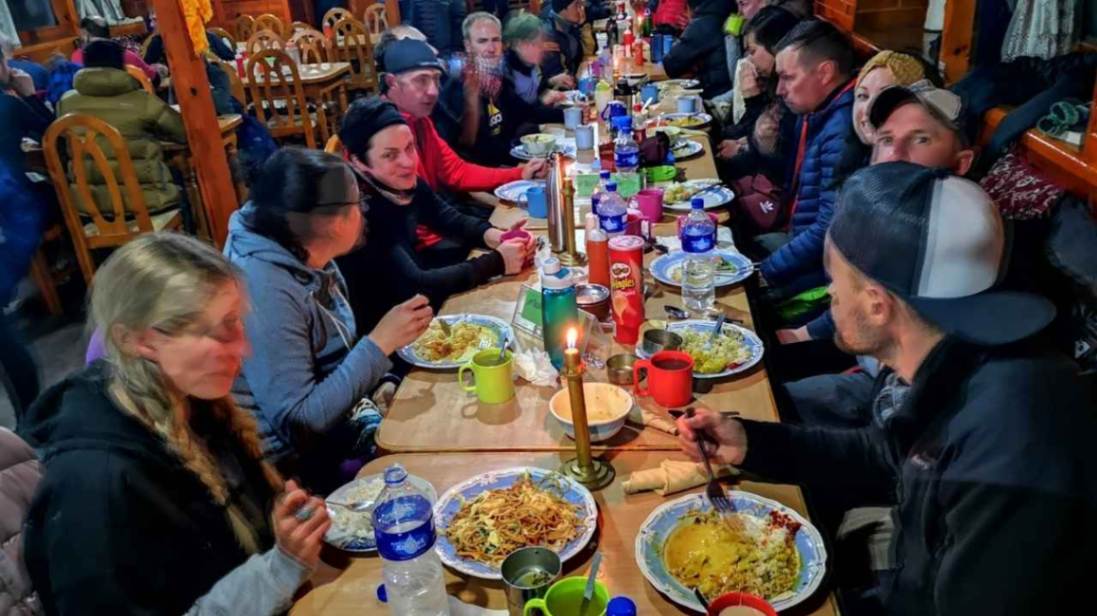
Most trekkers eat breakfast and dinner at the teahouse where they stay, while lunch is usually taken at a lodge along the trail. The dining room is also where trekkers spend time warming up, drinking tea, and talking with other groups.
Menus mix Nepali staples with familiar Western dishes. Dal bhat, noodles, soup, momos, pasta, fried rice, eggs, porridge, and pancakes are common choices. The biggest difference comes with altitude and location. Lukla and Namche Bazaar have more restaurants, bakeries, and cafés, so you will find a wider range of food. After Namche, the choice gradually becomes more limited, particularly in Lobuche and Gorak Shep.
What Is the Main Food on the EBC Trek?
Dal Bhat
Dal bhat is one of the easiest meals to rely on during the trek. A typical plate comes with rice, lentil soup, vegetables, and pickles, although the sides vary from one teahouse to another. It is especially useful after a long walking day because you can get a substantial meal without having to choose something unusual. Some teahouses also offer extra rice or lentils, depending on the lodge.
Noodles and Thukpa
Noodles are available at most stages of the route. You can order them fried or in soup, often with vegetables. Thukpa is a Tibetan-style noodle soup and is a popular choice on cold evenings. If your appetite is low, a bowl of hot noodle soup can be easier to finish than a large plate of food.
Momos
Momos are steamed or fried dumplings found throughout Nepal and are common on the lower and middle sections of the EBC route. Vegetable momos are widely available, while other fillings depend on the teahouse. They make a useful change when you have eaten rice, noodles, or dal bhat for several days.
Pasta
Pasta is available at many teahouses, particularly around Lukla, Phakding and Namche Bazaar. Expect straightforward preparations rather than elaborate sauces. Tomato, garlic, and cheese-based options may be available, but the exact choices depend on the lodge.
Breakfast
Breakfast is usually eaten before setting out for the day’s walk. Common choices include porridge, oatmeal, eggs, toast, Tibetan bread, pancakes, and potatoes, along with tea or coffee. For an early start, tell the teahouse the night before. This is particularly useful on longer days when you need to leave soon after breakfast.
How Does Food Change With Altitude?
The food does not suddenly disappear as you climb. What changes is the range of choices, the availability of some ingredients, and the price.
Lukla
Lukla has plenty of places to eat, with both Nepali meals and familiar Western dishes. Bakeries, cafes, and larger teahouses give you more choice than you will find farther up the trail. This is also a convenient place to buy snacks before starting the trek.
Phakding
Phakding still has a good selection of teahouse meals. Dal bhat, noodles, pasta, soup, momos, and standard breakfast dishes are common. At this stage, you can usually choose meals based on what you feel like eating rather than simply choosing from a short menu.
Namche Bazaar
Namche has the broadest food selection on the main EBC route. Along with teahouse meals, you will find bakeries, cafes, and restaurants serving items such as pizza, burgers, cakes, and other international dishes. It is also one of the best places to buy snacks and prepare for the higher sections of the Everest Base Camp Trek itinerary.
Debuche
After Namche, the range starts to narrow. Teahouses continue to serve dal bhat, noodles, pasta, soup, momos, and breakfast dishes, but you will see fewer choices than in Namche. Meals become more about having something warm and filling after the day’s walk.
Dingboche
Dingboche still has several teahouses, so there is usually a reasonable choice of meals. Dal bhat, noodles, soup, potatoes, pasta, and breakfast dishes remain common. Since many EBC itineraries include an acclimatization day here, having familiar food available can make the extra night easier.
Lobuche
By Lobuche, the menu is noticeably smaller. Expect basic teahouse meals such as dal bhat, noodles, soup, rice dishes, pasta, and eggs.
Prices are also higher than in the lower villages because food, fuel, and other supplies have to reach a much more remote settlement.
Gorakshep
Gorak Shep has the narrowest food selection on the standard EBC route. You can still order hot meals, but there is little reason to expect the variety found in Namche. Dal bhat, noodles, soup, pasta, rice dishes, eggs, and hot drinks are among the types of food you may find.
At this point, most trekkers are looking for a warm meal and enough food for the next part of the trek rather than a large selection.
Are Meals Included on the Everest Base Camp Trek?
Meal inclusions vary between trekking companies and packages. On many guided Everest Base Camp treks, breakfast, lunch, and dinner are included along with teahouse accommodation. Drinks, snacks, and drinking water are often paid separately. This can include tea, coffee, bottled water, boiled water, and other drinks you order during the trek.
If you trek independently, you normally pay for each meal and drink directly at the teahouse. Before booking, check what the package covers for meals, drinks, and water. This makes it easier to set a realistic food budget for the trek.
What Drinks Can You Get on the EBC Trek?
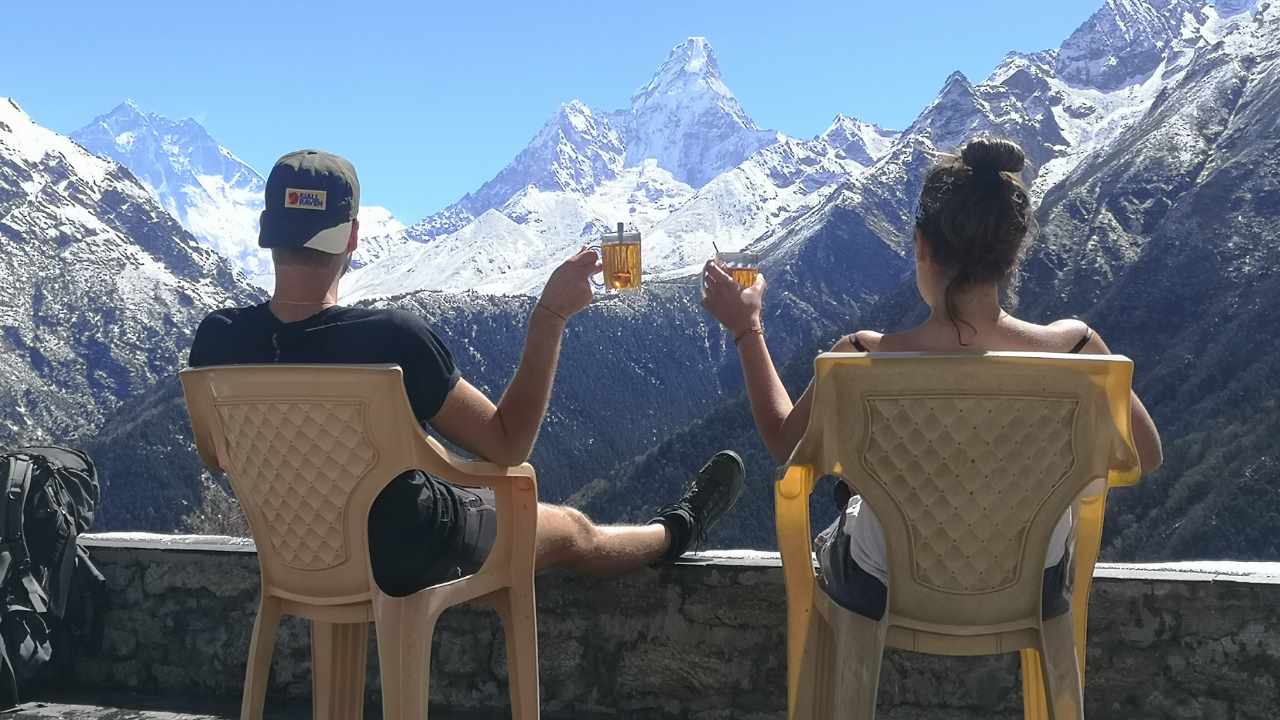
Teahouses serve a range of hot drinks throughout the EBC route. Tea is the most common, but you will usually have several other choices. Common options include:
- Black tea
- Milk tea
- Ginger tea
- Lemon tea
- Mint tea
- Coffee
- Hot chocolate
- Hot water
- Soup
Tea and hot water are especially common at higher elevations. Coffee is also available at many teahouses, although the quality and preparation can vary from one lodge to another. Drink prices generally increase as you climb, particularly for hot water and other items that require more fuel to prepare. If you want to carry a hot drink during the morning or on a cold section of the trail, you can usually ask your teahouse to fill a flask or bottle with hot water.
Is Drinking Water Safe on the EBC Trek?
Do not assume that tap water, stream water, or other natural water sources are safe to drink without treatment. Most trekkers use one of four options: boiled water, filtered water, chemical treatment, or bottled water. A reusable water bottle and a reliable water-treatment method should also be part of your Everest Base Camp Trek packing list.
Boiled Water
Teahouses sell boiled drinking water along the route. It is a convenient choice if you do not want to treat water yourself. The price usually gets higher as you climb because fuel and other supplies become more expensive to transport.
Water Filters
A personal filter can reduce your need to buy bottled or boiled water. If you use one, make sure it is designed for the type of water you plan to collect. Some trekkers combine filtering with another treatment method for extra protection.
Purification Tablets or Drops
Water purification tablets or drops are lightweight and easy to carry. They can be useful as a main treatment method or as a backup if you run out of other options. Follow the product instructions carefully, including the required contact time.
Bottled Water
Bottled water is available in many villages, although it becomes increasingly expensive at higher elevations. Buying bottles for the entire trek also means carrying and disposing of more plastic. Many trekkers therefore use a reusable bottle with boiled or treated water instead.
How Much Water Should You Drink During the EBC Trek?
There is no single amount of water that suits every trekker. Your needs change with the walking distance, weather, altitude, and how much you sweat. The easiest approach is to carry enough water for the section you are walking and drink regularly instead of waiting until you are very thirsty.
A practical routine is:
- Drink some water after waking up.
- Refill before leaving a village.
- Keep your bottle easy to reach while walking.
- Drink during breaks and with meals.
- Refill before longer sections where there are fewer places to stop.
- Carry extra water if the day’s conditions require it.
You may need more water on a long or sunny walking day than on a short, cold day. At the same time, do not force yourself to drink excessive amounts. If you develop a severe headache, confusion, unusual weakness, difficulty walking, or worsening breathing problems at altitude, tell your guide and take the symptoms seriously rather than trying to manage them by simply drinking more water.
Does Appetite Decrease at High Altitude?
A reduced appetite is common for some trekkers as they gain altitude. You may feel hungry less often or find that a full plate is harder to finish after a long day of walking. When this happens, smaller meals can be easier to manage. Soup, porridge, rice, noodles, potatoes, or a smaller portion of dal bhat are practical choices. Snacks between meals can also help you get enough energy when you do not feel like eating much at once.
Do not ignore food completely just because your appetite has dropped. Your body is still working hard each day. A loss of appetite can also occur alongside altitude-related illness. If it comes with a severe headache, confusion, unusual weakness, difficulty walking, or worsening breathing problems, tell your guide and take the symptoms seriously.
If you also want to understand the other effects of gaining altitude, see our guide to altitude sickness on the Everest Base Camp Trek.
What Should You Eat Before a Long Trekking Day?
Before a long walking day, stick with food you already know you can eat comfortably. For dinner, a meal based on rice, dal, potatoes, noodles, or pasta can provide plenty of carbohydrates. Add vegetables and some protein if they suit your usual diet. Breakfast should give you enough energy to get through the first part of the walk. Porridge, eggs, toast, pancakes, or another familiar breakfast are common choices at teahouses.
If you have an early start, let the teahouse know the night before. Eat early enough that you are not setting off with a completely full stomach. The goal is not to find a special trekking meal. It is to start the day fed, hydrated, and comfortable.
Are Vegetarian and Vegan Meals Available?
Vegetarian meals are widely available on the Everest Base Camp route. Most teahouses have several meat-free choices, so vegetarians usually have little trouble finding something to eat. Vegan diets need more planning. Many teahouse dishes may contain milk, butter, or eggs, even when the dish does not appear to contain meat. Options can also become more limited as you climb.
If you are vegan, tell your trekking company and guide before the trek. At each teahouse, explain clearly what you cannot eat rather than simply asking for a vegetarian meal. Food allergies require the same level of care. Carry suitable snacks as a backup, especially for higher sections where there are fewer menu choices and fewer alternatives if a lodge cannot meet your dietary needs.
What About Meat on the EBC Trek?
Meat dishes are available at some teahouses, particularly in the lower villages, but the choice becomes smaller as you head higher. If you want to eat meat, ask what is available that day and how it is prepared. Freshly cooked food is a better choice than anything that appears to have been sitting out for a long time.
You may find chicken or other meat dishes on some menus, but do not expect the same selection you would have in Kathmandu or Namche Bazaar. For the higher sections of the trek, many trekkers stick with dishes such as dal bhat, noodles, soup, rice, and potatoes because they are widely available and cooked to order.
Can You Eat Snacks on the EBC Trek?
Yes. Snacks are easy to carry and useful between meals, especially on longer walking days. Good options include energy bars, chocolate, nuts, dried fruit, biscuits, crackers, and other foods that you already know you can eat comfortably.
Keep a few snacks in your daypack so you can reach them during a break without opening your main luggage. Chocolate or energy bars can also be useful when you want a quick source of energy before reaching the next teahouse.
Namche Bazaar is a convenient place to restock before heading toward the higher villages. If you have a favorite snack or a specific dietary requirement, bring some from Kathmandu rather than relying on finding the exact product along the trail.
Can You Drink Coffee and Tea at High Altitude?
You can drink coffee and tea during the EBC Trek. If you normally have caffeine every day, there is usually no reason to stop simply because you are trekking at altitude. Tea is available at almost every teahouse, while coffee is common in the larger villages and many lodges farther up the trail.
The main point is not to make coffee or tea your only source of fluids. Continue drinking water regularly throughout the day. At higher elevations, sleep can already be difficult. If strong coffee or tea keeps you awake, consider having less later in the afternoon or evening.
Should You Drink Alcohol During the EBC Trek?
Alcohol is best avoided during the EBC Trek, especially as you reach higher elevations. Beer and other alcoholic drinks may be available at some teahouses, but alcohol can affect sleep and make dehydration harder to manage.
It can also make it more difficult to judge whether a headache, tiredness, or other symptoms are simply from the day’s walk or related to altitude. If you are already feeling unwell or having altitude-related symptoms, do not use alcohol as a way to relax or sleep. Most trekkers are better off sticking with water, tea, and other non-alcoholic drinks while their bodies are adjusting to the altitude.
What About Garlic Soup?
Garlic soup is a common item on teahouse menus and can be a good choice on a cold evening. It is warm, light, and easy to eat when you are not very hungry. You may hear that garlic soup helps prevent or treat altitude sickness. It should not be relied on for either.
Proper acclimatization, sensible pacing, and paying attention to altitude symptoms are much more important. If you develop serious or worsening symptoms, tell your guide rather than trying to treat them with garlic soup. Enjoy the soup for what it is: a warm meal, not an altitude treatment.
How Much Does Food Cost on the EBC Trek?
Food becomes more expensive as you move higher into the Khumbu. A meal that costs less in Lukla or Namche Bazaar will usually cost more in Lobuche or Gorak Shep. Prices vary between teahouses, seasons, and individual dishes, so it is better to treat menu prices as estimates rather than fixed rates.
Food is only one part of your overall budget, so see our guide to the Everest Base Camp Trek Cost for a broader breakdown of expenses. You will normally pay separately for items such as:
- Breakfast
- Lunch
- Dinner
- Tea and coffee
- Hot water
- Snacks
- Bottled water
Dal, bhat, noodles, soup, pasta, rice dishes, and other common meals are available at different prices depending on the village. Drinks and hot water can also become noticeably more expensive at higher elevations. If your trekking package includes meals, check whether drinks and drinking water are included as well.
If meals are not included, keep enough cash available for food and drinks throughout the trek, especially for the higher sections where prices are higher and there are fewer places to buy supplies.
What Is a Typical Day of Eating on the EBC Trek?
Your eating routine usually follows the walking schedule.
Breakfast
Breakfast is served at the teahouse before you leave. On a normal trekking day, you might have porridge, eggs and toast, pancakes, or Tibetan bread with tea or coffee. On longer days, leave enough time to eat without rushing.
During the walk, keep a few snacks in your daypack. Nuts, chocolate, dried fruit, biscuits, or an energy bar can be useful during breaks. You may also stop at a teahouse along the trail for tea, soup, or a light meal, depending on the day’s route.
Lunch
Lunch is usually taken at a teahouse along the trail. You can order a proper meal such as dal bhat, noodles, fried rice, pasta, or momos. The timing depends on your pace and the day’s walking distance.
Dinner
After reaching your overnight village, dinner is usually served at the teahouse where you are staying. Many trekkers choose a familiar meal that is easy to eat after several hours on the trail. At higher elevations, having dinner earlier can also give you more time to prepare your water, organize your daypack, and get ready for the next morning.
How Does Food Change From Lukla to Gorak Shep?
The difference is mainly in choice and price, not whether you can get a meal.
| Stop |
What to expect |
| Lukla |
The widest choice, including Nepali food, Western dishes, bakeries and cafes |
| Phakding |
Good selection of teahouse meals and breakfast dishes |
| Namche Bazaar |
The greatest variety, with cafes, bakeries, and international food |
| Debuche |
Fewer choices, with the usual teahouse staples |
| Dingboche |
Reasonable selection, but fewer options than Namche |
| Lobuche |
Smaller menu focused on basic meals and hot drinks |
| Gorak Shep |
The most limited choice on the standard EBC route |
As you climb, expect fewer menu choices and higher prices. You can still get hot meals at Gorak Shep, but it makes sense to choose from what the lodge has available rather than expecting the variety you found in Namche. If you have specific snacks or dietary requirements, Namche is a good place to stock up before continuing toward the higher villages.
What Food Should You Avoid on the EBC Trek?
You do not need to follow a strict list of forbidden foods on the EBC Trek. The safer approach is to be selective about what you eat, especially at higher elevations. Try to avoid:
- Food that looks undercooked or has been sitting out for a long time
- Raw foods when you are unsure how they were washed
- Untreated water or ice made from untreated water
- Very heavy meals when your stomach is already unsettled
- Foods that you know usually cause you digestive problems
- Alcohol, particularly at higher elevations
Freshly cooked meals served hot are generally a sensible choice. If something looks or smells unusual, choose another option. Your diet does not need to be perfect during the trek. The main goal is to eat enough, choose food that agrees with your stomach, and avoid unnecessary risks that could leave you dealing with stomach problems on the trail.
What Are the Best Foods for the EBC Trek?
The best food on the EBC Trek is food that gives you energy, agrees with your stomach, and is easy to find along the route. For regular meals, dishes such as dal bhat, rice, noodles, potatoes, and pasta are useful because they provide carbohydrates for long walking days. Soup can be easier to manage when you are cold or have little appetite.
Breakfast should be something you can eat comfortably before walking. Porridge, eggs, toast, and pancakes are common choices, but there is no need to force yourself to eat something you do not enjoy. If your appetite changes at altitude, smaller meals and snacks can be easier than trying to finish a large plate.
You also do not need to eat the same thing every day. Change between the available options and choose what feels good that day. In practice, a good EBC meal is one that you can digest comfortably, gives you enough energy, and is available at the teahouse where you stop.
Practical Tips for Eating on the EBC Trek
A few simple habits can make meals easier during the trek.
- Eat before you set off: Even when you are not very hungry in the morning, have something before a long walking day.
- Keep snacks within reach: Store a few in your daypack rather than your main luggage.
- Order dinner before you are exhausted: At busy teahouses, ordering a little earlier can save waiting time.
- Stick with food that agrees with you: If your stomach is unsettled, choose familiar and lighter meals.
- Restock in Namche: Buy snacks or other foods you want before heading toward the higher villages.
- Tell the teahouse about dietary restrictions: Explain allergies or specific dietary requirements clearly when ordering.
- Plan your water before bed: Refill your bottles and prepare what you will need for the next morning.
- Do not chase variety: At higher elevations, choosing a meal that is available and easy for you to eat is often more useful than looking for something different.
These small habits can save time and make eating easier when the walking days become longer and the menus become smaller.
What Should You Expect From Food at Gorak Shep?
Food at Gorak Shep is more about timing and practicality than variety. The village is the usual overnight stop before or after the Everest Base Camp and Kala Patthar walks, so many trekkers eat early, rest, and prepare for an early start the following morning. The menu is smaller than in Namche or the lower villages. You can still order familiar teahouse meals, but it is better to decide from what is available rather than expect a wide selection.
If you are staying overnight, take care of the next morning’s arrangements before going to bed. Refill your water, confirm breakfast time, and keep your snacks and essential gear ready for an early departure. At this altitude, getting enough food and rest matters more than finding a particular dish.
Is EBC Trek Food Safe?
Food safety can vary between teahouses, so it is worth taking a few basic precautions during the trek.
- Choose food that is cooked thoroughly and served hot.
- Be careful with raw vegetables or other uncooked foods if you are unsure how they were washed.
- Use boiled, filtered or otherwise treated drinking water.
- Wash or sanitize your hands before eating.
- Avoid food that looks like it has been sitting out for a long time.
- If a particular food repeatedly upsets your stomach, stop ordering it.
Be especially careful about anything that could leave you with stomach problems before a long walking day. If you develop persistent vomiting, severe diarrhea, or other significant symptoms, tell your guide and consider getting medical advice rather than trying to continue as normal.
Final Thoughts: What Should You Expect From EBC Food?
Food is not usually the difficult part of the Everest Base Camp Trek. The bigger adjustment is getting used to smaller menus, higher prices, and changes in appetite as you climb. You will have the most choice in Lukla and Namche Bazaar. Farther up the trail, meals become more basic, but you can still find warm food at the higher teahouses, including in Lobuche and Gorak Shep. The best approach is to eat regularly, carry a few snacks you know you like, and keep your drinking water properly treated.
If your appetite drops, smaller meals can be easier than trying to finish a large plate. You do not need gourmet food at 5,000 metres. You need enough food to support the day’s walk, water you can drink safely, and meals that sit well with your stomach. That is what makes teahouse food work on the EBC Trek. It may not be elaborate, but it keeps you fed through some very long days in the mountains.