Travel Guide
Everest Base Camp Trek Altitude Sickness: Symptoms, Causes & Prevention
Altitude sickness is one of the main health concerns on the Everest Base Camp trek. The route rises from Lukla at about…
S
Saligram
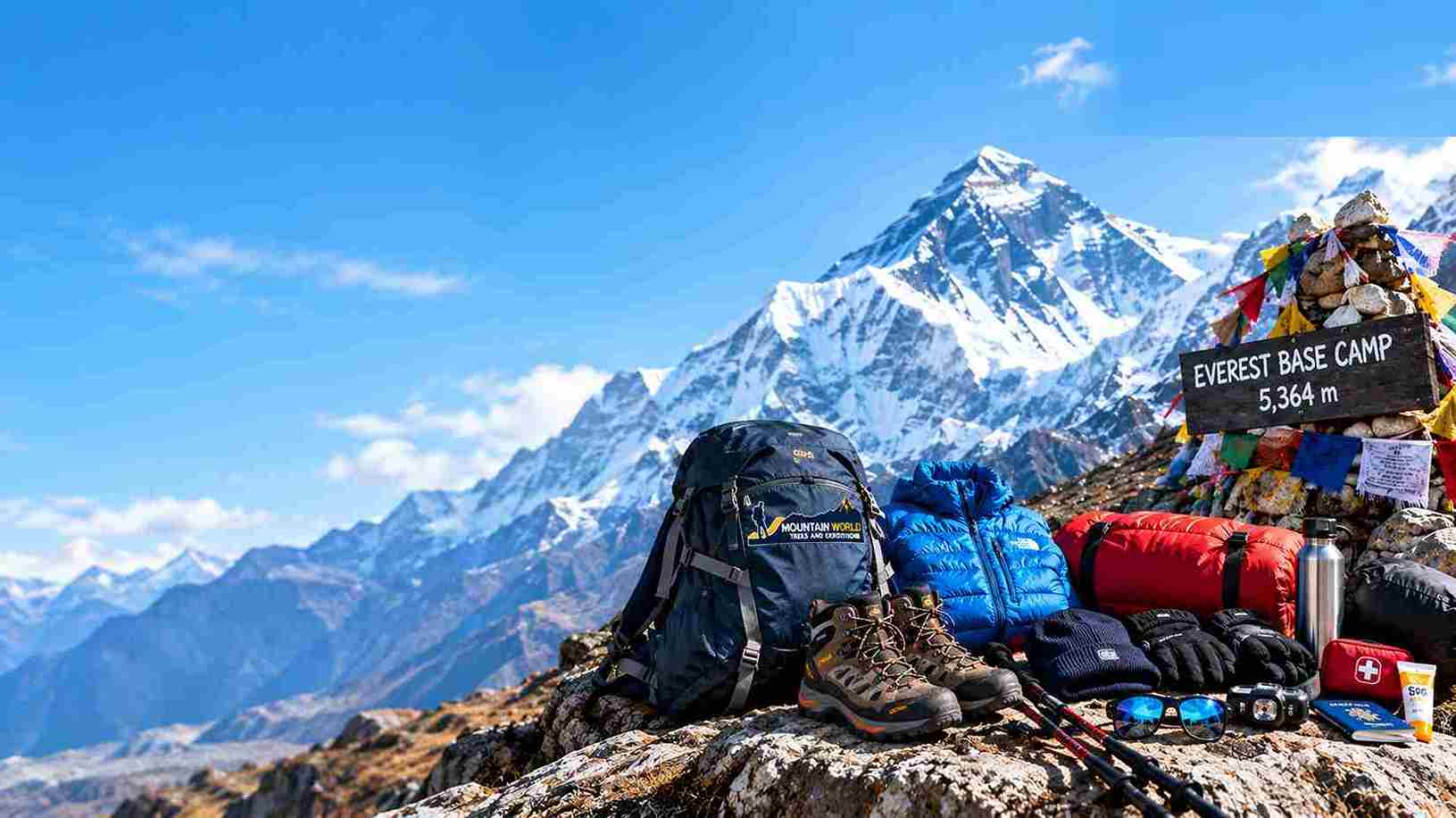
Planning your Everest Base Camp trek? This complete packing guide covers the clothing, footwear, gear, and essentials you need for the trail.
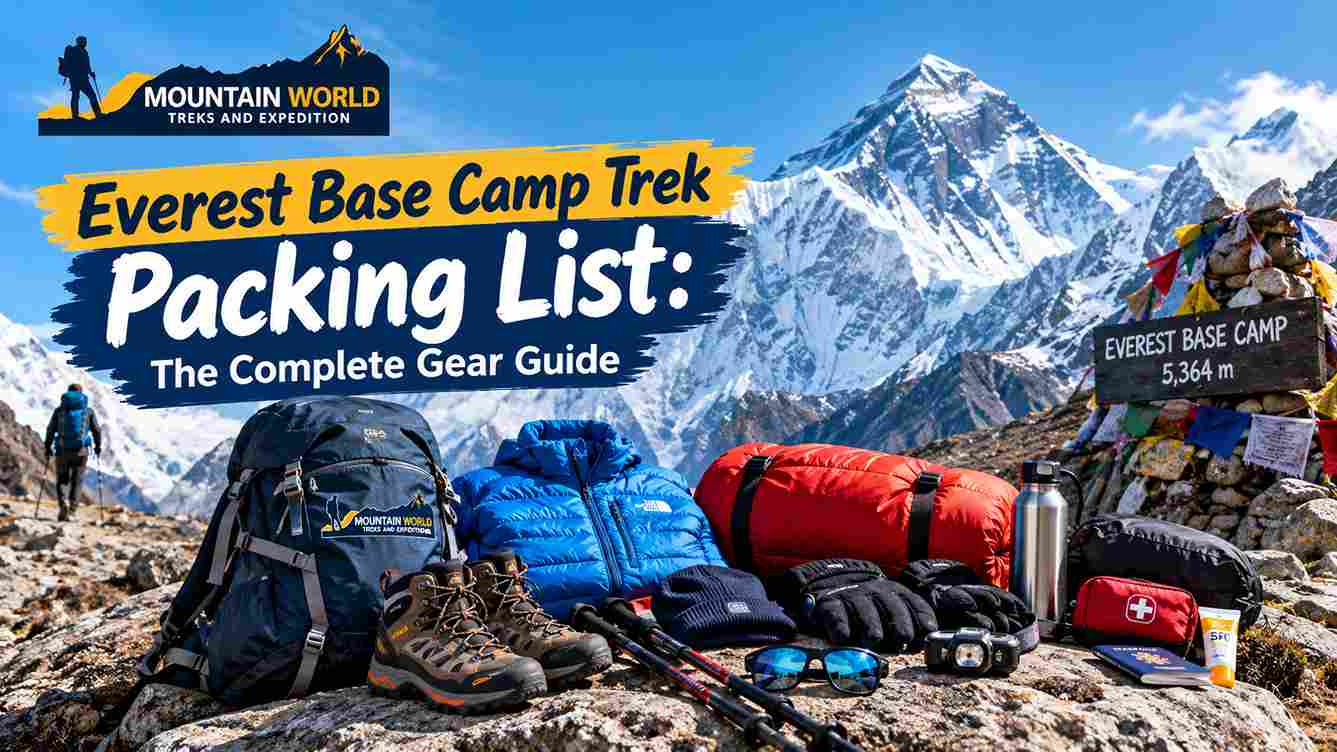
For the Everest Base Camp Trek, you need a reliable layering system, broken-in trekking boots, warm insulation, waterproof protection, a suitable sleeping bag, trekking poles, sun protection, and basic personal supplies. You do not need a new outfit for every day or expensive gear for every item.
The trek starts at Lukla, around 2,860 meters, and reaches Everest Base Camp at 5,364 meters. Kala Patthar adds another climb to about 5,545 meters. Temperatures can change sharply along the route. You might walk in a T-shirt on a warm afternoon near Lukla, then face freezing conditions during an early morning start from Gorak Shep.
The key is to pack for those changes without carrying things you will rarely use. A good layering system lets you adjust as the temperature changes, while reliable footwear and weather protection help you deal with the trail conditions.
This guide covers the clothing, footwear, sleeping gear, trekking equipment, toiletries, health supplies, and electronics you need. It also explains what to rent in Kathmandu, what to leave behind, and how to adjust your packing for different seasons and elevations.
If you are still deciding whether the route suits your fitness level, our Everest Base Camp Trek difficulty guide breaks down the walking, altitude and harder stages.
If a porter carries your main luggage, aim for about 10–12 kg in your duffel and 4–6 kg in your daypack. You can go lighter if you are able to.
You do not need a large expedition pack for the standard EBC route. Put clothing, your sleeping bag and other bulky items in the duffel. Keep only the things you may need during the day’s walk in your daypack.
| Bag | Suggested Weight |
| Main Duffel | 10-12 kg |
| Daypack | 4-6 kg |
| Total | 14-18 kg |
These figures are guidelines. Check your trekking company’s porter allowance before the trip, as luggage limits can vary.
If you are carrying your own gear, be stricter about weight. A pack that feels manageable in Lukla can become much harder to carry after several hours of walking at higher elevations.
Divide your gear according to when you will use it.
Start with the layers you need in the morning and remove them as you warm up.
You can start the morning wearing several layers, remove the fleece as the trail warms up and put it back on when the temperature drops.
The base layer manages sweat and helps keep your skin dry.
Pack:
Merino wool and synthetic fabrics are both practical choices.
Cotton is less suitable for your main trekking layers because it absorbs moisture and dries slowly.
Your mid-layer provides insulation.
Pack:
The fleece is useful during cool walking conditions and inside teahouses.
Your insulated jacket becomes more important as you move higher and during early morning starts.
Your shell protects you from rain, snow and wind.
Pack:
Choose a jacket with enough room to fit over your insulation without restricting movement.
Three to four trekking shirts and two pairs of trekking pants are enough for most EBC trekkers.
You do not need a separate outfit for every day.
Choose quick-drying clothing that can be washed when practical and rotated throughout the trek.
A useful combination is:
Long-sleeve shirts are particularly useful for sun protection.
For lower sections of the trail, some trekkers prefer convertible pants. Others simply use standard trekking trousers throughout the route.
Leave jeans in Kathmandu.
They are heavy, slow to dry and uncomfortable for long trekking days.
Your insulated jacket becomes especially useful above Dingboche and during early morning starts. A suitable high-altitude jacket is enough for a standard EBC trek when combined with your other layers.
If you rarely trek in cold environments, renting one in Kathmandu can make more sense than buying.
Bring a waterproof, breathable shell with a hood that fits comfortably over your insulating layers.
Rain and snow are not the only reasons to carry a shell. Wind can also make an otherwise manageable temperature feel considerably colder.
Look for:
A thin emergency poncho should not be your primary rain jacket.
Carry both sun protection and cold-weather protection because the same trekking day can involve strong sunlight, wind and freezing temperatures.
Pack:
A buff is versatile. You can use it around your neck, over your face in wind or as additional protection from the sun.
Comfortable, broken-in trekking boots with good grip are the safest choice for most trekkers. Fit matters more than brand.
Do not arrive in Nepal with completely new boots and expect to break them in during the trek. Before departure, test your boots on longer walks.
Check:
Waterproof boots can be useful in wet or snowy conditions, but waterproofing should not come at the expense of fit and comfort.
Camp Footwear
A lightweight pair of sandals or camp shoes is useful once you arrive at the teahouse.
After several hours in trekking boots, being able to change footwear is a small luxury that takes very little space.
Yes, a warm sleeping bag is strongly recommended even though you stay in teahouses.
Teahouses generally provide blankets, but rooms at higher elevations can become very cold at night. A suitable sleeping bag provides another layer of insulation and makes sleeping more comfortable.
When choosing one, pay attention to the comfort rating, rather than looking only at the lowest temperature printed on the label.
A sleeping bag liner can provide additional warmth and makes keeping the inside of the bag clean easier.
If your trekking company provides a sleeping bag, confirm its specifications before relying on it.
If you want to know what sleeping arrangements are like along the route, see our guide to Everest Base Camp Trek accommodation.
Trekking poles are not mandatory, but they are useful for balance, uneven terrain and long descents.
They can be especially helpful on:
The biggest benefit for many trekkers comes during descents.
Poles can help with balance and reduce some of the load placed on your legs and knees. You can buy them before your trek or rent them in Kathmandu.
A comfortable 25 to 35-liter daypack is usually enough when a porter carries your main luggage. Your daypack should contain only what you might need while walking. A typical daytime load includes:
Keep frequently used items near the top or in external pockets.
For example:
Easy-access pocket: sunscreen, lip balm, tissues and snacks.
Main compartment: warm layer, rain jacket and spare gloves.
Side pockets: water bottles.
Secure internal pocket: passport, money and important documents.
This organization saves time and prevents you from unpacking your entire bag whenever the weather changes.
A duffel is practical when a porter carries your main luggage. Use the duffel for:
Use Waterproof Bags Inside the Duffel
Do not rely entirely on the duffel’s outer material to protect your belongings.
Separate your equipment into waterproof or water-resistant bags.
A simple system is:
This makes finding things easier and prevents one wet item from soaking your entire luggage.
Yes. A headlamp is small, light and useful throughout the trek. You may need it for:
Choose a headlamp that is comfortable to wear and make sure it is charged before an early start.
Not necessarily. Their usefulness depends on the season and current trail conditions. Icy sections can develop after snowfall or during colder periods.
Rather than automatically carrying specialized traction equipment, ask your guide about current conditions before leaving Kathmandu.
This is one item where actual trail conditions matter more than a generic packing list. If conditions do require traction, having an appropriate pair can make icy sections more manageable.
Carry enough capacity for the day’s walking and refill along the route instead of carrying an excessive amount from the start.
A practical setup is one or two reusable bottles, or a hydration bladder combined with an additional bottle.
Your exact water requirement depends on:
Choose a system you can refill easily and drink from while walking.
A purification method such as tablets or a suitable filter can also be useful depending on how you plan to obtain drinking water.
Keep toiletries small and practical.
Pack:
A Simple Upper-Altitude Hygiene Strategy
As you gain altitude, showers can become less convenient and more expensive.
Wet wipes, hand sanitizer and a small towel become particularly useful when a full shower is not practical.
Very important. High altitude means stronger ultraviolet exposure, so sunscreen, sunglasses and lip protection should stay accessible throughout the trek.
Pack:
Apply sunscreen even when the air feels cold.
Cold temperatures can make sunlight feel less intense than it actually is. Snow and other bright surfaces can also reflect sunlight, increasing exposure.
Sunglasses should provide proper UV protection and fit securely enough to remain comfortable during long walking days.
Carry a compact personal first-aid kit focused on common trekking problems rather than trying to carry a full medical kit.
Useful items include:
Blister Prevention
Blisters are easier to prevent than treat. Before the trek:
Do not wait until a small hot spot becomes a painful blister before doing something about it.
Acetazolamide, commonly known as Diamox, is sometimes used for altitude-related illness, but it should not be treated as a routine item that every trekker should automatically take.
Discuss whether it is appropriate for you with a qualified medical professional before your trek.
Medication does not replace gradual acclimatization.
If altitude-related symptoms become serious or continue to worsen, following your guide’s advice and descending when necessary is more important than continuing toward Base Camp.
Our guide to Altitude sickness on the Everest Base Camp Trek explains the warning signs and why acting early matters.
Keep your passport, permits, insurance information and cash in a secure, waterproof pouch inside your daypack. Before the trek, also make sure your Travel insurance for trekking in Nepal covers the altitude and emergency evacuation requirements of your itinerary.
Carry:
Keep Digital and Physical Copies
Keep copies of important documents in more than one place.
For example, carry physical copies separately from the originals and store digital copies securely on your phone.
Do not put your passport, cash and all important documents into your porter-carried luggage.
You should have access to them throughout the trek.
Most trekkers need only a phone or camera, power bank, charging cables and a universal adapter. A simple electronics setup includes:
A 20,000 mAh power bank can be useful for a multi-day trek.
Charging is available at many teahouses, although availability, cost and convenience can change as you move higher.
Protect Electronics From Cold
Cold temperatures can reduce battery performance.
Keep spare batteries and power banks protected from extreme cold whenever practical.
Download important maps, reservations, emergency information and other essential documents before leaving Kathmandu.
Do not plan your entire trek around having reliable internet or mobile connectivity.
You do not need enough clothing for every trekking day, but a simple laundry system can make a two-week trek much easier.
Consider carrying:
Quick-drying fabrics can be washed and reused without adding much weight.
Keep dirty clothes separate from clean clothes inside your duffel. This small system can save space while keeping your luggage organized.
The clothes you wear during the day are not necessarily the clothes you will want inside the teahouse.
After reaching your destination, you may want to change into:
Keep your evening clothing in a separate waterproof bag inside your duffel. After a long walking day, changing into dry layers is far more comfortable than staying in damp trekking clothes.
Leave behind anything heavy, unnecessary, or unlikely to be used. You can safely avoid packing things such as:
A useful test is:
“Will I realistically use this during the trek?”
If the answer is no, leave it behind.
Your basic equipment remains similar throughout the year, but the priority changes between insulation, rain protection and traction depending on the season.
Spring: March to May
Spring can be comfortable lower down, but mornings remain cold higher on the route. Conditions can change quickly as you gain altitude, so prepare for colder mornings and possible snow higher up.
Autumn: September to November
Autumn is a popular period for EBC. Keep your warm sleeping gear and shell in the plan. Focus on cold mornings and generally stable trekking conditions.
Winter: December to February
Winter calls for your strongest cold-weather setup. Focus on sub-freezing temperatures, snow and ice.
Monsoon: June to August
Rain is more of a concern on the lower trail. Focus on rain, wet trails and waterproof stage.
You may experience relatively mild daytime conditions.
Keep these accessible:
You are unlikely to need your heaviest cold-weather equipment during most daytime walking in this section.
Temperatures become cooler, particularly in the mornings and evenings. This is a good point to start using earm layers more often.
This is also a good point to adjust your layering routine before reaching the colder upper sections.
This is where your cold-weather kit starts earning its space. Your insulated jacket, thermal layers, gloves, and beanie should be easy to reach, while the sleeping bag stays in your main luggage for the night.
Early morning conditions can be particularly cold.
Prepare your warmest clothing before going to bed so that you are not searching through your luggage in the dark before an early start.
Place your gloves, headlamp, jacket and other essentials where you can reach them immediately.
Knowing where you will sleep each night also helps you decide what needs to stay in your daypack. Our Everest Base Camp Trek itinerary shows where you sleep each night, how the acclimatization stops fit into the route and how the walking days build toward Base Camp.
Your gear cost can range from relatively little if you already own suitable equipment to several hundred dollars if you are starting from scratch.
These are planning estimates rather than fixed prices. Your final cost depends on brand, quality, rental duration and where you purchase the equipment.
Gear is only one part of the overall budget. For a complete breakdown of trekking expenses, see our guide to Everest Base Camp Trek cost.
Rent bulky equipment.
Sleeping bags, insulated jackets, and trekking poles can be rented when buying them does not make sense.
Buy boots before the trek.
Do not leave footwear until the last minute.
Choose equipment based on function.
A reliable mid-range product can be more useful than an expensive item with features you will never use.
Your Final Pre-Trek Gear Check
Before leaving Kathmandu, do more than simply look at your packing list. Perform a practical test.
Check your footwear.
Wear your trekking boots with your actual trekking socks and walk for several hours.
Test your daypack.
Load it with the equipment you expect to carry each day and make sure the straps sit comfortably.
Test your clothing system.
Put your base layer, fleece, insulated jacket, and waterproof shell together. Make sure you can move comfortably with all layers on.
Test your electronics.
Charge your phone, camera, headlamp, and power bank. Check that your charging cables work.
Check your documents.
Confirm that your passport, permits, insurance information, and emergency contacts are accessible.
Check rented equipment.
If you rented a sleeping bag, jacket, poles, or other equipment, inspect it before leaving Kathmandu.
This final check can catch problems while you are still in the city, rather than several days into the trek.
Use this as your final pre-trek checklist. The sections above explain why each item matters and when you are most likely to need it.
Clothing
Footwear
Sleeping
Trekking Equipment
Hygiene and Sun Protection
Health
Documents and Money
Electronics
The best EBC packing list is not the longest one.
It is the one that gives you enough protection and comfort without making you carry unnecessary weight for two weeks.
Before leaving Kathmandu, do one last practical check. Walk in your boots with your trekking socks, load the daypack as you will carry it, try your full layering system, and test the headlamp and electronics.
Check that your passport, permits, insurance details, and medication are easy to reach.
Most importantly, do not buy equipment simply because it appears on a generic checklist. Your season, itinerary, experience, personal comfort, and current trail conditions should determine the final few items.
Pack only what you need, test your gear before departure, and leave Kathmandu confident that everything in your bag has a purpose.
Connect with an expert - real trek leaders in Kathmandu, free advice, no pressure.
Altitude sickness is one of the main health concerns on the Everest Base Camp trek. The route rises from Lukla at about…
Saligram
The Everest Base Camp Trek and Annapurna Base Camp Trek suit different types of trekkers. EBC takes you through the Khumbu region…
Saligram
Everest Base Camp Trek food and drinks are mostly served in teahouses, with dal bhat, noodles, soup, momos, pasta, rice dishes, and…
Saligram
Find quick answers to common questions about what to pack for Everest Base Camp, including clothing, boots, sleeping bags, trekking poles, weight limits, rental gear, altitude, weather, toiletries, travel insurance and seasonal packing.
Pack a three-layer clothing system, broken-in trekking boots, a warm insulated jacket, waterproof protection, a sleeping bag, sun protection, basic first-aid supplies, documents, and the electronics you actually need.
Your final list should change with the season and whether you use a porter.
With a porter, aim for roughly 10–12 kg in the main luggage and 4–6 kg in the daypack. If you carry your own load, keep both as light as you can without leaving out essential gear.
Yes. A warm sleeping bag is strongly recommended because higher-elevation teahouse rooms can be very cold. If your company provides one, check its comfort rating before the trek.
Yes. Sleeping bags, insulated jackets and trekking poles are commonly rented in Kathmandu. Buy boots early enough to wear them on several longer walks before the trek.
Choose comfortable trekking boots with good grip and a proven fit. Test them on longer walks before the trek.
Lightweight footwear may work for some trekkers and certain conditions, but proper trekking footwear generally offers more protection and grip on rocky, uneven and potentially wet terrain.
No. They are optional, but they can make uneven ground, steep descents and long walking days easier on your legs.
Not always. Pack them if the current trail forecast or your guide indicates icy sections. They are not an automatic requirement for every EBC trek.
For most trekkers, 3 to 4 trekking shirts, 2 trekking pants and 1 to 2 thermal sets are sufficient when combined with proper layering.
Carry water, snacks, sunscreen, weather protection, one warm layer, medication, valuables, documents and electronics you need during the day.
Carry enough Nepali rupees for your expected personal expenses, including drinks, snacks, showers, Wi-Fi, charging and tips. Your exact amount depends on your spending habits and what your trekking package includes.
Some trekking supplies are available in larger settlements such as Namche Bazaar, but choices become more limited as you move higher.
Do your main gear check in Kathmandu rather than relying on last-minute purchases along the trail.
Avoid heavy jeans, excessive cotton clothing, oversized toiletries, unnecessary electronics, multiple pairs of shoes and items you are unlikely to use.
Conditions vary by season and time of day, but temperatures at higher elevations can fall below freezing, particularly at night and before sunrise.
Yes. Make sure your policy covers the altitude and activities on your itinerary, including emergency evacuation if required.
Overpacking is one of the most common mistakes. Other problems include starting with unbroken-in boots, relying too heavily on cotton and failing to prepare for cold conditions at higher elevations.
Still have questions? Our team responds within 24 hours.
Inquire Now


