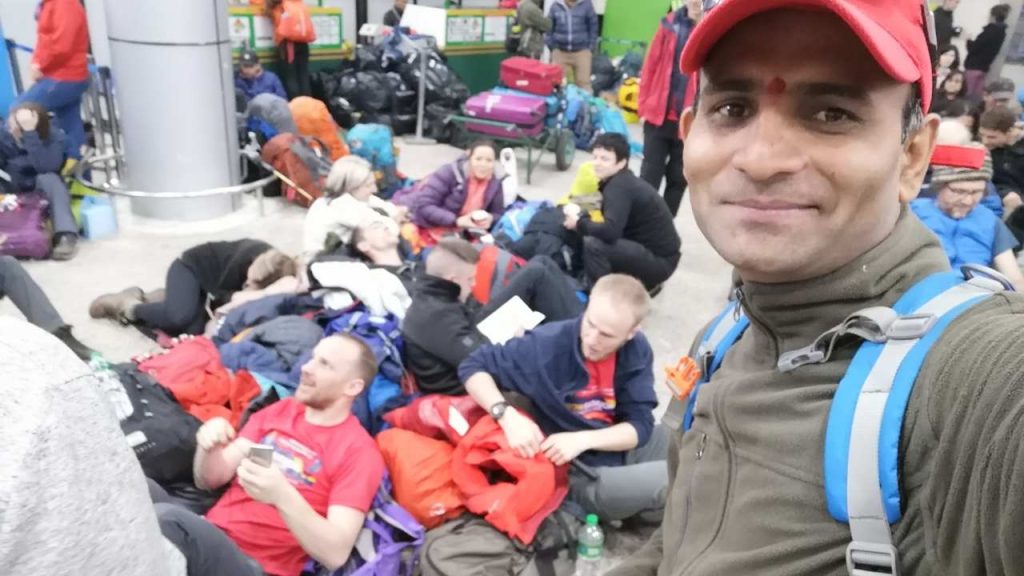
I first went to Annapurna Base Camp in 1996 as a porter, when the trek was still a camping trek. We carried tents, food, cooking equipment and other supplies for the group. Today, the route is a complete teahouse trek, and the permit system has also become much more organised.
For trekkers travelling with Mountain World Treks, we handle the required permits and TIMS before you start the trek so you can concentrate on the trail.
Annapurna Base Camp Trek Permits at a Glance
For a standard Annapurna Base Camp Trek, you normally need ACAP and TIMS. You do not need a Restricted Area Permit or a separate mountaineering permit simply to trek to Annapurna Base Camp.
| Permit or document |
Required for ABC? |
Purpose |
| Annapurna Conservation Area Permit (ACAP) |
Yes |
Entry into the Annapurna Conservation Area |
| TIMS |
Yes |
Trekker registration and route monitoring |
| Restricted Area Permit |
No |
Not required for the standard ABC route |
| Mountaineering Permit |
No |
Not required for trekking to ABC |
Your exact documents can depend on the route you choose. If you combine ABC with another restricted trekking area or a different mountaineering objective, additional permits may apply.
Current Annapurna Base Camp Permit Cost
The current permit cost for a foreign trekker is NPR 5,000 in total, including NPR 3,000 for ACAP and NPR 2,000 for TIMS. SAARC nationals pay NPR 2,000 in total.
| Trekker |
ACAP |
TIMS |
Total |
| Foreign nationals |
NPR 3,000 |
NPR 2,000 |
NPR 5,000 |
| SAARC nationals |
NPR 1,000 |
NPR 1,000 |
NPR 2,000 |
These are the current permit and TIMS charges, not the price of a trekking package. If you book a guided trek, your agency may include these costs in the package price rather than charging you separately.
For online ACAP payment, the NTNC currently applies a 2.9% payment gateway charge. Payment at an ACAP counter does not have this additional gateway charge.
Annapurna Conservation Area Permit
The Annapurna Conservation Area Permit, commonly called ACAP, is required for trekkers entering the Annapurna Conservation Area, including the Annapurna Base Camp route. The current fee is NPR 3,000 for foreign nationals and NPR 1,000 for SAARC nationals.
The permit is issued through the National Trust for Nature Conservation (NTNC). The money supports management and conservation of the protected area, while the permit also provides the registration needed for entering the conservation area.
Children below 10 years old are currently exempt from the ACAP fee according to the NTNC’s current information.
The ACAP is non-transferable and non-refundable, so the details on the permit should match the trekker’s documents.
TIMS for Annapurna Base Camp Trek
TIMS stands for Trekkers’ Information Management System. It records information about trekkers, guides and trekking routes and is part of the current trekking registration process in Nepal.
The current TIMS service information from Nepal Tourism Board lists the charge at NPR 2,000 for non-SAARC nationals and NPR 1,000 for SAARC nationals. The application is processed electronically through registered trekking agencies.
The agency enters the trekker’s information, guide details and trekking route into the system. Once the payment is completed, an electronic TIMS card, or eCard, is generated with a QR code for the trekker.
ACAP and TIMS Are Different Documents
ACAP and TIMS are sometimes confused because both are required for the same trek, but they serve different purposes.
ACAP is the entry permit for the Annapurna Conservation Area, while TIMS is the trekker registration system used to record information about the trekker, guide and route.
You should therefore not think of TIMS as a replacement for ACAP. For a normal ABC trek, you need to have both.
Who Issues ACAP and TIMS
ACAP is administered through the National Trust for Nature Conservation (NTNC), while TIMS is handled through the current system operated by the Nepal Tourism Board and registered trekking agencies.
The current NTNC system allows ACAP to be obtained online or from designated permit counters. The current NTB TIMS service requires the trekking information to be processed electronically through registered trekking agencies.
This is one reason it is useful to arrange your documents before leaving Kathmandu rather than trying to solve everything after reaching the trailhead.
Documents and Information You Need
You need your passport and basic trekking information to prepare the permit and TIMS documents. Your agency will use these details when completing the applications.
Normally, you should have your:
- Valid passport
- Passport details
- Passport-size photograph or digital photo when required
- Trekking dates
- Trekking route
- Emergency contact information
- Guide information where applicable
- Travel and insurance details for your own records
Make sure your name and passport number are entered correctly. A small mistake in personal information can create unnecessary problems when your documents are checked.
Getting ACAP Online
ACAP can currently be obtained online through the NTNC system, so you do not necessarily need to visit a permit counter in person. After successful online payment, the permit is sent electronically according to the current NTNC process.
The online option is useful when you want to prepare your documents before travelling to the trail. Keep a digital copy on your phone and, where practical, an offline copy as well.
If you are travelling with an agency, the agency can normally take care of this process for you.
Getting TIMS Online
TIMS is now processed electronically rather than being treated simply as an old-style paper card. Registered trekking agencies enter the required trekker, guide and route information into the system and complete the payment process.
Once the process is completed, each trekker receives an electronic TIMS eCard with a QR code. This means you should make sure you can access the document on your phone before leaving for the trek.
TIMS QR Code
The QR code on the electronic TIMS eCard is part of the current electronic registration system. It allows the TIMS information to be checked digitally rather than relying only on a traditional paper card.
Save the eCard to your phone before you leave Kathmandu. I also recommend keeping a screenshot or offline copy because mobile service is not reliable throughout the mountains.
Where You Can Get the ACAP Permit
The NTNC currently lists ACAP permit counters in Kathmandu, Pokhara, Simpani and Ghasa, in addition to its online permit system.
For an ABC trek, Kathmandu or Pokhara are usually the practical places to arrange the permit before entering the trekking route. If you are travelling independently, check the current counter arrangements before you go because opening procedures can change.
Can You Get the Permit in Pokhara?
Yes. ACAP can currently be obtained in Pokhara, and Pokhara is one of the locations listed by NTNC for ACAP permit services.
This is useful because many ABC trekkers travel from Kathmandu to Pokhara first. However, if your TIMS needs to be processed through a registered trekking agency, it is better to complete the required paperwork before starting the trek rather than leaving it until the last moment.
Permit Checkpoints on the ABC Trail
Your permit is not simply something you collect and forget before starting the trek. There are designated check-posts where trekking documents and registrations can be checked along the route.
The NTNC explains that registration at check-posts helps monitor tourist movement and can improve the ability to assist with rescue and emergencies.
Keep your passport and trekking documents accessible during the trek. Do not pack them somewhere you cannot reach easily during the walking day.
Permit Dates and Your Trekking Itinerary
Your trekking dates and route are important when the documents are prepared, so you should give your agency the correct itinerary. If your plans change significantly, tell your trekking agency before continuing rather than simply assuming the original information does not matter.
Weather, transport delays and trail conditions can sometimes force trekkers to change their schedule. Small changes are different from changing the entire route, so the correct procedure depends on what has changed.
If you already have your Annapurna Base Camp Trek Itinerary, it is useful to provide the same route and dates when your permits and TIMS are prepared.
Changing Your ABC Trek Itinerary
Trekking plans sometimes change because of weather, transport, health, trail conditions or personal reasons. If you need to change your itinerary, speak with your guide or trekking agency so they can confirm whether any document or registration needs to be updated.
Do not assume that a permit issued for one route automatically covers a completely different trekking area. The important point is to keep your actual trek and your registered route consistent.
Starting and Ending the Trek in Different Places
The ABC route can be approached from different trailheads and can be combined with other routes. Your starting and ending points should therefore be clear when your trekking documents are prepared.
A change such as starting from one side of the Annapurna region and finishing somewhere else may affect the route information recorded for the trek. Your guide or agency can confirm what needs to be changed if your plan is different from the original itinerary.
ABC Combined With Poon Hill
Many trekkers combine Annapurna Base Camp with Poon Hill, and this is a common way to extend the trek. If Poon Hill is included as part of your ABC itinerary, you are still trekking within the Annapurna region covered by the relevant conservation-area arrangements.
The important point is to give your agency the complete route rather than describing it simply as “ABC.” A route that includes Annapurna Base Camp Trek via Poon Hill should be recorded correctly from the beginning.
ABC Combined With Other Annapurna Routes
ABC can also be combined with other parts of the Annapurna region, but not every route has exactly the same permit requirements.
For example, Upper Mustang is a restricted trekking area and requires an additional Restricted Area Permit. The Nepal Tourism Board identifies restricted-area permits as separate permits for specified restricted regions.
This is why you should tell your agency your complete itinerary if you are combining ABC with another major Annapurna route.
Restricted Area Permit for Annapurna Base Camp
A Restricted Area Permit is not required for the standard Annapurna Base Camp Trek. The normal ABC route does not pass through the restricted areas for which the Department of Immigration requires this additional permit.
The situation changes if you add a restricted trekking area to your itinerary. In that case, the additional permit is based on the restricted section of your route, not on ABC itself.
Mountaineering Permit for Annapurna Base Camp
You do not need a mountaineering permit simply to trek to Annapurna Base Camp. ABC is a trekking destination, and reaching the base camp does not mean you are attempting to climb an Annapurna summit.
If your trip includes an actual climbing objective or expedition, different rules and permits can apply. Those requirements should be checked separately rather than being included under a normal ABC trekking permit.
Independent Trekking and Agency-Organised Treks
The current TIMS system is designed around electronic processing through registered trekking agencies. The agency enters the trekker, guide and route information and completes the TIMS process.
This is different from the old system that many older Nepal trekking articles still describe. You may still find websites showing previous TIMS categories, fees or procedures, so check the current Nepal Tourism Board service information rather than relying on an old page.
For a guided ABC trek, your trekking company should explain clearly what is included in the package and what documents will be prepared for you.
SAARC and Indian Trekkers
SAARC nationals currently pay lower ACAP and TIMS fees than non-SAARC foreign nationals. The current rates are NPR 1,000 for ACAP and NPR 1,000 for TIMS, giving a total of NPR 2,000.
Indian trekkers should carry their valid identification documents and confirm the current documentation requirements before travelling. Permit fees and documentation rules can change, so use the current official information when preparing your trip.
Nepali Trekkers
Permit requirements for Nepali citizens are different from those for foreign visitors. If you are a Nepali trekker planning to visit Annapurna Base Camp, check the current requirements for Nepali citizens rather than applying the foreign-trekker fee structure to yourself.
Your trekking agency can also confirm what registration or documentation is required for your particular itinerary.
Children and Family Trekkers
Families can trek to Annapurna Base Camp, but children still need to be properly included in the trekking arrangements. For ACAP, children below 10 years old are currently exempt from the permit fee according to NTNC information.
This does not mean you should leave a child’s details out of your trekking arrangements. Give your agency the correct passport or identification information so every member of the group is properly recorded where required.
If you are planning ABC with children, the permit is only one part of the preparation. Walking distance, altitude and the colder conditions near ABC also need to be considered.
Travel Insurance and Trekking Permits
Travel insurance and trekking permits are two different things. Your ACAP and TIMS documents register your trek and provide the permissions or registration required for the route, while travel insurance is there to protect you financially if you face problems such as medical treatment, evacuation, trip interruption or other covered events.
Do not treat a trekking permit as a replacement for insurance. Before leaving Nepal, check that your policy covers the altitude and activities included in your trip.
For more information about the physical side of the trek, see our Annapurna Base Camp Trek Altitude Guide and Annapurna Base Camp Altitude Sickness Guide.
Permit Fees and Trekking Agency Charges
The permit fee is not the same thing as the total price of an organised ABC trek. A trekking package can include permits, TIMS, guide services, accommodation, meals, transport and other services.
Ask your trekking company whether ACAP and TIMS are included in the quoted price. This avoids confusion when comparing different trekking packages.
A low package price does not automatically mean the permits are free. Sometimes they are simply included within the package rather than shown as separate items.
What Your Trekking Agency Should Arrange
A good trekking agency should take responsibility for the paperwork rather than leaving you to discover the process at the last minute. For an organised ABC trek, the agency should prepare the required ACAP and TIMS information, check your personal details and make sure the route information is correct.
The agency should also explain what you will receive and how you can access your documents. For TIMS, this includes the electronic eCard and QR code under the current system.
At Mountain World Treks, we prepare the required trekking documents before you start the ABC route so you do not have to spend your trekking morning dealing with paperwork.
What You Should Receive Before the Trek
Before leaving for the trail, make sure you know what documents have been prepared for you. You should have access to your TIMS eCard and the relevant ACAP permit information.
Keep copies of important documents on your phone, but do not depend only on an internet connection. Save screenshots or offline copies before leaving Kathmandu or Pokhara.
Your passport should remain with you during the trek rather than being left with someone else.
ACAP E-Permit and TIMS ECard
Both systems now have electronic elements, but they are not the same document. The ACAP permit is the conservation-area entry permit, while the TIMS eCard is the electronic trekker registration document generated through the TIMS system.
The current NTNC system can issue ACAP permits electronically after successful online payment, while the current TIMS system generates an electronic card with a QR code after the registered agency completes the process.
Save both documents on your phone before starting the trek.
Keeping Your Documents on Your Phone
Mobile service becomes less reliable as you climb higher, so do not wait until you are on the trail to open your permit for the first time. Download or screenshot your documents while you still have a reliable connection.
I recommend keeping your passport copy, permits, TIMS eCard, insurance details, emergency contacts and your Annapurna Base Camp Trek Itinerary together in one offline folder on your phone.
A paper backup is also useful, particularly if you are travelling with a group or carrying important original documents.
If You Lose Your Permit
If you lose access to your permit or cannot find the electronic copy, contact your trekking agency or the relevant permit office. Do not create a replacement document yourself or assume that a photograph of someone else’s permit is sufficient.
This is another reason I recommend keeping both a downloaded copy and a screenshot of your documents.
If You Lose Your Passport
Losing your passport is much more serious than losing a trekking permit. Contact your guide and trekking agency immediately and follow the instructions of your embassy or consular authority.
Keep a secure digital copy of your passport separately from the original. Having your passport information available can make the replacement process easier.
Avoiding Unofficial Permit Sellers
Use the official permit system or a registered trekking agency rather than buying permits from an unofficial person offering a cheaper price. Permit fees are published by the relevant authorities, so there is little reason to take unnecessary risks with your trekking documents.
If someone offers to arrange a permit but cannot explain which official system or authority issued it, ask questions before paying.
For current information, check the Nepal Tourism Board and National Trust for Nature Conservation information rather than relying on old trekking blogs or social-media posts.
If You Forget Your Permit
Do not assume that you can simply continue the trek without the required documents. If you discover a problem before entering the route, contact your guide, agency or the relevant permit office and resolve it before continuing.
If you are already on the trail and a document problem occurs, tell your guide immediately. Waiting until you reach another checkpoint can make a simple paperwork issue more complicated.
How Mountain World Treks Handles ABC Permits
At Mountain World Treks, we arrange the required trekking documents as part of the preparation for your Annapurna Base Camp Trek. Your passport details, trekking dates and route are checked before the trek so the information submitted for ACAP and TIMS matches your actual itinerary.
I started working on the Annapurna route in 1996 as a porter, long before today’s electronic permit system existed. The process is now much easier than it was in those days, but the basic principle is still the same: prepare properly before entering the mountains.
You can focus on walking, the villages, the forests and the mountains while we take care of the paperwork.
What to Check Before Leaving Kathmandu
Before travelling toward the Annapurna trailhead, check that your trekking documents are ready and that your personal information is correct.
Make sure you have:
- Valid passport
- ACAP permit
- TIMS eCard with QR code
- Correct trekking dates
- Correct trekking route
- Guide information where applicable
- Travel insurance details
- Offline copies of important documents
- Emergency contact information
- Your confirmed Annapurna Base Camp Trek Itinerary
If anything looks incorrect, fix it before starting the trek. It is much easier to correct paperwork in Kathmandu than while you are already walking through the mountains.
Annapurna Base Camp Permit and TIMS Checklist
For a standard ABC trek, keep the following simple checklist:
- ACAP: Required for the Annapurna Conservation Area.
- TIMS: Required under the current trekking registration system.
- Restricted Area Permit: Not required for the normal ABC route.
- Mountaineering Permit: Not required for trekking to ABC.
- Passport: Carry your valid passport and keep a secure copy.
- Digital documents: Save your ACAP and TIMS information offline before starting.
Current ABC Permit Cost Summary
For quick reference, the current standard costs are:
| Trekker |
ACAP |
TIMS |
Total |
| Foreign nationals |
NPR 3,000 |
NPR 2,000 |
NPR 5,000 |
| SAARC nationals |
NPR 1,000 |
NPR 1,000 |
NPR 2,000 |
The ACAP figures come from current NTNC information, while the TIMS figures come from the current Nepal Tourism Board TIMS service information.
Remember that these are permit and TIMS charges. They are not the complete cost of an organised Annapurna Base Camp Trek.
Official Information Sources
Permit regulations and fees can change, so I recommend checking the current official information before your trek.
The Nepal Tourism Board provides the current TIMS service information, including the electronic application process, current fees and QR-based eCard system.
The National Trust for Nature Conservation provides current ACAP information, including fees, online permits and permit-counter locations.
For restricted-area trekking, the relevant information comes through the Nepal Tourism Board and Department of Immigration system.
Final Advice on Annapurna Base Camp Permits
For a normal Annapurna Base Camp Trek, the paperwork is straightforward: ACAP plus TIMS. Foreign nationals currently pay NPR 5,000 for these two documents, while SAARC nationals pay NPR 2,000.
The main thing I tell trekkers is not to leave the paperwork until the last minute. Make sure your passport details, route and trekking dates are correct, save your electronic documents offline and keep them accessible throughout the trek.
When I first travelled to ABC in 1996 as a porter, we were carrying camping equipment and setting up tents along the route. Today you can stay in teahouses, access electronic permits and travel with much less equipment, but good preparation is still part of a successful Himalayan trek.
If you trek with Mountain World Treks, we take care of the required permit and TIMS preparation before you start walking. You can then concentrate on the part that brought you to Annapurna in the first place: the trail, the people, the changing landscape and the mountains.