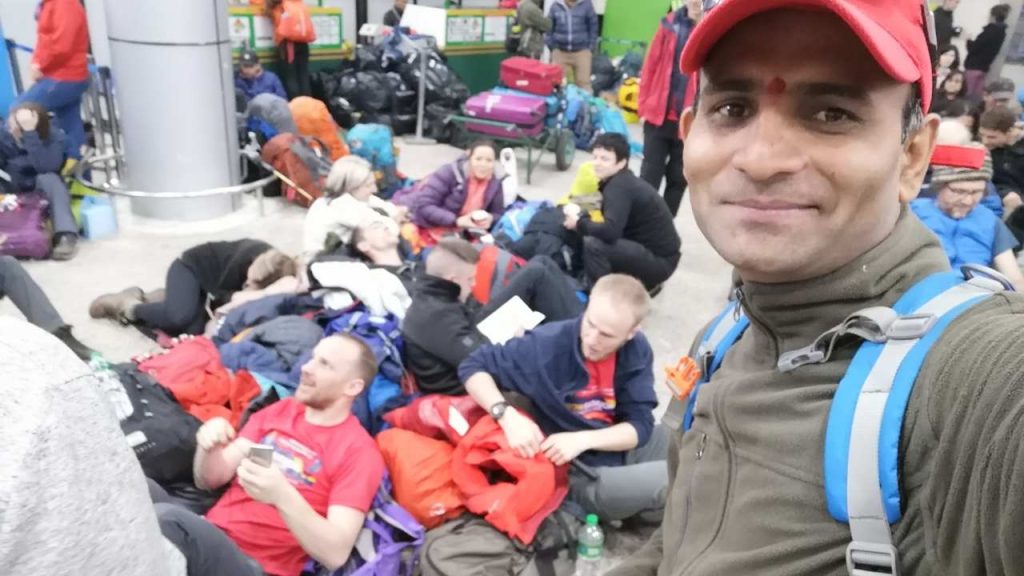
Altitude Sickness in Nepal: I have been working in the Himalayas for more than 30 years, starting as a porter and later working as a government-licensed trekking guide. During that time, I have guided trekkers in the Everest, Annapurna, Langtang, and Manaslu regions and on Nepal’s climbing peaks.
Altitude is one subject I discuss with every group before we reach the higher villages.
This guide combines what I have learned on the trail with current medical guidance on altitude illness. The medical information should not replace advice from a doctor, but the practical points come from what I have observed while guiding in Nepal.
What Is Altitude Sickness?
Altitude sickness describes health problems that can develop when the body has not adjusted to reduced oxygen availability at higher elevation.
The most common form is acute mountain sickness (AMS). Two more serious conditions are:
- High-altitude cerebral edema (HACE), which affects the brain.
- High-altitude pulmonary edema (HAPE), which affects the lungs.
HACE and HAPE are medical emergencies. Altitude illness is not simply a result of walking too hard. A physically strong person can become sick if they ascend faster than their body can adapt.
Why Does Altitude Affect the Body?
As elevation increases, atmospheric pressure decreases. The air still contains about 21% oxygen, but the lower pressure means less oxygen is available with each breath. The body begins adapting by changing breathing and other physiological processes. These adjustments take time.
This is why I do not judge someone’s ability at altitude based on how easily they walk in Kathmandu or during the first few days of a trek. A person may feel completely normal at 2,500 or 3,000 metres and then develop symptoms after moving considerably higher.
At What Altitude Is There a Risk?
For people who are not acclimatized, the risk of acute altitude illness generally becomes a concern above 2,500 metres, although individual responses vary and symptoms can occur at lower elevations.
In Nepal, altitude sickness can affect trekkers and climbers on many different routes once they reach higher elevations. It is not limited to one particular trekking region or destination.
The higher you go, the more important acclimatization becomes. The rate at which you gain elevation, especially your sleeping altitude, is one of the main factors to consider. A trekker who feels fine at a lower elevation can develop symptoms after moving higher, even on a route that is otherwise not considered technically difficult.
This is why I pay more attention to how quickly someone is gaining altitude and how they are feeling than simply the name of the place they are staying.
Can a Fit Trekker Get Altitude Sickness?
Yes. Fitness helps you handle long walking days, steep trails, and repeated ascents and descents. It does not prevent altitude illness.
I have guided very fit people who struggled after moving higher, while some less athletic trekkers adjusted without major problems. That is why I tell trekkers to prepare physically but not assume that good fitness will protect them from altitude sickness.
The CDC also states that physical fitness does not reduce susceptibility to altitude illness.
Does Previous High-Altitude Experience Protect You?
Not completely. If you reached Everest Base Camp without problems on a previous trip, that is useful information, but it does not guarantee the same response on your next visit.
Your itinerary may be different. You may gain altitude at a different rate, sleep higher, or simply respond differently on another trip. I treat every group according to how people are responding during that particular trek.
Acute Mountain Sickness: Early Symptoms
Common AMS symptoms include:
- Headache
- Dizziness or light-headedness
- Nausea
- Loss of appetite
- Unusual tiredness
- Reduced ability to carry out normal activity
Sleep disturbance can occur at altitude, but by itself it is not enough to diagnose AMS. Current Wilderness Medical Society guidance places particular importance on headache together with other symptoms and on how the person is functioning after ascent.
A headache after a long day does not automatically mean altitude sickness. Sun exposure, dehydration, poor sleep, and physical effort can have similar effects.
What matters is the timing, combination of symptoms, and change in your condition after gaining elevation.
What I Do When a Trekker Develops Symptoms
When someone tells me they are feeling unwell after gaining altitude, I first want to know what has changed.
I ask about headache, nausea, appetite, sleep, dizziness, breathing, and their ability to walk normally. If the symptoms suggest AMS, I do not want the person gaining more sleeping altitude.
We stop the ascent, monitor the situation, and decide what to do based on how the person responds. If symptoms improve, the itinerary may continue once the person has recovered. If symptoms remain or become worse, descending becomes the safer option.
The Wilderness Medical Society recommends stopping ascent when AMS symptoms are present and descending when symptoms worsen or serious altitude illness develops.
What I Have Seen on the Trail
This is where many of my altitude lessons have come from.
After more than three decades of guiding, I have seen trekkers make the same mistakes in different places and at different elevations. Some are caused by misunderstanding altitude. Others come from simply not wanting to change the plan.
Trekkers Who Want to Push Higher While Already Unwell
One of the hardest situations is a trekker who is already feeling poorly but still wants to continue upward. They may say they can manage because they have come all the way from another country and do not want to miss Everest Base Camp, a pass, or a summit.
I understand the disappointment. But if someone is already struggling at one elevation, taking that person higher is not a decision I make simply because the itinerary says we should continue.
Sometimes we need to stop. Sometimes we need to stay at the same elevation. Sometimes we need to descend. The destination can wait. A serious altitude problem should not.
Trekkers Who Drink Less Because They Do Not Want to Use the Toilet at Night
I have seen trekkers deliberately reduce their water intake because they do not want to get out of bed at night.
This is especially common at higher villages when the nights are cold and the toilets are outside the room.
I understand the reason, but I do not recommend deliberately avoiding fluids for this purpose.
After a long day of walking, your fluid needs are different from when you are sitting at home. Dehydration can make you feel worse.
I tell trekkers to drink normally throughout the day rather than spending the day trying to avoid nighttime toilet trips.
At the same time, drinking excessive amounts is not the answer. Sensible hydration is the goal.
Trekkers Who Want to Be First
Another thing I see is competition within a group. Some trekkers want to reach the lodge before everyone else. They walk faster, take fewer breaks and try to stay ahead.
At lower elevations this may not cause much trouble. Higher up, I prefer a different approach. A steady pace gives you more control over your breathing and energy.
There is no benefit in arriving at the lodge 30 minutes before everyone else if you are exhausted by the time you get there. When I guide, I would rather have everyone arrive at a comfortable pace and be ready for the following day.
Serious Cases and Helicopter Rescue
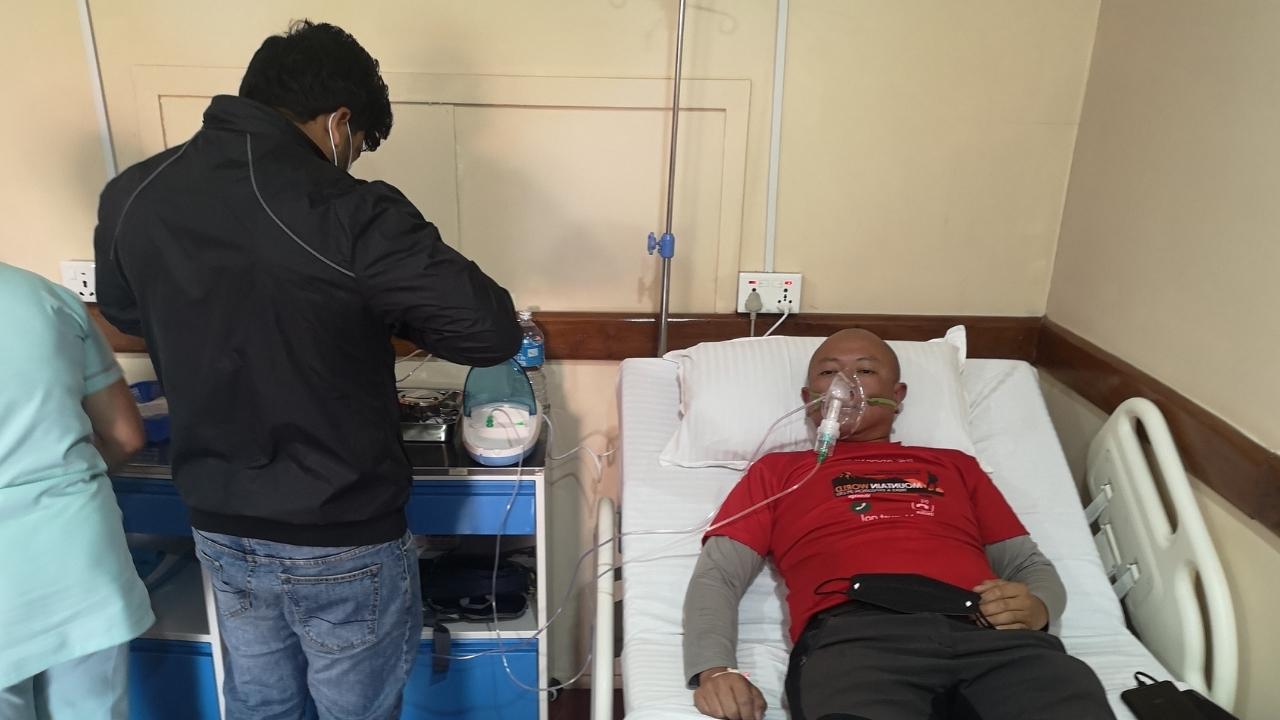
I have also dealt with serious altitude cases where evacuation became necessary.
In Nepal’s high mountain regions, helicopter evacuation can be an important part of an emergency response, but it should not be considered a substitute for acclimatization or early action.
When a trekker becomes seriously ill, the immediate priority is to get the person to a safer elevation and arrange appropriate medical care.
Whether a helicopter can reach a location depends on weather, visibility, location, and operating conditions.
That is why I pay attention to early changes in a trekker’s condition. A person who can still walk with assistance is in a very different situation from someone who has become confused, severely weak, or unable to move safely.
A Large Descent Can Make a Major Difference
One experience I remember clearly involved a trekker who became seriously unwell at high altitude.
We arranged a descent of roughly 2,000 metres. After reaching a much lower elevation, the person’s condition improved significantly.
That experience reinforced something I have seen many times: when altitude is contributing to a serious problem, getting lower can make a major difference.
Medical guidance also identifies descent as a key treatment for serious altitude illness. For me, this is one reason I never see descent as a failure. If a trekker needs to go down, going down is the correct decision.
Why I Ask Trekkers to Report Symptoms Early
Some people hesitate to tell their guide that they have a headache, nausea, or unusual weakness because they are afraid of slowing down the group.
Please do not do that. The earlier I know something has changed, the more options we have. A mild problem can sometimes be managed by stopping the ascent and monitoring the trekker. A serious problem may require immediate descent.
I would rather change an itinerary early than make a difficult evacuation decision later.
High-Altitude Cerebral Edema (HACE)
HACE is a severe form of altitude illness involving the brain. Warning signs include:
- Confusion
- Altered behavior or mental state
- Loss of coordination
- Difficulty walking normally
- Severe weakness
- Reduced consciousness
Loss of coordination is particularly important.
If someone who was walking normally starts stumbling or cannot walk in a coordinated manner, I take that seriously. HACE requires immediate descent and medical treatment. Untreated, it can progress rapidly and become fatal.
High-Altitude Pulmonary Edema (HAPE)
HAPE affects the lungs. Important symptoms include:
- Shortness of breath
- Breathlessness while resting
- Cough
- Weakness
- Increasing difficulty breathing
A trekker who is breathless while resting needs urgent attention. This is not something I would treat as ordinary tiredness after a long walking day. Suspected HAPE requires urgent descent and medical treatment. Oxygen may also be needed where available.
AMS, HACE, and HAPE: Quick Comparison
| Condition |
Main signs |
Response |
| AMS |
Headache with nausea, dizziness, fatigue or reduced appetite |
Stop ascending and monitor |
| HACE |
Confusion, altered mental state or poor coordination |
Immediate descent and medical treatment |
| HAPE |
Breathlessness at rest, cough and worsening breathing difficulty |
Immediate descent and medical treatment |
A person can have more than one altitude illness at the same time.
Acclimatization: Why I Build It Into Every High Trek
I am careful with itineraries that try to remove acclimatization days just to make a trek shorter. Your body needs time to adjust to higher elevation.
The Wilderness Medical Society recommends gradual ascent and limiting increases in sleeping elevation for people travelling above 3,000 metres. A commonly used guideline is to keep the increase in sleeping altitude to about 500 metres per day once above 3,000 metres, with additional acclimatization days built into the itinerary.
The exact schedule depends on the route and the trekker. When I plan an itinerary, I look at where the group will sleep each night rather than simply counting walking days.
Why Sleeping Altitude Matters
The elevation where you sleep is especially important. A useful approach on some routes is to walk higher during the day and return to a lower elevation to sleep.
For example, on an acclimatization day we may hike to a higher viewpoint and then return to the same village. This gives the body some exposure to higher elevation without increasing the sleeping altitude by the same amount. I do not use an acclimatization day as a competition to see how high someone can climb. The hike should support the next part of the trek, not leave the person exhausted.
Acclimatization in the Everest Region
On the Everest Base Camp route, Namche Bazaar and Dingboche are important points for acclimatization.
I use these days for a controlled hike, proper meals and another night at the same sleeping elevation. The group does not need to spend the whole day sitting inside the lodge, but there is also no reason to turn the acclimatization hike into a hard training day.
The purpose is to prepare for the higher elevations ahead.
Do Not Assume You Are Safe Because You Feel Good at Namche
A trekker may reach Namche at around 3,440 metres feeling excellent. That is good, but it does not tell us how the same person will respond several days later at a much higher elevation.
The route continues upward. For that reason, I continue asking about sleep, appetite, headache, nausea, and general condition even when everyone is walking well.
Food at High Altitude
Appetite often decreases as elevation increases. I encourage trekkers to continue eating regular meals even when they do not feel very hungry. Dal, bhat, rice, potatoes, noodles, pasta, bread, porridge, and other available meals can provide useful energy.
There is no particular food that prevents altitude sickness. The practical aim is to maintain enough energy for the walking day without making meals unnecessarily complicated.
Hydration: Drink Normally
I encourage regular drinking during the day, particularly after long walking and in dry mountain conditions. But there is no reason to force huge quantities of water. Excessive water intake does not prevent altitude illness and can itself cause problems.
The better approach is to drink normally according to thirst and activity. The mistake I see is not only drinking too much. Some trekkers go in the opposite direction and deliberately drink too little because they do not want to use the toilet. Both extremes are unnecessary.
Alcohol and High Altitude
I recommend avoiding alcohol while acclimatizing. At higher elevations, you are already dealing with reduced oxygen, colder conditions, physical exertion, and changes in sleep.
Alcohol does not help with acclimatization. I prefer trekkers to finish the day with food, normal fluid intake and enough rest for the following morning.
Sleep at High Altitude
Sleep can become lighter and more interrupted as you gain elevation.
Poor sleep alone does not establish a diagnosis of AMS. However, if sleep problems occur together with headache, nausea, dizziness, or reduced ability to function after ascending, I pay closer attention. The Wilderness Medical Society specifically gives less diagnostic weight to sleep disturbance alone.
If you use sleeping medication, discuss it with your doctor before the trek. Some sedative medicines can affect breathing.
Acetazolamide (Diamox)
Acetazolamide, commonly known as Diamox, is used to help prevent and treat acute mountain sickness. The CDC and Wilderness Medical Society recognize it as an effective medication for appropriate travellers.
But medication does not make rapid ascent safe. If you are considering acetazolamide, speak with a doctor before your trip. Your medical history, other medicines and planned itinerary all matter.
Do not take medication prescribed for another trekker.
Dexamethasone
Dexamethasone can also be used in altitude medicine, including for prevention or treatment of AMS and HACE in appropriate circumstances.
It is a prescription medicine and should be discussed with a healthcare professional before travel. It should not be used as a reason to climb faster or remove acclimatization from an itinerary.
Oxygen and Emergency Treatment
Supplemental oxygen can be useful for serious altitude illness when it is available. Portable hyperbaric chambers can also be used in some remote situations when immediate descent is temporarily impossible.
These measures are emergency treatment, not a way to continue upward while seriously ill. For HACE and HAPE, descent remains a central part of emergency management.
When a Trekker Needs to Descend
If a trekker needs to go down, I look at the person’s condition first. I also consider:
- Current elevation
- Ability to walk
- Nearest lower settlement
- Weather
- Accommodation below
- Access to medical care
- Whether another guide or porter needs to accompany the rest of the group
A seriously ill person should not simply be told to walk down alone. The response needs to match the person’s condition and the terrain.
Helicopter Evacuation in Nepal
Helicopter evacuation is available for mountain emergencies in Nepal, but availability depends on weather, visibility, location, and operating conditions. For a high-altitude trek, I recommend travel insurance that covers emergency evacuation at the maximum elevation of your itinerary.
Keep your insurance details accessible. More importantly, do not plan your trek around the assumption that a helicopter will solve every emergency. Early recognition, sensible ascent, and timely descent remain important.
Altitude on the Everest Base Camp Trek
The Everest Base Camp route reaches elevations where altitude management becomes a major consideration. Everest Base Camp is approximately 5,364 metres, and Kala Patthar reaches about 5,545 metres. The route’s gradual increase in sleeping elevation is one reason a properly designed itinerary matters.
By the time trekkers reach the higher Khumbu villages, the body has already had several days to adjust. That does not eliminate the risk. Each person still needs to be monitored according to their symptoms and ability to function.
Altitude on the Annapurna Circuit
The Annapurna Circuit rises gradually toward Thorong La, approximately 5,416 metres. The days before the pass provide important time at increasing elevations, but the pass itself remains a demanding day.
I pay attention to how trekkers are feeling the evening before the crossing. If someone is already unwell at the previous lodge, I would not treat reaching Thorong La the following morning as more important than their condition.
Altitude on the Manaslu Circuit
The Manaslu Circuit reaches Larkya La at around 5,160 metres. The route is remote, which makes early action particularly important.
When medical facilities and road access are limited, waiting until a problem becomes severe can leave fewer options. For this reason, I prefer trekkers to report symptoms while we still have time to decide what to do.
Altitude During Nepal Peak Climbing
Peak climbing adds another level of exposure. On Mera Peak, Island Peak, and Lobuche East, climbers may spend longer periods at high altitude and face steeper terrain, colder conditions, and longer summit days.
A climber can feel fine during the approach and still develop altitude illness during the higher part of the climb. The Wilderness Medical Society guidelines cover altitude illness prevention and treatment for people travelling into high-elevation environments, including mountaineering.
Summit Day: When Turning Around Is Necessary
Summit day creates a different kind of pressure. You may have prepared for months, started before dawn, and already spent many hours climbing.
Being close to the summit can make people reluctant to turn around. But serious altitude symptoms do not become less serious because the summit is nearby. If a climber’s condition is deteriorating, I would rather end the attempt and get the person lower than continue for the sake of reaching the top.
What I Watch for While Guiding
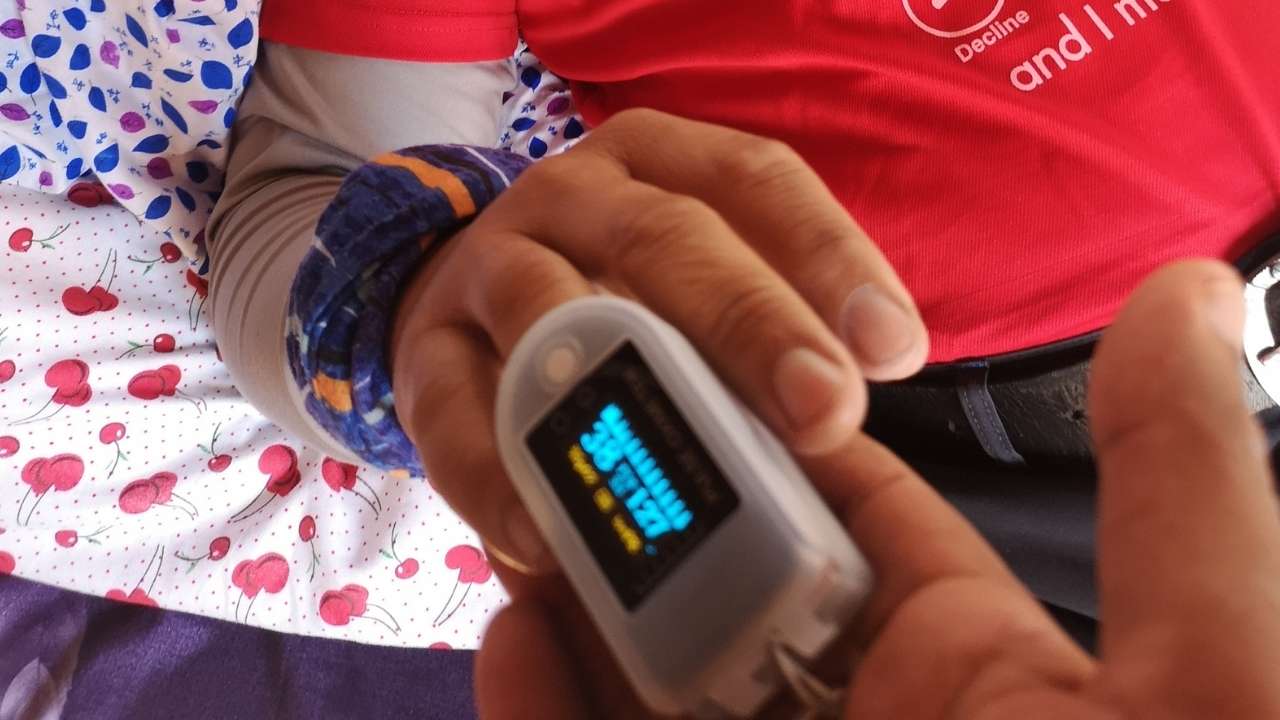
I do not rely only on what a trekker tells me. I watch the way people walk and behave. If someone who normally keeps up with the group suddenly falls far behind, becomes unusually quiet, starts stumbling, stops eating or has difficulty with simple movements, I want to know why.
I also ask direct questions:
- How did you sleep?
- Do you have a headache?
- Are you nauseous?
- Are you eating?
- Are you dizzy?
- How is your breathing?
- Do you feel different from yesterday?
A short conversation can tell me a lot about whether someone is coping with the elevation.
When Should You Stop or Turn Around?
If symptoms are getting worse, continuing upward is not the right decision. Confusion, poor coordination, and breathlessness at rest are particularly serious warning signs and require urgent action.
Altitude is not the only reason to change an itinerary. Severe exhaustion, injury or deteriorating weather can also make continuing unsafe. As a guide, I have to look at the actual condition of the trekker rather than simply follow the printed itinerary.
Preparing Before Your Nepal Trek
You cannot reproduce high altitude at home simply by becoming fitter. What you can do is prepare your body for the walking. I recommend:
- Regular walking
- Hill or stair training
- Longer walks on weekends
- Consecutive walking days
- Basic leg and core exercises
- Practising with your trekking boots
- Walking with a light daypack
The distinction is important:
Training prepares you for the walking. Acclimatization prepares you for the altitude.
When Should You Talk to a Doctor?
A pre-travel consultation is especially useful if you:
- Have heart or lung disease
- Take regular medication
- Have another significant medical condition
- Have previously experienced serious altitude illness
- Plan to climb above 5,000 meters
- Are unsure about altitude medication
Take your actual trekking or climbing itinerary to the appointment. The doctor can then see the highest elevations, sleeping altitudes, and rate of ascent rather than giving advice based only on the general statement that you are travelling to Nepal.
The Altitude Mistakes I See Most Often
Pushing higher while already unwell
A destination should not override worsening symptoms.
Drinking too little
Do not restrict fluids simply because you do not want to use the toilet at night.
Drinking far too much
More water is not a treatment for altitude sickness.
Racing ahead
Walking faster does not help your body acclimatize.
Assuming fitness is protection
Good fitness helps with the physical work but does not prevent altitude illness.
Hiding symptoms
Your guide needs accurate information to make a good decision.
Using medication as a shortcut
Altitude medication can have an appropriate role, but it does not replace acclimatization.
Refusing to descend
If your condition requires a lower elevation, changing direction is the correct response.
My Practical Altitude Rules
After years of guiding, I keep my advice to trekkers straightforward:
Ascend gradually. Keep a steady walking pace. Eat regularly. Drink normally. Avoid alcohol while acclimatizing. Tell your guide when something changes. Do not continue higher when significant symptoms are developing. Take confusion, loss of coordination and breathlessness at rest seriously.
Descend when the situation requires it.
These are the points I want every trekker to understand before entering the higher parts of a Nepal trek.
Advice From 30+ Years of Guiding in Nepal
I have learned that altitude problems rarely improve because someone decides to push harder. The better approach is to notice changes early, adjust the pace, give the body time to acclimatize and make a decision based on the trekker’s condition.
I have turned trekkers around, arranged descents, and dealt with situations where evacuation was necessary. I have also seen trekkers who initially struggled recover after moving lower and then continue their journey safely. There is no shame in changing the plan.
If you are trekking in Nepal, prepare well, follow a sensible ascent schedule and tell your guide when something feels wrong.
Reaching the destination matters, but making the right decision when your body is struggling matters more.