If you have never trekked in Nepal before, it can be difficult to know what the Annapurna Base Camp Trek will actually feel like. You may have seen photographs of Machhapuchhre, long stone staircases, suspension bridges and the mountains surrounding the Annapurna Sanctuary, but photographs cannot show what several days of walking through this landscape are really like.
The Annapurna Base Camp Trek for beginners is manageable without previous Himalayan trekking experience. It is a trekking route rather than a technical climbing expedition, but you should still expect several hours of walking each day, with plenty of stone steps, uphill climbs, downhill sections and changes in terrain.
I started working in the mountains as a porter in 1996, and I have seen many first-time trekkers arrive with very different expectations. Some are surprised by how many stone steps they encounter, while others are surprised by how quickly the scenery changes from green hills and villages to the high mountain landscape around the sanctuary.
This guide explains what your first Annapurna Base Camp Trek is actually like, from your first day on the trail to reaching the sanctuary and walking back out of the mountains. It focuses on the experience of being on the trail rather than repeating detailed information about cost, packing, accommodation, food and altitude, which I cover separately in our other guides.
First Day on the Annapurna Base Camp Trek
The first day can feel unfamiliar even if you are reasonably active. You are getting used to your backpack, trekking shoes and the rhythm of walking for several hours. You may also spend some time wondering whether you are walking too slowly compared with the people around you.
Do not worry about that at the beginning. The first day is partly about learning how your own body responds to the trail. You will quickly notice how you handle climbs, uneven ground and long periods of walking.
You may naturally prefer shorter steps on climbs, or find that several short breaks work better than one long break. You may also discover that your comfortable pace is slower than you expected. That is useful information because you are learning how to walk in the mountains rather than simply imagining what Himalayan trekking will be like.
By the end of the first day, the trail should already feel less unfamiliar. You have started to understand how your body handles climbs, uneven ground and several hours of walking.
What Himalayan Walking Feels Like
A normal day hike often has a clear finish. You walk for several hours and then return home, to your hotel or to your vehicle. ABC is different because the walking continues from one day into the next.
Where you finish becomes your base for the night, and the following morning begins from that same place. You are not simply completing one hike and going home. You are gradually moving through the mountains toward Annapurna Base Camp.
One kilometre on a flat road does not feel the same as one kilometre involving stone steps, rocks, uneven ground and repeated changes in elevation.
Understanding the ABC Trail
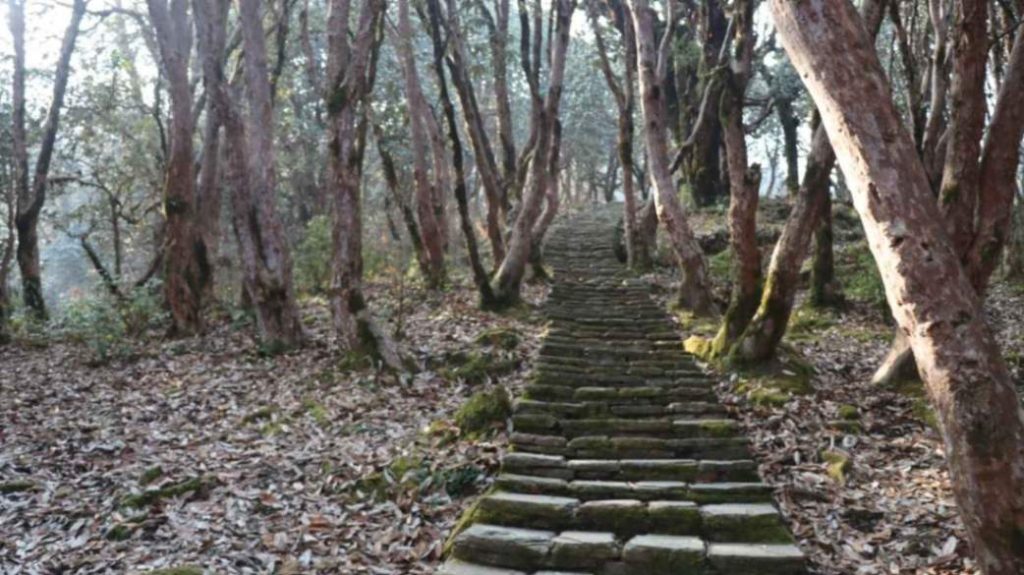
There is no single type of trail throughout the Annapurna Base Camp route. Depending on the section, you may walk on stone-paved paths, long flights of steps, dirt trails, rocky ground, forest paths, narrow hillside sections and bridges over rivers and streams.
Your feet are constantly making small adjustments. A smooth section allows you to maintain the same stride, while rocky ground requires more attention to where you place your feet. Steps change how your legs work, and uneven terrain can make a short section surprisingly tiring.
The route is established and does not require technical climbing skills, but you should be comfortable walking on uneven mountain terrain for several hours a day.
The Stone Staircases
The difficulty is rarely one individual step. It is the number of steps combined with the length of the walking day. A staircase may feel easy when you first start climbing, but after several hours of walking, another long staircase can feel very different.
Your breathing becomes faster, your stride becomes shorter and your legs begin to feel heavy. The best approach is to find a rhythm you can maintain rather than racing uphill and then stopping for a long time to recover.
Descending also requires effort. Long downhill sections place repeated pressure on your knees and thighs, particularly when the trail contains many stone steps.
For a beginner, one of the biggest lessons on ABC is that walking uphill is not the only physical challenge. You need to manage your effort in both directions.
If you want to understand the physical demands in more detail, see our Annapurna Base Camp Trek Difficulty Guide.
Why Mountain Distances Can Be Deceptive
Mountain geography can make distances difficult to judge. You may see a village across the valley and think it is nearby, only to find that the trail descends, crosses a river, follows the hillside and climbs again.
Chhomrong is a good example of how mountain terrain can change your understanding of distance. The trail does not simply travel in a straight line toward the destination because it has to follow the shape of the valley.
After a few days, you stop judging the route by straight-line distance and start paying attention to the terrain.
Walking Through the Forest
The trail changes as you move deeper into the Modi Khola valley. The lower sections include villages, cultivated land and more open areas, while farther along the trail passes through forest and the surroundings become more enclosed.
Instead of looking at distant peaks all the time, you may spend much of the walking day surrounded by trees. You may notice streams crossing the trail, moss-covered rocks, damp ground, birds, insects and changing light beneath the trees.
There can also be long periods when you cannot see the major mountains at all. That is normal. The Annapurna Base Camp Trek is not a mountain-view walk from beginning to end, and the forest is an important part of the route.
Walking Along the Modi Khola
The Modi Khola becomes a regular presence deeper in the valley. Sometimes you can see the river below the trail, while at other points trees and terrain hide the water but you can still hear it flowing.
The river helps you understand the shape of the valley. The trail repeatedly moves alongside or across waterways as you progress toward the Annapurna Sanctuary.
These sections are often quieter than the major viewpoints. Some of the best parts of the day are simply walking through the valley with the river beside you.
Suspension Bridges on the Trail
Suspension bridges feel different from normal trail crossings. Some move slightly when people walk across them, and looking down toward the river can make the crossing feel more dramatic than expected.
If you are uncomfortable with heights, your first bridge may require some concentration. There is no reason to rush. Walk at a controlled pace, use the side cable if it makes you more comfortable and give people coming from the opposite direction enough space.
After a few crossings, the movement usually feels less noticeable.
When the Trail Becomes More Remote
The route does not suddenly turn into wilderness. The feeling changes gradually as settlements become less frequent and walking becomes more important to your daily movement.
At the beginning of the trek, you are still close to villages and normal transportation. Farther into the valley, your feet become the main way of getting from one place to another.
That changes your relationship with the landscape. You are no longer simply travelling through the Annapurna region to visit a destination.
How the Landscape Changes With Elevation
The environment changes gradually as you climb higher. The greener vegetation of the lower sections becomes less dominant, rocky ground becomes more noticeable, the valley becomes more open and the surrounding peaks occupy more of your view.
This transition does not happen at one particular point. You start in a greener environment and eventually reach a high mountain basin surrounded by major Himalayan peaks.
Machhapuchhre Base Camp
Machhapuchhre Base Camp, usually called MBC, feels noticeably different from the lower sections. By this point, much of the dense forest is behind you, the surroundings become more open and the mountains feel much closer.
Earlier in the trek, the mountains may have appeared through gaps in the trees or from distant viewpoints. At MBC, they are much more immediate.
You are now walking through a high-altitude mountain environment rather than a forested valley.
Entering the Annapurna Sanctuary
The Annapurna Sanctuary is a high mountain basin surrounded by some of the major peaks of the Annapurna region. The landscape creates an unusual combination of openness and enclosure. The basin itself feels broad, but the mountains surrounding it make you feel enclosed at the same time.
A photograph can show individual peaks, but it cannot fully communicate what it is like to stand inside that landscape. The mountains are no longer distant scenery. They surround you.
For a first-time Himalayan trekker, this is often the point when the scale of the journey becomes real. You have reached a high mountain basin by walking from much lower terrain.
Reaching Annapurna Base Camp
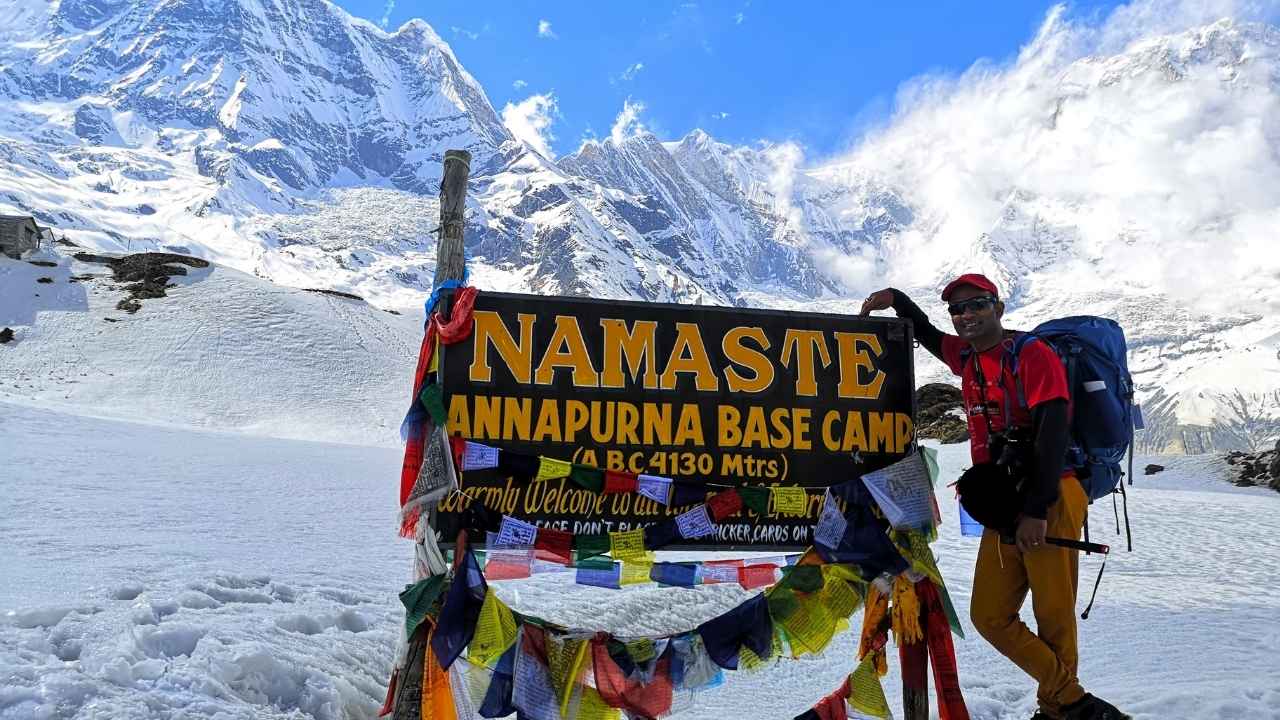
Everyone reacts differently when they reach ABC. Some trekkers become emotional, some immediately start taking photographs and others simply sit quietly and look around.
What you see at ABC is only part of the experience. The days of walking that brought you there are what make the arrival meaningful.
You have already crossed villages, forests, bridges, staircases and changing terrain, and you have spent several days walking toward one destination. For some people, reaching ABC is a dramatic moment. For others, the satisfaction is quieter.
A Typical Day on the Trail
A trekking day has a fairly simple structure. You wake up, prepare yourself, eat breakfast and begin walking. The first part of the morning can feel slow while your body gets moving, but after some time, walking becomes more automatic.
You stop thinking about every step and start concentrating on the trail ahead. The middle of the day is often when accumulated effort becomes noticeable because your legs have already done several hours of work and there is still more trail ahead.
A meal or rest stop gives you a chance to reset. The afternoon can require patience, particularly when you know the day’s destination is still some distance away.
Eventually, the day’s destination appears. Your backpack comes off, your boots come off and you find somewhere to sit. That simple change from movement to rest becomes one of the most familiar parts of a multi-day trek.
If you have a difficult day, do not hide a genuine problem because you are worried about slowing down the group. Tell your guide if you feel unwell or if something about your condition concerns you.
For detailed information about altitude-related symptoms and precautions, see the separate Annapurna Base Camp Trek Altitude Sickness Guide.
When the Weather Changes
You cannot control Himalayan weather. A clear morning does not guarantee that the mountains will remain visible throughout the day.
Cloud can cover the peaks, rain can change the feel of the lower trail and higher sections can become noticeably colder. Visibility can also change quickly.
The mountains do not follow your photography plan. Be prepared to walk even when the peaks are hidden.
Meeting Other Trekkers
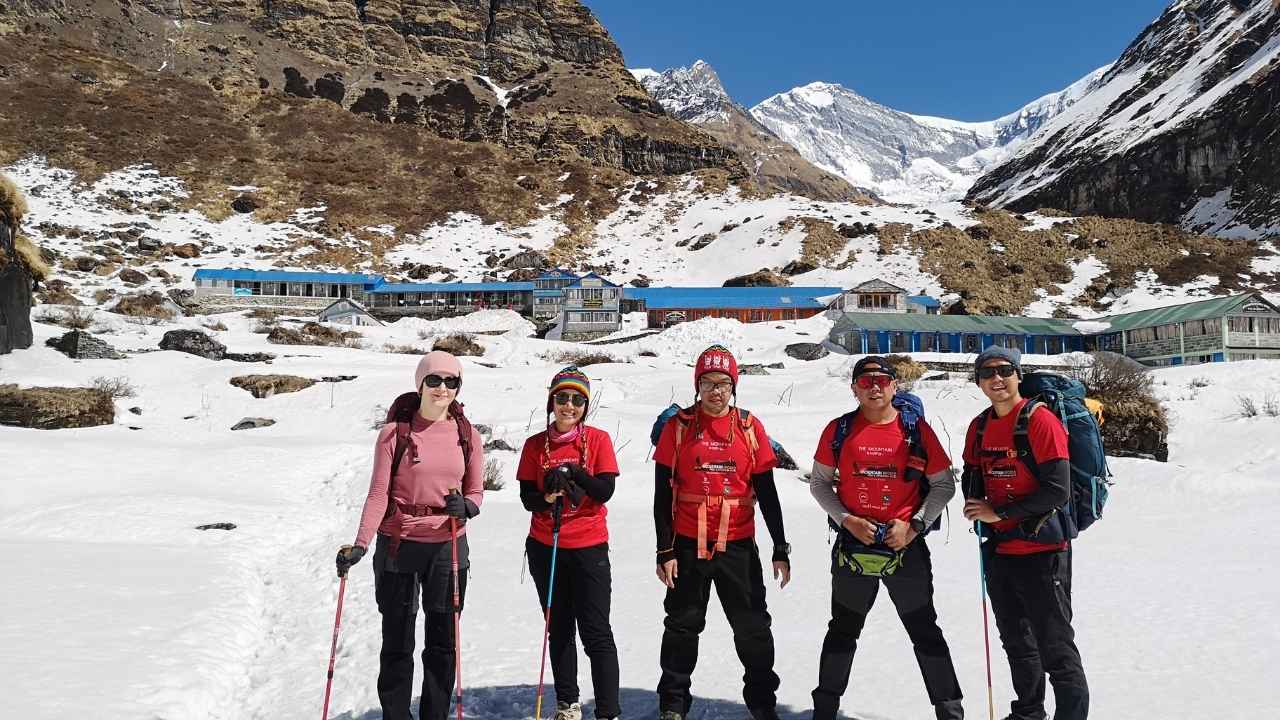
The ABC route creates repeated encounters. You may meet someone during breakfast, see the same person on the trail later and find them at the same teahouse that evening.
After a few days, some faces become familiar. Conversations often start naturally, and you may find yourself talking about where you started that morning or how the trail has been.
You can meet people naturally without travelling as part of a group.
Meeting Local People
The trail passes through communities where the mountains are part of everyday life. You may see residents working around their homes, travelling between settlements, managing animals or moving supplies.
These are working communities, not simply stops created for trekkers. As you walk through them, you begin to see the Annapurna region as a place where people live and work rather than only as a trekking destination.
That is one of the advantages of travelling on foot. You move slowly enough to notice things that are easy to miss when travelling by vehicle.
The Role of Porters
Porters are an important part of the trekking system in the Annapurna region. You will see them carrying equipment and supplies along steep sections of the trail.
Watching how they move through difficult terrain gives you a better understanding of the work involved in transporting goods in the mountains. If a porter carrying a heavy load needs to pass on a narrow trail, give them enough space when it is safe to do so.
A simple gesture of moving aside can make a difficult section easier for everyone.
Phones and Connectivity on the Trek
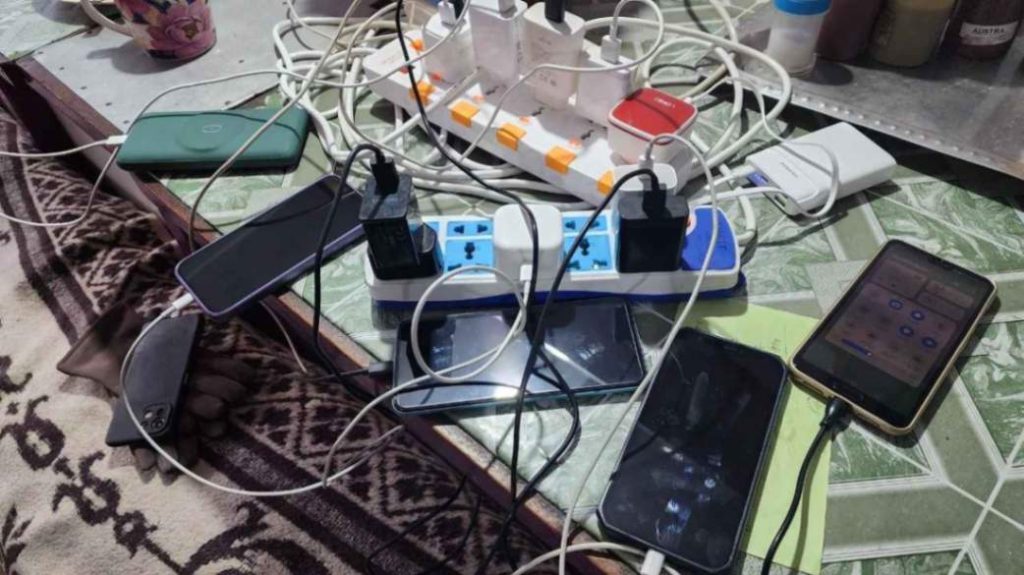
Your phone may become less important as the trek continues. You can still use it for photographs, communication and practical needs, but connectivity varies along the route.
It is better to treat internet access as a convenience rather than something you need every hour. There may be long periods when there is simply nothing you need to check on your phone.
Life in an Annapurna Teahouse
It can feel strange at first. A trekking teahouse is designed for people travelling through the mountains. It is not a city hotel.
You share common spaces with other trekkers, evenings are generally simple and your daily routine becomes much less complicated. You may have dinner, sit around the dining room, talk with other trekkers, prepare for the next day and go to bed.
At first, the simpler evening routine may feel unusual. After several days, the routine usually becomes familiar.
For detailed information about rooms, bathrooms, showers, electricity and other facilities, see the separate Annapurna Base Camp Trek Accommodation Guide.
Food After a Long Day of Walking
Long hours of walking can change how you experience meals. After several hours on the trail, even a simple meal can be very satisfying.
Meals also become part of your daily rhythm. Breakfast starts the day, lunch gives you a break from walking and dinner usually means the day’s walking is finished.
For detailed information about meals, drinks, snacks, water and dietary considerations, see the separate Annapurna Base Camp Trek Food Guide.
How Your Idea of Comfort Changes
Trekking can change what you notice about comfort. At home, comfort may mean a large room, entertainment, fast internet or many choices.
After several hours on the trail, your priorities become simpler. Dry clothes feel good, a warm room feels valuable and a hot drink can become something you genuinely look forward to.
The Journey Back
The return feels different because you already know the main destination has been reached. On the way toward ABC, every section is taking you closer to the sanctuary. On the way back, familiar places have a history.
You may recognize a bridge, remember a particular staircase or remember where you stopped for lunch. A section that felt difficult on the way up may now be a descent.
The landscape can also look different because you are seeing it from another direction. The return gives the journey a sense of closure.
Leaving the Mountains
The end can feel mixed. You may be happy to return to easier transportation, familiar facilities and a normal routine, while at the same time feeling strange about leaving the walking routine behind.
For several days, your attention was organised around walking, eating, resting and reaching the next destination. Then that routine disappears.
You may find yourself remembering small details rather than only the major sights: a particular bridge, a quiet forest section, a conversation at a teahouse or a mountain appearing between clouds.
Saligram’s Tips for Your First ABC Trek
I first walked to Annapurna Base Camp in 1996 as a porter, when the trek was still mainly a camping trek. Since then, I have seen the route, villages and trekking conditions change, and I have guided many different types of trekkers to ABC. If this is your first Himalayan trek, these are the things I would tell you before you start.
- Prepare for walking, not running.
You do not need to train like an athlete. Regular walking, hiking and stairs before the trek will help much more than trying to walk very fast.
- Good shoes matter more than expensive equipment.
Your trekking shoes should be comfortable, broken in and suitable for uneven ground. Do not start a multi-day trek with brand-new shoes.
For a complete list of what to take, see our Annapurna Base Camp Trek Packing List.
- Tell your guide when something does not feel right.
Do not wait until a small problem becomes a bigger one. Tell your guide early if you feel unwell or something about your condition concerns you.
- Keep your daily routine simple.
Eat properly, drink enough water, keep your belongings organised and get enough sleep. On a trek, these simple things make a bigger difference than most people expect.
- Leave some space in your plan.
Mountain conditions can change, and trekking days do not always go exactly according to the original plan. A little flexibility makes the journey easier when weather, trail conditions or your own pace require a change.
Come prepared, give yourself enough time and do not be afraid to tell your guide when you need a break or something does not feel right.
I have seen many first-time trekkers arrive with questions about whether they are ready. Once they find their rhythm on the trail, most of those questions disappear. You do not need previous Himalayan experience. You need preparation, patience and enough time to enjoy the walk.
Annapurna Base Camp Trek for Beginners: FAQs
Is Annapurna Base Camp a good first Himalayan trek?
Yes. The standard ABC route does not require previous Himalayan trekking or climbing experience, but you should be prepared for several days of walking on uneven terrain and stone steps.
What is the hardest part of ABC for beginners?
The long stone staircases, repeated climbing and descending, and several consecutive days of walking are usually the biggest physical challenges.
How should I prepare for my first ABC trek?
Build your walking endurance before the trek with regular hikes, stairs and longer walks. Focus on being comfortable walking for several hours rather than trying to walk fast.
Do I need to be very fit for ABC?
You do not need to be an athlete, but you should have enough fitness to walk for several hours a day and manage repeated climbs and descents.
What if I am slower than other trekkers?
Do not race other trekkers. Walk at a pace you can maintain comfortably and tell your guide if you need more time or breaks.
Are there many stone steps on the ABC route?
Yes. Stone steps are a major part of the route, particularly around the lower and middle sections, and some stretches can be surprisingly tiring.
Are there suspension bridges on the ABC Trek?
Yes. You will cross several suspension bridges, and they may move slightly when people walk across them. Most trekkers become comfortable with them after a few crossings.
Will I see mountains throughout the entire trek?
No. Lower sections include forests where the mountains may be hidden, while the views become more open as you gain elevation.
What happens if the weather is cloudy?
Clouds can hide the mountains and visibility can change quickly. Be prepared for the trail to continue even when the peaks are not visible.
Is it normal to feel tired after a trekking day?
Yes. Several hours of walking can leave your legs and feet tired, especially after long climbs or descents.
Can I use my phone during the trek?
Yes, but mobile connectivity and internet access vary along the route. Treat your phone mainly as a tool for communication, photographs and practical needs.
Can I trek to ABC alone?
Rules for independent trekking and guide requirements can change, so check the current Nepal trekking regulations before travelling.
What if I feel unwell during the trek?
Tell your guide immediately rather than trying to hide the problem. Your guide can help assess the situation and decide what should happen next.
What will surprise me most as a first-time trekker?
Many beginners are surprised by how much the landscape changes from the lower valleys to the Annapurna Sanctuary. The number of stone steps is another common surprise.
What should I remember before starting ABC?
Prepare for several days of walking, start at a steady pace and give yourself enough time to adjust to the trail. You do not need to be the fastest trekker in the group.