
Everest trek guide
Kala Patthar: A Complete Guide From a Trekking Guide
Kala Patthar is a rocky ridge above Gorak Shep on the Everest Base Camp route. It reaches 5,545 meters (18,192 feet), making…
S
Saligram
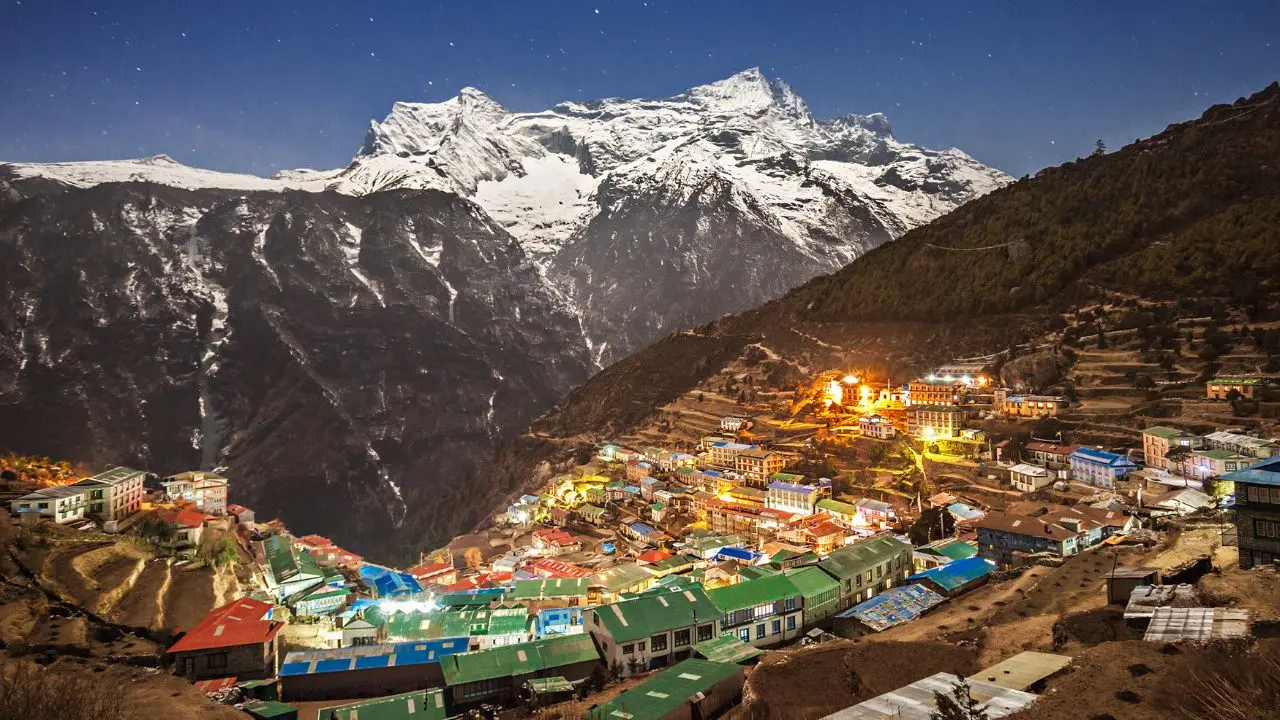
Learn about Namche Bazaar altitude, acclimatization, Everest View Hotel, accommodation, food, ATMs, Wi-Fi, and practical tips for Everest trekkers.
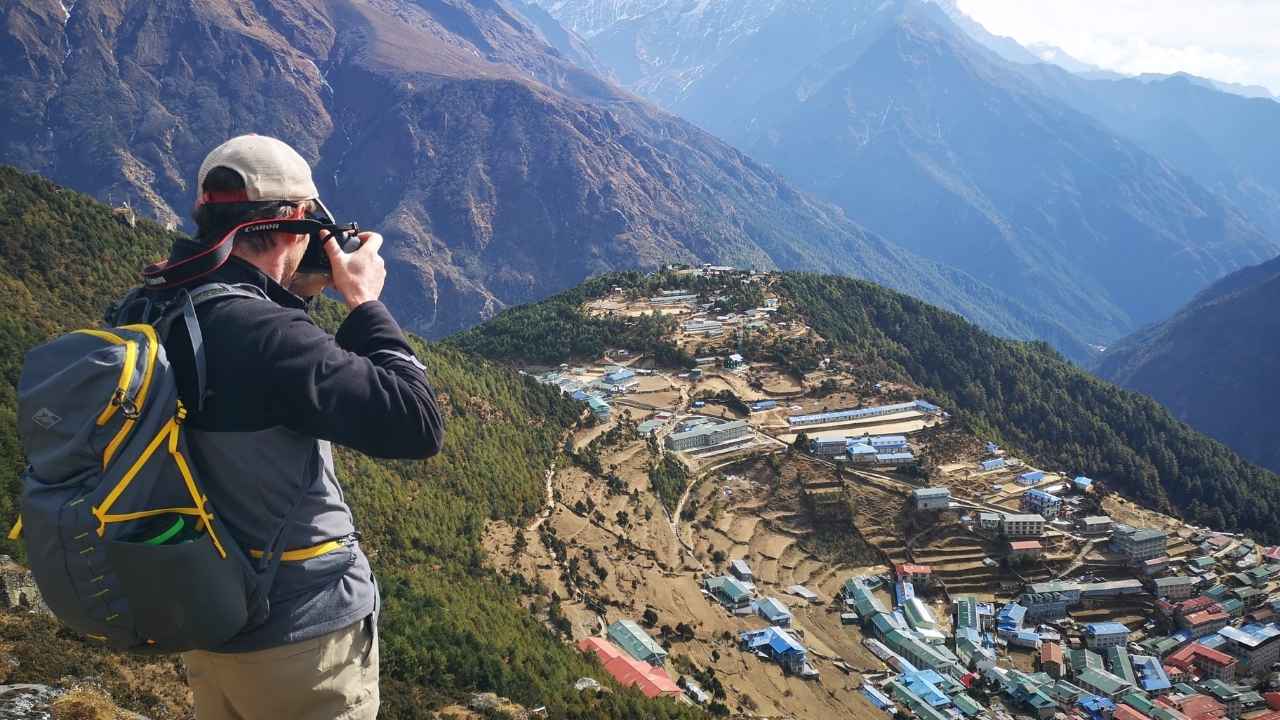
Namche Bazaar is the main town in the Everest region and one of the most important stops on the Everest Base Camp trek. At about 3,440 meters, it is where most trekkers spend two nights before continuing toward Tengboche, Dingboche and the higher parts of the Khumbu.
I first came to Namche in 1997 as a porter on my first Everest Base Camp trek. I had started carrying loads the year before, when I was 14. I did not arrive as a guide or trekking company owner. I came with a load on my back and a group of trekkers.
Namche was very different then. There were fewer lodges, fewer shops and very little communication with the outside world. Porters carried supplies for trekkers, lodges and businesses farther into the mountains.
I became a licensed guide in 2002. Since then, I have returned to Namche many times with trekkers from different countries, and I still actively guide in the Everest region today.
Today, Namche has lodges, hotels, restaurants, bakeries, trekking shops, ATMs, Wi-Fi and other services. For trekkers, it is the main place to acclimatize and prepare before heading higher.
For me, Namche also shows how much my own life has changed. The first time I arrived here, I was carrying somebody else’s luggage. Today, I arrive as the founder of my own trekking company, still walking the same trails with my clients.
| Fact | Details |
| Location | Khumbu region, Nepal, inside Sagarmatha National Park |
| Altitude | About 3,440 m |
| Main role | Main trading and service centre in the Everest region |
| Typical stay | 2 nights on a standard Everest Base Camp itinerary |
| Main purpose | Acclimatization before going higher |
| Popular hike | Everest View Hotel via Syangboche |
| Everest View Hotel | About 3,880 m |
| Nearest airport | Tenzing-Hillary Airport, Lukla |
| Facilities | Lodges, hotels, restaurants, bakeries, shops, ATMs and internet |
| Main routes | Everest Base Camp, Gokyo, Three High Passes and other Khumbu routes |
| Weekly market | Saturday |
| My first visit | 1997 as a porter |
| Licensed guide since | 2002 |
Namche is the main acclimatization stop before the trail climbs toward Tengboche, Dingboche and the higher Khumbu.
By the time you reach town, you have already gained considerable elevation from Lukla. Spending an extra night here gives your body time to adjust before you continue.
Namche is also the last major service centre on the standard Everest Base Camp route. If you need cash, trekking accessories, snacks, a phone charge, internet access or a replacement item, this is the most convenient place to take care of it.
Namche Bazaar is in the Khumbu region of northeastern Nepal, inside Sagarmatha National Park. The town is built on a mountain slope around a large curved bowl.
On the standard Everest Base Camp route, trekkers reach Namche after walking from Lukla through Phakding, Monjo and Jorsale.
The trail follows the Dudh Koshi Valley and crosses several suspension bridges before reaching the long uphill section toward Namche. This climb can feel demanding because you are gaining altitude while still adjusting to trekking.
Once you reach Namche, the trail opens into a busy mountain settlement with lodges, hotels, restaurants, shops and other services.
Namche Bazaar sits at about 3,440 meters above sea level.
The number may appear slightly different on some maps, but the important point for trekkers is the elevation gain from Lukla. You are now above 3,400 meters and preparing to climb considerably higher.
At this altitude, uphill walking can feel harder than expected. You may breathe faster, need more breaks or feel tired after a climb that would normally be easy at home.
Some trekkers notice:
These symptoms can occur while your body is adjusting to altitude. If symptoms become severe, worsen or are accompanied by other concerning signs, tell your guide immediately.
A standard Everest Base Camp itinerary normally includes two nights in Namche.
The second day is used for acclimatization. Rather than staying at the same elevation all day, you walk to a higher point and then return to Namche to sleep.
The most common option is the hike toward Syangboche and Everest View Hotel. Trekkers who are feeling strong may continue toward Khumjung and Khunde, while those who need an easier day can take a shorter walk above Namche.
The purpose is not to cover a certain distance. It is to spend controlled time at a higher elevation before continuing farther up the valley.
| Time | Plan |
| Morning | Breakfast and prepare a small daypack |
| Morning to midday | Walk toward Everest View Hotel or another suitable point |
| Midday | Spend some time at higher elevation |
| Afternoon | Return to Namche |
| Late afternoon | Lunch, rest and check equipment |
| Evening | Dinner and sleep |
Keep the day comfortable. An acclimatization walk should not leave you exhausted.
The hike toward Everest View Hotel is the most common acclimatization walk from Namche.
The trail climbs through Syangboche to the hotel at approximately 3,880 meters. You spend some time at the higher elevation before returning to Namche.
The area around the hotel provides views toward Everest, Lhotse, Ama Dablam and other Khumbu peaks when conditions allow.
| Detail | Information |
| Starting point | Namche Bazaar |
| Route | Namche to Syangboche and Everest View Hotel |
| Highest point | About 3,880 m |
| Main purpose | Acclimatization |
| Difficulty | Moderate because of elevation |
| Typical plan | Walk up, spend time there and return |
| Sleeping place | Namche Bazaar |
You do not need to race to the hotel. The important part is spending time higher up and returning to Namche comfortably.
Khumjung and Khunde are options for trekkers who want a longer acclimatization walk.
Both villages are above Namche. Khumjung is one of the important Sherpa settlements in the area, while Khunde is another established village nearby.
The route can be added to the acclimatization day when the group is comfortable with the elevation.
If someone has struggled during the climb into Namche or has not slept well, I prefer a shorter walk. There is no reason to make the acclimatization day unnecessarily difficult.
A shorter walk around Syangboche or the viewpoints above Namche can be suitable for trekkers who need an easier acclimatization day.
I do not use exactly the same walking plan for every group. Fitness, sleep, previous trekking experience and how someone is feeling at Namche all matter.
If you feel unwell, tell your guide. Do not wait until the group is much higher to mention a problem.
Leave your main trekking bag at the lodge and take a small daypack.
Carry:
After the morning walk, return to Namche for lunch and rest. You can spend the afternoon visiting a bakery or café, checking your equipment or walking around town.
The main aim is to prepare for the next stage of the trek, not to fill every hour with activity.
Namche is the main service and trading centre for trekkers in the upper Khumbu.
| Need | What you can find |
| Money | ATMs and money exchange services |
| Trekking gear | Gloves, socks, jackets, hats, poles and accessories |
| Food | Dal bhat, rice, noodles, pasta, soups, eggs and bread |
| Coffee | Bakeries, cafés and restaurants |
| Health | Pharmacies and basic medical services |
| Internet | Wi-Fi and mobile phone services |
| Accommodation | Lodges, hotels and guesthouses |
| Shopping | Trekking equipment, snacks and local products |
| Market | Weekly Saturday market |
| Rest | Cafés and lodge common areas |
Namche is useful for replacing something you forgot or damaged, but I still recommend arranging your important trekking equipment in Kathmandu.
Namche has many shops selling trekking equipment, so it is a useful place to replace an item before going higher.
You can commonly find:
Prices can be higher than in Kathmandu because goods have to be transported into the mountains.
Before leaving Kathmandu, check your boots, sleeping bag, down jacket, gloves and other important equipment. Namche should be your backup, not your main equipment-shopping plan.
ATM services are available in Namche, but I recommend carrying enough Nepalese cash from Kathmandu.
You may need cash for:
Do not depend entirely on an ATM working when you need it. Keep some cash in a dry and secure place.
Namche has more food choices than most villages farther along the Everest Base Camp route.
Common options include:
There are also cafés and bakeries where trekkers can sit down after their acclimatization walk.
My advice is to choose food that your stomach handles well. Eat enough to support the day’s walking and drink regularly.
I recommend avoiding alcohol while you are acclimatizing.
Your body is already adjusting to the elevation, and alcohol can affect sleep and make it harder to judge how you are feeling.
If you develop symptoms that concern you, tell your guide instead of trying to ignore them.
Communication in Namche has changed greatly since my first visit.
When I came here as a porter in 1997, there were no smartphones and no easy internet communication. Today, trekkers can find Wi-Fi and mobile phone services in town.
The connection can vary, so do not depend on having reliable internet throughout the trek.
Before leaving Kathmandu, download:
A power bank is useful because charging facilities can become busy.
Namche has a wider range of accommodation than most villages farther along the Everest Base Camp route.
You can find simple trekking lodges as well as more comfortable hotels.
Depending on the property, facilities may include:
Some services may cost extra, particularly hot showers, charging and Wi-Fi.
During the main trekking seasons, good rooms can fill quickly, so advance planning is useful.
Namche has a weekly Saturday market where local traders and people from surrounding villages come to buy and sell goods.
The market reflects Namche’s role as a trading centre for the Khumbu, not only as a stop for trekkers.
If you are in Namche on Saturday, take some time to walk through the market. You can see food, clothing, household supplies and other goods being traded.
My first visit to Namche was in 1997. I was 15 years old and working as a porter.
I had started carrying loads the year before, at the age of 14. At that time, mountain work taught me through experience. There were fewer lodges, fewer shops and much less communication than today.
Porters carried supplies for trekkers, lodges and businesses farther into the mountains. Carrying a heavy load taught me that mountain walking is not just about strength. You have to control your pace, understand the trail and know when to stop.
That experience also changed how I think about porters. A porter is not simply somebody carrying a bag. A porter is part of the trekking team.
Today, Namche has more hotels, restaurants, cafés, shops, ATMs, internet services and trekking equipment stores.
The town has changed, but the mountain conditions still demand patience. More comfortable facilities do not make the altitude lower or the trail shorter.
That is one of the lessons I carry with me every time I guide through Namche.
After the acclimatization day, the Everest Base Camp route continues toward Tengboche.
The trail follows the hillside before descending toward the Dudh Koshi and then climbing again toward Tengboche. There are several ups and downs, so the day still requires a controlled pace.
Tengboche is an important stop on the Everest route and is home to Tengboche Monastery.
From Tengboche, the route continues toward Pangboche and then to higher settlements such as Dingboche or Pheriche, depending on the itinerary.
A typical 14-day Everest Base Camp itinerary can look like this:
| Day | Itinerary |
| Day 1 | Arrive in Kathmandu |
| Day 2 | Fly to Lukla and trek to Phakding |
| Day 3 | Trek Phakding to Namche Bazaar |
| Day 4 | Acclimatization day in Namche |
| Day 5 | Trek Namche to Tengboche or Deboche |
| Day 6 | Trek toward Dingboche |
| Day 7 | Acclimatization day in Dingboche |
| Day 8 | Trek Dingboche to Lobuche |
| Day 9 | Trek Lobuche to Gorak Shep and Everest Base Camp |
| Day 10 | Kala Patthar and trek toward Pheriche |
| Day 11 | Trek Pheriche to Namche |
| Day 12 | Trek Namche to Lukla |
| Day 13 | Fly Lukla to Kathmandu |
| Day 14 | Departure |
The exact schedule can change because of Lukla flights, weather, health, walking pace and accommodation availability.
A good guide should be able to adjust the plan when conditions require it. The printed itinerary is a plan, not something more important than the people following it.
Before leaving Namche, I look at a few basic things:
Physical fitness does not guarantee that you will have no altitude problems. People adjust differently.
Tell your guide honestly how you feel. It is much easier to deal with a problem in Namche than after you have gone considerably higher.
Most importantly, do not compare your pace with another trekker. Your body may adjust differently from theirs.
I have been coming to Namche since 1997. The first time, I arrived with a load on my back as a young porter. Today, I come here as a guide and as the founder of my own trekking company, still walking with clients on the same route.
My years as a porter taught me what it means to carry a heavy load, manage a pace and depend on the people around you. Those lessons still shape how I work with my guides, porters and trekkers.
Namche has changed greatly since my first visit. There are more buildings, better accommodation, more food choices, trekking shops, ATMs and communication services.
But the important part has not changed. You are still above 3,400 meters. Your body still needs time to adjust, and the trail toward Everest Base Camp still needs to be taken one day at a time.
Use your time in Namche properly. Take your acclimatization walk, check your equipment, eat well and rest. I have walked this route for many years, first carrying loads and later guiding trekkers.
My advice is simple: Do not rush the mountain. Walk steadily, acclimatize properly and listen to your body.
Namche Bazaar is the main trading and service centre in the Khumbu region and an important acclimatization stop on the Everest Base Camp route.
Namche Bazaar is about 3,440 meters above sea level. Some sources may show slightly different figures.
Most standard Everest Base Camp itineraries include two nights in Namche. The second day is normally used for acclimatization.
The hike toward Syangboche and Everest View Hotel is one of the most common options. Khumjung and Khunde can be added for a longer walk.
I do not recommend skipping it on a standard Everest Base Camp trek. You have already gained considerable elevation, and allowing your body time to adjust is an important part of the itinerary.
Tell your guide. A headache can occur while adjusting to altitude, but worsening symptoms or additional symptoms need proper attention.
Yes, ATM services are available in Namche. However, it is better to carry enough Nepalese cash from Kathmandu because ATM services can sometimes be unavailable.
Yes. You can find gloves, hats, socks, jackets, trekking poles and other trekking accessories. Important equipment should still be arranged before starting the trek.
Yes. Wi-Fi and mobile phone services are available, although connection quality can vary.
Many lodges and hotels offer hot showers, although they may cost extra. Facilities vary between properties.
Prices are generally higher than in Kathmandu because supplies have to be transported into the mountains. Costs also tend to increase as you travel farther and higher into the Khumbu.
Yes. Namche can be part of shorter Khumbu trekking itineraries that do not continue to Everest Base Camp. You can also visit nearby villages and viewpoints before returning.
Kala Patthar is a rocky ridge above Gorak Shep on the Everest Base Camp route. It reaches 5,545 meters (18,192 feet), making…
Saligram

Tengboche Monastery is one of the main cultural stops on the Everest Base Camp Trek. It sits at about 3,867 meters on…
Saligram
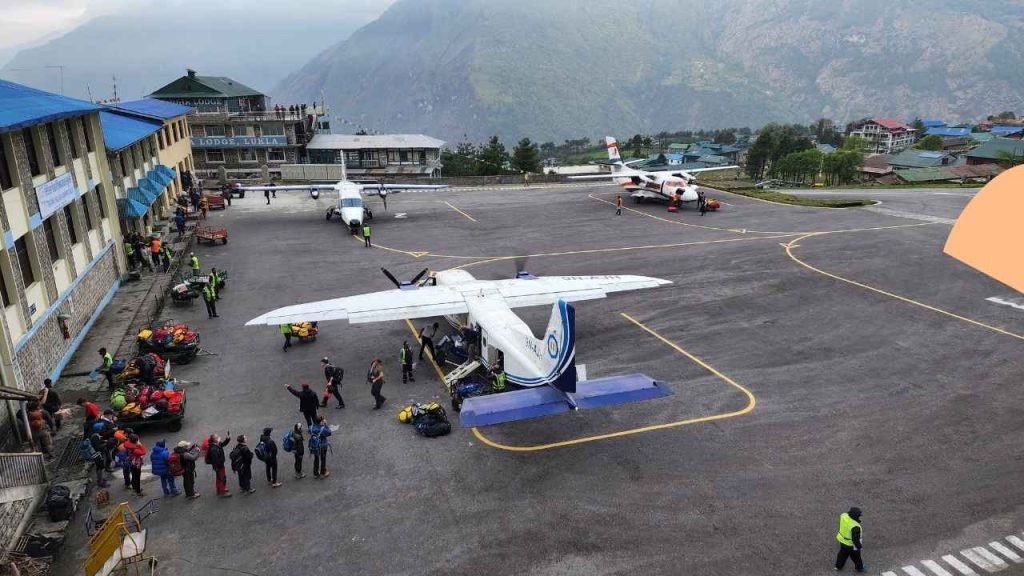
Lukla Airport, officially Tenzing-Hillary Airport, is the main airport for trekkers flying to Everest Base Camp and other destinations in the Khumbu…
Saligram


