
Everest trek guide
Kala Patthar: A Complete Guide From a Trekking Guide
Kala Patthar is a rocky ridge above Gorak Shep on the Everest Base Camp route. It reaches 5,545 meters (18,192 feet), making…
S
Saligram
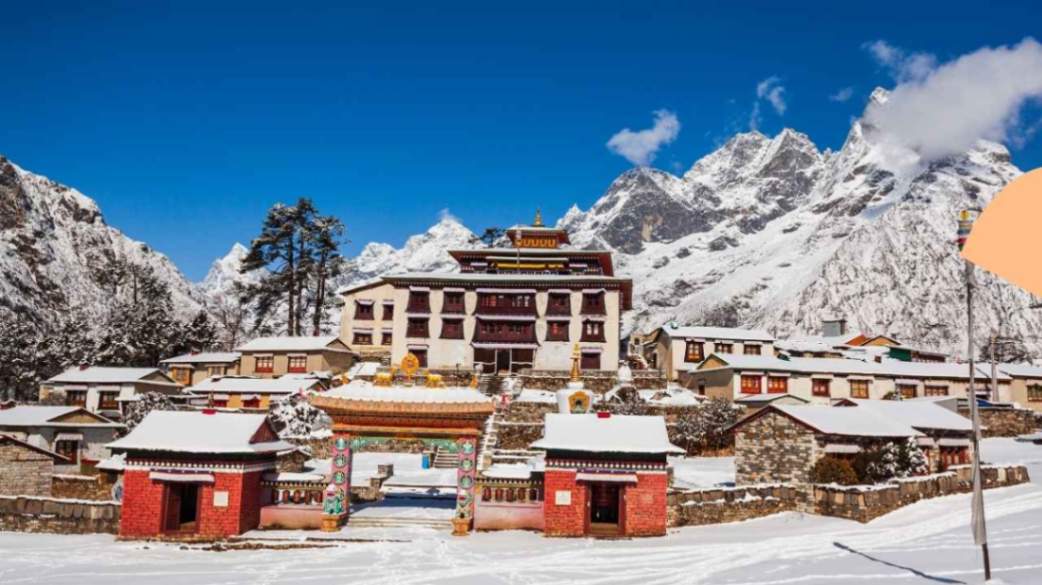
Tengboche Monastery is a Tibetan Buddhist monastery at 3,867 meters on the Everest Base Camp route, known for its Buddhist traditions, Mani Rimdu festival and views of Ama Dablam and other Khumbu peaks.
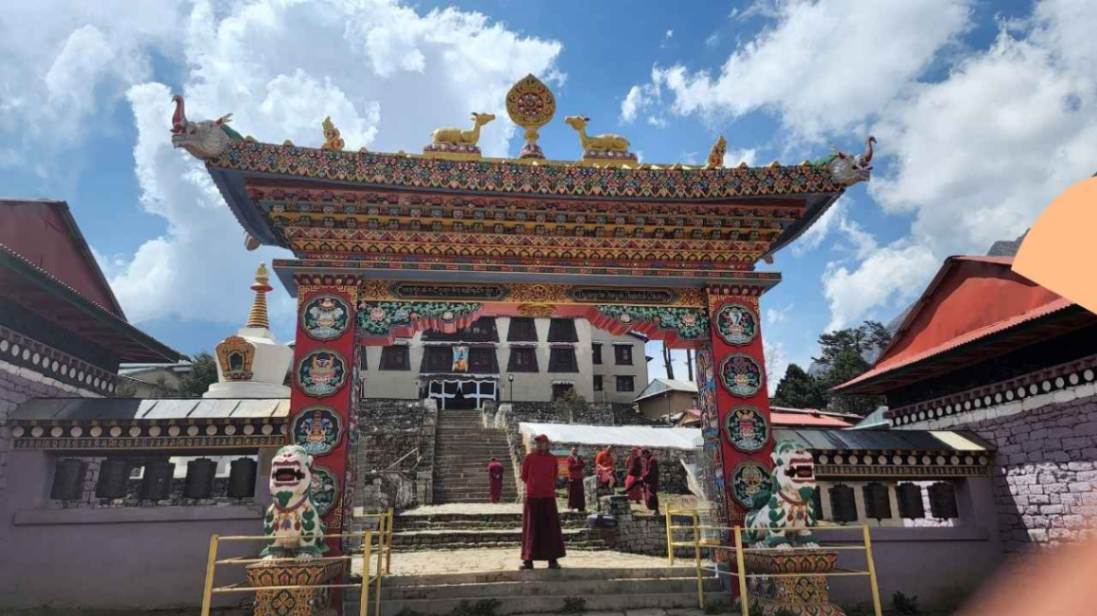
Tengboche Monastery is one of the main cultural stops on the Everest Base Camp Trek. It sits at about 3,867 meters on a ridge above the Imja Khola, between Namche Bazaar and Dingboche. From the monastery area, you can see Ama Dablam, Everest, Lhotse, Nuptse, Thamserku and other peaks in the Khumbu.
For trekkers, Tengboche is more than a place to stop for a mountain photograph. It is an active Buddhist monastery where monks continue their religious practices. Depending on the day and the monastery schedule, visitors may be able to observe a prayer ceremony or visit the prayer hall.
I have walked this section of the Everest route many times while guiding trekkers. My advice is simple: do not rush through Tengboche. You have already climbed from Lukla to Namche, and after Tengboche the trail takes you higher toward Dingboche, Lobuche and Everest Base Camp. Give yourself some time here before continuing.
Tengboche Monastery is a Tibetan Buddhist monastery in the Khumbu region of Nepal. It is an important Buddhist centre for the Sherpa communities of the Everest region and has a long connection with trekkers and mountaineers.
The monastery stands on a ridge above the Imja Khola. Its location gives visitors open views toward several major mountains while also making it an important religious stop on the route.
On a standard Everest Base Camp itinerary, trekkers normally reach Tengboche after spending an acclimatization day in Namche Bazaar. The walk from Namche descends toward Phunki Tenga before climbing through the forest to Tengboche.
Tengboche village is also a common overnight stop after Namche. There are lodges and other accommodation options in the area, while nearby Deboche is another popular place to stay.
| Detail | Information |
| Location | Khumbu, Solukhumbu, Nepal |
| Altitude | About 3,867 m |
| Religion | Tibetan Buddhism |
| Founded | 1916 |
| Main festival | Mani Rimdu |
| Main trekking route | Namche to Tengboche to Dingboche |
| Common EBC stop | Around Day 5 |
| Nearby overnight option | Deboche |
| Main mountain views | Ama Dablam, Everest, Lhotse, Nuptse and Thamserku |
You may see slightly different altitude figures in trekking information. Nepal Tourism Board currently lists Tengboche at 3,867 meters.
Tengboche Monastery was founded in 1916 under Lama Gulu. The monastery became an important Buddhist centre for the Sherpa communities living in the Khumbu.
The original monastery was damaged by the major earthquake of 1934 and later rebuilt with help from the local community. In 1989, a fire destroyed the monastery again, and the building was reconstructed.
The monastery you see today is therefore not the original structure. It has been rebuilt after major damage and continues to function as an active place of Buddhist practice.
Tengboche monastery has a long connection with mountaineering in the Everest region.
Mountaineers, trekkers and expedition members have traditionally visited the monastery for blessings before continuing toward the higher mountains. The monastery’s resident Rinpoche is also known for giving blessings to pilgrims, mountaineers and travellers.
This connection is still easy to notice when you walk through Tengboche. People heading toward Everest and other high peaks pass through the same monastery area used by the local community.
The main prayer hall is the centre of religious activity at Tengboche.
Inside, you may see Buddhist statues, religious paintings, prayer texts, butter lamps and traditional instruments used during ceremonies. Monks sit in rows during prayers, with the arrangement of the hall reflecting its religious purpose.
The activity inside depends on when you visit. You may find the hall quiet, arrive during a prayer ceremony, or visit while another monastic activity is taking place.
It is important to remember that Tengboche is not a museum. It is an active monastery. If monks are praying or carrying out religious work, visitors should stay quiet and follow the instructions given by the monastery.
You do not need to understand every Buddhist symbol to appreciate the visit.
As a trekker, I suggest paying attention to:
Your guide can explain the main things you see and answer questions about the monastery and Sherpa Buddhist traditions.
Prayer ceremonies, commonly called pujas, are part of the normal religious life of the monastery.
Visitors may be able to observe a ceremony when one is taking place and when the monastery allows visitors inside. I do not recommend planning your trek around a fixed prayer time found on a website because the monastic schedule can change.
If you arrive during a ceremony, your guide can help you understand where visitors can sit and when it is appropriate to enter. The most important thing is to remain quiet and avoid disturbing the monks.
During a puja, monks sit together in the prayer hall and recite Buddhist prayers. You may hear chanting together with drums, horns, bells and cymbals.
Butter lamps, Buddhist images and religious texts are part of the setting. Depending on the ceremony, the monks may also perform different rituals as part of the prayers.
You do not need to understand every part of the ceremony. Sit quietly, listen and watch without interrupting the people taking part.
If you need to leave before the ceremony finishes, do so quietly when there is a suitable opportunity. Avoid walking through the centre of the prayer hall while prayers are underway.
For most trekkers, visiting the monastery is straightforward. When you arrive in Tengboche, check with your guide or the monastery about visitor access. If a ceremony is taking place, you may need to wait or enter only when visitors are permitted.
Before entering any area where shoes must be removed, take them off and leave them where instructed. Inside the prayer hall, sit in the area provided for visitors rather than among the monks.
Keep your phone silent and follow any instructions about photography. If photography is not permitted, put your camera away. When you leave, do so quietly and avoid disturbing any ceremony or religious activity.
There is no fixed amount of time you need to spend at the monastery. If you are simply looking around, 20 to 30 minutes can be enough for a short visit. If a prayer ceremony is taking place and visitors are allowed to observe it, you may want to stay longer.
Trekkers staying overnight in Tengboche have more flexibility. You can visit in the afternoon and, depending on the schedule, have another opportunity the following morning. I prefer trekkers to have enough time to understand the place rather than arrive, take one photograph and immediately leave.
You do not need to know every Buddhist custom before visiting Tengboche. A few basic rules are enough.
| Do | Avoid |
| Follow the monastery’s instructions | Ignoring signs or instructions |
| Remove shoes where required | Entering with shoes when they should be removed |
| Keep your phone silent | Phone calls and loud notifications |
| Sit where visitors are directed | Walking through the monks’ seating area |
| Ask before taking photographs | Photographing ceremonies without permission |
| Dress respectfully | Clothing unsuitable for a religious site |
| Walk clockwise around Buddhist structures | Walking against the traditional direction |
| Make a donation if you wish | Assuming a donation is compulsory |
When walking around a stupa, mani wall or prayer wheels, keep the religious structure on your right and walk clockwise. These customs are simple. You are visiting an active place of worship, so watch what local people and your guide do and follow their example.
Do not assume that everything inside the monastery can be photographed. Ask before taking photographs inside the prayer hall, especially if a ceremony is taking place. If photography is restricted, respect the rule and put the camera away.
Outside the monastery, you can photograph the building and mountain views. If you want to photograph a monk or local person, ask first. A quick question is enough. If the answer is no, respect it.
Tengboche sits in a good position for looking toward several major peaks in the Everest region. Ama Dablam is especially prominent from the monastery area. Everest, Lhotse and Nuptse can also be seen, together with Thamserku and other peaks.
The weather decides how much you will see. If the sky is clear when you arrive, take some time outside before going to your lodge. Morning and late afternoon can give different light on the mountains. If you stay overnight in Tengboche or nearby Deboche, you have more than one chance to see the peaks.
The monastery grounds and open areas around Tengboche give different angles toward the mountains. Rather than staying in one place, walk slowly around the village and monastery area where it is permitted. You can often find a better view by moving a short distance.
Your guide can point out the major peaks and help you understand which mountain is which.
Not every Everest Base Camp itinerary sleeps directly in Tengboche.
Some trekkers stay in Deboche, which is lower down the trail. Both places are used as overnight stops on the route toward Dingboche.
| Tengboche | Deboche | |
| Altitude | About 3,867 m | Lower than Tengboche |
| Monastery | Tengboche Monastery | No main monastery |
| Mountain views | More open | More forested |
| Main advantage | Close to monastery and ridge views | Lower sleeping altitude |
| Next route | Toward Deboche and Dingboche | Toward Pangboche and Dingboche |
If your main reason for staying in Tengboche is the monastery, sleeping there gives you more time around the area. If your itinerary uses Deboche, you can still visit Tengboche during the day before continuing downhill. The choice depends on the itinerary, lodge availability and how your guide has planned the day.
Tengboche is high enough that altitude needs to be taken seriously. Namche Bazaar is around 3,440 meters, while Tengboche is around 3,867 meters. The difference may not look large on paper, but you can feel the climb because you are already at altitude.
The trail after Phunki Tenga climbs steadily toward Tengboche. This is why I recommend keeping a slow and steady pace rather than trying to reach the village quickly. Drink regularly, take short breaks and tell your guide if you feel unwell.
A faster breathing rate during an uphill climb is common at this altitude. But severe headache, confusion, difficulty walking, unusual breathlessness or worsening symptoms should not be ignored. Tell your guide immediately if you develop concerning symptoms.
The walk from Namche to Tengboche is one of the main trekking days on the Everest Base Camp route. The trail first follows the hillside before descending toward Phunki Tenga. After the river area, the route climbs steadily through forest toward Tengboche.
The climb is noticeable because you are gaining altitude while walking uphill. Nepal Tourism Board trekking information gives roughly four to five hours for the walk from Namche to Tengboche, although actual time depends on your pace, breaks, weather and group.
I normally tell trekkers not to worry too much about the clock on this day. The important thing is reaching Tengboche comfortably rather than trying to arrive first.
You leave the busier environment of Namche and move deeper into the Everest region. The route passes through forest before reaching the more open ridge around Tengboche. You also start noticing the effect of altitude more clearly.
This does not mean the day is extremely difficult. It means you should respect the altitude and maintain a sensible pace.
If you arrive early and have time before dinner, you do not need to spend the entire afternoon inside your lodge.
You can:
Do not turn every free minute into another hike. You have already gained altitude, and the next day takes you higher. Sometimes the best use of an afternoon at Tengboche is simply resting.
Tengboche can be visited during several trekking seasons, but the conditions change throughout the year.
March to May is one of the main trekking periods. The lower sections of the route can have rhododendron flowers, while temperatures are generally more comfortable than in winter. Tengboche can become busy during the main spring trekking months.
September to November is another major trekking season. Many trekkers choose this period for the Everest Base Camp route. Mani Rimdu can also fall during autumn, depending on the lunar calendar. If the festival is important to you, check the exact dates before fixing your trekking itinerary.
December to February is much colder. Snow and ice can affect the trail, and accommodation and services may operate differently from the main trekking seasons. If you trek during winter, you need proper cold-weather clothing and a flexible approach to the itinerary.
June to August brings more rain and cloud to much of the lower Everest route. There are fewer trekkers, but wet trails, cloud and changing weather can affect the route.
Mani Rimdu is the major Buddhist festival associated with Tengboche Monastery. The festival follows the Tibetan Buddhist calendar, so the exact dates change each year. It includes religious ceremonies, prayers and traditional masked dances.
Nepal Tourism Board describes Mani Rimdu as a major festival at Tengboche and notes that visitors can attend the public celebrations. If your trek coincides with the festival, the monastery area will be much busier than on a normal day.
The public part of the festival includes traditional masked dances performed by monks, religious ceremonies and gatherings around the monastery. The dances have religious meaning, so they should be treated as part of the festival rather than simply as a show for visitors.
If you are visiting during Mani Rimdu, listen to your guide and follow the instructions of the monastery and people organizing the event. Also allow extra time. A normal trekking schedule may need to be adjusted around the festival.
After Tengboche, the trail goes toward Deboche, Pangboche and eventually Dingboche or Pheriche. The vegetation gradually becomes thinner as you gain altitude. The route also becomes more open, and the effect of altitude becomes more noticeable.
From Dingboche, most EBC itineraries include another acclimatization day before continuing toward Lobuche and Gorak Shep. So after Tengboche, the focus of the trek changes. You are moving away from the lower Khumbu villages and toward the higher section of the Everest route.
A standard 14-day itinerary may look like this:
| Day | Route | Approx. altitude |
| 1 | Arrive in Kathmandu | 1,400 m |
| 2 | Fly to Lukla and trek to Phakding | 2,610 m |
| 3 | Phakding to Namche Bazaar | 3,440 m |
| 4 | Acclimatization in Namche | 3,440 m |
| 5 | Namche to Tengboche | 3,867 m |
| 6 | Tengboche to Dingboche | 4,410 m |
| 7 | Acclimatization in Dingboche | 4,410 m |
| 8 | Dingboche to Lobuche | 4,940 m |
| 9 | Lobuche to Everest Base Camp via Gorak Shep | 5,364 m |
| 10 | Kala Patthar and toward Pheriche | 5,545 m |
| 11 | Pheriche to Namche | 3,440 m |
| 12 | Namche to Lukla | 2,860 m |
| 13 | Lukla to Kathmandu | 1,400 m |
| 14 | Departure | 1,400 m |
Not every itinerary uses the same overnight stops. Some groups stay in Deboche instead of Tengboche, and some itineraries use different schedules.
The important point is that Tengboche comes after your first major acclimatization stop in Namche and before you move toward Dingboche and the higher part of the route.
I have guided the Everest route since 2002, and I often tell my trekkers not to rush through Tengboche. By this stage, you are already at nearly 3,900 meters and the higher part of the trek is ahead. Take a little time here, then focus on resting and preparing for the next day.
You do not need to see or do everything. If the monastery is open, visit it respectfully. Otherwise, enjoy the surroundings and continue at a comfortable pace. For me, Tengboche monastery is a place to pause, not another place to hurry through.
Tengboche Monastery is about 3,867 meters above sea level according to Nepal Tourism Board. You may see slightly different figures in trekking information.
Yes. Tengboche is on the main Everest trekking route, and visitors can visit the monastery subject to the monastery’s schedule and instructions.
Visitors may be able to observe a ceremony when one is taking place and visitor access is permitted. Sit quietly in the area provided for visitors.
There is no single time that I recommend treating as guaranteed. The monastic schedule can change, so check with your guide or the monastery when you arrive.
Ask before taking photographs inside the monastery or during a religious ceremony. Follow any photography restrictions given by the monastery.
A short visit can take 20 to 30 minutes. If a ceremony is taking place and visitors are allowed to observe it, you may want to stay longer.
The main peaks visible from the area include Ama Dablam, Everest, Lhotse, Nuptse and Thamserku.
The monastery was founded in 1916 under Lama Gulu. It was later damaged by the 1934 earthquake and destroyed by fire in 1989 before being rebuilt.
Mani Rimdu is a major Buddhist festival held at Tengboche. It includes religious ceremonies, prayers and traditional masked dances. The dates change each year according to the lunar calendar.
No. A donation should not be treated as compulsory. If you wish to support the monastery, you can make a small donation in the appropriate place.
Clockwise movement is a traditional practice when walking around Buddhist religious structures. Keep a stupa, mani wall or prayer wheels on your right as you walk.
Yes. Tengboche has a long connection with mountaineering, and the monastery is known for blessings given to mountaineers, pilgrims and travellers.
Yes. Tengboche has lodges and other accommodation options. Deboche is another common overnight option on this part of the EBC route.
It is a moderate trekking day with a noticeable climb after Phunki Tenga. At nearly 3,900 meters, the altitude can make the climb feel harder than the distance suggests.
Yes. Tengboche is a normal stop on the EBC route. First-time trekkers should follow a gradual itinerary, maintain a comfortable pace and tell their guide about any unusual symptoms.
Kala Patthar is a rocky ridge above Gorak Shep on the Everest Base Camp route. It reaches 5,545 meters (18,192 feet), making…
Saligram
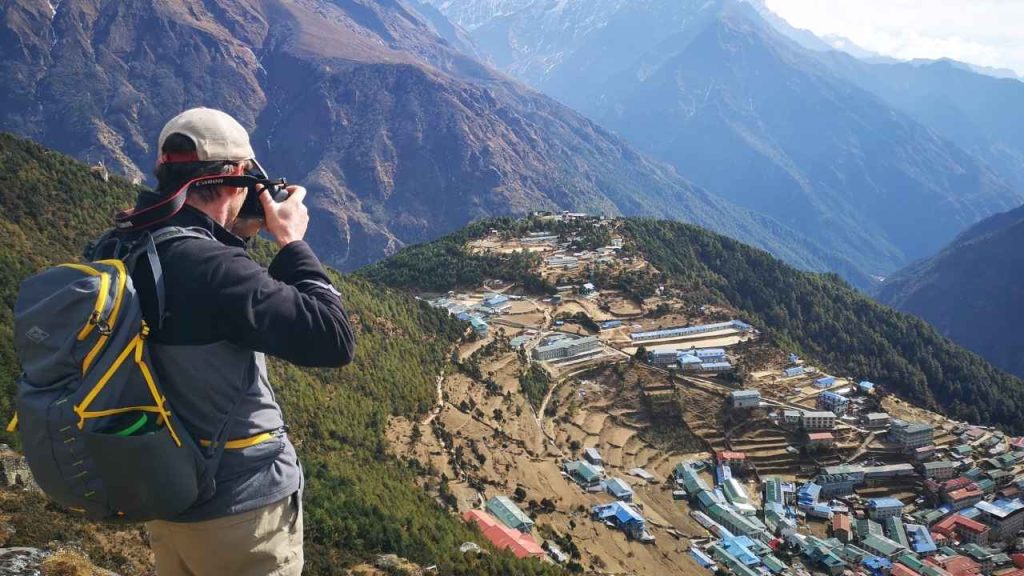
Namche Bazaar is the main town in the Everest region and one of the most important stops on the Everest Base Camp…
Saligram
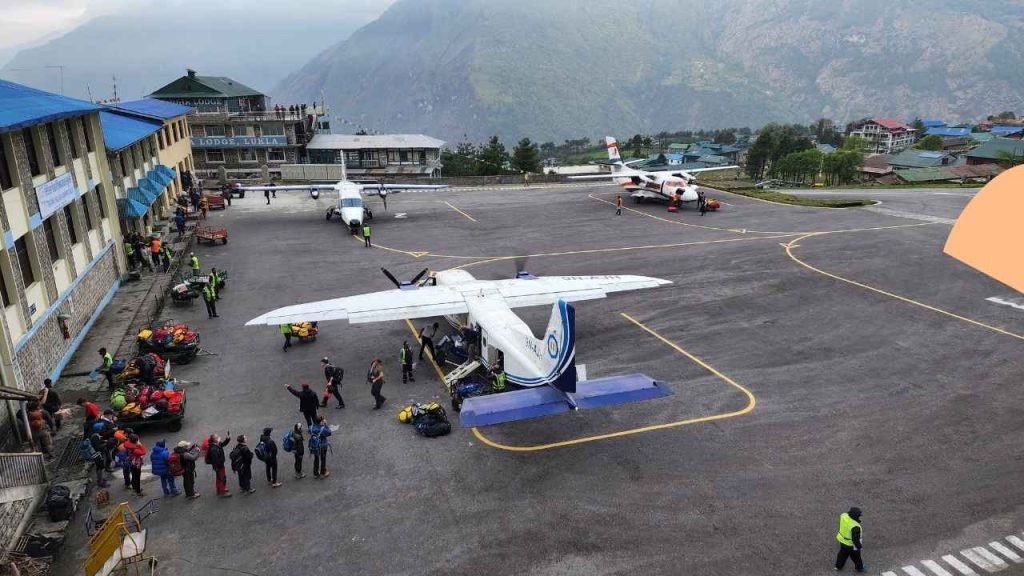
Lukla Airport, officially Tenzing-Hillary Airport, is the main airport for trekkers flying to Everest Base Camp and other destinations in the Khumbu…
Saligram


