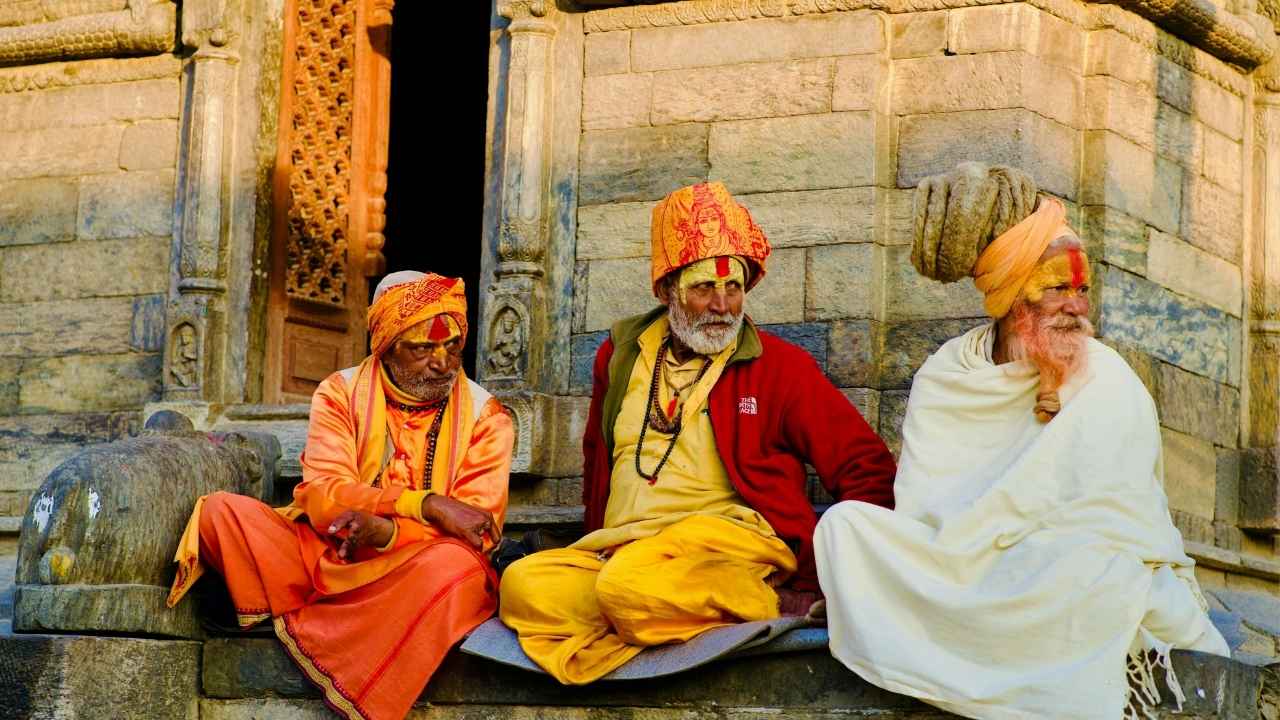
The culture of Nepal varies from one region and community to another. The country’s mountains, hills and Terai are home to many ethnic groups, languages and traditions, with Hinduism, Buddhism, Kirat and other local belief systems shaping religious and social life.
Newari culture is closely associated with the Kathmandu Valley, while Sherpa and other Himalayan communities have developed traditions suited to mountain life. In the Terai, Tharu culture has its own language, architecture, art and customs. Across Nepal, family relationships, local communities, religious practices, traditional arts and seasonal celebrations remain important parts of daily life.
Nepal Culture at a Glance
| Aspect |
What to Know |
| People and communities |
Nepal has many ethnic, caste and regional communities with their own customs and languages. |
| Main cultural regions |
The Himalayas, hills, Kathmandu Valley and Terai have noticeably different cultural traditions. |
| Religious traditions |
Hinduism and Buddhism are widespread, alongside Kirat and other indigenous belief systems. |
| Languages |
Nepali is the country’s main common language, alongside many communities and regional languages. |
| Architecture |
Historic towns, temples, monasteries, courtyards and traditional houses reflect local building traditions. |
| Arts and crafts |
Wood carving, metalwork, painting, pottery, weaving and other crafts remain important in several regions. |
| Clothing |
Dress differs according to community, region, age and occasion. |
| Music and dance |
Different communities have their own instruments, songs and dances. |
| Family and community |
Extended family relationships and local community networks remain important in many parts of the country. |
What Is the Culture of Nepal?
There is no single way of describing Nepali culture. A person growing up in a Newar neighborhood of Bhaktapur, a Sherpa village in the Everest region and a Tharu settlement in the Terai may have very different customs, languages, food and daily routines.
Geography is one reason for this variety. The high mountains, middle hills and southern plains have different climates and ways of life. Trade, migration and centuries of contact between communities added further influences, particularly in places such as the Kathmandu Valley.
Religion is another major influence. Hindu and Buddhist traditions are widespread, while Kirat and other indigenous beliefs remain important within particular communities. Religious practices often sit alongside family customs, local ceremonies and community responsibilities rather than existing separately from them.
Why Is Nepal Culturally Diverse?
Nepal’s geography has a direct effect on how people live. Mountain communities have traditionally relied on livestock, farming suited to short growing seasons and trade across high passes. In the hills, farming villages developed around terraced fields and local water sources. The Terai has a warmer climate and extensive agricultural areas, with its own settlement patterns and traditions.
The country has also long been a meeting place between the Indian plains and the Tibetan plateau. Traders, pilgrims and migrants moved through different parts of Nepal, bringing languages, religious practices, artistic techniques and customs with them.
As a result, cultural differences are often visible even within a relatively short journey. Architecture, language, clothing and religious practices can change as the landscape changes.
What Are the Main Cultural Communities in Nepal?
Nepal has a large number of ethnic and caste communities. Newar, Sherpa, Tamang, Gurung, Magar, Tharu, Rai, Limbu, Brahmin, Chhetri and many other communities have their own histories and cultural practices.
Some communities are strongly associated with particular regions, although migration means that people from almost every community can now be found throughout the country.
A few examples include:
- Newar: closely associated with the historic towns of the Kathmandu Valley and known for architecture, craftsmanship and Hindu-Buddhist traditions.
- Sherpa: associated particularly with the high Himalayan regions, including the Everest area, with strong Tibetan Buddhist influences.
- Tamang: traditionally found across the hills north and northwest of Kathmandu and in other parts of central Nepal.
- Gurung: traditionally associated with the central hills and mountain regions.
- Magar: found widely across the western and central hills.
- Tharu: indigenous to the Terai, with distinctive houses, artwork, music and social traditions.
- Rai and Limbu: prominent communities of eastern Nepal with their own languages, customs and ceremonial traditions.
These names are only a starting point. Traditions can vary considerably within the same community from one locality to another.
How Does Religion Influence Nepali Culture?
Religion can be seen throughout everyday life in Nepal. Temples and shrines are often found alongside homes and shops, while monasteries, chortens, prayer wheels and other Buddhist structures are common in many mountain communities.
Hindu and Buddhist traditions have also influenced one another over generations. The Kathmandu Valley is a clear example. Hindu temples and Buddhist shrines can stand within the same historic neighborhood, and some communities observe traditions associated with both religions.
Kirat traditions remain important among several communities in eastern Nepal. Other local beliefs and practices are also passed from one generation to the next.
Religious customs may involve household rituals, visits to sacred places, offerings, ceremonies and community responsibilities. Their importance differs from one family and community to another.
What Is Newari Culture?
Newari culture developed in the Kathmandu Valley and remains particularly visible in Kathmandu, Patan and Bhaktapur. The Newars have a long history as traders, farmers, artisans and urban residents, and their influence can be seen throughout the valley’s historic towns.
Traditional Newari architecture is one of the clearest expressions of this culture. Brick houses, carved wooden windows, courtyards, bahals, stone water spouts and temples form part of the older neighborhoods. Many of these places are still used by local residents rather than existing only as monuments.
Newar religious life includes both Hindu and Buddhist traditions. Local ceremonies and community organizations have helped maintain temples, courtyards and other shared spaces over generations.
Craftsmanship is another important part of Newari heritage. Wood carving, metalwork, paubha painting and traditional architectural decoration have been practiced by skilled artisans for generations. Newari food and music are also closely associated with the cultural life of the valley.
For anyone visiting Kathmandu Valley, walking through the older parts of Patan or Bhaktapur is one of the simplest ways to see how this culture developed around homes, courtyards, temples and local neighbourhoods.
What Is Himalayan Culture Like?
Culture in Nepal’s Himalayan regions has developed around high-altitude conditions and long-standing connections with Tibet. The traditions differ between communities, but Tibetan Buddhist practices are particularly visible in many northern areas.
Villages may contain monasteries, chortens, mani walls and prayer wheels. Houses are built with local materials and adapted to cold conditions, while agriculture and livestock have traditionally been organized around the short growing season.
Sherpa culture is strongly associated with the Everest region, although Sherpa communities also live elsewhere. Tamang, Gurung, Thakali and other Himalayan and hill communities have their own languages, customs and religious practices.
Mountain culture is also reflected in everyday work. Farming, animal husbandry, trading, construction and seasonal movement have all influenced the way settlements developed.
What Is Tharu Culture?
Tharu culture is associated with the Terai, particularly the lowland areas of southern Nepal. Tharu communities have developed traditions shaped by the region’s forests, rivers, agriculture and climate.
Traditional Tharu houses are known for decorated walls and locally made materials. Painting, weaving, basketry and other forms of craftsmanship are part of the material culture of different Tharu communities.
Music and dance have an important place in Tharu social life, particularly during community gatherings and cultural occasions. Clothing, language and customs vary between different Tharu groups, so there is no single version of Tharu culture throughout the Terai.
Visitors around Chitwan and other parts of the Terai can encounter Tharu heritage through local villages, museums, community programs and cultural performances.
What Are Traditional Nepalese Customs?
Many everyday customs in Nepal are based on respect for family members, elders, guests and religious traditions. The way people greet one another, share meals and take part in family occasions can differ between communities, but courtesy is generally valued.
Namaste, with the palms placed together, is a common respectful greeting. In some communities, other greetings are used according to local custom.
Guests may be offered tea or food when visiting a home. Family gatherings can involve relatives beyond the immediate household, particularly during important ceremonies and life events.
Visitors should remember that Nepal does not have one set of customs followed identically everywhere. Watching what local people do and asking when unsure is often the best approach.
What Is Traditional Clothing in Nepal?
Traditional clothing varies considerably across Nepal. There is no single outfit that represents everyday dress throughout the country.
The daura suruwal is a traditional men’s outfit, while women may wear saris, gunyu cholo and other regional forms of dress. Different communities also have their own garments, jewellery, shawls, headwear and patterns.
Traditional clothing is particularly visible during weddings, religious occasions, cultural events and festivals. In cities, everyday clothing is generally modern, while traditional dress continues to be worn for particular occasions.
What Is Traditional Art and Craft in Nepal?
Nepal’s traditional crafts include wood carving, metalwork, stone carving, pottery, weaving and painting. In many areas, these skills developed alongside religious buildings, household objects and community traditions.
The Kathmandu Valley is particularly known for carved wooden architecture and metal sculptures. Traditional windows, doors, temple details and ritual objects show the level of craftsmanship developed by local artisans.
Paubha painting is a traditional Newar painting form associated with Hindu and Buddhist subjects. Thangka painting is closely associated with Tibetan Buddhist traditions and is practiced in Nepal as well.
Craft traditions continue today, although artisans increasingly work alongside modern production and changing markets.
What Is Traditional Music and Dance in Nepal?
Music in Nepal varies between communities and regions. Traditional instruments include the madal, sarangi, bansuri and different types of drums and wind instruments.
Songs and dances may be connected with weddings, religious occasions, seasonal activities, storytelling or community celebrations. Some are performed only within particular communities and local traditions.
The madal is widely used in Nepali folk music, while the sarangi has a long association with traditional musicians. Modern Nepali music has developed alongside these older forms rather than replacing them completely.
What Is Nepalese Family and Community Life Like?
Family remains an important part of life in Nepal, although household structures are changing as more people move to cities or work abroad. Parents, children, grandparents and other relatives may continue to maintain close relationships even when they no longer live in the same household.
In many villages and traditional neighborhoods, people also maintain strong connections with their immediate community. Neighbors may work together during ceremonies, religious activities and local events.
The guthi system in the Kathmandu Valley is one example of traditional community organization. Guthis have historically been involved in religious ceremonies, festivals, temple maintenance and other communal responsibilities.
Migration, education, urban growth and technology are changing how these relationships work, but family and community networks remain important in many parts of Nepal.
How Is Nepali Culture Changing Today?
Nepali culture continues to change as people move between villages and cities, travel abroad, use new technology and work in different industries.
Kathmandu and other cities bring people from many parts of the country together. Traditional practices may now be maintained alongside modern education, office work, social media and urban lifestyles.
Some traditions are becoming less common, while others are being actively maintained through community groups, cultural organizations, museums, artisans and local events. Younger generations may practice a tradition differently from their parents without completely abandoning it.
This makes present-day Nepali culture different from the culture of previous generations. Old and new ways of life often exist in the same family and neighborhood.
How Can Travelers Experience Nepali Culture?
You do not need to attend a special cultural program to see how people live in Nepal. Much of the culture can be observed simply by spending time in older neighborhoods, villages, markets and local communities.
In the Kathmandu Valley, walking through the traditional quarters of Kathmandu, Patan and Bhaktapur reveals courtyards, shrines, workshops, temples and homes that remain part of local neighborhoods. In the mountains, staying in locally run lodges and walking through villages gives a closer view of everyday life.
In the Terai, community visits can introduce travelers to local architecture, food, crafts and Tharu traditions. Museums and heritage sites can provide historical context, while local markets often reveal more about ordinary life than formal attractions do.
A little patience helps. Talk with people when appropriate, learn a few Nepali words, ask before taking photographs and take time to observe rather than treating every cultural practice as a tourist attraction.
What Should Travelers Know About Nepalese Cultural Etiquette?
A few simple habits can prevent most cultural misunderstandings:
- Ask before taking photographs, particularly of people, ceremonies and religious activities.
- Remove your shoes where local custom requires it.
- Dress modestly when visiting temples, monasteries and traditional communities.
- Follow local signs and instructions at religious and heritage sites.
- Do not touch religious objects unless you are invited to do so.
- Use Namaste as a respectful greeting when appropriate.
- Respect private homes and community spaces rather than entering without permission.
- Observe local customs instead of assuming that the same rules apply throughout Nepal.
Nepalese Culture by Region
| Region |
Cultural Characteristics |
| Kathmandu Valley |
Newar architecture, traditional urban settlements, Hindu-Buddhist heritage, craftsmanship and historic courtyards |
| Himalayan Region |
Mountain communities, Tibetan Buddhist traditions, monasteries, high-altitude settlements and seasonal livelihoods |
| Hill Region |
Numerous ethnic communities, terraced farming, village traditions, folk music and regional customs |
| Terai |
Tharu and other plains communities, agriculture, distinctive houses, local crafts and regional traditions |
Experiencing the Culture of Nepal
The cultural character of Nepal becomes clearer when you move beyond individual monuments and look at the communities around them. A carved window in Patan, a monastery in a Himalayan village, a traditional Tharu house in the Terai and a family gathering in a hill village all belong to different parts of the country’s cultural life.
Nepal’s traditions have changed over time, and they continue to change. Some are maintained almost as they were practiced by earlier generations, while others have adapted to modern life.
That combination of old customs and present-day life is what visitors encounter when they travel through Nepal. Culture here is not confined to museums or heritage sites; it remains visible in homes, neighborhoods, places of worship, workshops and ordinary daily routines.
Frequently Asked Questions About the Culture of Nepal
What is the culture of Nepal?
Nepali culture consists of many regional, ethnic, religious and linguistic traditions rather than one single cultural system. Hindu, Buddhist, Kirat and other local traditions influence religious practices, family life, festivals, architecture, art and everyday customs.
Why is Nepal culturally diverse?
Nepal’s cultural diversity is closely connected with its geography and history. The Himalayas, hills and Terai developed different ways of life, while centuries of movement between the Indian plains, the Kathmandu Valley and the Tibetan region brought different languages, religions and customs into contact.
What are the main cultural groups in Nepal?
Newar, Sherpa, Tamang, Gurung, Magar, Tharu, Rai, Limbu, Brahmin and Chhetri are among the many communities found in Nepal. Each has its own history and traditions, and customs can also differ within the same community from one region to another.
What is Newari culture?
Newari culture is associated particularly with the Kathmandu Valley and the Newar community. It is known for historic urban settlements, carved wooden architecture, courtyards, craftsmanship, paubha painting and traditions that include both Hindu and Buddhist practices.
What is Tharu culture?
Tharu culture is associated with the Terai of southern Nepal. Tharu communities have their own languages, customs, traditional houses, artwork, music and dances, with local variations between different communities and regions.
How does religion influence Nepali culture?
Religion influences many parts of Nepali life, including architecture, ceremonies, festivals, household practices and community activities. Hinduism and Buddhism are widespread, while Kirat and other indigenous traditions remain important within particular communities.
What are some traditional customs in Nepal?
Common customs include greeting people respectfully with Namaste, showing respect to elders, welcoming guests with food or tea and following local practices at religious places. Customs vary between communities, so local context matters.
What is traditional clothing in Nepal?
Traditional clothing varies by community and region. The daura suruwal is a well-known traditional men’s outfit, while saris, gunyu cholo and many community-specific garments are worn by women and men on different occasions.
What are the traditional arts and crafts of Nepal?
Traditional Nepali crafts include wood carving, metalwork, stone carving, pottery, weaving, Paubha painting and Thangka painting. The Kathmandu Valley is particularly known for its wood and metal craftsmanship.
How can visitors experience Nepali culture respectfully?
Visitors can experience local culture by walking through historic neighborhoods, staying in local communities, visiting museums and heritage sites, and taking part in appropriate community activities. Asking before taking photographs, dressing respectfully and following local customs are important.