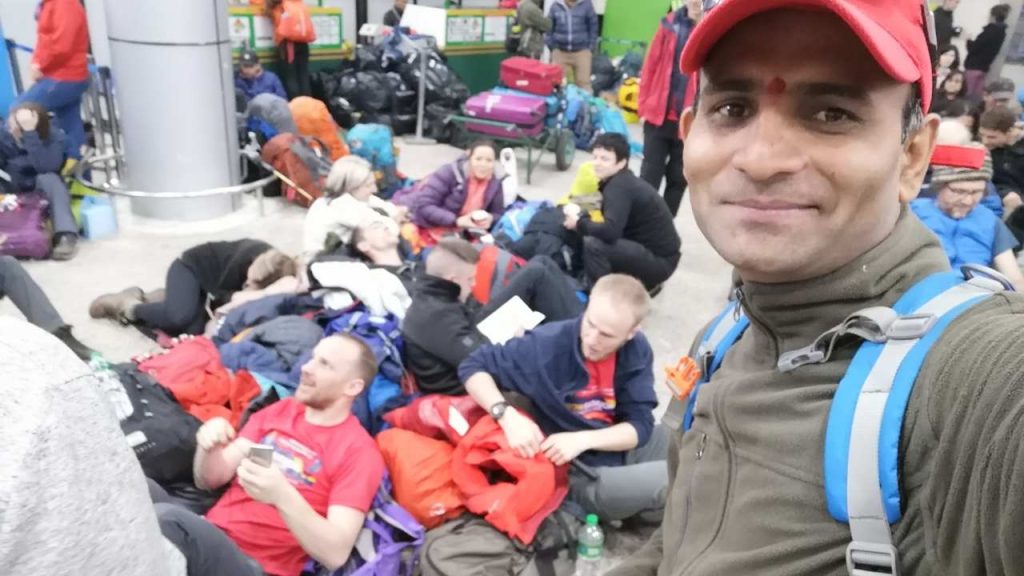
I have travelled many times from the lowlands of the Terai to the base camps of the Himalayas, and along the way I have experienced Food in Nepal through many different communities and regions. The food changes as much as the landscape. The meals I have eaten in Newari homes, Thakali villages, Terai communities and high Himalayan settlements can be very different from one another.
Over the years, I have eaten simple dal bhat in mountain lodges, local dishes prepared in village homes, festival foods shared with families and meals made from grains and vegetables grown close to where they were cooked. Some dishes are familiar across much of the country, while others belong closely to a particular community or region.
Food in Nepal is closely connected with the land and the people who live there. The climate, crops, local customs and traditions all influence what people cook. What you eat in the Terai can be very different from what you find several days later in a Himalayan village.
If you are travelling through Nepal, do not look only for the dishes you have already heard about. Some of the meals you remember most may be very simple. A plate of rice, lentils, vegetables and achar after a long day of walking can taste better than an expensive restaurant meal because you are eating it in the right place, at the right time.
Nepal does not have one single style of food. As you travel from the Terai through the middle hills and into the Himalayas, the ingredients, cooking methods and meals change. Newari food has its own traditions, Thakali cooking has developed around the Kali Gandaki region, and communities in the high mountains have foods shaped by their climate and local crops.
This guide takes you through the food you can experience while travelling in Nepal, from everyday meals and popular dishes to regional cooking, trekking food, festival foods, local drinks and traditional meals still prepared in homes and communities across the country.
What Is Food Like in Nepal?
Food in Nepal is based largely on rice, grains, lentils, vegetables, potatoes, spices and locally available ingredients. What appears on the table depends greatly on where you are and what grows or can be brought into that area.
Rice is a major part of meals in many parts of Nepal, while maize, millet, wheat, buckwheat and barley are important in other areas. Different communities have developed their own ways of preparing these ingredients.
You will also notice the influence of neighbouring regions. Indian cooking has influenced food in the southern and central parts of Nepal, while Tibetan and Himalayan traditions are more visible in northern mountain communities.
There is no single menu that represents every Nepali household. Even dal bhat, perhaps the most familiar Nepali meal to visitors, changes from one home or restaurant to another.
For a deeper look at the traditions, communities and customs behind these meals, see our Nepal Culture guide.
Dal Bhat
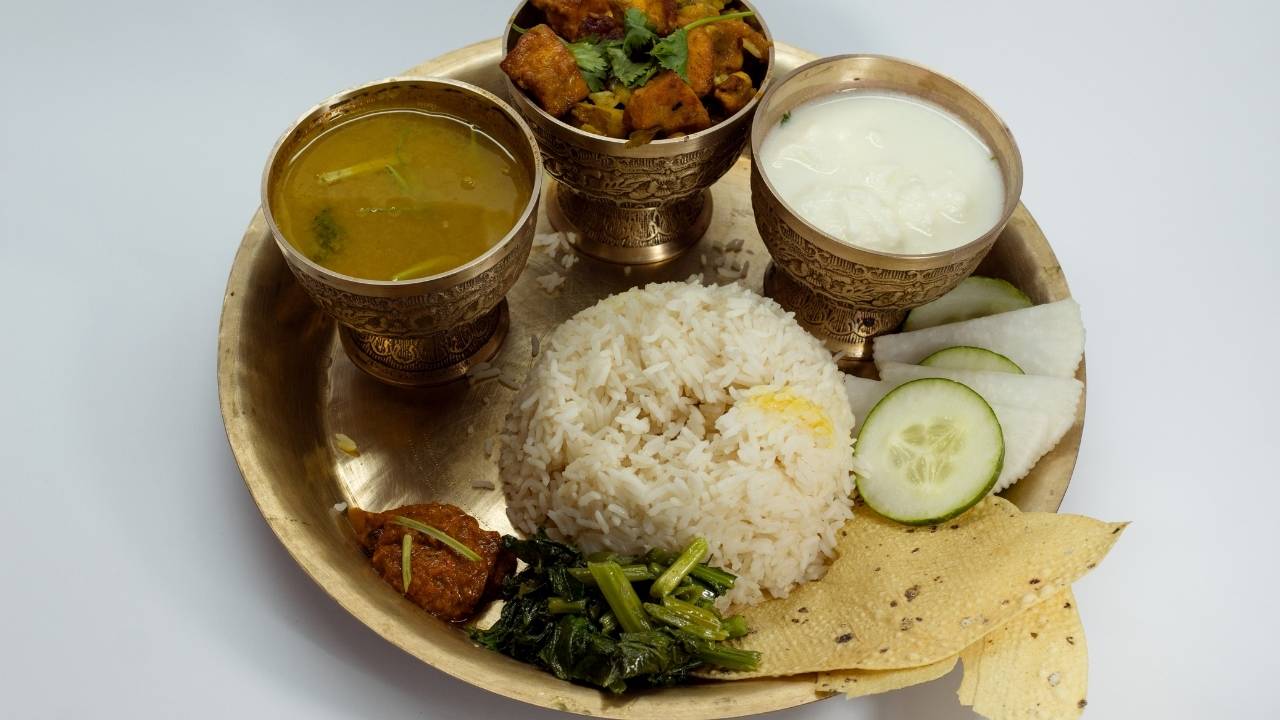
Dal bhat is the everyday meal most closely associated with Nepal. It consists of rice and lentil soup, usually served with vegetables, curry, achar and sometimes meat.
The ingredients and side dishes change according to the household and region. In some places you may get several vegetable dishes and different pickles, while a simple village meal may contain only rice, dal, one vegetable and achar.
For people travelling in Nepal, dal bhat is one of the easiest traditional meals to find. It is served in homes, local restaurants and many trekking lodges.
After several hours of walking, a hot plate of dal bhat is one of the meals many trekkers look forward to. It is filling, familiar and easy to eat when you are tired.
Momo
Momo are steamed dumplings and one of the most popular foods you will find in Nepal. They are commonly filled with vegetables, chicken or buffalo meat and served with a dipping sauce.
You will find momo in towns, villages and along many trekking routes. The dough, filling, spices and sauce can differ considerably from one restaurant to another.
Steamed momo are the most common, but fried momo and jhol momo are also widely available. Jhol momo are served with a warm, spiced sauce that becomes part of the dish rather than being used only as a dip.
If you enjoy momo, try different preparations when you have the opportunity. A small local restaurant may prepare them quite differently from a restaurant serving international travellers.
Newari Food
Newari food comes from the Newar communities of the Kathmandu Valley and has a strong place in the food culture of Nepal. The cuisine includes lentils, grains, vegetables, fermented foods, meat, spices and many dishes prepared for festivals and family gatherings.
Bara, chatamari, choila and yomari are among the foods you may encounter. Bara is a lentil-based pancake, while chatamari is made from rice flour and can be prepared with different toppings.
Choila is a spiced meat preparation traditionally associated with Newari cooking. It is often served alongside other small dishes rather than as a meal on its own.
Newari meals can include many small portions at once. Instead of ordering one large dish, you may receive several preparations with different textures, flavours and levels of spice.
The old Newar settlements of the Kathmandu Valley are good places to look for this food. A traditional Newari meal also gives you a chance to see how food connects with local celebrations, family gatherings and community life.
Yomari
Yomari is a steamed rice-flour dumpling associated with the Newar community. It is traditionally filled with sweet ingredients such as chaku and may also contain sesame or other fillings.
Yomari is particularly connected with Yomari Punhi, a Newar festival. Families prepare the dumplings and share them as part of the celebration.
It is not something you will necessarily find on every restaurant menu throughout the year. If you have a chance to try freshly made yomari during the festival period, it is worth doing.
Thakali Food
Thakali food is closely associated with the Thakali people and the Kali Gandaki region, including areas of Mustang. Thakali-style meals are now served in many parts of Nepal.
A Thakali meal often resembles a familiar dal bhat set, with rice, dal, vegetables, achar and other side dishes. The difference comes through the seasoning, preparation and the combination of accompaniments.
When travelling through the Kali Gandaki valley, you can try Thakali food in the region where this cooking tradition developed. Eating it there gives you a different connection to the food than simply ordering the same style of meal elsewhere.
Food in Nepal’s Cities
Kathmandu and Pokhara offer some of the widest choices of food for travellers. You can find traditional Nepali meals alongside Newari and Thakali restaurants, Tibetan dishes, Indian food, bakeries, cafes and international restaurants.
The Kathmandu Valley is particularly good for exploring Newari food. Patan, Bhaktapur and Kirtipur retain strong Newar traditions, and local restaurants in these old settlements offer dishes connected with the communities that have lived there for generations.
Pokhara has a strong connection with trekking and receives visitors from many countries, so its restaurants serve both local dishes and international food. It is easy to move between a traditional Nepali meal, a Thakali set and familiar food from home.
These cities are also good places to try dishes that may be harder to find elsewhere. If you want to explore several regional cuisines during one trip, you can do that without travelling far.
Food on Trekking Routes
Food on trekking routes depends on the route, the settlement, the available ingredients and how supplies reach each lodge. Lower sections generally have easier access to fresh vegetables, fruit, eggs and other ingredients, while higher and more remote settlements depend more on food that can be transported and stored.
Most established trekking routes have teahouses or lodges where you can order meals. Dal bhat, noodles, soup, potatoes, eggs, rice dishes, momo, pasta, pancakes and bread are common choices.
As you move farther into the mountains, the menu can become smaller and prices can increase because transporting food takes more time and effort. On routes such as the Everest Base Camp Trek, Annapurna Circuit Trek and Langtang Valley Trek, what you can order depends on what each lodge has received and stored.
A lodge may have many dishes listed but only some available because ingredients have run out or fresh supplies have not arrived. This is normal on mountain trails.
On a demanding walking day, simple food is often the easiest choice. Dal bhat, soup, noodles, potatoes and eggs are common meals when trekkers want something filling without a complicated preparation.
It is worth asking what is fresh and what the lodge recommends. The people running the kitchen know what they have available and what they can prepare properly that day.
Tibetan-Influenced Food
The influence of Tibetan food is especially noticeable in Himalayan communities of northern Nepal. The cooking uses ingredients and methods that developed around life in the mountain environment.
Potatoes, barley, buckwheat and other crops feature in local food traditions. Tibetan-style bread, noodles, soups and butter tea can also be found in Himalayan areas.
The flavours and textures can be different from the food most visitors know from the rest of Nepal. Trying these dishes gives you another view of how communities across the Himalayas have developed their own food traditions.
Thukpa
Thukpa is a noodle soup common in Himalayan and Tibetan-influenced areas. It usually contains noodles, vegetables and sometimes meat, with the preparation changing from one kitchen to another.
A hot bowl of thukpa is especially welcome in cold weather. It is simple food, but the combination of warm soup and noodles works well after several hours outside.
The dish can vary considerably between kitchens. Some versions are light and simple, while others contain more vegetables, meat or spices.
Gundruk
Gundruk is made from fermented leafy vegetables and is a traditional part of Nepali cooking. The vegetables are fermented, dried and later used in cooking, allowing them to be kept for longer periods.
It has a sour, earthy flavour and is commonly used in soups and other preparations. The taste can be unfamiliar at first if you have never eaten fermented vegetables.
Gundruk also shows how traditional households preserved vegetables for later use. It remains part of everyday cooking in many Nepali homes.
Dhido
Dhido is made by cooking flour, often from millet, buckwheat or maize, with water until it becomes thick. It is eaten with dal, vegetables, achar and sometimes meat.
The texture is very different from rice, so do not expect it to feel like another type of rice dish. It is a traditional food that has been part of rural diets and is now also served in restaurants that focus on Nepali cooking.
If you want to move beyond the most familiar foods in Nepal, dhido is worth trying.
Sel Roti
Sel roti is a ring-shaped bread made from rice flour and fried in oil. It is especially associated with festivals and family occasions.
You may see people preparing sel roti at home or find it in local shops and markets around festival times. Fresh sel roti has a crisp outside and a softer centre.
It is commonly eaten with other foods rather than by itself. The way it is prepared can also vary from one household to another.
Food in the Terai
The Terai has its own food traditions shaped by the warm climate, farming and the communities living across the southern plains. Rice, wheat, lentils, vegetables, fish and different meat dishes are common parts of regional cooking.
Tharu food is especially worth trying when visiting the Terai. Traditional dishes such as dhikri and other local preparations use ingredients connected with the region and the daily lives of its communities.
If you visit Chitwan National Park, take some time to try local food instead of eating only the dishes available in tourist restaurants. A meal prepared in a local community can tell you much more about the area.
The same applies when travelling farther west toward Bardia National Park, where local food traditions are another part of the experience.
Vegetarian Food in Nepal
Vegetarian travellers can find plenty of food in Nepal. Dal, rice, vegetables, potatoes, roti, noodles, soups and vegetable momo are common choices.
Traditional Nepali cooking already includes many meals that do not contain meat. In local restaurants, simply tell the person taking your order that you are vegetarian.
If you have a strict dietary restriction, ask about the ingredients rather than assuming a dish is vegetarian because it contains vegetables. Cooking methods and sauces can vary between restaurants.
Meat in Nepali Food
Meat is eaten differently among Nepal’s communities. Chicken, goat, buffalo and pork appear in Nepali cooking, but food choices can depend on community traditions, religion and individual preference.
Buffalo meat, commonly called buff in Nepal, is used in many local dishes. Goat meat is also common, particularly during festivals and family gatherings.
Pork is eaten by several communities, while other communities may avoid it. Beef is not part of ordinary Nepali food culture, and cows have protected status under Nepali law.
When you are unsure about a meat dish, ask what kind of meat it contains. The name of a dish does not always tell an international visitor exactly what is inside.
Achar and Pickles
Achar is served with many Nepali meals and can completely change the taste of a dish. It may be made from tomatoes, radish, chilli, sesame, fermented vegetables, fruit or other ingredients.
Some achar is fresh, while other types are fermented or preserved. The flavour can be sour, spicy, salty, smoky or mildly sweet.
Be careful with chilli if you are not used to spicy food. Some achar looks harmless but can be much hotter than expected.
Food During Nepali Festivals
Festivals are an important time for traditional cooking. Families prepare foods that may not appear on an ordinary day, and recipes can be connected with particular communities and celebrations.
Sel roti is strongly associated with festivals such as Dashain and Tihar. Yomari is closely connected with Yomari Punhi among the Newar community.
Festival food is often prepared in large quantities because it is meant to be shared. Relatives, neighbours and guests may all become part of the meal.
If you are staying with a local family during a festival, ask what they are preparing. You may be offered something you would never find on a standard restaurant menu.
Eating With Your Hands
Eating with the right hand is traditional in many Nepali homes, particularly when eating rice-based meals. Rice, dal, vegetables and achar may be mixed together before each bite.
You can use a spoon if that is more comfortable. If you want to eat with your hands, wash them first and watch how the people around you do it.
When eating in someone’s home, following the host’s example is usually the easiest way to understand the local custom.
Tea and Drinks in Nepal
Tea is part of everyday life throughout Nepal. Milk tea, black tea and spiced tea are common in homes, restaurants and trekking lodges.
In Himalayan areas, you may also come across butter tea, a traditional drink influenced by Tibetan culture. It is salty and buttery rather than sweet, so it can be surprising if you have never tried it.
Coffee is widely available in towns and tourist areas and can also be found in many trekking areas. On remote trails, however, tea is often easier to find than good coffee.
Local alcoholic drinks are also prepared in some communities, including traditional fermented or distilled beverages. Drinking customs differ between communities, so ask what a drink contains before trying it.
Food and the Seasons
The food available in Nepal changes with the seasons. Fresh vegetables and fruits appear according to what can be grown locally, while preserved foods become more important when fresh produce is harder to obtain.
Festival seasons also bring particular foods into homes and markets. Some dishes that you may not see during an ordinary month can become common during a celebration.
If you are interested in food, ask what is in season when you arrive. Local people will often know what is being harvested, prepared or sold at that time.
Food and Local Communities
Food is closely tied to the communities of Nepal. Newar, Thakali, Tamang, Gurung, Magar, Tharu and many other communities have their own food traditions, even though they may share some ingredients and dishes.
The differences are not always obvious from a restaurant menu. A particular preparation may have a connection with a festival, family ceremony, farming practice or local custom that a visitor would not know without asking.
When you eat local food, ask about it. Who normally prepares it? When is it eaten? What is it made from? These simple questions can lead to conversations that tell you more about Nepal than the food itself.
Food in Nepal for Different Travel Experiences
If you are staying in a city, you can explore traditional restaurants, local markets and food from several communities without travelling far.
If you are trekking, the food becomes closely connected with the lodges and villages along your route. The meals available reflect what can be prepared and supplied in those settlements.
If you are staying in homestays or visiting rural communities, the food may be closer to what local families actually eat. This can be very different from the standard restaurant menu.
For travellers interested in culture, food can be a good way to understand the communities they visit. A meal can show you how people use local crops, preserve food, celebrate festivals and welcome guests.
Food on a Mountain World Treks Journey
When travelling with Mountain World Treks, food is part of the daily trekking experience. Your guide can help you understand the local menu, ask about available dishes and communicate with lodge staff when you are unsure about an ingredient.
The food choices depend on the route and the villages where you stay. Rather than expecting the same food every day, trekkers are encouraged to try the local meals available in each place.
Sometimes a simple village meal becomes one of the memories you carry home from the trek.
Planning Your Food Experience in Nepal
You do not need to plan every meal before coming to Nepal. Learn the names of a few local dishes, tell restaurants about allergies or dietary restrictions, and leave some room for recommendations from people you meet.
If you are planning a trekking trip, you can also explore our Nepal Trekking information to understand the different routes and travel experiences available.
If you want to explore traditional food, do not spend the entire trip in restaurants serving international dishes. There is nothing wrong with having pizza, pasta or a burger when you want one, but Nepal has foods that you cannot experience in the same way elsewhere.
Allow some room for unexpected meals. A local dish, a family recipe or a food prepared for a festival may be something you remember long after the trip.
When you travel through Nepal, give the local food the same attention you give the mountains, temples, villages and forests. Try what people actually eat, ask where it comes from and do not be afraid of a dish simply because you have never heard its name before.
That is where you begin to understand Food in Nepal.