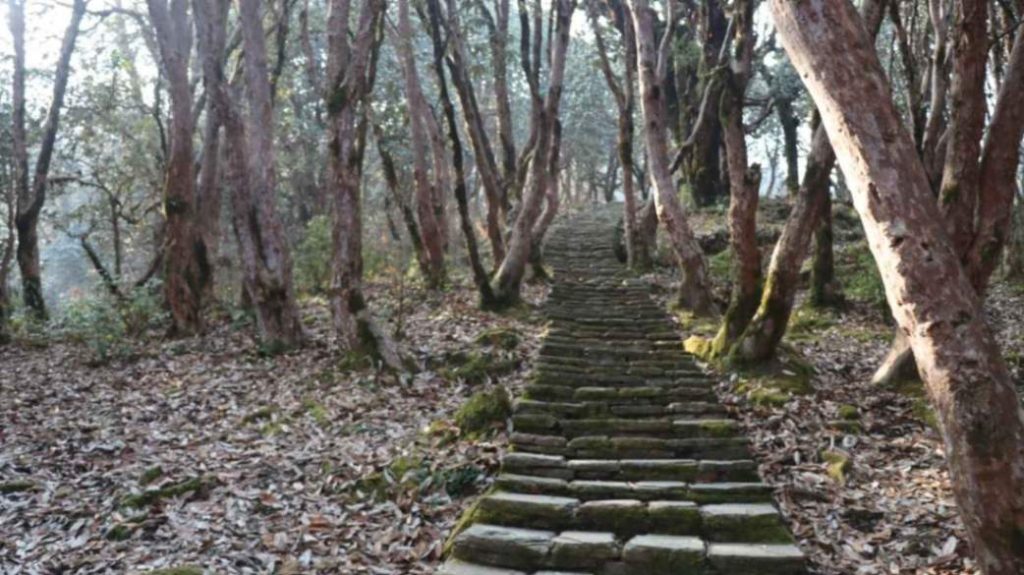
I still remember the early days when I began paying closer attention to the forest around me. I would hear a bird calling from somewhere above, find fresh tracks in the mud or see deer watching quietly from between the trees. After so many years on Nepal’s trails, these are the moments that have shaped the way I understand wildlife in Nepal.
I started working as a porter in 1996 and became a guide in 1999. Since then, I have spent many years walking through Nepal’s forests and mountain trails. Sometimes I have walked for hours looking for an animal and seen nothing, while on other days something has appeared when I was least expecting it.
The Terai is home to one-horned rhinos, Bengal tigers, wild elephants, deer and crocodiles. Higher in the country, the forests and mountain slopes provide habitat for red pandas, Himalayan tahr, blue sheep, musk deer and snow leopards. You do not need to know every animal before you go. Walk quietly, take your time and let your guide point out the signs that are easy to miss.
Where to See Wildlife in Nepal
The main wildlife areas are spread across southern Nepal and the Himalayan region. Chitwan National Park and Bardia are well known for large mammals, Shuklaphanta has wide grasslands, Parsa protects forest in the central Terai, and Koshi Tappu is known for wetlands and birds.
The mountain regions have a different selection of animals. Langtang, Makalu-Barun, Sagarmatha, Shey-Phoksundo and Kanchenjunga contain habitats for red panda, Himalayan tahr, blue sheep, musk deer and snow leopard.
| Destination |
Main wildlife |
| Chitwan |
One-horned rhino, tiger, deer, crocodiles, birds |
| Bardia |
Tiger, rhino, wild elephant, deer |
| Shuklaphanta |
Swamp deer, tiger, leopard |
| Parsa |
Tiger, leopard, elephant, gaur |
| Koshi Tappu |
Wild water buffalo, wetland birds |
| Langtang |
Red panda, Himalayan black bear, tahr |
| Sagarmatha |
Himalayan tahr, musk deer, pheasants |
| Makalu-Barun |
Red panda, snow leopard, black bear |
| Shey-Phoksundo |
Snow leopard, blue sheep |
| Kanchenjunga |
Snow leopard, red panda, musk deer |
One-Horned Rhinoceros
The greater one-horned rhinoceros is one of the main animals people come to the Terai hoping to see. It is found in Chitwan, Bardia, Shuklaphanta and Parsa, with Chitwan holding the largest population.
Nepal’s 2021 national rhino count recorded 752 rhinos, including 694 in Chitwan. In the park, rhinos often spend time around grassland, rivers and forest edges, so a jeep safari can give you several chances to look for them.
You may find a rhino feeding in tall grass or standing near water. They can look peaceful while feeding, but they are powerful wild animals, so keep the distance your guide recommends and never try to approach one for a photograph.
Bengal Tiger
Bengal tigers live in the forests and grasslands of Nepal’s Terai. The main tiger areas include Chitwan, Bardia, Parsa, Banke and Shuklaphanta, where the animals move through large territories and may spend much of the day hidden.
Nepal’s national tiger survey in 2022 estimated 355 wild tigers. Finding one is not simply about driving through the forest and looking ahead, because a guide also watches the behaviour of deer, monkeys and birds for signs that a predator may be nearby.
Fresh pugmarks can sometimes be easier to find than the tiger itself. You may also hear alarm calls from deer or monkeys before seeing anything, so staying quiet and watching the forest carefully can be more useful than rushing from one place to another.
Red Panda
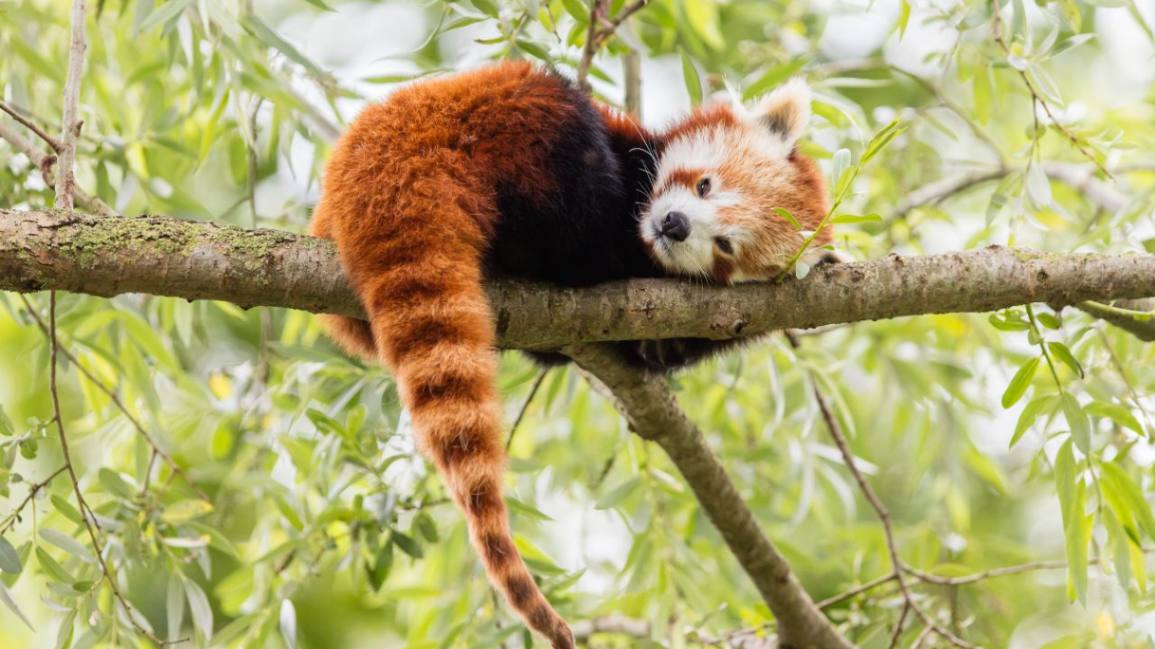
The red panda lives in mountain forests with suitable tree cover and bamboo. It is a small animal that spends much of its time in trees, which makes it much harder to find than the large mammals of the Terai.
Red pandas are found in parts of Nepal’s eastern and central Himalayan forests, including areas around Langtang, Makalu-Barun and Kanchenjunga. Their habitat is also affected by altitude, forest condition and the availability of bamboo.
If seeing a red panda is important to you, give yourself several days in suitable habitat. Walk quietly, look into the trees as well as along the trail and let a local guide help you search the places where signs of the animal have been found.
Snow Leopard
The snow leopard lives in the high Himalayan regions of Nepal, mainly in rocky country where its grey coat blends into the landscape. It is one of the hardest animals to see because it can stay far from trails and settlements and can disappear against the rocks even when it is in view.
Nepal’s 2025 national assessment estimated around 397 snow leopards. The same high mountain areas also support blue sheep, which are an important prey species for snow leopards.
When guides search for snow leopard, they look at the whole hillside rather than only searching for the animal itself. Blue sheep, tracks, scrapes and likely resting places can all give clues, and sometimes you may spend hours watching before a small movement reveals the animal.
Other Wildlife in Nepal
Nepal has many mammals besides rhino and tiger. Chital, sambar, barking deer, wild boar, langur, rhesus macaque, leopard and sloth bear are found in different parts of the country, depending on the forest and altitude.
Leopards can live in several habitats and are often difficult to see, while sloth bears are also secretive and should never be approached. Their tracks, feeding marks or other signs can sometimes be noticed even when the animals themselves remain hidden.
The rivers have their own wildlife as well. Gharials and mugger crocodiles occur in some of Nepal’s river systems, with gharials having a long narrow snout suited mainly to catching fish and muggers having a broader snout and a wider diet.
Birds of Nepal
Birds are among the easiest wildlife to find in Nepal because they live from the lowlands to the high mountains. More than 850 species have been recorded, including forest birds, river birds, wetland species and birds that arrive in Nepal during migration.
You can begin birdwatching without travelling far from Kathmandu. Phulchowki, Godavari and Nagarjun are known birdwatching areas, and a quiet morning walk can produce several species before the day becomes busy.
Koshi Tappu is especially useful if birds are your main interest because of its wetland habitat. The area attracts both resident and migratory birds, so the species you see can change with the season.
Nepal’s national bird is the Danphe, or Himalayan monal. The male has bright colours and lives in the Himalayan region, where it can sometimes be seen around forest edges and alpine areas.
Chitwan National Park
Chitwan is the most established wildlife destination for many visitors coming to Nepal. The park has forests, grasslands, rivers and wetlands, giving you the chance to look for several kinds of animals during the same visit.
A wildlife programme can include a jeep safari, canoe ride, nature walk and birdwatching. The canoe is particularly useful around the river because you can quietly watch birds and look along the banks for crocodiles, while a jeep allows you to cover more ground.
Chitwan became Nepal’s first national park in 1973. The park and surrounding conservation work have played an important role in protecting rhino and other wildlife in the central Terai.
The area is also easy to include in a normal Nepal itinerary because there are many places to stay around the park. Two or three nights gives you more time to try different activities instead of relying on one short safari.
Bardia National Park
Bardia National Park is in western Nepal and covers a large area of forest and grassland. It is known for tiger, rhino, wild elephant and deer, and the Karnali river is an important part of the surrounding landscape.
Bardia can feel quieter than Chitwan, especially away from the main visitor areas. Long drives through the forest give you time to look for animal tracks, movement in the grass and birds along the river.
Wild elephants need particular care because they can move quickly and may react when they feel threatened. Guides watch the animal’s behaviour and the surroundings before deciding whether to continue, stop or take another route.
The 2022 national tiger survey estimated 125 tigers in Bardia National Park and its adjoining forest areas. This is one reason the park has become an important destination for people who want to spend more time looking for tigers.
Shuklaphanta National Park
Shuklaphanta is in far-western Nepal and is known for its large grasslands and swamp deer. The open landscape allows you to look across a much wider area, which gives the visit a different feel from a forest-dominated safari.
Tigers, leopards and other Terai animals also use the park. The grasslands are especially important for animals that need open feeding areas, while the surrounding forest provides cover.
Shuklaphanta takes more time to reach from Kathmandu than Chitwan. I would therefore include it in a longer western Nepal journey rather than trying to fit it into a short holiday.
Parsa National Park
Parsa protects a large forest area in the central Terai. Tiger, leopard, wild elephant, gaur, deer and sloth bear are among the animals recorded in the park.
The forest makes observation different from an open grassland safari. You may notice tracks, broken branches, calls or movement between the trees before you get a clear view of an animal.
Parsa is also home to many bird species, including the great hornbill. It suits travellers who have extra time in the Terai and want to visit an area that receives fewer visitors than Chitwan.
Koshi Tappu Wildlife Reserve
Koshi Tappu lies around the wetlands of the Koshi river system in eastern Nepal. It is known for wild water buffalo and for the large number of birds that use its wetlands and grasslands.
The river changes through the year, and water levels affect where birds and other animals gather. A local guide who knows the current channels, grasslands and resting areas can make a morning of observation much more productive.
Koshi Tappu is worth giving enough time if birdwatching is a main reason for your visit. The area is less about chasing large mammals and more about sitting quietly and watching what is happening around the wetlands.
Wildlife in the Himalayas
The high mountains have animals adapted to cold temperatures, steep ground and limited vegetation. Himalayan tahr and blue sheep are found on open slopes, while musk deer use mountain forests and other species live higher among rocks and alpine meadows.
As you climb, the landscape changes with the altitude. Forest becomes thinner, the ground becomes more open and rocky, and the animals you may encounter change with it.
Mountain wildlife takes more time to find than animals in the lowland parks. You may walk for several hours before seeing a blue sheep or another large animal, so binoculars are useful if wildlife is part of your interest.
Wildlife While Trekking in Nepal
You can see wildlife on ordinary trekking routes in Nepal without joining a separate wildlife tour. Langtang, Annapurna and the eastern trekking areas pass through several types of forest and mountain habitat.
The animals you see will depend on the route, season, weather and how much time you spend looking rather than simply walking towards the next village.
I often tell trekkers to listen before they look. A bird may be calling from a tree that appears empty, while the sudden alarm of monkeys or deer can tell you that something has moved nearby.
Animal tracks are worth checking as well. A footprint in mud or snow, feathers on the trail or marks on a tree may be the only sign that an animal has recently passed.
Best Time for Wildlife Watching in Nepal
October to March is generally a comfortable period for wildlife trips in the Terai because temperatures are lower and the weather is mostly dry. April and May become very hot in the lowlands, while the monsoon from around June to September brings heavy rain and changes road, river and trail conditions.
Winter is also a useful time for birdwatching because migratory species arrive in Nepal. Wetland areas such as Koshi Tappu can have a good mix of resident and seasonal birds during this period.
Mountain wildlife needs a separate plan because the conditions are controlled more by altitude and mountain weather. If your main goal is a high-altitude animal, choose the travel period together with the trekking route rather than following the Terai season.
How to Behave Around Wild Animals
Wild animals need space, even when they appear calm. Do not feed them, call them closer, throw objects at them or try to touch them, and never leave a safari vehicle unless your guide or park staff says that it is safe.
Keep your voice low when you are watching wildlife. Loud talking and sudden movement can make animals leave before the group has a chance to observe them properly.
Photography should come after safety. A good guide will choose the distance and position for the group, and it is better to miss a photograph than to disturb an animal.
Wildlife Conservation in Nepal
Nepal has protected areas ranging from Terai grasslands and wetlands to forests and high Himalayan valleys. Protecting wildlife involves park staff, government agencies, local communities, researchers and conservation organisations working in different parts of the country.
The national rhino count recorded 752 rhinos in 2021, while the 2022 tiger survey estimated 355 wild tigers. Nepal’s 2025 snow leopard assessment estimated around 397 snow leopards.
These numbers come from separate surveys carried out in different years and using different methods. They are useful for understanding the scale of Nepal’s wildlife populations, but they should not be treated as directly comparable figures.
Tourists also have a part to play during a visit. Following park rules, keeping away from animals, avoiding litter and using responsible local services are simple things that help protect the areas people come to see.
What to Take on a Wildlife Trip
A normal Terai safari does not require a large amount of equipment. Comfortable clothes, walking shoes, a hat, sunglasses, sunscreen, drinking water and a small daypack will cover most needs.
Binoculars are one of the most useful things you can carry. They help you look at birds and animals from a safe distance and are especially useful when something is moving on the other side of a river or across open grassland.
Winter mornings can be cold when a safari starts early, so take an extra layer even if the afternoon will be warm. If you are going into the mountains, pack according to the trek and give priority to proper clothing and footwear.
Wildlife Photography in Nepal
Nepal gives photographers many subjects, but wildlife photography requires patience. A tiger may stay hidden, a red panda may remain high in a tree and a bird can disappear before you have time to raise your camera.
A telephoto lens is useful when animals are far away, while binoculars help you find them first. You do not need expensive equipment to enjoy wildlife photography, especially if you are more interested in observing animals than producing professional photographs.
Never ask a driver or guide to chase an animal so you can get a closer picture. A wild animal should be allowed to behave naturally, and sometimes the photograph you do not take is the right choice.
Planning a Wildlife Trip in Nepal
Start by deciding what you want to see. Rhinos and tigers take you towards the Terai, birds can be found in forests and wetlands across the country, and animals such as red panda and snow leopard require a mountain plan.
Then look at the amount of time you have. Chitwan can fit into a shorter Nepal holiday, while Bardia, Shuklaphanta and high Himalayan wildlife areas need more travel time.
If you are already planning a trek, you can simply add wildlife observation to the days on the trail. Carry binoculars, walk quietly and tell your guide that you are interested in animals so they can point out signs you might otherwise walk past.
After so many years of working on Nepal’s trails, I still enjoy the small moments. A deer standing between the trees, a bird calling from above the trail or a set of fresh tracks in the mud can make me stop just as quickly as a much rarer animal.
That is how I see wildlife in Nepal. You come looking for a particular animal, but the forest and mountains show you many other things along the way.