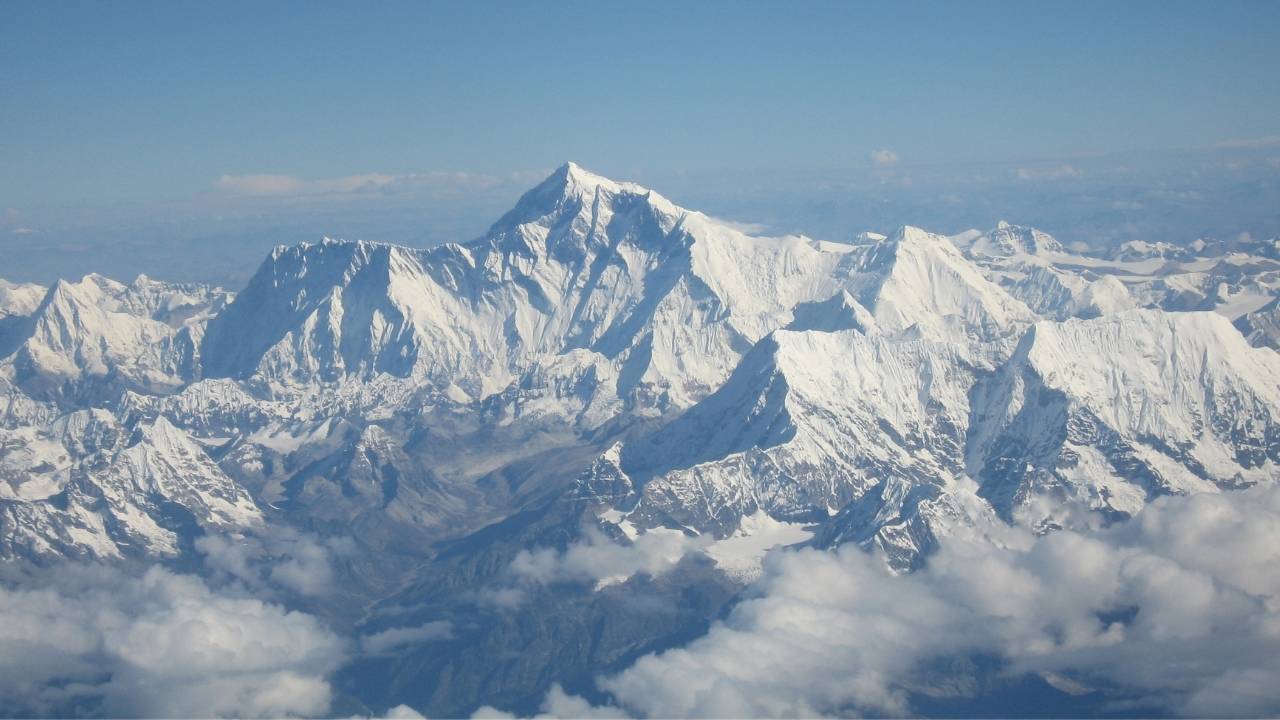
Everest Mountain Flight
Over the Himalayas
Fly above the clouds and take in Everest and the high Himalayas from the air, with snow-covered peaks and deep valleys stretching to the horizon.
Everest Scenic Mountain Flight | Cost, Views and Best Time
The Everest Scenic Mountain Flight is a simple way to see Mount Everest and the surrounding Himalayan range without trekking to Everest Base Camp. The flight leaves from Kathmandu and heads toward the Everest region, where you can see Everest, Lhotse, Nuptse, Ama Dablam, Makalu, and other peaks from the air before returning to Kathmandu.
The flight itself takes about one hour, while the full morning includes the airport process, transfers, and the flight. You do not need trekking experience or special equipment, making it suitable for travelers who have limited time in Nepal, do not want a high-altitude trek, or simply want to see Everest from above.
What Is the Everest Scenic Mountain Flight?
The Everest Scenic Mountain Flight is a sightseeing flight from Kathmandu toward the Everest region and back. It is not a trekking flight and does not land near Everest Base Camp. You stay on the aircraft during the mountain sightseeing portion and return to Kathmandu after seeing the Himalayan range.
From the plane, you can see long ridges, glaciers, deep valleys, and several peaks at the same time. Mount Everest is part of a much larger mountain range, and the aerial view shows how the surrounding mountains and valleys fit together.
The aircraft normally flies at a lower level than the summit of Everest, while the mountains rise around you. Depending on the route, weather, aircraft, and air traffic, you may see Everest and the surrounding peaks from different angles during the flight. The main attraction is Everest, but Lhotse, Nuptse, Ama Dablam, Makalu, Cho Oyu, and other Himalayan peaks can also be visible on a clear day.
Everest Scenic Flight Duration
The actual sightseeing flight generally takes around one hour, although the total morning at the airport can be longer. A typical morning can include:
- Early departure from your hotel
- Transfer to Tribhuvan International Airport
- Airport check-in and security
- Waiting for the aircraft and weather clearance
- Mountain flight of around one hour
- Return to Kathmandu
- Transfer back to your hotel
The exact timing can change because mountain flights depend on weather and airport operations. Morning flights are generally preferred because the mountain air is often clearer before clouds develop later in the day. Even so, clear views are never guaranteed.
Mountains Seen on the Everest Flight
Everest is the main reason people book the flight, but several other major Himalayan peaks may also be visible.
Mount Everest
Mount Everest is 8,848.86 m high and is the highest mountain in the world. From the aircraft, the summit rises above the surrounding mountains. Everest does not always appear to be the largest mountain in the view. It is surrounded by other very high peaks, including Lhotse and Nuptse, and its appearance changes according to your position.
Lhotse
At 8,516 m, Lhotse is the fourth-highest mountain in the world. It stands directly beside Everest and forms part of the same mountain wall. From the air, you can see the close relationship between Everest, Lhotse, and Nuptse.
Nuptse
Nuptse rises to 7,855 m and stands southwest of Everest. Its steep ridges form an important part of the scenery around Everest Base Camp.
Ama Dablam
Ama Dablam is one of the most recognizable mountains in the Everest region. Its pointed shape stands out among the surrounding peaks. Trekkers see Ama Dablam from several places along the Everest Base Camp route, but the aircraft gives you a view from a completely different angle.
Makalu
Makalu is 8,485 m high, making it the fifth-highest mountain in the world. It lies east of Everest and may be visible depending on the flight route and visibility.
Cho Oyu
Cho Oyu, at 8,188 m, is one of the world’s fourteen 8,000-meter peaks. It lies northwest of Everest, so its visibility depends on the route and weather. The exact peaks visible on your flight cannot be guaranteed. Cloud, haze, flight direction, and operating conditions all affect what you see.
Mount Everest from the Plane
Everest looks different from the air than it does from a trekking trail. From the ground, nearby ridges and valleys often block much of the surrounding range. From the aircraft, you can see several peaks together, along with glaciers and deep valleys between them.
The summit of Everest may appear as a pyramid-shaped peak rising behind or beside other mountains. Its shape changes considerably depending on where the aircraft is at the time. If this is your first view of Everest, it may take a moment to identify the mountain. The crew normally points out the major peaks during the flight.
Which Side of the Plane Is Best?
Passengers on both sides of the aircraft get opportunities to see the mountains. The flight route and turns allow views from both sides. There is no fixed left-side or right-side rule that guarantees the best Everest view on every flight. The aircraft type, route, weather, and operating conditions can change the exact view. If you can choose, a window seat is the important part. If you are traveling with family or friends, different seats may give different views during different parts of the flight.
Everest Mountain Flight Visibility
A clear morning can give you excellent views of Everest, but no scenic flight can guarantee clear mountain views. Visibility can be affected by:
- Cloud cover
- Wind
- Rain or snowfall
- Haze
- Conditions around the Everest region
- Airport operations
- Air traffic
The mountains can be clear one morning and hidden by cloud a few hours later. That is one reason morning flights are commonly used. If seeing Everest is particularly important to you, leave some flexibility in your Kathmandu schedule rather than booking the flight on the last possible morning before your international departure.
Best Time for the Everest Scenic Mountain Flight
The better months are generally those with clearer skies and more stable mountain weather.
Spring: March to May
Spring is a popular period for mountain sightseeing. March can still be cold in the mountains, while April and May are warmer in Kathmandu. Clouds can increase toward the end of spring, so conditions still vary from day to day.
Autumn: September to November
Autumn is another strong period for mountain visibility. After the monsoon, the air often becomes clearer and the mountains can appear sharply against the sky. October and November are also busy trekking months, so flights can have higher demand.
Winter: December to February
Winter mornings can produce very clear views when the weather is stable. Kathmandu mornings are cold, and the Everest region is much colder, so bring an extra layer.
Summer and Monsoon: June to August
The monsoon brings more cloud and rain to Nepal, making mountain visibility less reliable. Flights can still operate when conditions are suitable, but you should allow more flexibility during these months.
Everest Scenic Flight Departure Time
Everest scenic flights normally operate in the morning. Your exact departure time depends on the airline, airport operations, weather, and the day’s schedule. Your travel or trekking company normally confirms the pickup and airport reporting time in advance.
Do not schedule an important activity immediately after the flight. Weather or air traffic can cause delays. If you have an international flight from Kathmandu on the same day, leave plenty of time between the mountain flight and your international departure.
What Happens If the Flight Is Cancelled?
- Weather cancellations are part of mountain aviation in Nepal.
- If conditions are not suitable, the airline may delay or cancel the flight. The decision is based on safety and operating conditions.
- If you have several days in Kathmandu, you can move the flight to another morning.
- If you have only one morning available, there may not be another opportunity.
- For that reason, I recommend booking the Everest scenic flight early in your Kathmandu stay rather than leaving it until your final morning.
What to Bring for the Everest Scenic Flight
You do not need trekking equipment for the flight. Bring:
- Passport or required identification
- Flight confirmation
- Phone or camera
- Extra battery or power bank
- Light jacket
- Sunglasses
- Water
- Any personal medication you normally carry
The cabin can feel cool during an early morning flight, so a light jacket is useful. A phone is enough for casual photographs. A camera with a zoom lens gives you more flexibility, but large photography equipment is not necessary.
Photography Tips for the Mountain Flight
Photography through an aircraft window can be difficult because of reflections.
Keep the Camera Close to the Window
Keep your camera reasonably close to the window to reduce reflections from inside the aircraft. Do not press the lens tightly against the window.
Turn Off the Flash
A flash usually reflects from the window and does not help with mountain photographs.
Clean the Lens
Clean your phone or camera lens before the flight. Fingerprints can make the mountains look hazy.
Take Several Photos
The aircraft is moving and the view changes quickly. Take several photographs rather than waiting for one perfect frame.
Look at the Mountains Yourself
It is easy to spend the whole flight looking through your phone. Take photographs, but also watch the mountains directly through the window.
Kathmandu Airport Process
The Everest scenic flight starts at Tribhuvan International Airport in Kathmandu. You need to arrive early enough for check-in and security. Your reporting time depends on the airline and the day’s schedule. After check-in, you wait for the flight.
Mountain flights depend more heavily on weather than ordinary domestic flights. If the Everest region is cloudy, passengers may have to wait for an update before the aircraft departs. Kathmandu can also have clear weather while clouds cover the Everest region, so the weather you see from your hotel does not always tell you what is happening near Everest.
Everest Scenic Flight Safety
Mountain aviation requires careful attention to weather, visibility, aircraft condition, airport procedures, and air traffic. The airlines operating scenic flights use pilots familiar with the route and the conditions. Flights may be delayed or cancelled when conditions are not suitable.
As a passenger, remember that a cancelled flight because of weather is preferable to flying when conditions are unsafe. Do not choose a company only because it offers the lowest price. Check the airline, what is included, the cancellation policy, and how weather-related changes are handled.
Everest Scenic Flight vs Everest Base Camp Trek
These are two very different ways to see the Everest region.
| Feature | Everest Scenic Flight | Everest Base Camp Trek |
| Duration | About 1 morning | Around 12–14 days |
| Main Experience | See Everest and the Himalayas from the air | Walk through the Everest region |
| Walking Required | None | Several hours of walking each trekking day |
| Everest Views | From the aircraft | From the trekking trail and viewpoints |
| Mountain Highlights | Everest, Lhotse, Nuptse, Ama Dablam, Makalu and others | Everest, Lhotse, Nuptse, Ama Dablam and other Khumbu peaks |
| Villages & Culture | Seen from above | Sherpa villages, monasteries and local communities |
| Places Visited | Everest region from the air | Namche Bazaar, Tengboche, Dingboche, Lobuche, Everest Base Camp and Kala Patthar |
| Altitude Experience | No overnight stay at high altitude | Overnight stays up to about 5,164 m at Gorak Shep |
| Physical Demand | Low | Challenging |
| Best For | Limited time, non-trekkers, families and travelers who want an aerial view | Trekkers who want to spend time in the Khumbu and reach Everest Base Camp |
| Time in the Mountains | A few hours | More than a week |
| Experience | See the mountains from above | Walk through the valleys and villages below the mountains |
A scenic flight lets you see the mountains from above. The Everest Base Camp Trek lets you walk through the Khumbu and spend time in its villages, valleys, and viewpoints. If you have only a day or two in Kathmandu, the flight fits easily into your schedule. If you have two weeks and enjoy walking, the trek gives you time to experience the region on foot.
Everest Scenic Flight vs Everest Base Camp Helicopter Tour
A helicopter flight is another option for travelers who want to see Everest from the air. The main difference is that a helicopter can make a landing depending on the itinerary and operating conditions, while the scenic mountain flight is primarily an aerial sightseeing experience and returns to Kathmandu.
Helicopter tours are generally more expensive. The scenic flight is usually the simpler choice if your main goal is to see the Himalayan range from the air without landing.
| Feature | Everest Scenic Flight | Everest Base Camp Helicopter Tour |
| Duration | About 1 morning | Usually several hours |
| Aircraft | Fixed-wing aircraft | Helicopter |
| Main Experience | See Everest and the Himalayan range from the air | See Everest from the air with a possible landing |
| Landing in Everest Region | No | Possible, depending on the itinerary and conditions |
| Everest Views | From the aircraft window | From the helicopter |
| Other Mountain Views | Everest, Lhotse, Nuptse, Ama Dablam, Makalu and others | Everest, Lhotse, Nuptse, Ama Dablam and surrounding peaks |
| Everest Base Camp Area | Viewed from the air | May be viewed from the air and visited depending on the itinerary |
| Time on the Ground | No mountain landing | May include a landing |
| Price | Generally lower | Generally higher |
| Best For | Travelers who mainly want to see the mountains from the air | Travelers who want an aerial flight with a possible landing |
| Physical Demand | Very low | Very low |
| Weather Dependence | High | High |
In simple terms: the scenic flight is mainly about seeing the Everest range from the aircraft, while the helicopter tour can add a landing in the Everest region depending on the itinerary and conditions.
Everest Scenic Flight for Seniors
For many seniors, a scenic flight is much easier than a high-altitude trek. There is no long-distance walking, heavy backpack, or overnight stay in the mountains. You still need to manage the early morning airport transfer and the flight itself. If you have difficulty walking, use a wheelchair, or have a health condition that could affect flying, tell us before booking so we can check the arrangements with the airline and make the airport transfer easier.
Everest Scenic Flight for Children
Children can see Everest without the physical demands of a long trek. Suitability depends on the child’s age, airline requirements, and ability to remain comfortable during the early morning airport process and flight. For young children, check the airline’s current requirements before booking.
Motion Sickness During the Flight
- Some people are more comfortable on a larger commercial aircraft than a smaller sightseeing plane.
- If you are prone to motion sickness, avoid eating a very heavy breakfast immediately before the flight.
- Keep your eyes on the horizon when possible and carry any medication you normally use for motion sickness.
- If you feel unwell during the flight, tell the crew.
Everest Scenic Mountain Flight Cost
The price changes according to the airline, season, exchange rates, taxes, and current operating costs. Instead of relying on an old fixed price published online, check the current price when you book. When comparing prices, ask what is included. A package may include:
- Hotel pickup and drop-off
- Airport transfers
- Scenic flight ticket
- Airport assistance
- Government or airport taxes, where applicable
Some prices may cover only the flight ticket. If you are booking through a trekking company, ask for the complete price before confirming.
When to Book the Everest Scenic Flight
- During the main trekking seasons, demand can be high.
- If your dates are fixed, arrange the flight in advance rather than waiting until you arrive in Kathmandu.
- Booking early does not guarantee clear weather, so keep another morning available if possible.
- That gives you an alternative if the original flight is delayed or cancelled.
Booking the Flight Before or After Your Trek
If you are already doing an Everest trek, you may not need a scenic flight because you will see the mountains from the ground throughout the journey. If your main trek is in Annapurna, Langtang, Manaslu, or another region, however, you can add an Everest scenic flight while staying in Kathmandu. This lets you see Everest without changing your trekking itinerary.
Everest Flight Names and What They Mean
You may see several names for this experience:
- Everest Scenic Flight
- Everest Mountain Flight
- Everest Sightseeing Flight
- Everest View Flight
- Mountain Flight to Everest
The name can vary between airlines and travel companies. Check the actual itinerary, flight time, aircraft, departure airport, and cancellation policy rather than choosing only by the name.
What You Can See Besides the Mountains
The flight is not only about snow-covered peaks. From the air, you can also see:
- Deep Himalayan valleys
- Glaciers
- Ice fields
- Rocky ridges
- High mountain passes
- Rivers far below
- Sherpa settlements
- Trekking valleys
- Large mountain walls
The villages and trails can look very small compared with the mountains around them. From an aircraft, you can also see the shape of a valley in a way that is difficult to understand while walking along the trail.
Why Morning Flights Are Preferred
Morning flights are preferred because the mountains are often clearer before daytime cloud develops. This is not a guarantee, as mountain weather changes quickly. The early light can also be good for photography. As the sun rises, the mountain faces change from darker shades to brighter snow and rock.
What Happens During the Flight?
- Once the aircraft reaches the mountain area, the crew normally points out the major peaks.
- You can watch through the window and take photographs as the aircraft follows its route.
- The aircraft may turn during the flight so passengers on both sides have opportunities to see the mountains.
- Keep your camera ready because some views appear only for a short time.
- The aircraft then turns back toward Kathmandu.
Can You See Everest From Kathmandu?
You cannot normally see Mount Everest clearly from central Kathmandu. The city is surrounded by hills and is far enough from Everest that the mountain is not visible as an ordinary city view. The scenic flight takes you toward the Himalayan range, where you can see Everest from the aircraft.
Trekking Fitness Is Not Required
You do not need to train for an Everest scenic flight in the same way you would prepare for the Everest Base Camp Trek. You only need to be comfortable with:
- Early morning travel
- Airport procedures
- Sitting in an aircraft
- A short flight in a smaller plane
Clothing for the Everest Flight
- No special trekking clothing is required.
- Wear comfortable clothes and bring a light jacket because the morning can be cool.
- You do not need hiking boots, trekking poles, sleeping bags, or other trekking equipment.
- If you are combining the flight with a trek or another activity, dress for the rest of your day’s plans.
Combining the Flight With Kathmandu Sightseeing
You can combine the flight with Kathmandu sightseeing, but leave enough time between the flight and your other plans. Because the flight can be delayed, do not schedule something that requires you to arrive at an exact time immediately afterward. After returning to Kathmandu, you can visit places such as:
- Boudhanath
- Pashupatinath
- Swayambhunath
- Kathmandu Durbar Square
- Thamel
Who Should Choose the Everest Scenic Mountain Flight?
Travelers With Limited Time
If you have only a few days in Nepal, you can see Everest without spending two weeks on a trek.
Travelers Who Do Not Want to Trek
Not everyone wants to walk several hours each day at altitude. The flight gives you access to the mountain scenery without that physical demand.
Families
Families with children can see the Everest region without committing to a long trek.
Older Travelers
For travelers who would find a high-altitude trek physically difficult, the flight can be an easier option.
Travelers Doing Another Trek
If your main trek is in Annapurna, Langtang, Manaslu, or another region, you can add an Everest sightseeing flight while staying in Kathmandu.
Photographers
The flight gives you views that are difficult to get from the ground, particularly the relationship between the major peaks, glaciers, and valleys.
Who Should Not Choose the Scenic Flight?
The flight may not be the right choice if your main goal is to experience the Everest region on foot. If you want to stay in Namche Bazaar, visit Tengboche, walk through the Khumbu villages, reach Everest Base Camp, and stand at Kala Patthar, you need a trek. A flight shows you the mountains from above, but it does not give you the experience of walking through the villages and valleys.
Is the Everest Scenic Mountain Flight Worth It?
If seeing Mount Everest is important to you but you do not have the time or desire to trek, the scenic flight gives you a practical way to see the mountain and the surrounding range. It is also useful for travelers who cannot or do not want to trek at high altitude. If you have enough time and enjoy walking, however, the Everest Base Camp Trek offers something the flight cannot: days spent in the Khumbu, walking through its villages, valleys, and mountain trails.
From a plane, you see the scale of the Himalayas. On a trek, you experience the distance, altitude, weather, villages, and changing landscape yourself.
How to Choose a Reliable Everest Scenic Flight Company
Do not choose only by price. Before booking, check:
- Which airline operates the flight
- Whether airport transfers are included
- What happens if the flight is cancelled?
- Whether rescheduling is possible
- What taxes and charges are included?
- How early you need to reach the airport
- Whether you receive assistance at the airport
- Whether the company has clear contact information
A reliable operator should explain the arrangements before taking your payment. If weather cancels the flight, you should already know what your options are.
Why Book Your Everest Scenic Flight with Mountain World Treks?
At Mountain World Treks, we arrange the Everest scenic mountain flight as part of your Nepal travel plans, including airport transfers and coordination for the morning flight. If weather affects the flight, we help you understand the available options rather than leaving you to deal with the airline on your own.
We can also combine the flight with Kathmandu sightseeing or another Nepal trek, depending on your itinerary. Because we are based in Nepal, you can contact us directly before and during your trip.
Practical Tips for the Everest Scenic Flight
- Keep your schedule flexible. Do not book an important international departure immediately after the mountain flight.
- Keep your camera ready. The aircraft moves quickly and some mountain views appear for only a short time.
- Bring a light jacket. Kathmandu mornings can be cool.
- Choose a window seat if possible. You are going for the mountain views.
- Do not rely only on Kathmandu weather. Conditions around Everest can be very different.
- Book early if your dates are fixed. Flights can be busy during the main seasons.
- Leave another morning available if possible. This gives you another option if weather prevents the flight.
Everest Scenic Mountain Flight FAQs
How long does the Everest scenic flight take?
The mountain sightseeing flight generally takes around one hour. The full morning is longer because of airport check-in, waiting, transfers, and possible delays.
Can I see Mount Everest from the flight?
Yes. The flight is designed to provide views of Mount Everest and the surrounding Himalayan peaks. Actual visibility depends on weather and flight conditions.
Is the Everest flight safe?
Flights operate according to aviation and weather conditions. If conditions are not suitable, the flight can be delayed or cancelled.
What happens if my flight is cancelled because of weather?
The airline may reschedule the flight or provide another option according to its current policy. Having another morning available in Kathmandu gives you more flexibility.
Is the Everest Mountain flight available every day?
Flights generally operate regularly when weather and operating conditions allow, but schedules can change.
What is the best month for the Everest scenic flight?
October and November are popular because of generally clearer post-monsoon conditions. March and April can also provide good mountain visibility. Winter mornings can be very clear when the weather is stable.
Can I take the Everest flight during the monsoon?
Flights can operate during the monsoon when conditions allow, but cloud and rain make mountain visibility less reliable.
Do I need a passport?
Carry the identification required by the airline for the flight. Your travel company can confirm the current requirement when booking.
Can children take the flight?
Children can generally travel on scenic flights, subject to the airline’s current rules and age requirements.
Can older people take the Everest scenic flight?
Yes. Since there is no trekking involved, it can suit travelers who do not want the physical demands of a high-altitude trek. Individual health and mobility should still be considered.
Do I need trekking shoes?
No. Comfortable everyday shoes are enough for the flight.
Can I take photographs?
Yes. A phone or camera is sufficient. Keep your lens clean and avoid using flash against the aircraft window.
Which side of the plane should I sit on?
There is no single side that guarantees the best view on every flight. The aircraft route and turns give passengers on both sides opportunities to see the mountains.
Can I see Everest Base Camp from the plane?
You may see the Everest region and surrounding valleys from above, but the exact visibility of Everest Base Camp depends on the flight route, weather, and viewing angle. The flight is not a substitute for reaching Base Camp on foot.
Can I do the Everest scenic flight and visit Kathmandu attractions on the same day?
Usually, yes, if the flight returns on schedule. Keep the rest of your day flexible because weather can cause delays.
Is the Everest scenic flight better than a helicopter tour?
It depends on what you want. A scenic flight is generally the simpler and less expensive way to see the Himalayan range from the air. A helicopter tour may include a landing and usually costs more.
Is the Everest scenic flight better than the Everest Base Camp Trek?
They offer different experiences. The flight is for seeing Everest from the air in a short time. The trek is for spending days in the Khumbu and reaching places such as Everest Base Camp and Kala Patthar on foot.
Before You Book
The Everest Scenic Mountain Flight gives you a short way to see Mount Everest and the surrounding Himalayan range without spending days on a trekking trail. You leave Kathmandu in the morning, fly toward the Everest region, see Everest and other major peaks from the air, and return to the city.
If you have limited time, do not want to trek, or want to see the Himalayas from above, the flight can fit well into your Nepal itinerary. The main thing to remember is that mountain weather controls visibility. A clear morning can give you excellent views, while cloud can hide the mountains. If possible, keep some flexibility in your schedule and check the current flight arrangements before booking.
Our Registrations & Memberships

Government of Nepal

TAAN

Nepal Tourism Board

NMA

TripAdvisor Excellence
