Everest Base Camp Trek Flying Out by Helicopter is a practical option if you want to walk all the way to Everest Base Camp but do not want to spend another four days walking back to Lukla. You still complete the main trekking route on foot, including Everest Base Camp and Kala Patthar, then take a helicopter from the Gorak Shep area after your trek.
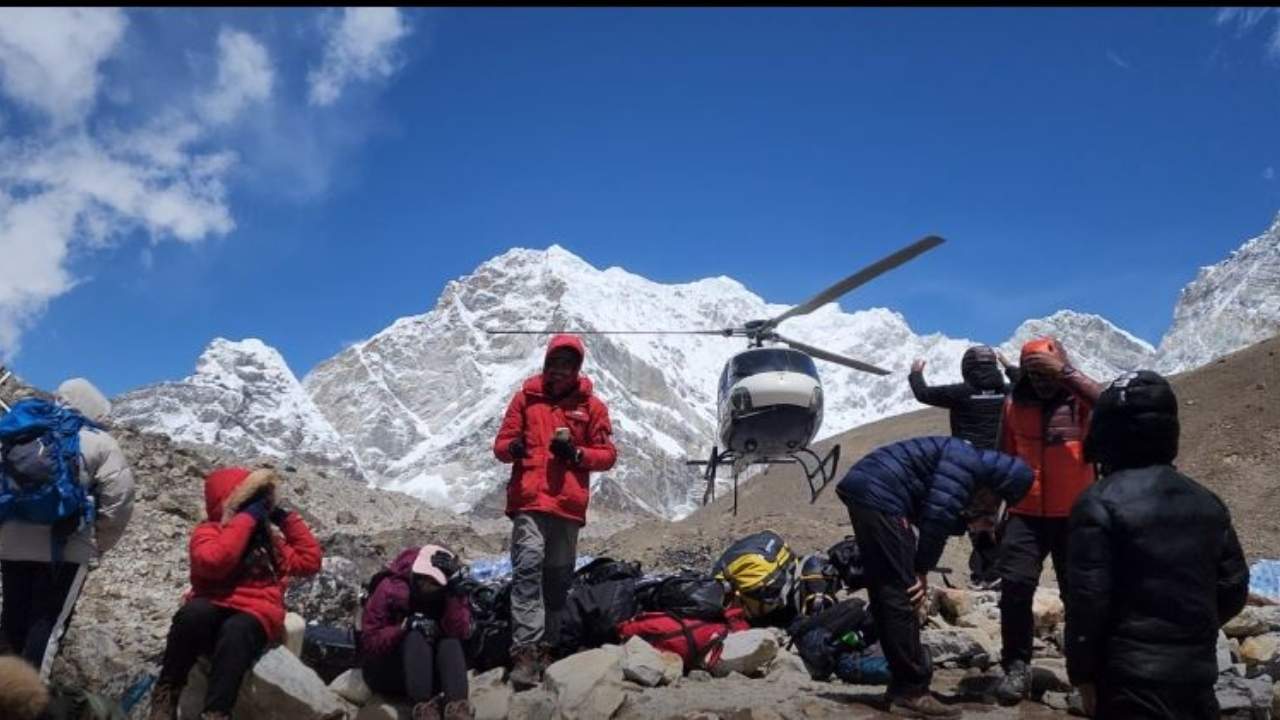
I have guided the Everest region since 2002, and this is one of the return options I discuss with trekkers who want to save time after reaching the high point of the trek. The important thing to understand is that the helicopter does not normally pick you up from Everest Base Camp itself. You walk back to Gorak Shep, where the helicopter can collect you when the flight is operating.
Our Everest Base Camp Trek follows the normal route through Lukla, Phakding, Namche Bazaar, Tengboche, Dingboche, Lobuche and Gorak Shep before reaching Base Camp. After Base Camp and Kala Patthar, instead of walking back through the same villages, you can arrange a helicopter return toward Lukla or Kathmandu.
Where Does the Helicopter Pick You Up?
The practical helicopter pickup point is Gorak Shep, not Everest Base Camp. Everest Base Camp is at 5,364 metres, and there is no regular fixed-wing airport there. Helicopter operations in this area depend on the landing conditions, weather, aircraft availability and operational restrictions on the day.
On a normal itinerary, you walk from Gorak Shep to Everest Base Camp and return to Gorak Shep on the same day. The next morning, you can walk to Kala Patthar for the early-morning view of Everest and the surrounding peaks, return to Gorak Shep for breakfast, collect your luggage and prepare for the helicopter.
The exact pickup arrangement can change according to the helicopter operator and the conditions that morning. This is why I prefer to arrange the return flight as part of the trekking plan rather than telling trekkers that a helicopter will definitely arrive at a particular minute.
Can You Fly from Everest Base Camp to Kathmandu?
You cannot book a normal flight directly from Everest Base Camp to Kathmandu like you would from an airport. The usual arrangement is to walk back from Base Camp to Gorak Shep and then take a helicopter from the Gorak Shep area.
Depending on the flight arrangement, the helicopter may take you toward Lukla, where onward travel to Kathmandu can be arranged. In some cases, helicopter operators may be able to arrange a different routing, but this depends on the aircraft, operating conditions, weather, landing permissions and availability.
For this reason, I do not recommend booking your international flight home on the assumption that a helicopter will always take you directly from Gorak Shep to Kathmandu at a fixed time. Mountain flights do not work like city airport transfers.
Everest Base Camp to Lukla by Helicopter
Flying to Lukla after completing the trek is a useful option if you want to reduce the number of walking days. From Gorak Shep, the helicopter can take you toward Lukla when conditions allow.
The helicopter flight itself is much shorter than walking the return route, but the total time is not simply the aircraft flying time. You need to allow for preparation, loading, weather checks, possible waiting and operational arrangements at Lukla.
Once you reach Lukla, your onward travel depends on your booking. If you are continuing to Kathmandu, a fixed-wing flight or another helicopter arrangement may be used depending on the season, availability and weather.
During the main trekking seasons, Lukla flights can become busy. I therefore recommend leaving some flexibility in your Kathmandu schedule instead of planning an international connection immediately after arriving in Lukla.
Everest Base Camp Helicopter Return to Kathmandu
If your main goal is to reach Kathmandu as quickly as practical after finishing the trek, we can discuss a helicopter arrangement that continues toward Kathmandu. However, I always explain that the final routing depends on the helicopter company and the conditions on that day.
A helicopter may need to operate through Lukla or another suitable landing point before continuing. Weather at Gorak Shep, Lukla and Kathmandu can be different, so good weather at one location does not automatically mean the entire flight can operate.
This is particularly important for trekkers who have an international flight the following day. I recommend keeping a buffer rather than making your trekking schedule so tight that one weather delay creates a problem with your international ticket.
Complete Plan for Everest Base Camp Trek Flying Out by Helicopter
Our Everest Base Camp Trek with Helicopter Return is designed for trekkers who want to walk the full route to Base Camp and then avoid the long return walk.
The walking itinerary still includes proper acclimatization. Taking a helicopter at the end does not mean you can shorten the ascent without considering altitude. Your body still has to adjust gradually from Lukla to the higher villages.
Day 1: Fly to Lukla and Trek to Phakding
You fly from Kathmandu or, during periods when Lukla flights are operated from Ramechhap, travel by road to Ramechhap before the flight. The flight to Lukla is short, but the actual departure time can change because of weather and airport operations.
From Lukla, the trek begins on foot toward Phakding. This first walking day is deliberately short compared with the days higher in the Khumbu because the main purpose is to begin gaining altitude gradually.
Day 2: Phakding to Namche Bazaar
You walk along the Dudh Koshi Valley, crossing suspension bridges and passing through small settlements before reaching the entrance area of Sagarmatha National Park. The route then becomes steeper as you approach Namche Bazaar.
Namche is at about 3,440 metres, so I do not treat this day as simply another walking day. Once you arrive, I recommend taking the evening slowly, drinking enough water and allowing your body to adjust.
Day 3: Acclimatization in Namche
You spend another night in Namche and take an acclimatization hike rather than sitting in the lodge all day. The exact hike can depend on your group, weather and how everyone is feeling.
This is a good place to understand why altitude matters on the Everest trek. My Everest Base Camp Trek Acclimatization Guide explains how I approach these rest and hiking days.
Day 4: Namche to Tengboche
The trail leaves Namche and follows the valley toward Tengboche. You have views toward peaks including Ama Dablam, but the important point today is to maintain a steady walking pace rather than trying to reach the next village quickly.
Tengboche is around 3,860 metres. Some itineraries stay around Deboche, which is lower and gives trekkers another practical accommodation option.
Day 5: Tengboche to Dingboche
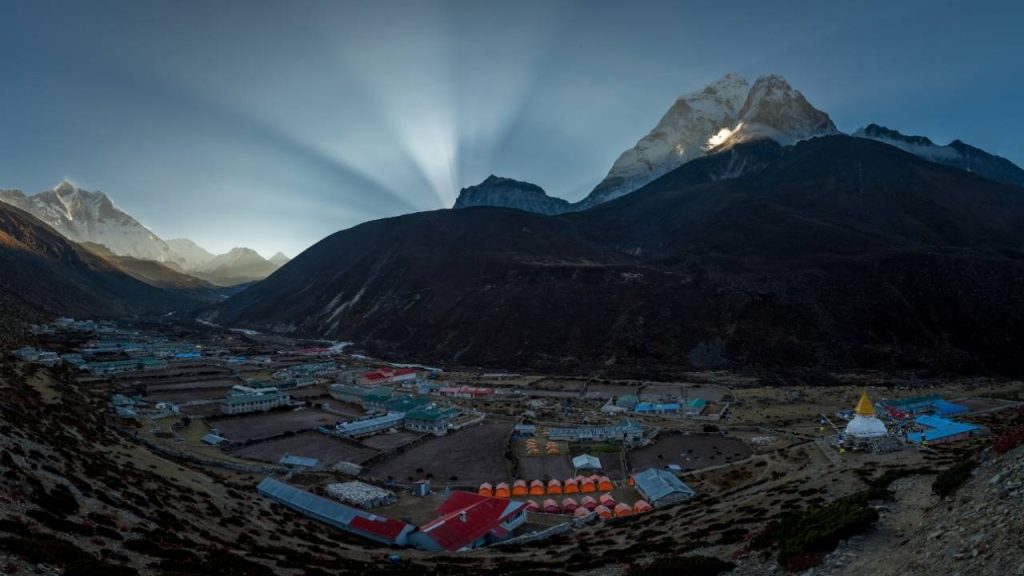
The route descends through the forest before continuing toward Pangboche and then higher into the Imja Valley. As you approach Dingboche, vegetation becomes thinner and the effects of altitude become more noticeable.
Dingboche is around 4,410 metres. This is one of the points where I pay close attention to how trekkers are sleeping, eating, drinking and walking.
Day 6: Acclimatization in Dingboche
You spend another night at altitude and take a gradual acclimatization hike. Nangkartshang is one option when the group is ready for it, although the exact hike depends on the condition of each trekker.
The purpose is not to reach the highest possible point. The purpose is to spend time at altitude while keeping the day manageable.
For more preparation information, see the Everest Base Camp Trek Preparation Guide before your trip.
Day 7: Dingboche to Lobuche
You leave Dingboche and walk toward the higher Khumbu Valley. The route passes through areas associated with climbers and trekkers heading toward Everest, and the landscape becomes much more open as you gain altitude.
Lobuche is around 4,910 metres. The walking distance is manageable on paper, but altitude makes the day harder than the number of kilometres suggests.
Day 8: Lobuche to Everest Base Camp and Gorak Shep
This is the main Base Camp Day. You walk toward Gorak Shep first, leave what you do not need at the lodge and continue toward Everest Base Camp.
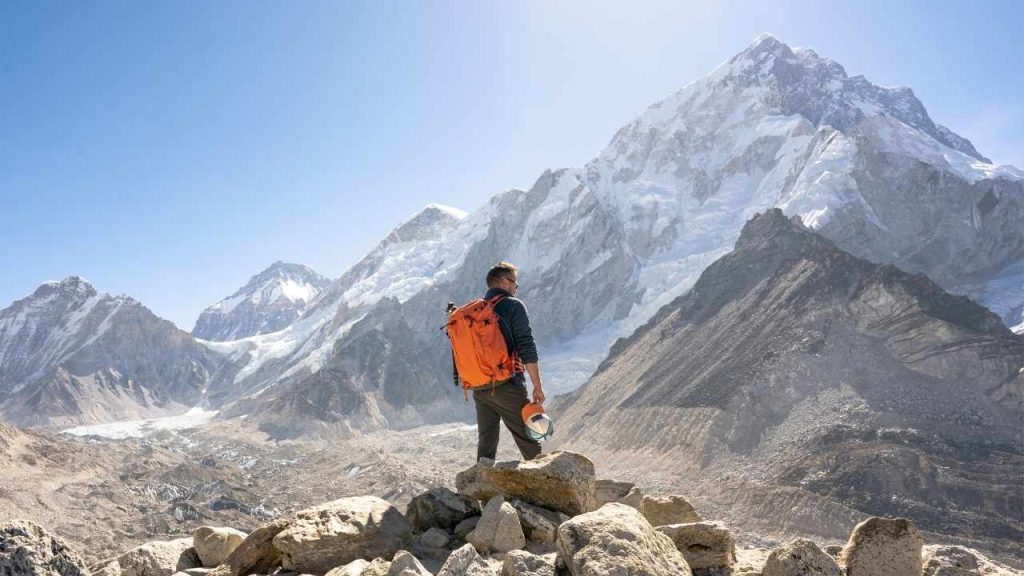
The trail follows the Khumbu Glacier area before reaching Base Camp at 5,364 metres. After spending time at Base Camp, you return to Gorak Shep for the night rather than expecting the helicopter to collect you directly from Base Camp.
Day 9: Kala Patthar and Helicopter Return
Early in the morning, you hike from Gorak Shep toward Kala Patthar, which reaches about 5,545 metres. After returning to Gorak Shep, you have breakfast, collect your bags and prepare for the helicopter.
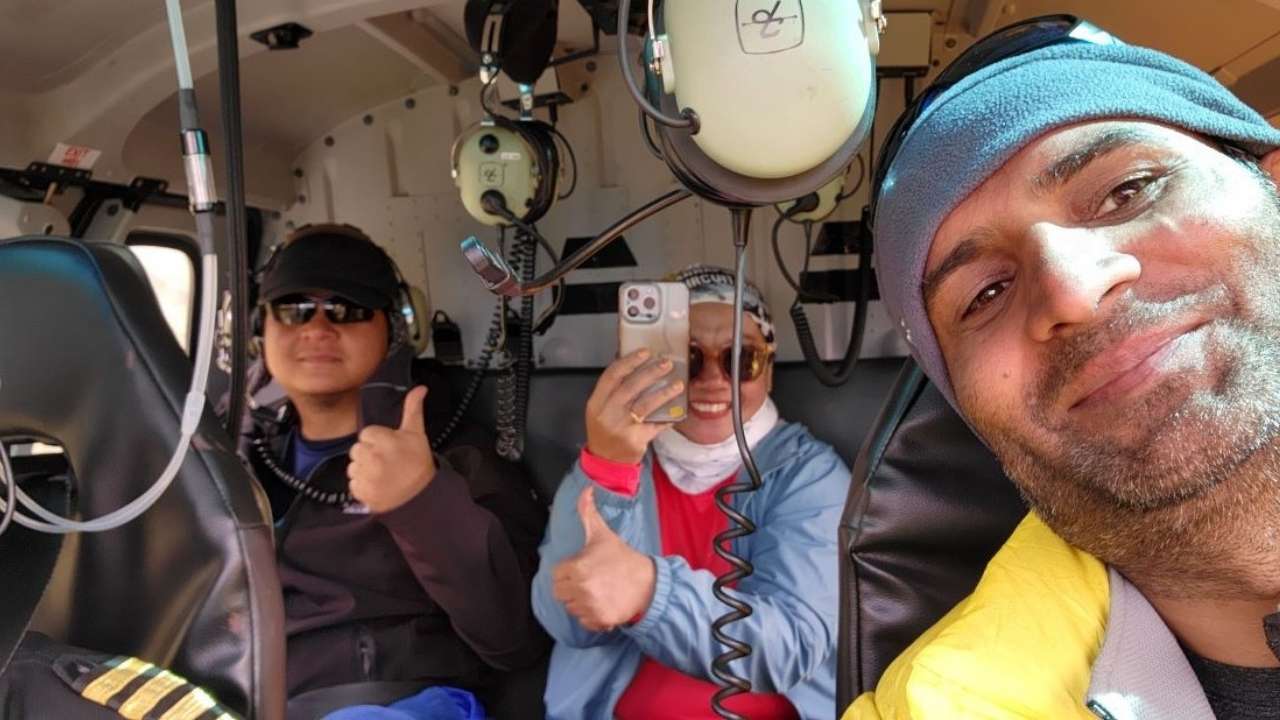
If the helicopter is able to operate, you fly from the Gorak Shep area toward Lukla or according to the agreed routing. From there, you continue toward Kathmandu based on the flight arrangement.
This is the point where the helicopter saves several walking days. You have already completed the main trekking route, so you are not missing Everest Base Camp itself by choosing this return option.
How Long Does the Helicopter Return Take?
The helicopter portion is short compared with walking from Gorak Shep back to Lukla, but I would not give trekkers one fixed total travel time because mountain aviation does not work on the same schedule as a normal domestic airport.
You may need to wait at Gorak Shep if the weather changes, if another flight is being handled first, or if the helicopter needs to adjust its operating plan. The actual time in the air can be much shorter than the total time from leaving the lodge to reaching your final destination.
If you have an international flight, I recommend treating the helicopter return as a time-saving option rather than a guaranteed same-day connection.
What Happens If the Helicopter Cannot Fly?
This is one of the most important questions to ask before booking. A helicopter cannot simply take off because you have already paid for the flight. Wind, cloud, visibility, landing conditions and other operational factors can prevent the flight from operating.
If the helicopter cannot fly from Gorak Shep, the first alternative is normally to wait for a suitable operating window if your schedule allows. If the weather remains poor, you may need to continue walking toward Lukla and use the normal flight arrangements from there.
This is why I always recommend having extra time in your overall Nepal itinerary. The backup plan should be discussed before the trek starts, not when you are already standing in Gorak Shep with no flying window.
How Much Does the Helicopter Return Cost?
The helicopter return is an additional cost because it requires an aircraft and operational arrangement that is not part of a normal walking-only EBC package.
The final price depends on whether you use a private helicopter, share the flight with other passengers, fly only to Lukla or arrange onward travel toward Kathmandu. Weather-related waiting, route changes and additional operational requirements can also affect the final arrangement.
When comparing prices, ask exactly what the quoted amount covers. A low price may only refer to one section of the helicopter journey and may not include the onward transfer to Kathmandu.
Private or Shared Helicopter?
A private helicopter gives you more control over the arrangement because the aircraft is organised for your group. This can be useful when you have a fixed schedule, more luggage or want to continue toward Kathmandu rather than simply flying to Lukla.
A shared helicopter can reduce the cost when seats are available and the routing works for everyone on board. The disadvantage is that the departure and routing are less flexible because the aircraft may be serving several passengers.
For most trekkers, I first look at the practical route and weather conditions and then compare the cost of private and shared arrangements.
How Much Luggage Can You Take?
Do not assume that because you are flying by helicopter you can take your full trekking bag without restrictions. Helicopters operating at high altitude have strict payload considerations, and passenger weight and baggage weight both matters.
I recommend keeping the luggage you need for the trek as compact as possible. If you are using a porter, your main bag can remain with the porter arrangement until Gorak Shep, while valuables, documents, medication and important personal items should stay with you.
Before the helicopter flight, confirm the baggage allowance with the operator arranging your flight. The allowance can differ depending on the aircraft and the number of passengers.
Our Everest Base Camp Trek Packing List can help you decide what you actually need to carry instead of taking unnecessary weight.
What Should You Pack for a Helicopter Return?
Your packing does not change dramatically just because you are flying out. You still need proper layers, trekking footwear, gloves, warm clothing, sun protection, water, personal medication and equipment suitable for temperatures at high altitude.
One item I particularly recommend is keeping important documents and valuables in your daypack rather than your main luggage. Your passport, insurance information, phone, wallet and any required medication should stay accessible.
You should also carry enough warm clothing for waiting outside. A helicopter may not arrive immediately after you reach the pickup area, and Gorak Shep is not a place where I recommend standing around without proper layers.
Do You Still Need Acclimatization?
Yes. Taking a helicopter down does not reduce the altitude stress you experience while going up.
You still sleep at Namche, Dingboche and other high-altitude villages before reaching Gorak Shep. The ascent needs to be planned around gradual altitude gain, rest days and your personal response to the altitude.
If you develop symptoms that concern me as your guide, I will not treat the helicopter return as a reason to continue upward. Your health during the ascent comes before reaching Base Camp on a particular date.
You can also read the Everest Base Camp Trek Altitude Sickness Guide before departure so you understand the symptoms that need attention.
What About Travel Insurance?
Your travel insurance should specifically cover trekking at the altitude you will reach. Everest Base Camp is at 5,364 metres and Kala Patthar is about 5,545 metres, so a standard travel policy that excludes high-altitude trekking may not be sufficient.
Check the policy wording rather than relying only on the insurance company’s general statement that trekking is covered. Look for emergency evacuation by helicopter, trekking at your planned altitude and the geographical area of Nepal.
Keep your policy details and emergency contact information on your phone and in another accessible place.
Do You Need Any Special Permit for the Helicopter?
The helicopter return does not replace the trekking permits and park entry requirements for the Everest Base Camp route. You still need the permits and documentation required for the trek itself.
The helicopter company also has its own operational requirements. These can include passenger details, weight information and flight coordination.
I normally recommend giving accurate passport and passenger information when the helicopter is being arranged. Last-minute changes are more difficult at high altitude than they are in Kathmandu.
Helicopter Return vs Walking Back to Lukla
Walking back gives you several additional days in the Khumbu and costs less than arranging a helicopter. It also allows you to see the lower sections of the route again at a slower pace.
The helicopter return is mainly about time. After reaching Base Camp and Kala Patthar, you can reduce the return portion from several walking days to a much shorter flight arrangement.
I would choose based on your schedule, budget and how you want to spend the final part of the trek. If you have enough time, walking back is completely practical. If your Nepal schedule is tight, flying out can make the itinerary much shorter.
Helicopter Return Is Not the Same as an Everest Helicopter Tour
There is an important difference between these two products.
With a helicopter-return trek, you walk to Everest Base Camp and complete the trekking route normally. The helicopter is used only for your return after the walking portion is finished.
A helicopter sightseeing tour is different. It is designed around flying to viewpoints or landing areas without completing the full EBC trekking route on foot. The time, altitude exposure, itinerary and purpose are different.
If your main goal is to experience the complete trek on foot but save time on the return, the helicopter-return option is the relevant one.
Who Is This Trek Suitable For?
This option is useful for trekkers who want to complete the walking route to Everest Base Camp but have limited time for the return journey. It can also suit people who would rather spend their extra days elsewhere in Nepal after reaching Base Camp.
It does not mean the trek is easy. You still reach more than 5,000 metres, spend nights at high altitude and walk several long days before the helicopter flight.
I would not choose this option simply because you think the helicopter removes the need for preparation. The difficult part of the trek is mainly the ascent, and that remains the same.
What Should You Ask Before Booking?
Before paying for a helicopter-return package, ask these questions clearly:
- Where exactly is the helicopter scheduled to pick me up?
- Is the flight from Gorak Shep or another location?
- Is the quoted price for a private or shared helicopter?
- Does the price cover Lukla only or onward travel toward Kathmandu?
- What happens if the helicopter cannot operate?
- What baggage allowance applies to my flight?
- Are weather delays included in the plan?
- What backup route will be used if flying is not possible?
- Is my insurance valid for trekking above 5,000 metres and helicopter evacuation?
- How much time should I leave before my international flight?
A responsible trekking company should be able to explain these points before you make the payment.
My Advice on Flying Out by Helicopter
After more than 25 years of guiding in the Everest region, I see the helicopter return as a practical transport choice, not a replacement for the trek. You still need to walk from Lukla to Everest Base Camp, acclimatize properly and manage your energy all the way to Gorak Shep.
The main benefit is at the end. Instead of spending several more days retracing the route toward Lukla, you can use a helicopter when conditions allow and put those days back into your Nepal itinerary.
My advice is to decide the return plan before you leave Kathmandu, but keep enough flexibility for mountain weather. If the helicopter flies, you save time. If it does not, you should already know what the walking or alternative flight plan will be.
For the complete walking itinerary, costs and services, see our main Everest Base Camp Trek page. If you are specifically interested in walking to Base Camp and flying out afterward, our Everest Base Camp Trek with Helicopter Return package explains the arrangement in more detail.
Frequently Asked Questions
Does the helicopter pick up trekkers at Everest Base Camp?
No. The normal arrangement is to walk from Everest Base Camp back to Gorak Shep, where a helicopter can pick you up when the flight is operating.
Can I fly from Gorak Shep directly to Kathmandu?
A helicopter return toward Kathmandu can sometimes be arranged, but the exact routing depends on the operator, aircraft, weather and operating conditions. You should confirm the route before booking rather than assuming a direct Gorak Shep-to-Kathmandu flight.
Can I take a helicopter only to Lukla?
Yes, a helicopter return to Lukla can be arranged. From Lukla, you can continue toward Kathmandu using the available flight or transport arrangement.
How many walking days can the helicopter save?
It can remove several days of walking between the high Khumbu and Lukla. The exact number depends on your itinerary and where the helicopter flight finishes.
Is the helicopter guaranteed after I reach Gorak Shep?
No. Mountain weather and aviation conditions can prevent a flight from operating. A proper itinerary should include a backup plan.
Can I use the helicopter if I have altitude sickness?
A helicopter can be used for emergency evacuation when medically required and when flight conditions allow, but that is different from a scheduled helicopter return. If you develop serious altitude symptoms, your guide should assess the situation immediately rather than treating the scheduled flight as the solution.
Do I still need to walk to Kala Patthar?
If Kala Patthar is included in your itinerary, yes. On our standard helicopter-return plan, you hike to Kala Patthar before returning to Gorak Shep for the helicopter.
Is helicopter return included in a normal EBC trek price?
Usually not. A standard walking EBC package and a helicopter-return package are different arrangements. Always check whether the helicopter cost is included in the quoted price.
What if the helicopter cannot fly on my planned day?
You may need to wait for a suitable flying window or continue walking toward Lukla and use the normal flight arrangements. The correct option depends on the weather, your remaining time and the availability of transport.
Should I book an international flight on the same day as the helicopter return?
I do not recommend making the connection too tight. Weather can delay helicopter operations, and the onward flight from Lukla or another point can also be affected. Leave a reasonable buffer before your international departure.
Is helicopter return worth considering if I have plenty of time?
If you have several extra days, you can simply walk back to Lukla. The helicopter is mainly useful when you want to shorten the return portion of the trek and use those days elsewhere.
What insurance should I have for this trek?
Your policy should cover trekking at the altitude you will reach, including the Everest Base Camp and Kala Patthar elevations, and should include helicopter evacuation where applicable. Read the actual policy conditions before travelling rather than assuming every trekking policy has the same coverage.