Spirituality in Nepal is not confined to temples or monasteries. It appears in the morning puja at a family shrine, the oil lamp burning before a deity, the prayer wheels beside a mountain trail, the rituals performed beside the Bagmati River and the long walk to a sacred lake. Hindu, Buddhist, Kirat, Bon, Muslim and Christian communities follow their own forms of worship, while some places bring more than one tradition together.
For a traveler, the easiest way to understand this side of Nepal is to look at what people actually do. They make offerings, light lamps, walk around stupas, visit temples, recite prayers, observe fasts, attend festivals, carry out funeral rites and travel to places considered sacred. The customs change from one community and region to another, so there is no single practice that represents spirituality across the whole country.
Hindu Spirituality in Nepal
Hindu worship in Nepal ranges from a short visit to a neighborhood shrine to major pilgrimages involving several days of travel. Flowers, rice, vermilion, water, incense, oil lamps and food are common offerings, although the items used depend on the deity and the occasion.
Shiva, Vishnu, Durga, Krishna, Ganesh, Hanuman, Saraswati and Kali are among the deities worshipped at temples and household shrines. Certain days of the lunar calendar bring larger crowds to particular temples, and festivals such as Shivaratri, Dashain, Teej and Janai Purnima add their own rituals to the annual calendar.
In many homes, worship does not require a priest. A family member may light a lamp, place flowers before an image, offer water and recite prayers according to the family’s custom. Temple worship can be more formal, with priests carrying out puja and devotees waiting their turn to make offerings.
Pashupatinath and the Worship of Shiva
Pashupatinath in Kathmandu is the main Hindu pilgrimage center associated with Shiva in Nepal. The temple complex stands beside the Bagmati River and contains numerous smaller shrines, while the ghats on the riverbank are used for Hindu cremation ceremonies.
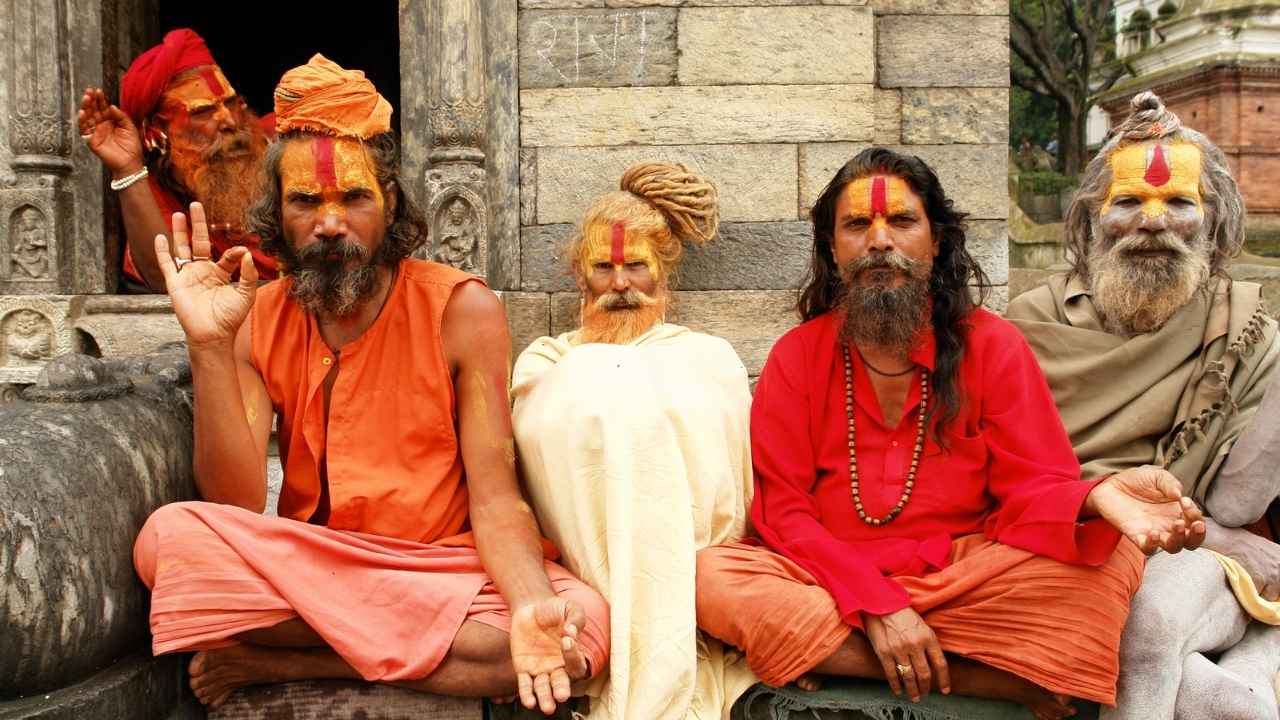
Shiva worship at Pashupatinath continues throughout the year, but Shivaratri brings particularly large numbers of pilgrims. Sadhus and other religious practitioners gather around the temple, and devotees come for darshan, prayer and offerings.
The main temple has ruled that visitors need to know before entering. Non-Hindus cannot enter the main temple, and photography is restricted in parts of the complex, so it is better to follow the instructions posted at the site rather than assume that every area is open to visitors.
The Bagmati ghats are another important part of the complex. Families bring the dead for cremation there, and the ceremonies follow Hindu funeral customs that differ according to family and community.
Buddhist Traditions in Nepal
Buddhist practice in Nepal includes several traditions rather than one uniform system. Tibetan Buddhist communities are prominent in the Himalayan regions, while Newar Buddhist traditions have a long history in Kathmandu, Patan and Bhaktapur.
Prayer, meditation, offerings, mantra recitation and circumambulation are common practices, but the form of worship varies between communities and monasteries. A visitor might see people turning prayer wheels around a stupa in Kathmandu or hear monks reciting prayers inside a monastery in the mountains.
Buddhist religious sites are still used for worship, teaching and ceremonies. They should therefore be treated as active places of religion rather than simply as monuments to photograph.
Boudhanath Stupa
Boudhanath is one of Kathmandu’s main Buddhist centers. The large white stupa is surrounded by monasteries, shops and residential buildings, and pilgrims move around its base throughout the day.
The usual direction of circumambulation is clockwise. Worshippers walk around the stupa, turn prayer wheels, recite mantras, light butter lamps and make offerings.
The monasteries around Boudhanath represent different Tibetan Buddhist traditions. During religious festivals, prayers and ceremonies can continue for extended periods, and the area becomes much busier than on an ordinary day.
For visitors, the basic rule is simple: follow the direction of people walking around the stupa, do not climb on religious structures and ask before photographing inside monasteries or during ceremonies.
Swayambhunath
Swayambhunath sits on a hill above Kathmandu and is another major Buddhist site in the valley. The main stupa is surrounded by shrines, temples, images and smaller religious structures, and Hindu worshippers also visit the complex.
The eastern staircase is the route most visitors notice first, with a long climb leading toward the stupa. Monkeys are common around the hill, but they are not the reason the site is religiously important.
People come to Swayambhunath to pray, light lamps, make offerings and walk around the stupa. The site also gives a clear view of Kathmandu, but the religious activity around the stupa is what continues to bring local worshippers there.
Lumbini and Buddhist Pilgrimage
Lumbini in the Rupandehi district of southern Nepal is traditionally identified as the birthplace of Siddhartha Gautama, the Buddha. The Maya Devi Temple marks the principal sacred area, and the Ashoka Pillar is an important historical marker within the site.
Buddhist pilgrims visit Lumbini to pray, meditate, make offerings and visit monasteries established by different Buddhist communities. The wider complex contains monasteries representing Buddhist traditions from several countries.
Buddha Jayanti draws additional visitors to Buddhist sites around Nepal. The festival commemorates the Buddha’s birth, enlightenment and death, and religious observances can include prayers, lamps, offerings and processions.
Sacred Rivers
Water has a practical and religious role in many Nepali rituals. Rivers are used for bathing, offerings, funeral rites and pilgrimage, and certain stretches of a river may be associated with particular temples or festivals.
The Bagmati is closely associated with Pashupatinath and Hindu cremation rites. Along the Kali Gandaki, shaligram stones collected from the river are treated as sacred by many Hindus and are used in worship associated with Vishnu.
Ritual bathing also forms part of several pilgrimage traditions. The date and location depend on the religious calendar, with some pilgrims traveling considerable distances to reach a particular river or lake.
Gosaikunda and Mountain Pilgrimage
Gosaikunda is a high-altitude lake in the Langtang region associated with Shiva. It is one of Nepal’s best-known mountain pilgrimage destinations, particularly during Janai Purnima.
Pilgrims walk through the hills and forests to reach the lake, where ritual bathing and worship take place. The journey is demanding because of the altitude and terrain, and the religious purpose is the reason many people undertake it.
The lake is also part of the wider [Langtang Valley Trek] region, although the standard Langtang Valley route and the Gosaikunda pilgrimage route are not the same trek. Travelers planning to visit both should allow additional time rather than assuming that Gosaikunda lies directly on the main Langtang Valley trail.
Muktinath
Muktinath lies in Mustang at an altitude of roughly 3,800 meters and is visited by both Hindu and Buddhist pilgrims. Hindus associate the site with Vishnu, while Buddhists know it as Chumig Gyatsa.
Water spouts at the temple complex are part of the Hindu pilgrimage ritual, while a Buddhist monastery stands nearby. The combination is especially clear in the way pilgrims from the two traditions use the same religious area according to their own customs.
Muktinath is reached through the Kali Gandaki valley, an area that historically connected settlements on the Tibetan Plateau with communities farther south. The pilgrimage therefore takes place within a landscape that has also long been used for trade and movement.
Religion in the Kathmandu Valley
The Kathmandu Valley has an unusually dense concentration of temples, stupas, monasteries, shrines and traditional courtyards. Kathmandu, Patan and Bhaktapur each retain old religious spaces that are still used by local communities.
Newar religious traditions are particularly important to understanding the valley. Hindu and Buddhist practices developed alongside one another, and a walk through an old neighborhood can reveal temples, Buddhist courtyards and shrines within a very small area.
Patan is known for its Buddhist bahals, or traditional monastery courtyards. These courtyards contain shrines and images and remain connected to local Buddhist communities rather than serving only as historic architecture.
Bhaktapur has another concentration of religious sites, including temples and public squares used during festivals and processions. Religious activity here is closely connected with the city’s traditional neighborhoods.
Newar Buddhism
Newar Buddhism has its own institutions, rituals and religious specialists. Its history is particularly strong in the Kathmandu Valley, where Buddhist courtyards, monasteries and festivals remain part of the urban fabric.
The term bahal is commonly used for traditional Buddhist courtyards, while other forms of Newar Buddhist institutions have their own names and functions. Religious practice can include offerings, puja, festivals and ceremonies associated with different Buddhist deities and figures.
Newar Buddhism also shares certain spaces and festival traditions with Hindu communities. This does not mean the two traditions are identical; rather, centuries of living in the same cities have produced a religious landscape where different practices can be found close together.
Buddhism in the Himalayan Regions
The Himalayan regions have strong connections with Tibetan Buddhism. In places such as the Everest region, Langtang, Manang, Mustang and Dolpo, religious structures are often found directly along village paths and trekking routes.
Mani walls are made from stones carved with Buddhist prayers and mantras. Travelers normally pass around them rather than crossing through them, following the established direction of movement.
Chortens are another common sight. They may stand at village entrances, beside trails, near monasteries or on mountain passes, and travelers should not climb on them or treat them as ordinary roadside structures.
Prayer flags are commonly placed around religious sites, bridges, passes and high points. They carry printed prayers and symbols, and their colors and arrangement follow established Buddhist traditions.
Monasteries and Religious Life
A monastery can serve several purposes at once. It may be a place where monks live and study, where prayers are conducted, where local people bring offerings and where major community ceremonies take place.
Tengboche Monastery in the Everest region is one of the best-known examples. It is also associated with Mani Rimdu, a Buddhist festival featuring prayers and masked dances performed by monks.
Other monasteries in the mountains are much smaller and serve nearby villages. Their importance cannot be judged by size, and some of the most active religious places encountered on a trek may be buildings that receive little attention from tourists.
When visiting a monastery, travelers should wait quietly if prayers are underway. Photography inside prayer halls may be restricted, and monks or local residents should be asked before taking close photographs.
Spiritual Practices Along Trekking Routes
Several trekking routes pass directly through communities where religious customs are visible. On the Everest Base Camp Trek, Buddhist monasteries, mani walls, chortens and prayer flags appear along the route; the Manaslu Circuit Trek also passes through villages with Tibetan Buddhist traditions.
The Upper Mustang Trek leads through an area where monasteries, chortens and old Buddhist artwork are central to village religious life. Lo Manthang and surrounding settlements contain some of the most important examples of Tibetan Buddhist architecture and painting in the region.
Langtang has its own mixture of village monasteries, chortens and prayer walls. The route passes through settlements where religious buildings are used by residents rather than maintained specifically for trekkers.
A trek through these areas is therefore different from visiting a museum. Religious activity can be taking place while you are there, and the correct approach is to observe without interrupting it.
Kirat Spiritual Traditions
Nepal’s religious life extends beyond Hindu and Buddhist practice. Kirat communities in eastern Nepal maintain traditions associated with Mundum, an oral body of knowledge covering religious practice, stories, customs and ways of understanding the natural world.
Sakela is one of the major Kirat celebrations. It is observed during different parts of the agricultural cycle and includes community gatherings, ritual activities and traditional dancing.
These traditions should not be described simply as another form of Hinduism or Buddhism. They have their own histories, terminology and practices, and the details vary between Kirat communities.
Bon and Himalayan Religious Practices
Bon is associated with the Tibetan cultural region and is practiced by some communities in Nepal’s northern areas. Alongside formal religious institutions, Himalayan communities also retain local customs connected with mountains, springs, caves, protective beings and ancestral places.
A village’s religious life can therefore contain several layers. Buddhist monastery practices may exist alongside older local customs, with each community maintaining its own understanding of particular places and rituals.
These differences are one reason it is better to learn about the specific region you are visiting rather than assuming that every Himalayan village follows exactly the same religious customs.
Muslim and Christian Communities
Islam has a long presence in Nepal, particularly in the Terai and in urban areas. Mosques serve local Muslim communities for daily prayers and major religious occasions, while Eid brings families together for communal prayers, food and visits.
Christian communities are also present throughout the country, particularly in towns and cities. Churches hold regular services and observe Christmas, Easter and other Christian occasions.
These communities form part of Nepal’s present religious population alongside the country’s Hindu, Buddhist, Kirat and other traditions. Their practices are most visible in the neighborhoods and towns where these communities live.
Festivals and Spiritual Practice
Religious festivals provide some of the clearest public expressions of spirituality in Nepal, but each festival follows its own rules and history. Shivaratri centers on Shiva, Buddha Jayanti marks the Buddha’s birth, enlightenment and death, and Tihar includes Laxmi Puja among its five days.
Janai Purnima involves the renewal of the sacred thread for Hindu men who follow the tradition, while priests and devotees also observe other forms of ritual during the festival. Pilgrims travel to places such as Gosaikunda for bathing and worship.
In the Kathmandu Valley, Indra Jatra includes the raising of a ceremonial pole, chariot processions and appearances of the Kumari, Ganesh and Bhairav. In Upper Mustang, Tiji is a three-day Buddhist festival centered on masked dances performed by monks in Lo Manthang.
These examples show why Nepal’s religious calendar cannot be reduced to a list of national holidays. The customs attached to a festival can belong strongly to one city, ethnic community, valley or religious tradition.
Death and Funeral Practices
Death is an important part of religious practice in Nepal, and funeral customs vary according to religion and community. Hindu cremation beside the Bagmati at Pashupatinath is one of the most visible examples.
The body is brought to the ghats, where family members take part in the funeral rites before cremation. The ceremonies follow established Hindu customs, with details varying according to family and tradition.
Buddhist communities have their own funeral practices and rituals surrounding death. Other ethnic and religious communities likewise maintain their own customs for mourning, burial, cremation and remembrance.
Gai Jatra in the Kathmandu Valley adds another public dimension to remembrance. Families who have lost relatives take part in processions, and the festival combines remembrance with traditional performances and humor.
Spirituality Inside the Home
Some of the most ordinary religious practices in Nepal take place inside the home. A family shrine may contain an image of a deity, a lamp, incense and objects used during puja.
The person performing the ritual may be a family member rather than a priest. Offerings can be made in the morning, on a particular day of the week, during a festival or before an important family event.
Household practice varies greatly between communities. A Newar household in Patan, a Hindu family in the Terai and a Buddhist household in a Himalayan village may follow completely different customs.
Pilgrimage and the Journey Itself
Nepali pilgrimage is not always about reaching a large temple. The route can include mountain trails, river crossings, ritual bathing, fasting and visits to smaller shrines along the way.
Some pilgrimages happen at particular times of the year. Janai Purnima brings pilgrims toward Gosaikunda, while other religious occasions draw people to Pashupatinath, Muktinath, Janakpur and Lumbini.
For pilgrims, practical preparation can be part of the journey. High-altitude routes require attention to weather, walking conditions and acclimatization, while large festival gatherings require travelers to allow extra time for transport and accommodation.
Sacred Places and Visitor Etiquette
Religious sites in Nepal do not all follow the same rules. Some temples restrict entry to Hindus, some monasteries close certain rooms to visitors, and photography may be prohibited during ceremonies or inside prayer halls.
Shoes are removed before entering many temples and monasteries. At Buddhist stupas and chortens, visitors should normally walk clockwise, and religious structures should never be climbed or used as seats.
Dress should be modest at temples and monasteries. During a ceremony, it is better to stand aside and watch quietly than to move through a group of worshippers to take a photograph.
When in doubt, ask. A temple caretaker, monk, priest or local resident can usually explain whether a particular area is open to visitors and what behavior is expected.
Spirituality in Modern Nepal
Nepal’s cities have changed considerably, but religious practice remains visible. People still stop at roadside shrines, visit temples before work, attend monastery prayers and travel across the country for festivals and pilgrimage.
Modern life has also changed how people reach religious sites. Roads now make some pilgrimage destinations easier to access, while trekking routes bring visitors into villages that were once reached mainly on foot.
The religious traditions themselves continue to vary from one community to another. A ceremony in Patan, a monastery prayer in the Everest region, a pilgrimage to Gosaikunda and a Sakela gathering in eastern Nepal are not different versions of one ritual; each comes from its own community and history.
Understanding Spirituality in Nepal
The clearest way to understand Spirituality in Nepal is to look beyond the country’s famous religious monuments. The morning lamp in a household shrine, the carved stones of a mani wall, the cremation ghats of Pashupatinath, the pilgrimage to Gosaikunda and the prayers inside a mountain monastery all belong to different parts of the same national religious landscape.
For travelers, the most useful approach is to learn the custom of the place they are visiting. Know whether a temple permits entry, walk correctly around a stupa, ask before taking photographs and give ceremonies the same space you would give any private religious gathering.
Nepal’s spiritual traditions are best understood one place and one community at a time. The further you travel, the more the details change: the deity may be different, the prayer may be different, the festival may follow another calendar, and the reason for visiting a sacred place may belong entirely to the people who live there.