I first went to Annapurna Base Camp in 1996 as a porter. At that time, ABC was a camping trek. We carried tents, food and other equipment and stayed in camps along the trail. Things have changed a lot since then. More teahouses were built, the route became easier to access, and today you can walk to Annapurna Base Camp without carrying camping equipment.
But one thing has not changed. ABC is still at about 4,130 meters, and your body still needs time to adjust to the altitude.
I often meet trekkers who are worried about altitude sickness before they start the trek. Some ask whether they need to be extremely fit, some want to know if medicine is necessary, and others think they will be fine because they have trekked at high altitude before.
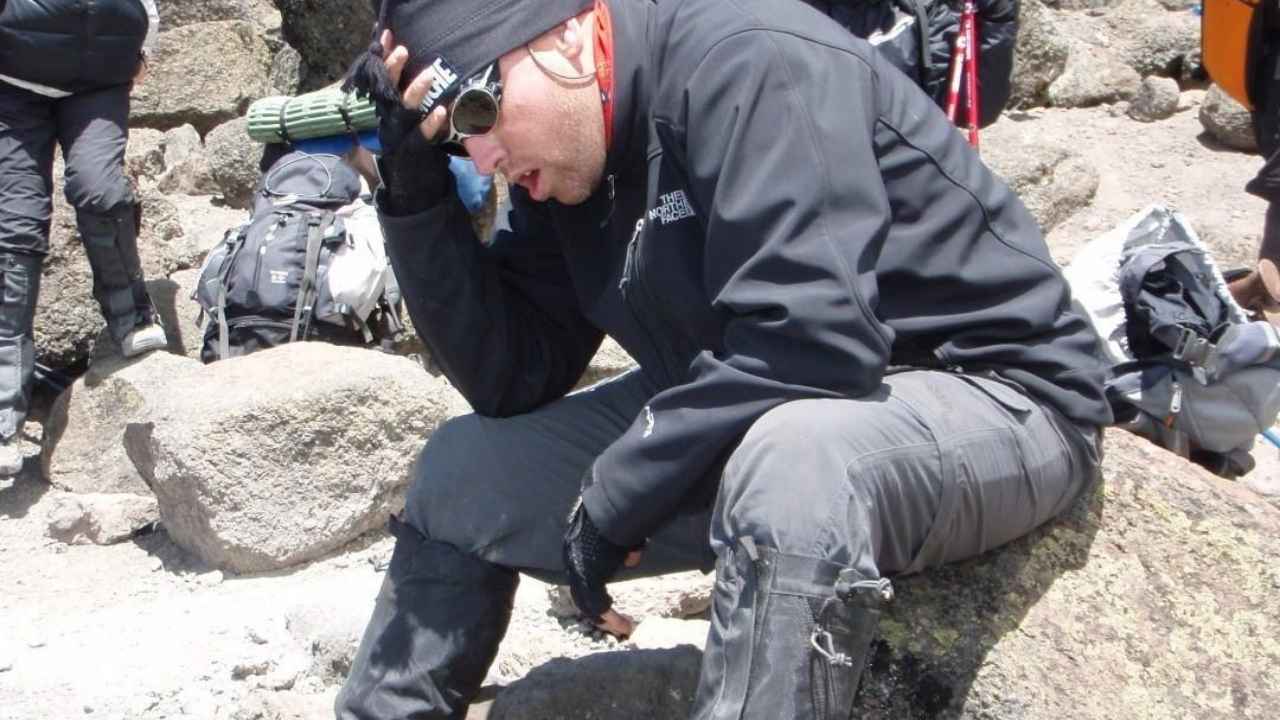
I have seen very fit trekkers struggle with altitude and slower walkers reach ABC without a serious problem. Your body has to adjust to less oxygen as you go higher, and previous fitness or trekking experience does not guarantee that you will avoid altitude sickness.
On the Annapurna Base Camp trek, the increase in altitude happens over several days. You start much lower and gradually climb through Chhomrong, Himalaya and Machapuchare Base Camp before reaching ABC. A headache after a long walking day is not automatically altitude sickness, but a headache together with nausea, dizziness, unusual tiredness or loss of appetite after gaining altitude needs attention.
In this guide, I explain the symptoms I tell my trekkers to watch for, how we manage altitude during the ABC trek, what you should do if you start feeling unwell, and when descending is necessary. I also cover questions trekkers commonly ask about fitness, previous high-altitude experience, drinking water, altitude medicine and pulse oximeters.
How High Is Annapurna Base Camp?
Annapurna Base Camp is about 4,130 metres (13,550 feet) above sea level. The trail reaches this height gradually, passing through Chhomrong, Himalaya and Machapuchare Base Camp before reaching ABC.
| Place |
Approx. altitude |
| Pokhara |
800 m |
| Chhomrong |
2,170 m |
| Himalaya |
2,920 m |
| Machapuchare Base Camp |
3,700 m |
| Annapurna Base Camp |
4,130 m |
At 4,130 metres, the air pressure is much lower than at sea level. This means there is less oxygen available with each breath. You may notice that you breathe harder while walking uphill, need more time to recover after a climb, or sleep differently than you do at home.
The altitude itself does not mean that every trekker will become sick. The main issue is how quickly your body has to adjust to the lower oxygen level.
How Acclimatization Works on the ABC Trek
Acclimatization is the process your body goes through as it adjusts to less oxygen at higher altitude. The gradual rise on the ABC trek gives your body time to adapt, but the speed of ascent and sleeping altitude still matter.
When you go higher, your body starts making several changes. You breathe more, your heart works harder and your body gradually makes further adjustments to cope with the lower oxygen availability.
Acclimatization takes time. Walking quickly to a high elevation does not give your body the same opportunity to adjust as a gradual ascent.
Above about 3,000 metres, a commonly used guideline is to keep the increase in sleeping altitude to around 500 metres per day, with an additional acclimatization day when the sleeping elevation increases substantially.
The ABC route does not follow an identical elevation gain every day. The actual itinerary needs to consider the trail, available teahouses and where trekkers will sleep each night.
When I plan an itinerary, I look at sleeping altitude as well as the distance walked. A short walking day can still involve a significant change in elevation.
What Does Altitude Sickness Feel Like?
Acute mountain sickness, or AMS, commonly causes a headache together with symptoms such as nausea, dizziness, unusual tiredness, loss of appetite or vomiting. Symptoms usually develop after gaining altitude and should not be ignored if they continue or become worse.
A headache on its own does not automatically mean that you have AMS. You may have a headache after a long walking day because you are tired, have not eaten enough, have not slept properly or have another common cause.
The combination of symptoms and the timing are more useful.
| Symptom |
What it can indicate |
What to do |
| Headache |
Common AMS symptom |
Tell your guide and monitor |
| Nausea or poor appetite |
Possible AMS |
Rest and monitor |
| Dizziness |
Possible altitude illness |
Stop and tell your guide |
| Unusual tiredness |
Possible AMS when combined with other symptoms |
Do not push higher |
| Vomiting |
More significant altitude symptom |
Inform your guide |
| Confusion |
Serious altitude illness |
Urgent medical attention and descent |
| Loss of coordination |
Serious altitude illness |
Urgent descent and medical attention |
| Shortness of breath at rest |
Possible HAPE |
Urgent descent and medical attention |
You do not need to have every symptom. What matters is a change in how you feel after gaining altitude.
If a trekker tells me they have a headache, I ask when it started and whether they have nausea, dizziness, poor appetite or other symptoms. I also want to know whether they have eaten and slept properly. That gives us a much clearer picture than looking at one symptom alone.
Normal Trekking Tiredness or Altitude Sickness?
Normal tiredness usually improves with food, rest and sleep, while altitude sickness is more concerning when symptoms appear after gaining altitude and continue or worsen despite resting.
After several hours of walking, tired legs are normal. Your appetite may also be lower after a long climb. A mild headache can come from poor sleep, physical exertion or other common causes.
The situation becomes more concerning when several symptoms appear together after gaining elevation. For example, a trekker who arrives at the teahouse after six hours of walking and says, “My legs are tired, but I feel normal otherwise,” is describing something different from someone who says, “I have a headache, I feel dizzy, I am nauseous and I do not want to eat.”
That difference is important as you approach the higher sections of the ABC route.
How I Manage Altitude with Trekkers
I pay attention to how trekkers are feeling as we gain altitude rather than waiting for a serious problem to develop. I ask about sleep, appetite, headache, nausea and general condition, especially after reaching higher elevations.
I have guided people with very different walking speeds and fitness levels. Some naturally walk fast, while others take more time and stop frequently. At altitude, I do not encourage people to race ahead. I want trekkers to walk at a pace they can maintain without repeatedly pushing themselves hard.
I also notice changes in behavior. If someone who was eating normally suddenly loses their appetite, becomes unusually quiet or starts struggling with the same trail they were handling easily earlier, I ask what is happening.
These changes do not automatically mean altitude sickness, but they are reasons to check. Trekkers sometimes hesitate to tell their guide about a headache or nausea because they are afraid, they will be asked to stop. I would rather know about a small problem early than find out later that someone has been hiding symptoms for hours.
What Should You Do If You Develop Symptoms?
If you develop symptoms that may be related to altitude, stop gaining altitude and tell your guide. Rest at your current elevation and see whether the symptoms improve or become worse.
Do not hide symptoms because you are worried about missing ABC. If symptoms are mild, staying at the same elevation and resting may give your body time to adjust. Your guide can continue monitoring you and decide whether moving higher is appropriate.
If symptoms become worse, especially if you develop confusion, difficulty walking, severe weakness or breathing problems while resting, the situation requires urgent action.
A simple response is:
- Stop ascending while symptoms are present.
- Tell your guide exactly what you are feeling.
- Rest at your current elevation.
- Eat and drink normally if you can.
- Monitor your condition.
- Do not continue higher if symptoms are getting worse.
- Descend and seek medical help when serious symptoms develop.
The decision should be based on your condition, not on how close you are to Base Camp.
When Do You Need to Go Lower?
You need to descend when altitude symptoms become serious or continue to worsen, because lower altitude gives your body access to more oxygen.
Mild AMS can sometimes improve after resting at the same elevation. Worsening symptoms should not be treated by simply waiting at a higher altitude.
If a person develops signs of severe altitude illness, descent should begin as soon as possible. The person should not be left alone, and medical assistance should be arranged where possible.
On the ABC route, descending means losing elevation. In a serious altitude situation, that is exactly what the body needs. Reaching ABC is never more important than dealing with a serious medical problem.
HACE and HAPE: The Warning Signs You Should Know
HACE and HAPE are severe forms of altitude illness and require urgent descent and medical care. They affect different parts of the body, but both can become life-threatening.
HACE
High-altitude cerebral edema, or HACE, affects the brain and is an emergency. Warning signs include:
- Confusion or unusual behaviour
- Difficulty walking straight or loss of coordination
- Severe weakness
- Increasing drowsiness
- Difficulty responding normally
A person showing these signs should not continue toward ABC. They need urgent descent and medical attention.
HAPE
High-altitude pulmonary edema, or HAPE, affects the lungs and is also an emergency. Warning signs include:
- Shortness of breath while resting
- Increasing difficulty breathing
- Severe weakness
- Persistent cough
- Chest congestion or tightness
- Blue or grey lips in severe cases
Breathing harder while walking uphill is normal at altitude. Breathing difficulty while sitting or lying down is different and requires urgent attention. Oxygen may be available in some situations, but it should not be used as a reason to delay descent when descent is required.
How Can You Reduce the Risk of Altitude Sickness?
The main way to reduce the risk is to gain altitude gradually and give your body enough time to adjust. Your walking pace, sleeping altitude, food, hydration, rest and alcohol intake also matter.
Before starting the ABC trek, I look at the number of days available rather than trying to make the itinerary as short as possible.
Some useful habits are:
- Allow enough days for the route.
- Avoid unnecessary rapid gains in sleeping altitude.
- Walk at a steady pace.
- Eat regular meals even if your appetite decreases.
- Drink regularly according to your needs.
- Avoid alcohol during the early acclimatization period.
- Get enough sleep.
- Tell your guide when something feels wrong.
- Do not continue higher if symptoms are getting worse.
Drinking excessive amounts of water does not prevent altitude sickness. You need enough fluid to replace what you lose through walking, breathing and the dry mountain air, but forcing large amounts of water can cause other problems.
Food is also easy to overlook. Some trekkers lose their appetite at altitude and start eating very little. Your body still needs energy for several hours of walking each day.
For more practical preparation, see our Annapurna Base Camp Trek food guide and what to pack for Annapurna Base Camp Trek.
Does Physical Fitness Prevent Altitude Sickness?
No. Being physically fit does not make you immune to altitude sickness. Fitness helps you handle the walking, but altitude illness depends on how your body responds to reduced oxygen.
I have seen strong trekkers struggle at altitude and people who walk slowly manage the same elevation without major problems. A fit person may have stronger legs and better cardiovascular conditioning, which can make the physical part of trekking easier. That does not guarantee that the body will acclimatize faster.
This is why I look at fitness and altitude as two different things. Someone can be physically prepared for the trail and still develop AMS.
You can read more about the walking conditions in our Annapurna Base Camp Trek difficulty guide.
Does Previous High-Altitude Experience Protect You?
Previous experience at high altitude does not guarantee that you will avoid altitude sickness on another trek. Your response can be different on another trip depending on the rate of ascent, sleeping elevation and other conditions.
Someone who reached 5,000 metres without problems last year can still develop AMS on a different trek. Likewise, someone who had a headache on a previous trek should not assume the same thing will definitely happen again.
I look at the current trek and the current condition of the person rather than relying only on what happened during an earlier trip.
What About Altitude Medicine?
Altitude medicine can reduce the risk of AMS for some travellers, but medication should be discussed with a doctor before the trek rather than taken automatically.
Acetazolamide, commonly known by the brand name Diamox, is one medicine doctors may recommend for prevention or treatment of altitude illness in appropriate situations. It is not a replacement for gradual ascent. Taking medication does not mean you can safely climb faster.
Some people cannot take certain medicines because of allergies, medical conditions or interactions with other drugs. That is why I do not tell trekkers to start altitude medication simply because another trekker used it.
If you are considering altitude medication, speak with a doctor before travelling and discuss your itinerary and previous altitude experience.
Can a Pulse Oximeter Tell You If You Have Altitude Sickness?
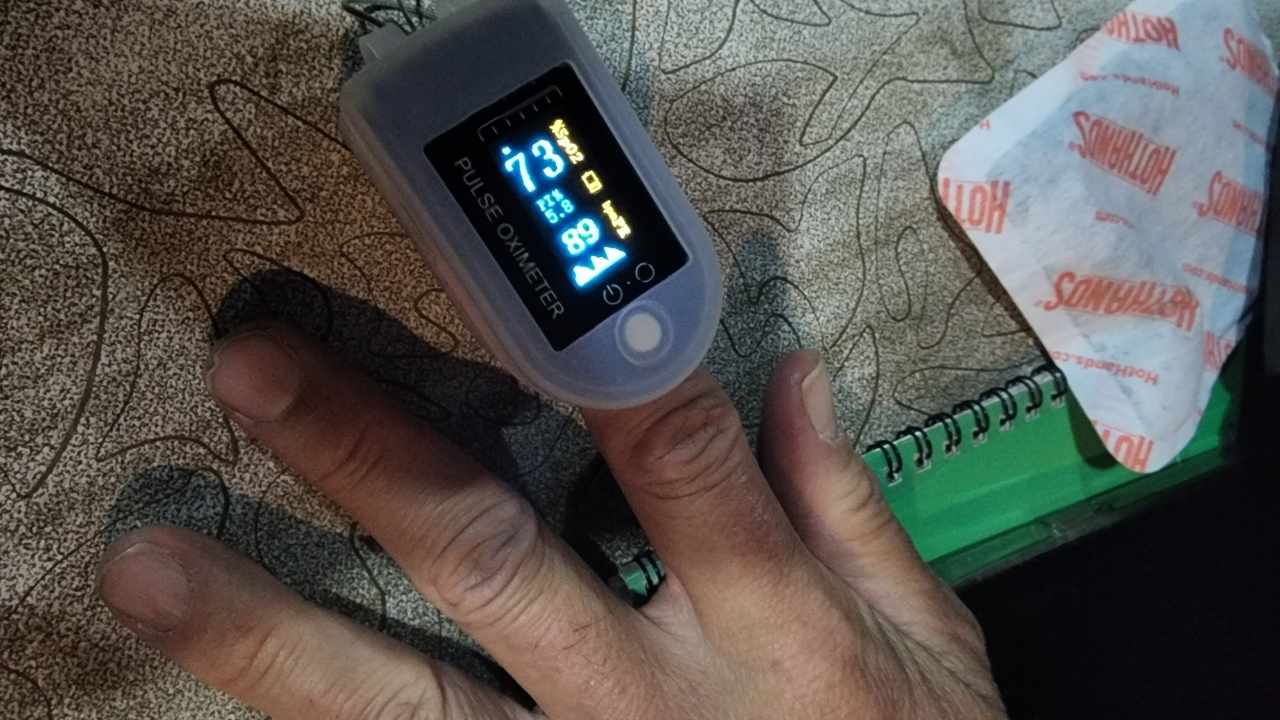
A pulse oximeter can show your blood oxygen saturation and pulse rate, but it cannot diagnose altitude sickness by itself.
At altitude, oxygen saturation can be lower than it would be at sea level. The reading can also be affected by cold fingers, movement, the device and other factors.
A trekker may have a lower reading without having serious altitude illness. Another person may have a concerning medical condition even when a reading does not look particularly alarming.
I prefer to look at the person rather than one number. How someone is walking, breathing, speaking, eating, sleeping and responding to questions gives important information when combined with other observations.
If symptoms are serious, medical assessment and descent should not be delayed because a pulse oximeter gives a particular reading.
How Should You Prepare Before the ABC Trek?
The best preparation is to arrive with enough walking fitness, understand the elevation you will reach and allow enough days for the route.
You do not need to train like a mountaineer for the Annapurna Base Camp trek. You should be comfortable walking for several hours on consecutive days, including uphill and downhill sections.
Before leaving for Nepal, regular walking or hiking is useful. If you have access to hills or stairs, include some uphill walking in your training.
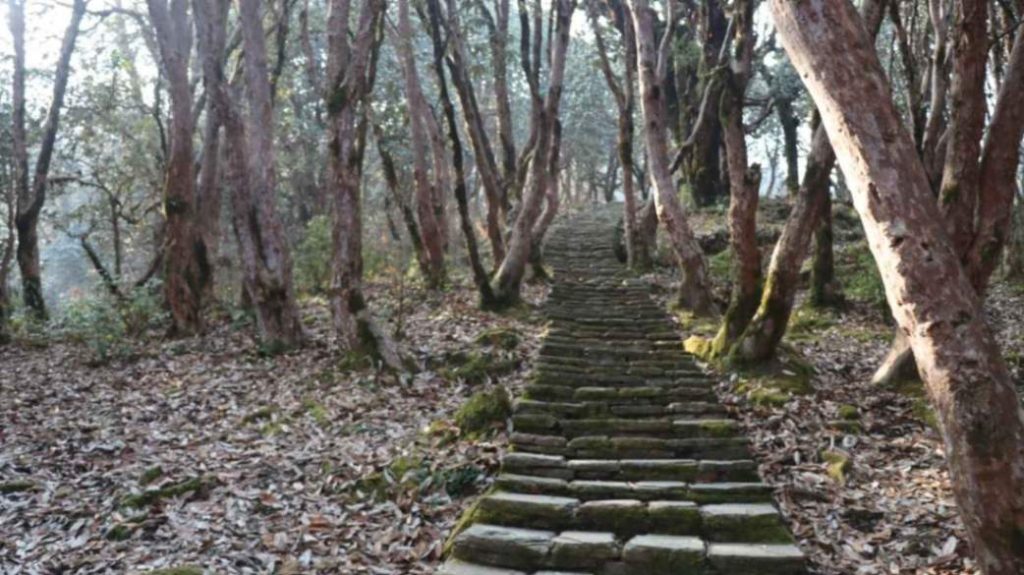
It also helps to understand the route before you start. ABC is not a flat walk through the mountains. There are stone steps, steep sections, long climbs and descents. The altitude becomes more relevant as you approach Machapuchare Base Camp and ABC.
Your preparation should also include the things you will actually use on the trail, including suitable footwear, warm layers, rain protection, sun protection and a personal medical kit.
Our Annapurna Base Camp Trek itinerary explains how the walking days and overnight stops are arranged.
Does the Season Affect Altitude Sickness?
Altitude sickness can occur during any season because the altitude remains the same even when the weather changes. The season mainly changes temperature, rainfall, snow, visibility and trail conditions.
The Annapurna Base Camp route lies on the southern side of the Annapurna range, where the monsoon brings substantial rainfall. During wet periods, rain can make the lower trail slippery and can affect walking conditions.
Winter brings colder temperatures, especially around Machapuchare Base Camp and ABC. Snow can also affect the higher section of the route.
Spring and autumn have different weather patterns, but trekkers can still develop altitude sickness during these seasons. Choosing a particular season does not remove altitude risk.
For weather and trail conditions by month, see our best time for Annapurna Base Camp Trek guide.
Is Annapurna Base Camp Safe for First-Time Trekkers?
First-time trekkers can reach Annapurna Base Camp, but beginners still need to prepare for long walking days, stone steps, elevation gain and changing mountain conditions.
You do not need previous Himalayan trekking experience to walk to ABC. Many people arrive in Nepal with little or no experience at this altitude.
What matters is understanding what the trek involves before starting. The route includes several hours of walking on many days, substantial stone steps and a gradual increase in elevation. Near ABC, the altitude is high enough that some people will notice changes in breathing, sleep, appetite or energy.
A first-time trekker who knows these signs is more likely to tell the guide early if something does not feel right.
If you are new to Himalayan trekking, our Annapurna Base Camp Trek for beginner’s guide explains what to expect before you start.
My Advice as a Trekking Guide
My advice is simple: do not hide altitude symptoms, and do not let the goal of reaching ABC stop you from telling your guide that something is wrong.
I first walked to Annapurna Base Camp in 1996 carrying loads as a porter, when we camped along the route. Since then, I have seen the trail change, more teahouses appear and the way people trek to ABC become much easier.
The accommodation and equipment have changed, but the altitude has not. Annapurna Base Camp is still around 4,130 meters, and your body still has to adjust to the lower oxygen at that height.
At around 4,130 meters, your body has to deal with less oxygen than it is used to. Some people adjust without much trouble. Others develop symptoms even when they are fit and have previous trekking experience.
That is why I pay attention to the person, not just the itinerary. If you feel well, keep walking. If you develop symptoms, tell your guide and stop gaining altitude until you know what is happening.
If symptoms become serious, going lower is more important than reaching the next village or Base Camp. Annapurna Base Camp is a trek, not a race. Reaching the highest point is only one part of the trek. You also need to be able to come back down safely.