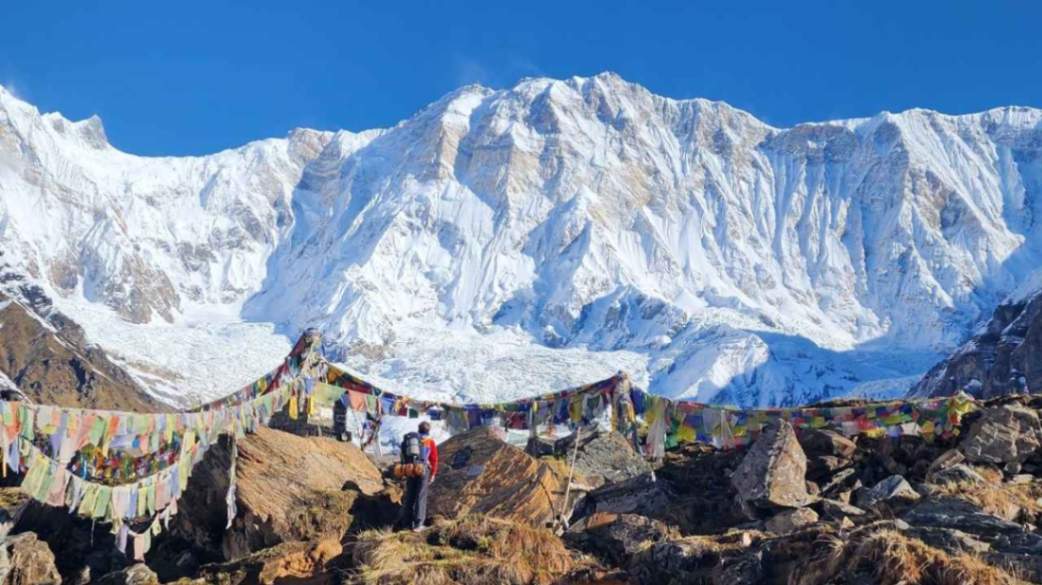
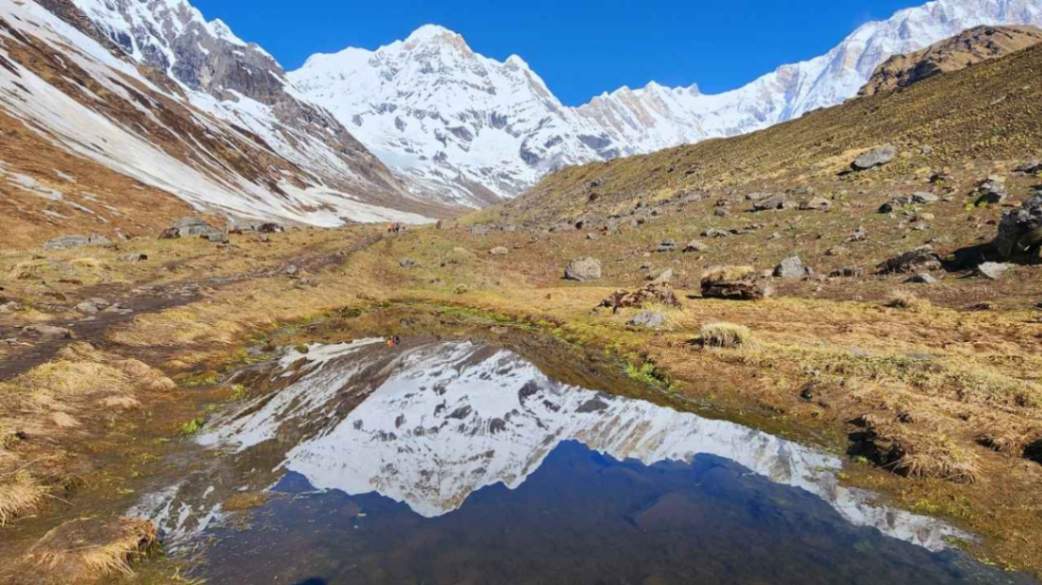
For most trekkers, October, November, March and April are the months I would look at first. These months usually give better walking conditions and a good chance of seeing the Annapurna range. September and May can also work, but the weather is less predictable. June to August is the monsoon period, while December to February brings much colder conditions at higher elevations.
The right month also depends on what you want from the trek. If mountain views are your priority, choose a different period than someone who wants spring flowers or a quieter trail.
When is the Best time
For the best chance of clear mountain views and dry trekking conditions, look at October and November.
For rhododendron flowers and spring scenery, March and April are the months to consider.
Late September and May can also be good, but conditions can change more quickly. June to August is wet, while December to February is cold and can bring snow at higher elevations.
My Experience on the Annapurna Trail
I first went to Annapurna Base Camp in 1996 as a porter. At that time, the trek was a camping trek. We carried the equipment and supplies for the group and set up camp along the route.
Things have changed a lot since then. More teahouses were built along the trail, and the route gradually changed from a camping trek into a complete teahouse trek. Today, trekkers can walk to ABC without carrying camping equipment or setting up tents along the way.
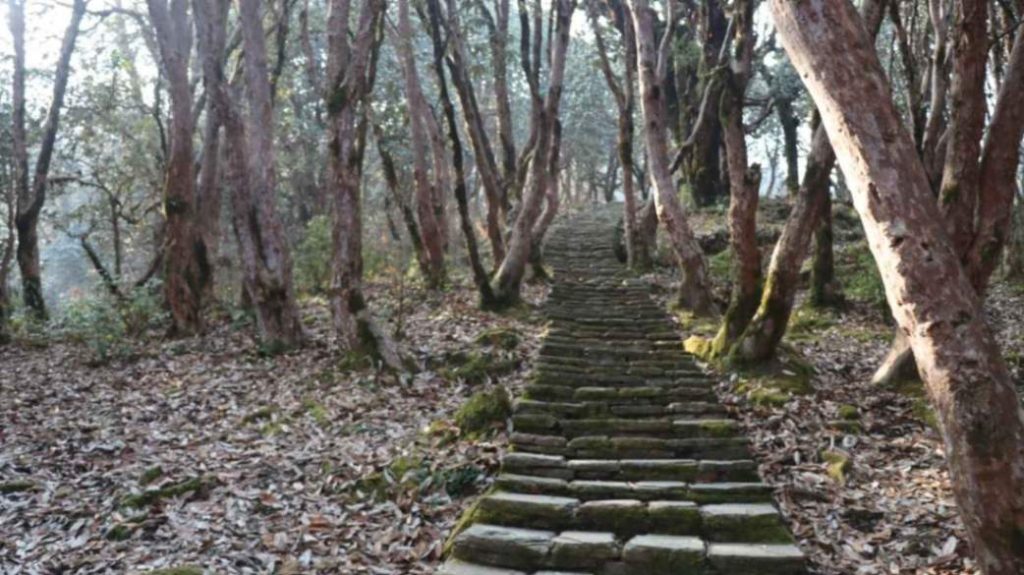
The trail is easier to organise now, but the weather has not changed. A clear morning can become cloudy later in the day, rain can make the stone steps slippery, and the temperature drops quickly as you climb toward Machapuchhare Base Camp and Annapurna Base Camp.
If you want to see how the trek is organised today, you can also look at our Annapurna Base Camp Trek itinerary, which covers the route day by day.
That is why I prefer to talk about the conditions you are likely to meet in each month rather than simply saying one month is “the best.”
Annapurna Base Camp Trek: Month at a Glance
| January |
Cold, snow possible |
Quiet winter trek |
| February |
Cold, improving |
Winter trekking |
| March |
Spring begins |
Flowers and clear days |
| April |
Warmer, flowers |
Rhododendrons |
| May |
Warm, clouds increase |
Late spring |
| June |
Wet, cloudy |
Green scenery |
| July |
Rainy, very green |
Quiet trails |
| August |
Wet, humid |
Green forests |
| September |
Conditions improve |
Late monsoon |
| October |
Dry, clearer |
Mountain views |
| November |
Cool, clear |
Stable autumn weather |
| December |
Cold, snow possible |
Quiet winter trek |
October and November: Autumn on the ABC Trail
October and November are the main autumn trekking months. After the monsoon, the weather normally becomes drier, the trails start drying out, and the mountains become easier to see.
There is a difference between the two months. October is generally a little warmer, while November is colder, particularly in the mornings and evenings. Both can give good mountain views, but November often feels more like winter is approaching.
October
October is a busy month on the Annapurna Base Camp trail. The lower hills are still green from the monsoon, but the amount of rain is much lower than during summer.
The mornings are often the best time for mountain views. As you climb higher, Machapuchare becomes more prominent, followed by the mountains around the Annapurna Sanctuary.
Because many trekkers choose October, teahouses can become busy. If you are travelling during the busiest part of the month, starting early is useful both for walking and for reaching the next village before accommodation fills up.
November
November is colder than October, especially after sunset and before sunrise. At higher elevations, you need proper warm layers, even when the afternoon sun makes walking comfortable.
The air is generally dry, and mountain views can be very good. The trail is no longer dealing with the heavy rainfall of the monsoon, and the forest sections are usually much easier to walk.
If you want dry conditions and clear mountain scenery and do not mind cold mornings, November is one of the months I would consider first.
March and April: Spring on the Annapurna Trail
Spring brings a different look to the trail. The lower and middle forest sections begin filling with rhododendron flowers, while the higher mountains can still have plenty of snow.
March is cooler, especially early in the month. April is warmer and usually has more flowers, but afternoon clouds can also become more common as spring progresses.
March
March marks the beginning of the main spring period. Early March can still feel like winter around the higher sections, while lower elevations start becoming warmer.
Rhododendrons begin flowering through parts of the forest, although the exact timing depends on elevation and the weather that year. As the month progresses, more flowers appear higher along the route.
Do not pack only for the lower trail. Nights around Machapuchare Base Camp and ABC remain cold, and snow can still be present depending on the winter.
April
April is one of the most popular spring months. Rhododendrons are more noticeable through many of the forest sections, and daytime temperatures at lower and middle elevations are easier for walking.
The higher part of the trek remains cold, particularly in the early morning. If mountain views are important to you, starting early is useful because clouds can build later in the day.
April also brings more trekkers to the route. The combination of spring flowers and generally manageable walking conditions makes it a busy period.
September and May: The Months Between Seasons
September and May are both useful months to consider, but for different reasons.
September is coming out of the monsoon. May is moving toward the monsoon. Neither month has exactly the same conditions throughout the entire month.
September
Early September can still be wet. Rain, clouds and muddy sections are possible, particularly on the lower trail.
The second half of September is usually more interesting for trekkers who want to travel before the main autumn season. Conditions can improve as the month goes on, although you should still be prepared for some rain.
The hills remain very green after the monsoon, and the waterfalls are still carrying plenty of water.
May
May is warmer than March and April. Lower elevations can feel hot during the day, and the chance of afternoon cloud and rain increases as the month progresses.
The beginning of May can still provide good trekking conditions. Later in the month, weather becomes less predictable as the monsoon approaches.
If you trek in May, an early start is useful. You will usually get the cooler part of the day for the longer uphill sections and a better chance of seeing the mountains before clouds develop.
Annapurna Base Camp Trek During Monsoon
You can trek to Annapurna Base Camp during the monsoon, but you need to know what you are signing up for.
The ABC route is on the wetter southern side of the Annapurna range. From June to August, rain can affect the trail regularly, particularly at lower and middle elevations.
The biggest difference is not just getting wet. Rain can leave the stone steps slippery, turn sections of trail muddy, increase the flow of streams and waterfalls, and bring leeches into some forest areas.
Mountain views are also less reliable. You can spend several hours walking through green forest without seeing the higher peaks because clouds are sitting around the mountains.
For a more detailed see our Annapurna Base Camp Trek in monsoon video guide.
June
June marks the beginning of the main monsoon period. Rain becomes more frequent and humidity increases.
The vegetation becomes very green, and waterfalls are much stronger than during the dry months. The trail can be wet, particularly after periods of continuous rain.
Mountain visibility can change quickly. You may have a clear view in the morning and clouds around the peaks later in the day.
July
July is usually very wet. The stone steps can remain slippery, and muddy sections are common.
There are fewer trekkers compared with October or April, but you should not choose July simply because the trail is quieter. You need to be comfortable walking in rain and accepting that you may not see the mountains every day.
Good footwear, rain protection and waterproof protection for your backpack become very important.
August
August remains within the monsoon. The hills are still very green, streams and waterfalls are strong, and rain can arrive at any time.
Clouds can cover Machapuchare and the Annapurna peaks for long periods. When the weather clears, the views can appear suddenly, but you should not plan the trek expecting clear skies every morning.
For trekkers who enjoy green landscapes and do not mind wet conditions, August has its own appeal. For reliable mountain views, I would choose another month.
December to February: Winter on the ABC Trail
Winter brings cold rather than heavy rain. The lower trail can be dry, but temperatures drop quickly as you gain elevation.
Snow is possible around the higher sections, particularly near Machapuchare Base Camp and Annapurna Base Camp. The amount of snow is different each year, so it is important to check the current conditions before starting the higher part of the trek.
The trail is quieter in winter. That can be a good reason to choose this period, but fewer trekkers do not mean easier conditions. For a more detailed see our Annapurna Base Camp Trek in winter video guide.
December
December is the start of the colder winter period. Days can still be pleasant when the sun is out, but mornings and evenings are cold.
Snow is possible at higher elevations. A warm jacket, gloves, hat and suitable sleeping bag are important.
January
January is normally the coldest part of the year. Freezing temperatures are common at higher elevations, and snow can affect the trail.
The lower sections may be comfortable during the daytime, but conditions change as you climb. You need to be prepared for cold nights rather than relying on the temperature in Pokhara.
If there has been heavy snowfall, check the condition of the upper trail before going higher.
February
February remains cold at altitude, but the lower elevations begin moving toward spring later in the month.
Snow can still be present around the higher sections. The forest begins to change gradually, but it is too early to expect the full spring conditions of April.
February can work for trekkers who prefer a quieter trail and are comfortable with winter temperatures.
Annapurna Base Camp Weather Changes with Elevation
One thing I always tell trekkers is not to judge the ABC weather from Pokhara.
Pokhara is around 800 metres above sea level, while Annapurna Base Camp altitude is about 4,130 metres. Between them, the trail climbs through villages, farmland, forest and much higher mountain terrain.
The lower sections can feel warm while the higher sections are cold. By the time you reach Machapuchare Base Camp at around 3,700 metres, you are already in a high mountain environment.
This difference is especially important when packing. A warm afternoon in Pokhara does not tell you what the temperature will be at ABC after sunset.
It also explains why weather can feel different from one part of the trek to another. You are not walking through one climate for the entire journey.
Which Month Should You Choose?
The easiest way to decide is to start with what matters most to you.
| Your priority |
Months to look at |
Main trade-off |
| Clear mountain views |
October–November |
More trekkers |
| Rhododendrons |
March–April |
Busy trail |
| Quieter trail |
December–February |
Cold and possible snow |
| Green forests |
June–August |
Rain and clouds |
| Before/after monsoon |
Late September, May |
Less predictable weather |
If you are travelling for the first time and want the weather to be easier to manage, I would look at the main autumn or spring months.
If your dates are fixed outside those periods, that does not mean the trek cannot be done. It simply means your clothing, footwear, schedule and expectations need to match the season.
What Should You Pack for Different Seasons?
You do not need completely different trekking equipment for every month, but a few things become much more important depending on when you go.
For a complete packing checklist, see what to pack for Annapurna Base Camp Trek before you start preparing your bag.
October, November, March and April
Use layers so you can adjust as the temperature changes during the day.
Carry:
- Warm fleece or mid-layer
- Insulated or down jacket
- Waterproof jacket
- Warm hat and gloves
- Comfortable trekking trousers
- Good trekking shoes
- Sunglasses and sunscreen
- Warm sleeping bag
June to August
Rain protection becomes a priority.
Carry:
- Waterproof jacket
- Rain trousers
- Backpack rain cover
- Waterproof bags for electronics and clothing
- Shoes with good grip
- Extra socks
- Quick-drying clothes
Wet stone steps are one of the things to take seriously during the monsoon. Good grip on your shoes is more useful than carrying too many unnecessary items.
December to February
Cold-weather clothing becomes more important.
Carry:
- Warm down or insulated jacket
- Thermal base layers
- Fleece
- Warm gloves
- Warm hat
- Thick trekking socks
- Suitable sleeping bag
- Trekking shoes with good grip
If snow is expected around the higher sections, check the current trail conditions before you leave.
Is Annapurna Base Camp Good for a First Trek?
Yes. You do not need previous Himalayan trekking experience to go to Annapurna Base Camp.
But the trail is not flat. There are many stone steps, uphill sections and downhill sections, and the effort increases as you gain altitude.
If this is your first Himalayan trek, our guide to Annapurna Base Camp Trek for beginners covers the walking, altitude and preparation in more detail.
A first-time trekker should give enough time for the body to adjust. Walking slowly, drinking enough water, eating properly and not trying to rush the itinerary are more useful than trying to walk fast.
The altitude also matters. ABC is at about 4,130 metres, so even someone who is physically fit can feel the difference as the trail gets higher.
How the ABC Trail Looks in Different Seasons
The same trail can look completely different depending on the month.
In autumn, the stone steps are generally drier and the mountains are easier to see. In spring, the forests add another layer to the trek with rhododendron flowers appearing along the route.
During the monsoon, the trail becomes wet and the vegetation becomes much thicker. Waterfalls carry more water, streams become stronger and clouds often sit around Machapuchare and the higher Annapurna peaks.
In winter, the main change is the cold. Snow can cover parts of the higher trail, and the mornings around ABC can be freezing.
The route does not become a different trek, but the conditions under your feet and the mountains above you can change considerably.
What About Accommodation on the ABC Trek?
The Annapurna Base Camp route is now a teahouse trek, so you do not need to organise a camping setup for a normal itinerary.
That was not the case when I first went there in 1996. At that time, I was working as a porter on a camping trek, carrying the equipment needed for the group.
As more teahouses were built, the way people travelled the route changed. Today, trekkers can walk from village to village, eat hot meals and sleep in teahouses along the route instead of carrying tents, cooking equipment and camping supplies.
The facilities are basic in the higher sections, and conditions are not the same as staying in a hotel in Pokhara. But for a mountain trek, having a warm meal and a bed at the end of the walking day makes a big difference.
My Advice Before You Choose Your Dates
Do not choose your ABC dates only because someone tells you that one month is the “best.”
First decide what you want to see. If clear mountain views are the main reason for your trek, October and November are the first months I would check. If you want rhododendrons, March and April are better suited to that. If you prefer fewer people and can handle cold, winter is an option. If you want the greenest forests and do not mind rain, the monsoon gives you a completely different trail.
Also remember that no two years are exactly the same. Weather can arrive early or late, and conditions at higher elevations can change during a single week. If your schedule gives you some flexibility, use it. A few extra days can also help if weather or trail conditions affect the journey.
My Advice as a Guide
If you ask me for one simple answer, I would say October, November, March and April are the months to look at first.
But I would not choose between them without thinking about what you want from the trek. Autumn is mainly about clearer and drier conditions, while spring brings flowers and a different look to the forests.
I started on the Annapurna Base Camp route in 1996 as a porter, when we were still carrying camping equipment and setting up camps. Today, the teahouses have changed the way trekkers travel on this route, but the basic rule has not changed.
You still need to respect the altitude, the weather and the mountain. Choose your dates based on the conditions you are ready for, not only the month that someone calls “best.”