Festivals in Nepal do not follow one fixed calendar of celebrations. Some follow the lunar calendar, while others mark the farming season, honor a deity, remember the dead, welcome a new year, or bring a particular community together through its own customs. In the Kathmandu Valley, an old city square can fill with a chariot procession, while in the Terai families gather beside rivers to prepare offerings for the sun.
The dates of many festivals in Nepal change each year because religious celebrations are often calculated according to lunar cycles rather than the Gregorian calendar. Nepal also uses the Bikram Sambat calendar for official purposes, so checking the festival dates for the particular year is important when planning a trip around a celebration. The sections below cover the major festivals in Nepal and the customs, places, and traditions that shape the festival calendar.
Dashain
Dashain occupies roughly two weeks and reaches its main family gatherings during the final days. The festival honors Durga in her various forms, while households also mark the occasion through worship, food, visits to elders and the exchange of blessings. For many Nepali families, the practical side of Dashain is just as noticeable as the religious ceremonies: people travel home, buy new clothes, prepare food and make time for relatives they may not see regularly.
The opening day, Ghatasthapana, begins the ritual sequence. Families prepare a worship space and sow jamara, usually barley, whose shoots are later used during tika. As the days progress, Phulpati, Maha Ashtami and Maha Navami bring their own ceremonies, with the final day, Vijaya Dashami, becoming the principal day for receiving tika and jamara from elders.
Dashain changes the rhythm of Kathmandu. Government offices, shops and businesses operate differently around the holiday, roads become crowded with people travelling out of the Valley, and many urban neighborhoods become quieter as families leave for their home districts. Large bamboo swings also appear in many places, continuing an old seasonal custom alongside the household rituals.
For visitors, the most revealing part of Dashain is often the family ceremony rather than a public procession. A tika ceremony may involve red vermilion mixed with yogurt and rice, jamara placed behind the ears or in the hair, and blessings given by older relatives. The details vary between households and communities, so there is no single Dashain ceremony followed by everyone.
Tihar
Tihar follows Dashain and lasts five days, with each day assigned to a different form of worship. Crows are honored first, followed by dogs, while the third day centers on cows and Laxmi Puja. The fourth day has different practices among communities, including Mha Puja among Newars, and Bhai Tika closes the five-day sequence with sisters honoring their brothers.
The third evening is the one most visitors notice. Families clean their homes, arrange oil lamps or electric lights and create designs near entrances, while Laxmi, associated with wealth and prosperity, is worshipped inside the house. Some households draw small footprints leading from the doorway toward the puja room, representing the goddess entering the home.
Kukur Tihar has a very different character. Dogs receive flower garlands, tika and food, turning an ordinary animal into the central figure of the day’s household ritual. The following days shift again, from worship of animals and wealth toward the family ceremony of Bhai Tika.
Bhai Tika brings brothers and sisters together for a formal exchange of tika, food and gifts. The ceremony varies by family and community, but the five-colored tika used in many households has become one of the recognizable details of the day.
Holi
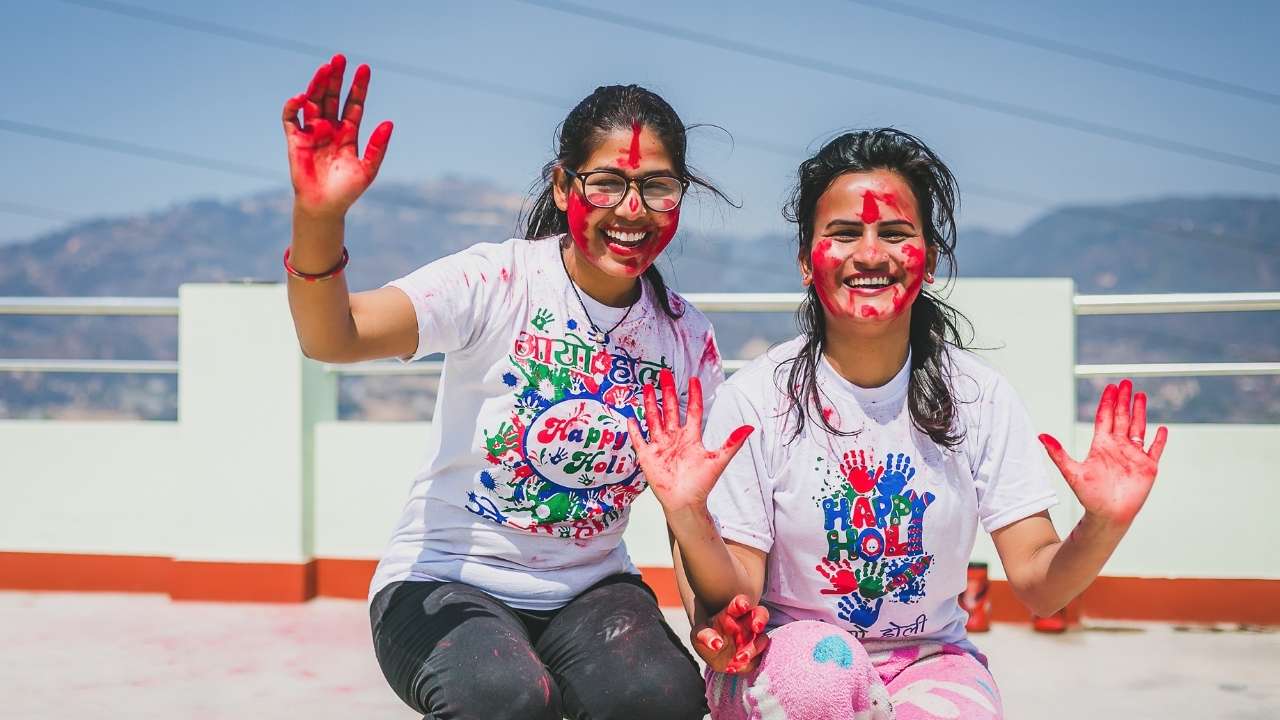
Holi arrives with the full moon of Falgun and is particularly associated with color, water and public gatherings. In Nepal, the way it looks changes from one region to another, with large street gatherings in cities and a particularly strong presence across the southern Terai.
The throwing of colored powder is only part of the occasion. Groups of friends move through neighborhoods, music and water become part of the day, and families often mark the occasion at home before or after joining public gatherings. The date differs according to the lunar calendar, so the Kathmandu celebration and the Terai celebration may fall on different days.
Holi can become physically messy very quickly, especially in crowded public areas. Anyone joining the street celebrations should expect colored powder and water on clothing, protect phones and cameras, and avoid assuming that every passerby wants to participate.
Maha Shivaratri
Maha Shivaratri is dedicated to Shiva and brings large numbers of pilgrims to Pashupatinath in Kathmandu. The temple complex becomes a meeting point for Hindu pilgrims, sadhus and visitors, with worship continuing through the day and night.
Fasting, prayer and visits to Shiva temples form part of the observance. At Pashupatinath, the scale is much larger than an ordinary temple day, and some ascetics establish themselves around the complex during the period.
The main temple of Pashupatinath is open only to Hindus. Visitors of other faiths can observe activity from designated areas outside the inner temple, but should follow the site’s rules on photography, clothing and access.
Buddha Jayanti
Buddha Jayanti marks the birth, enlightenment and passing away of Siddhartha Gautama, the Buddha. The date falls on the full moon of the lunar month associated with April or May, and Buddhist communities across Nepal mark the occasion through prayer, lamps, offerings and visits to monasteries and sacred sites.
Lumbini becomes the natural focus because it is regarded as the Buddha’s birthplace. Monks, pilgrims and visitors move between monasteries and the sacred garden, while prayer flags, butter lamps and religious ceremonies continue around the site.
Kathmandu also has important Buddhist observances during the period, particularly around Boudhanath and other monasteries. The scale and form of the rituals differ between Buddhist communities, so Buddha Jayanti should not be understood as one standardized ceremony.
For a broader understanding of Nepal’s religious landscape, the festival also connects with the country’s long history of Hindu and Buddhist practices existing alongside one another. The subject fits naturally with a wider guide to religion and spirituality in Nepal.
Haritalika Teej
Teej is observed primarily by Hindu women and is especially visible in Kathmandu during the gatherings around Pashupatinath. Women commonly wear red clothing, jewelry and bangles, visit temples, sing Teej songs and take part in fasting practices associated with Shiva and Parvati.
The observance extends over three days, with different rituals attached to each stage. Married women may return to their maternal homes before the main day, where food and family gatherings form part of the occasion.
The songs deserve attention because they are not simply background entertainment. Teej songs can deal with marriage, relationships, household life and personal experiences, allowing women to express subjects that may not appear in ordinary social settings.
On the final day, women perform purification and offering rituals associated with the seven sages. The exact practice varies by community, but bathing, worship and offerings remain central elements.
Indra Jatra
Indra Jatra belongs to the old Newar cities of the Kathmandu Valley and is centered on Kathmandu’s historic core. The festival begins with the raising of a ceremonial wooden pole at Hanuman Dhoka, after which several days of processions, masked dances, chariot movement and ritual performances follow.
The Kumari’s chariot is one of the best-known parts of the festival. Chariots carrying Ganesh and Bhairav also move through prescribed streets, while masked Lakhay dancers and musicians appear around the old city.
Indra Jatra also contains ceremonies connected with Indra, the deity associated with rain and the harvest season. At night, oil lamps illuminate the streets around the old palace area, and crowds gather around the procession routes.
The festival is easier to understand if the streets themselves are treated as part of the ritual setting. The courtyards, temples, old palace squares and narrow lanes are not simply scenery; the processions move through spaces that have served these communities for generations.
Gai Jatra
Gai Jatra is held in the Kathmandu Valley to commemorate people who have died during the previous year. Families traditionally lead or accompany a cow, or a child dressed as a cow, through the streets as part of the ritual.
The festival also has a deliberately comic side. Performances, satire, costumes and public humor became associated with the occasion, creating a setting in which grief could be expressed alongside laughter.
Bhaktapur’s version extends beyond a single procession day and includes its own local customs. The festival is often linked to the story of a Malla-period queen who could not be consoled after the death of her son, leading the king to ask families to demonstrate that death had touched every household.
The result is unusual among Nepal’s major festivals because mourning and public comedy occupy the same space. The custom gives families a recognized way to remember the dead while allowing the wider community to participate.
Janai Purnima
Janai Purnima falls on the full moon of Shrawan and is marked by Hindus across Nepal. Men who wear the sacred thread, janai, traditionally replace it after ritual bathing, while priests tie protective threads around the wrists of worshippers.
The day also has different customs among Newar communities, where it is known as Gunhi Punhi. Kwati, a soup made from a mixture of sprouted beans and pulses, is traditionally prepared for the occasion and has become one of the foods most closely associated with the day.
Water pilgrimage forms another part of the observance. Gosaikunda attracts pilgrims who make the difficult journey to the high-altitude lake, while other groups visit Shiva temples and bathing sites closer to home.
In the Kathmandu Valley, Kumbheshwar in Patan has its own rituals connected with the day. The festival therefore moves from household food and sacred-thread ceremonies to mountain pilgrimage without losing its connection to the full moon of Shrawan.
Krishna Janmashtami
Krishna Janmashtami marks the birth of Krishna and is observed at temples and homes across Nepal. Worshippers gather for prayers and devotional singing, with the main ceremonies traditionally extending toward midnight, the time associated with Krishna’s birth.
Krishna temples receive large numbers of visitors, and Patan’s Krishna Mandir becomes one of the most visible locations in the Valley. Devotees bring offerings, light lamps and remain through the evening ceremonies.
The festival is particularly noticeable for its devotional atmosphere rather than a large street procession. Families and temple groups may sing bhajans and recite stories connected with Krishna’s life, giving the evening a different rhythm from the processional festivals of Kathmandu.
Nag Panchami
Nag Panchami is dedicated to serpent deities and falls during the monsoon season. Families place images of snakes near entrances or worship them at temples, with offerings made according to local custom.
The timing is closely connected with the agricultural calendar and the rainy season. Serpents occupy an established place in Hindu mythology, while the day also reflects older relationships between people, water, fields and the creatures associated with them.
Kathmandu Valley households may display printed or hand-prepared images of Nag at the doorway. The small household ritual contrasts with the large public gatherings found during festivals such as Indra Jatra or Dashain.
Chhath
Chhath has its strongest presence in the Terai, with Janakpur serving as one of Nepal’s best-known centers. The observance extends over several days and culminates at water bodies where devotees make offerings to the setting and rising sun.
Preparation begins before the main riverbank ceremonies. Homes and utensils are cleaned carefully, special foods are prepared, and fruits, sweets and other offerings are arranged for the journey to the water.
At sunset, devotees stand in the water while making offerings to the sun. Before sunrise the following morning, the same basic act is repeated, creating the central sequence of the festival.
Janakpur’s ponds and riverbanks become important public spaces during Chhath. The festival is therefore best understood from the water’s edge, where the food, baskets, lamps, songs and early-morning rituals come together.
Maghe Sankranti
Maghe Sankranti falls on the first day of Magh, around the middle of January. It marks the seasonal movement toward longer and warmer days and is accompanied by particular foods and bathing rituals.
Sesame sweets, chaku, ghee, sweet potatoes and yam are common foods associated with the day. In different parts of Nepal, people also visit rivers for ritual bathing, including the Bagmati, Gandaki and Koshi.
Among Tharu communities, the period is associated with Maghi and carries a much broader social meaning. Family gatherings, food, music and community decisions have traditionally formed part of the season.
Lhosar
Lhosar refers to New Year observances among several Himalayan and mountain communities, but the different Lhosar festivals should not be treated as one event. Tamu Lhosar is associated particularly with Gurung communities, Sonam Lhosar with Tamang communities, and Gyalpo Lhosar with Tibetan Buddhist communities.
Tamu Lhosar falls around December and marks the change of year according to the community’s calendar. Families prepare food, wear traditional clothing, visit relatives and gather for dances and music, while monasteries and community spaces hold their own programs.
The Gurung celebrations can include Ghatu and Sorathi dances, while food such as sel roti and khapse may appear during gatherings. The twelve-animal cycle used in the calendar also gives each year its own name.
Sonam and Gyalpo Lhosar have their own dates and practices. Buddhist monasteries may hold prayers and ceremonies, and households prepare special foods before visiting relatives and exchanging greetings.
Sakela Ubhauli and Udhauli
Sakela is associated with the Kirat communities of eastern Nepal and follows the agricultural cycle. Ubhauli takes place as the warmer agricultural season begins, while Udhauli comes later in the year as people move toward the colder season.
The Sakela dance is performed in groups, with participants forming lines or circles and using movements connected with farming, animals, nature and daily work. The movements are not merely decorative steps; they carry references to the community’s relationship with land and seasonal activity.
Eastern Nepal, particularly areas around Bhojpur and Khotang, provides important settings for these observances. The wider Kirat region is also connected with Mundum, an oral tradition containing stories, knowledge and ritual practices passed between generations.
Rato Machhindranath Jatra
Rato Machhindranath Jatra is one of Patan’s major annual processions. A large wooden chariot is constructed and then pulled through designated parts of Lalitpur over a period of weeks.
The chariot’s movement is connected with Machhindranath, a deity associated with rain and agricultural prosperity. The long procession involves local neighborhoods, priests, musicians and groups responsible for managing the enormous structure.
The festival’s physical scale is difficult to separate from its history. Moving the chariot through Patan requires coordination between communities, and the route connects temples, courtyards and old settlements across the city.
A related procession, Seto Machhindranath Jatra, takes place in Kathmandu. Although the two festivals share the name Machhindranath, their routes, local traditions and ritual settings are different.
Bisket Jatra
Bisket Jatra takes over Bhaktapur around the Nepali New Year in April. The central event involves the enormous chariot of Bhairab, which is pulled through the historic city during a series of processions.
Another major ritual takes place at the edge of the city, where a tall ceremonial pole is erected and later brought down. Crowds gather around the rope-pulling, sometimes turning the movement of the chariot itself into the day’s main contest.
Bhaktapur’s brick lanes and palace squares give the procession a very different setting from the broad streets used for some modern public events. The festival remains closely tied to the old urban structure of the city.
Ghode Jatra
Ghode Jatra is held in Kathmandu during the spring season and is traditionally associated with horse displays and military riding skills. The main public event takes place around Tundikhel, where mounted riders perform before spectators.
The festival also has older legends connected with the defeat or suppression of a demon said to have troubled the Valley. The modern public program, however, is centered on horse riding, formations and demonstrations.
Kathmandu’s Tundikhel becomes particularly noticeable during the event because the open ground allows large-scale mounted performances. It is one of the Valley’s festivals where military display forms the central public spectacle.
Vivah Panchami
Vivah Panchami takes place in Janakpur and commemorates the marriage of Sita and Rama. The city is closely associated with Sita through the Ramayana tradition, and the festival brings pilgrims to the Janaki Temple and surrounding areas.
The ceremonies recreate elements of a wedding, with processions, religious performances and rituals involving the symbolic bride and groom. Devotees arrive from Nepal and India, making the occasion much larger than an ordinary temple observance.
The festival follows a sequence of ceremonies rather than one isolated event. Visitors who stay for several days can see the rituals move through different stages before the main marriage ceremony.
Yomari Punhi
Yomari Punhi is a Newar festival associated with the rice harvest and falls during the full moon of December. Its most recognizable feature is the yomari, a steamed rice-flour dumpling shaped like a fish and filled with ingredients such as chaku, sesame or khuwa.
The food gives the festival its name and its identity. Families prepare yomari at home, and the preparation itself becomes part of the occasion rather than simply a dish served alongside a meal.
The festival also connects household worship with the harvest. Annapurna and deities associated with food and prosperity are worshipped, reflecting the importance of newly harvested rice in Newar life.
Ram Navami
Ram Navami marks the birth of Rama and is observed at temples and by Hindu households. Devotees may fast, recite passages from the Ramayana and visit temples dedicated to Rama and Sita.
Janakpur has a particularly strong connection with the festival because of its association with Sita. The city therefore sees Ram-related observances within a much larger religious landscape that also includes Vivah Panchami.
Matina Paru
Matina Paru is a Newar observance associated with love and relationships and is sometimes described as a Newar expression of Valentine’s Day. It is particularly connected with the Kathmandu Valley’s Newar communities.
The name comes from Nepal Bhasa, and the observance has developed into a modern occasion for young people as well as a cultural event linked to older Newar customs. Its place in the calendar shows that Kathmandu’s festival year is not limited to large religious processions.
Mani Rimdu Festival
Mani Rimdu is held at Tengboche Monastery in the Everest region, usually in October or November. The monks spend several days with prayers and ritual preparations before the main cham dances take place in the monastery courtyard.
The masked dances are performed in elaborate robes to tell Buddhist stories and drive away forces considered harmful. People from the surrounding Sherpa villages come to Tengboche for the ceremonies, while trekkers on the Everest Base Camp Trek may arrive when the monastery is already busy with the festival.
Tiji Festival
Tiji is held for three days in Lo Manthang, usually in May. Monks from Choede Monastery perform masked dances in the palace square, telling the story of a deity who defeats a force threatening the Mustang kingdom.
The dancers wear large masks and heavy costumes while monks play drums, cymbals and long horns. Residents gather around the square to watch the rituals, which take place among Lo Manthang’s old palace, monasteries and mud-brick houses.
Gyalpo Lhosar in the Langtang Valley
Gyalpo Lhosar marks the Tibetan New Year in the Buddhist communities of the Langtang region. Before the new year begins, families clean their homes, prepare food, visit monasteries and take part in prayers.
In Langtang, the days around Lhosar bring families together in the villages along the valley. People put on new or traditional clothes, prepare festive meals, exchange greetings and spend time at the monastery for prayers and other ceremonies.
For trekkers on the Langtang Valley Trek, the timing depends on the lunar calendar. If the trek falls during Gyalpo Lhosar, the villages may be preparing for the new year while monastery courtyards become places for prayers, gatherings and local celebrations.
Eid in Nepal
Nepal’s Muslim communities observe Eid al-Fitr at the end of Ramadan and Eid al-Adha according to the Islamic lunar calendar. Families attend prayers, prepare food, visit relatives and exchange greetings, with mosques and Muslim neighborhoods becoming the focus of the day.
The form of the observance varies according to community and family. In cities such as Kathmandu and Nepalgunj, visitors may encounter larger public gatherings around mosques, while household meals and family visits remain central.
Christmas
Christmas is observed by Christian communities throughout Nepal, with churches holding services, prayers and gatherings around December 25. Kathmandu, Pokhara and other urban centers may also have public decorations and community events during the season.
The scale differs considerably between churches. For Christian families, the day centers on worship and family gatherings rather than the commercial Christmas imagery commonly associated with the holiday elsewhere.
Other Festivals in Nepal
Nepal’s calendar extends well beyond the festivals described above. Festivals such as Kushe Aunsi, Teej, Fagu Purnima, Janai Purnima, Mha Puja, Udhauli, Ubhauli, Gaura Parva, Tamu Lhosar, Sonam Lhosar, Gyalpo Lhosar, and numerous local jatras occupy particular places in regional and community calendars.
Some are confined mainly to particular ethnic groups or geographical areas, while others have spread across the country. This is why a single list of “Nepal’s festivals” can easily hide the differences between Kathmandu’s Newar jatras, Terai observances, Himalayan Buddhist festivals and the agricultural celebrations of eastern Nepal.
Festivals by Season
Spring
Spring brings Holi, Ghode Jatra, several Kathmandu Valley jatras and the approach of the Nepali New Year. April also brings major events such as Bisket Jatra and, depending on the lunar calendar, Buddha Jayanti.
Summer and Monsoon
The monsoon months contain festivals closely connected with water, agriculture and religious observance. Nag Panchami, Janai Purnima, Krishna Janmashtami, Teej and Gai Jatra fall within this broad period, although their Gregorian dates change each year.
Autumn
Autumn contains the densest concentration of major festivals. Dashain and Tihar dominate the national calendar, while Indra Jatra, Chhath and several regional observances create a second layer of celebrations across the Valley and Terai.
Winter
Winter brings Maghe Sankranti, Yomari Punhi, Tamu Lhosar and several other community festivals. The colder months also provide the setting for New Year observances among different Himalayan and hill communities.
Where to Experience Nepal’s Festivals
Kathmandu is the obvious starting point for travelers interested in large public festivals, but the city should not be treated as a substitute for the rest of Nepal. Indra Jatra, Gai Jatra, Ghode Jatra and several other events take place in the Valley, with nearby Patan and Bhaktapur following their own calendars.
Patan is particularly important for Newar festivals, including Rato Machhindranath Jatra and several ceremonies centered on its courtyards and temples. Bhaktapur has a separate festival calendar, with Bisket Jatra being its most prominent public event.
Janakpur is the place to look toward for festivals connected with Sita, Rama and the traditions of the Mithila region. Chhath and Vivah Panchami are particularly closely associated with the city, while the Janaki Temple provides the main religious setting for several observances.
Lumbini is central to Buddha Jayanti because of its connection with the Buddha’s birthplace. Pokhara, meanwhile, has a large population drawn from different communities, so visitors can encounter Gurung, Tibetan Buddhist, Hindu and other celebrations at different times of the year.
Eastern Nepal is particularly useful for understanding Kirat festivals such as Sakela. Rather than looking only at large tourist centers, following these festivals into Bhojpur, Khotang and surrounding districts reveals the agricultural and oral traditions behind the public dances.
How to Attend a Festival in Nepal
A festival is not automatically a public performance for visitors. Many rituals take place inside homes, temples or community courtyards, and photography may be restricted even when hundreds of people are watching from the street.
Dress conservatively around temples and religious ceremonies, remove shoes where required and ask before photographing people or entering a ritual space. During chariot festivals, follow instructions from organizers and police because ropes, wheels and moving structures can create genuine hazards.
Food is another part of festival etiquette. If someone offers you prasad, accept it respectfully unless you have a dietary reason not to, and avoid touching offerings or ritual objects without permission.
The best preparation is to learn the basic sequence before arriving. Knowing whether you are watching a chariot being pulled, a household puja, a water offering, a funeral remembrance or a New Year ceremony change what you notice once the event begins.
Nepal’s Festival Calendar
The most useful way to plan around Nepal’s festivals is to start with the festival itself and then check its date for the year of travel. Lunar calculations mean that the Gregorian date can move, while some festivals also have different dates or forms among particular communities.
A trip built around Dashain will look very different from one built around Indra Jatra or Chhath. The first takes you into family homes and travel routes across the country, the second into the old streets and courtyards of Kathmandu, and the third toward rivers and ponds where the main rituals happen at sunset and sunrise.
For travelers interested in Nepal culture, the festival calendar provides a practical way to understand how religion, food, agriculture, family life, architecture and local history overlap. It also explains why two towns only a few hours apart can have completely different public calendars.
Nepal’s festivals are best understood one at a time. Dashain is not Tihar, Kathmandu’s jatras do not follow the same pattern as Terai festivals, and Lhosar cannot be reduced to a single New Year ceremony. Once those differences are kept intact, the calendar stops looking like a list of holidays and starts revealing how different parts of Nepal organize time, worship, food, memory and community life.