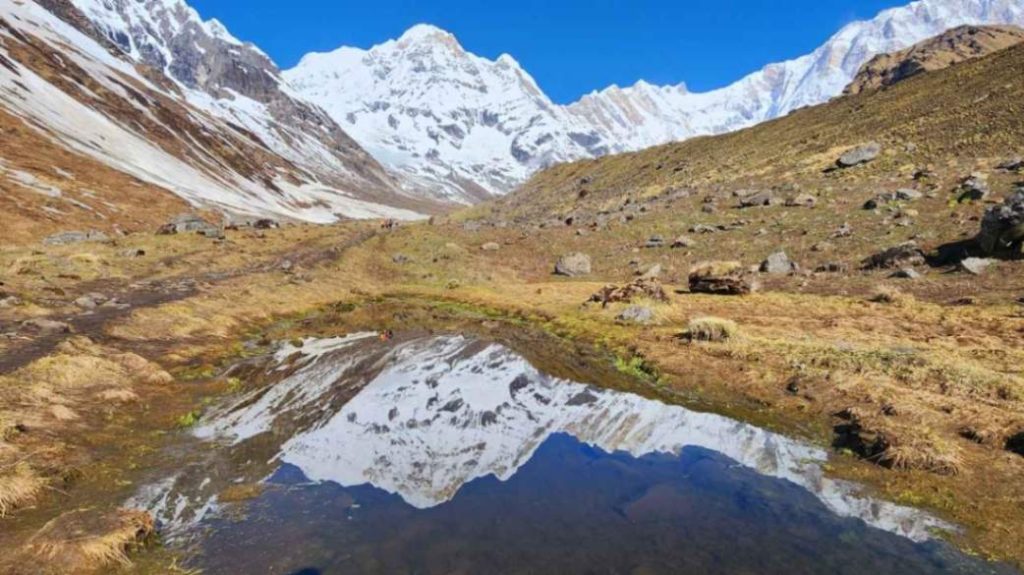
You do not need mountaineering experience or climbing equipment for the standard route. If you can walk comfortably for several hours and manage long stair sections, you can prepare for this trek. The key is not to rush the lower sections. Save your energy, walk at a pace you can maintain, and let your body adjust as the trail gets higher. If you are looking at the practical arrangements for the journey, our Annapurna Base Camp Trek package covers the route, services and trip arrangements from start to finish.
The character of the walk changes as you move toward Machapuchare Base Camp and into the Annapurna Sanctuary. The air becomes thinner, the temperature drops and the trail feels different under your feet. A staircase that seemed ordinary at lower altitude can feel much longer higher up. The Annapurna Base Camp Trek Itinerary gives a useful day-by-day picture of these changes, including the walking distance and altitude gain along the route.
That is why, when I explain the difficulty of ABC, I prefer to take trekkers through the route section by section and tell them where the walking becomes harder and why.
Annapurna Base Camp Trek Difficulty at a Glance
The Annapurna Base Camp Trek is a moderate trek in Nepal. The physical challenge comes mainly from walking for several hours each day, climbing and descending long sections of stone steps, and gaining altitude rather than from technical climbing.
| Factor |
What to expect |
| Overall difficulty |
Moderate |
| Technical climbing |
Not required |
| Annapurna Base Camp altitude |
4,130 m |
| Machapuchare Base Camp |
Around 3,700 m |
| Main terrain |
Stone steps, dirt, rocks and uneven trail |
| Uphill sections |
Frequent |
| Downhill sections |
Significant |
| Daily walking |
Several hours, depending on itinerary |
| Main altitude concern |
Upper Sanctuary section |
| Winter conditions |
Snow possible at higher elevations |
| Monsoon conditions |
Wet, muddy and slippery sections |
| Useful preparation |
Walking, stairs, hills and endurance |
The trail becomes harder as you climb because several things happen at the same time. Your legs have already been working for days, the terrain becomes higher and colder, and the air becomes thinner. A steady pace is therefore more useful than trying to finish each section quickly.
For a wider look at how the trail changes through the year, see our Best Time for Annapurna Base Camp Trek guide.
Stone Steps Make the Trek Physically Demanding
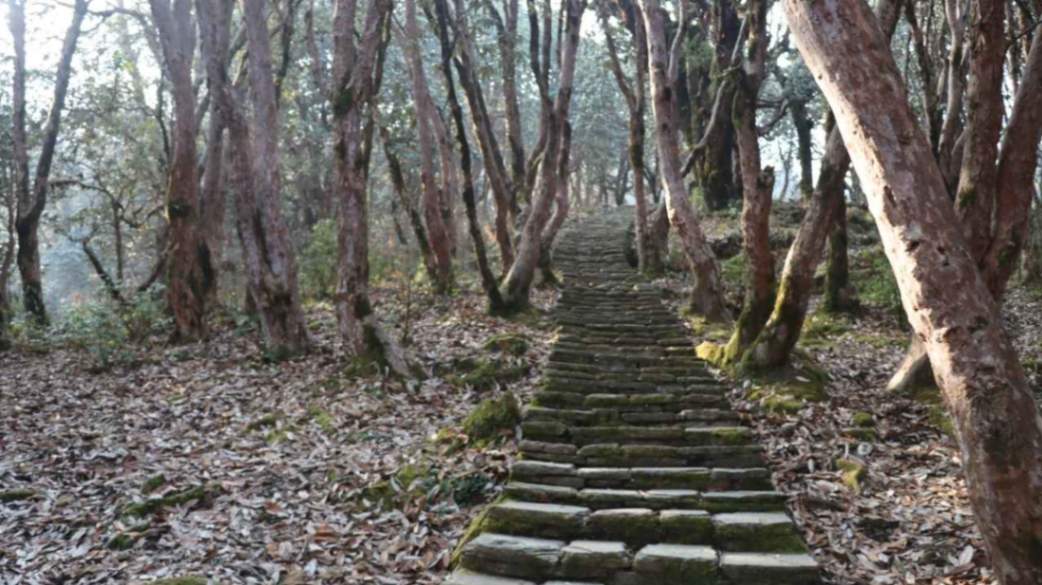
The stone steps are one of the biggest physical challenges on the Annapurna Base Camp Trek. They are found throughout the route, and some sections involve long climbs followed by more steps on the way down.
The lower part of the trek can feel particularly demanding because you gain and lose elevation repeatedly. You may climb a long staircase, walk through a village, descend again and then face another climb. This repeated movement can be more tiring than a trail that simply climbs gradually.
Your knees and thighs also notice the difference between climbing and descending. Going uphill puts more work on your lungs and legs, while long downhill sections can place more pressure on your knees and quads.
This is one reason I recommend preparing for both directions. If you only practise walking uphill, you may be ready for the climbing but less comfortable when you have to spend hours going down stone steps.
The Lower Trail Tests Your Legs
The lower sections of the ABC route are not difficult because of altitude. They are physically demanding mainly because of the repeated stairs, uneven trail and constant changes in elevation. You start at a relatively low elevation, but the route does not simply go uphill in a straight line.
The trail passes through villages, farmland, forest and sections of stone steps. Depending on your itinerary, you may walk for several hours before reaching your overnight stop, and the accumulated effort becomes noticeable even though you are still at a relatively comfortable altitude.
For many trekkers, the first few days are a useful lesson in pacing. Walking too quickly at the beginning can leave your legs tired before you reach the higher sections, so I prefer a steady walking rhythm from the first day.
Chhomrong Has Some of the Most Noticeable Stair Sections
Chhomrong is one of the places where trekkers clearly notice the amount of climbing involved. The village sits on a steep hillside, and reaching and leaving Chhomrong involves a substantial amount of stone steps.
Chhomrong is also an important overnight and supply point on the route. There are more accommodation and food choices here than in the higher villages, and some teahouses have facilities such as attached bathrooms and hot showers.
The stairs around Chhomrong are a good example of why distance alone does not explain the difficulty of ABC. A relatively short distance can still take time when the trail is climbing steeply or repeatedly changing elevation.
The accommodation and facilities also become simpler as you go higher. Our Annapurna Base Camp Trek Accommodation Guide explains what to expect from the teahouses along the route.
Sinuwa to Bamboo Brings Repeated Ups and Downs
The section between Sinuwa and Bamboo is not a continuous climb, but the repeated ups and downs can make it tiring. Much of the route passes through forest, with stone steps and uneven sections underfoot.
The forest provides shade in many places, but the trail can become wet during periods of rain. In the monsoon, moss, mud and wet stone make some steps more slippery, and streams can carry more water.
This section is usually manageable when you maintain a comfortable pace. I would rather see trekkers take a little longer and walk safely than rush through the forest because they are trying to reach the next village at a particular time.
Dovan, Himalaya and Deurali Bring More Elevation
The section from Dovan through Himalaya toward Deurali becomes more demanding because the elevation is increasing while your legs are already carrying several days of walking. The forest becomes different, the temperature drops and the higher mountain environment starts to become more noticeable.
You continue to encounter stone steps and uneven terrain, but altitude becomes an additional factor. A pace that felt normal near the lower villages may feel too fast here.
This is where I usually tell trekkers to stop worrying about how fast other people are walking. Your breathing, legs and overall condition are more important than someone else’s pace.
Machapuchare Base Camp Is Where Altitude Becomes More Noticeable
Machapuchare Base Camp, at around 3,700 meters, is an important point in the trek because you are now in a high mountain environment. The walking itself is not technical, but the thinner air and colder conditions can make the same trail feel considerably harder.
The section toward MBC involves continued climbing, and the surroundings become more exposed compared with the forest lower down. Your pace naturally becomes slower, and that is normal.
The nights are cold at this elevation. Bedrooms in the teahouses are not heated, so a good sleeping bag and proper warm layers are important.
The Final Walk to Annapurna Base Camp Requires a Slow Pace
The walk from Machapuchare Base Camp to Annapurna Base Camp is physically manageable for a prepared trekker, but the altitude makes it important to walk slowly. You are reaching approximately 4,130 metres, so this is not the place to rush because you can see the destination ahead.
The final approach is very different from the lower trail. You are inside the Annapurna Sanctuary, surrounded by high mountain terrain, and the temperature can be very cold, especially early in the morning and after sunset.
Some trekkers feel strong at MBC and then notice the altitude more as they continue toward ABC. That is why I prefer a steady pace, regular water and enough time rather than treating the final section as a race.
Altitude Is Different From Fitness
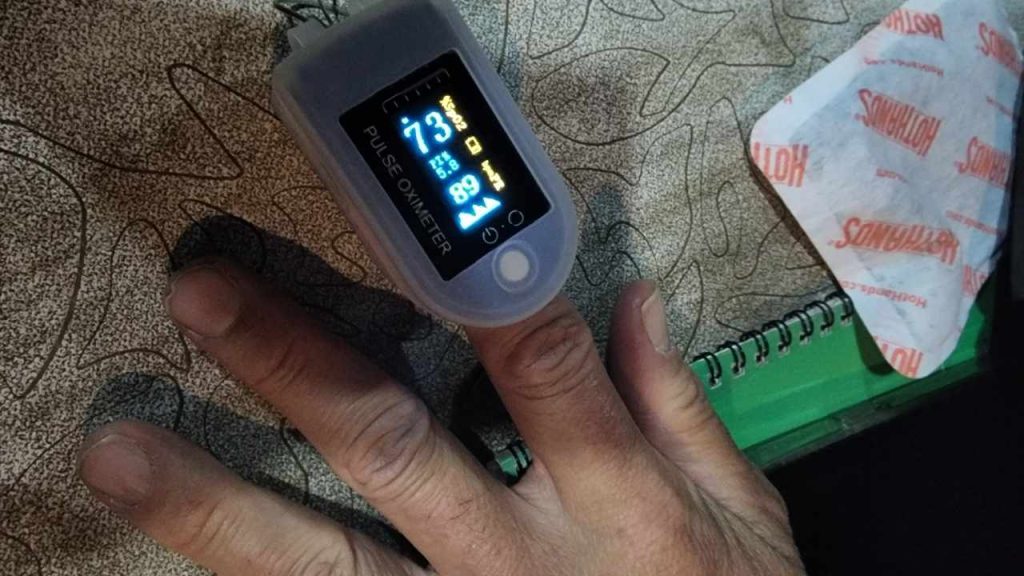
Altitude is one of the most important parts of ABC difficulty, and physical fitness does not guarantee that you will have no problems at higher elevation. Fitness helps you handle the walking, but your body’s response to altitude is a separate matter.
You start the trek much lower and gradually move toward 4,130 metres. As you gain elevation, there is less oxygen available in the air, so normal walking can require more effort and your pace may naturally become slower.
This is why I tell trekkers not to judge themselves by how quickly they walked on the first days. A person who walks very strongly at a lower elevation may still need to slow down near MBC and ABC.
If you develop concerning symptoms at altitude, do not simply assume that you need to walk through them. Tell your guide, rest and follow appropriate altitude-safety advice.
For a more detailed explanation of altitude, symptoms and preparation, see our Annapurna Base Camp Altitude Sickness Guide.
The Return Journey Uses Your Legs Differently
The return from ABC can feel easier mentally because you are going lower, but the downhill walking can still be physically demanding. Long descents on stone steps put repeated pressure on your knees and thighs, especially after several days on the trail.
Walking down for hours is not the same as walking on a flat road. Tired legs can make uneven steps more difficult, particularly during the later part of the day.
Take controlled steps rather than rushing downhill. Trekking poles can also be useful for some people, particularly on steep or slippery sections.
Daily Walking Requires Endurance Rather Than Speed
You do not need to be a fast walker for ABC, but you should be comfortable staying on your feet and walking for several hours a day. The exact walking time depends on the itinerary, overnight stops, trail conditions and the pace of the group.
The important thing is not to focus only on a kilometre number. Ten kilometres on a flat road and ten kilometres of Himalayan stairs are very different days.
A comfortable walking pace allows you to continue without exhausting yourself early. You should be able to take short breaks, eat regularly and continue walking without feeling that every climb has become a race.
The Fitness You Need for ABC
You do not need to be an athlete to complete the Annapurna Base Camp Trek. You need practical trekking fitness: the ability to walk uphill, downhill and on uneven ground for several hours without becoming completely exhausted.
Regular walking is a good starting point if you are not already active. Longer walks are useful for building endurance, while hills and stairs prepare your legs for the type of terrain you will meet on the trail.
If you normally spend most of your day sitting and rarely walk long distances, give yourself time to prepare. It is much better to arrive with your legs accustomed to walking than to expect the first few trekking days to provide all the training.
For a structured preparation guide, see our Annapurna Base Camp Trek Training Guide.
Stair Training Prepares You for the Actual Trail
Stair training is one of the most practical ways to prepare for ABC because the trail contains so many stone steps. You do not need an expensive gym programme or complicated exercises to start building this strength.
Begin with a manageable amount of stairs and gradually increase the duration. Include both climbing and descending because the trek places demands on your legs in both directions.
You can combine stair sessions with longer walks on hills or uneven ground. The goal is not to exhaust yourself during training but to make repeated climbing and several hours on your feet feel familiar before the trek.
A Light Backpack Makes the Trail Easier
A lighter backpack makes a noticeable difference on ABC, particularly on the long stair sections. Because the route is now a complete teahouse trek, you do not need to carry camping equipment, tents, cooking equipment or large amounts of food.
When I first went to ABC in 1996 as a porter, we carried the equipment and supplies needed for a camping trek. Today, trekkers can stay in teahouses, eat hot meals along the route and carry much less weight.
Pack the things you actually need rather than filling your bag simply because there is space. A lighter load is easier on your shoulders, knees and legs during long climbs.
Our Annapurna Base Camp Trek Packing List gives you a practical guide to what you need for the route.
Food, Water and Rest Help You Manage the Effort
Eating and drinking regularly makes it easier to manage long walking days. You should not wait until you are exhausted or extremely thirsty before taking food or water.
The teahouses serve hot meals along the route, so you can eat regularly without carrying all your food from the start. Dal bhat, noodles, soups, rice, pasta, eggs and other basic meals are commonly available depending on the teahouse.
Sleep also becomes important as you gain altitude. Higher teahouses are basic, bedrooms are not heated, and cold nights can affect how well you sleep, so warm clothing and a suitable sleeping bag are important.
If you want to know what meals are normally available, see our Annapurna Base Camp Trek Food Guide.
Weather Can Change the Difficulty of the Trail
Weather can make the same ABC trail feel very different from one season to another. Dry stone steps are easier to manage than wet ones, while snow and freezing temperatures create different challenges at higher elevations.
In autumn and spring, the trail is generally easier to walk when conditions are dry. During the monsoon, rain can make stone steps slippery and increase mud, streams and waterfalls.
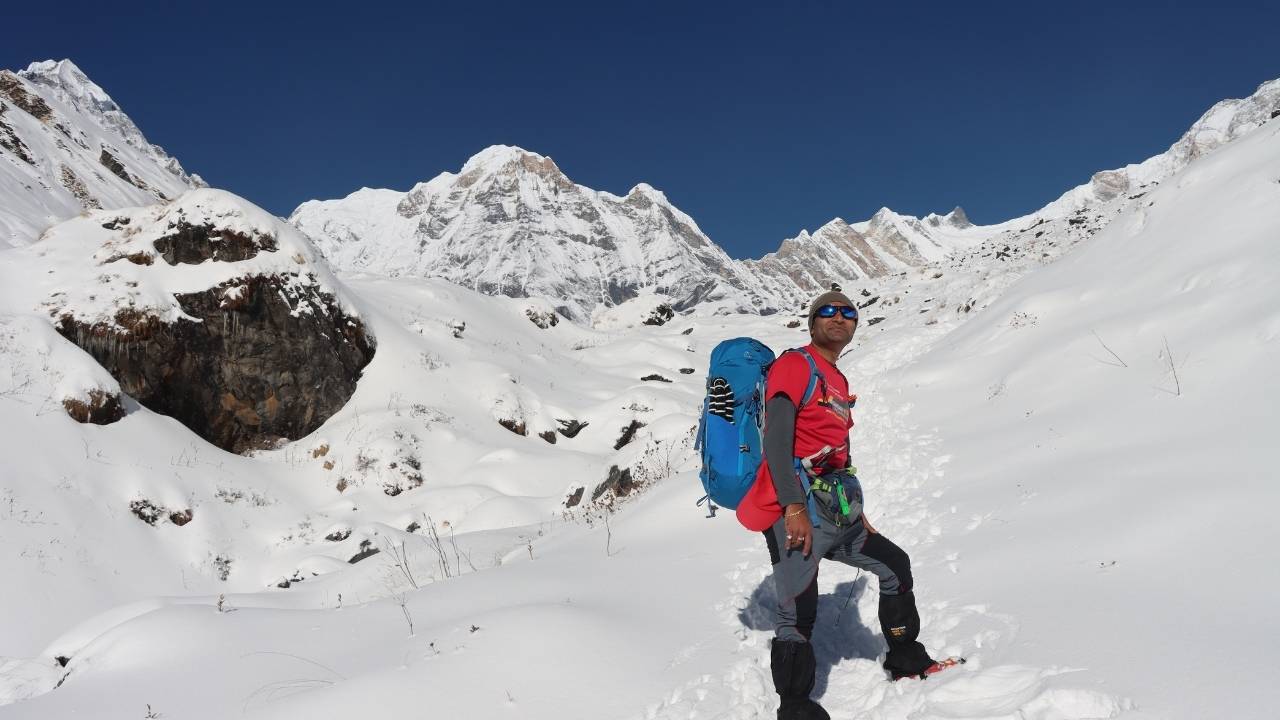
Winter brings cold and possible snow around the higher sections. The lower trail may be dry while conditions around MBC and ABC are much colder, so you need to prepare for the elevation rather than packing only according to the weather in Pokhara.
Our Best Time for Annapurna Base Camp Trek guide explains the differences between autumn, spring, monsoon and winter.
Monsoon Makes the Trail Wetter and More Slippery
The ABC route lies on the wetter southern side of the Annapurna range, so June to August can bring frequent rain, wet stone steps, muddy sections, stronger streams and leeches in some forest areas.
The main difficulty during monsoon is not simply getting wet. Wet stone requires more careful footing, and continuous rain can make sections of trail slower and more tiring.
Good footwear with reliable grip, waterproof clothing and protection for your backpack become much more important during this season. Clouds can also cover the higher mountains, so mountain visibility is less reliable.
Winter Adds Cold and Possible Snow
Winter is possible on the ABC Trek, but December to February requires more preparation for cold and possible snow at higher elevations. Conditions can be quite different between the lower villages and the Annapurna Sanctuary.
The mornings and evenings are cold, and bedrooms in teahouses are not heated. The dining room is usually the warmest place because of the stove, but once you return to your room you need proper insulation and a suitable sleeping bag.
Snow conditions vary from year to year. If there has been significant snowfall, check the current condition of the higher trail before continuing toward MBC and ABC.
Teahouse Accommodation Makes the Trek Easier to Organise
The ABC route is now a complete teahouse trek, which makes the logistics much easier than they were when I first travelled there. You can stay in teahouses, eat hot meals and carry a much lighter pack instead of transporting tents and cooking equipment.
When I first went in 1996, we were camping along the route. We carried the equipment, supplies and food needed by the group, then established camp at the end of the walking day.
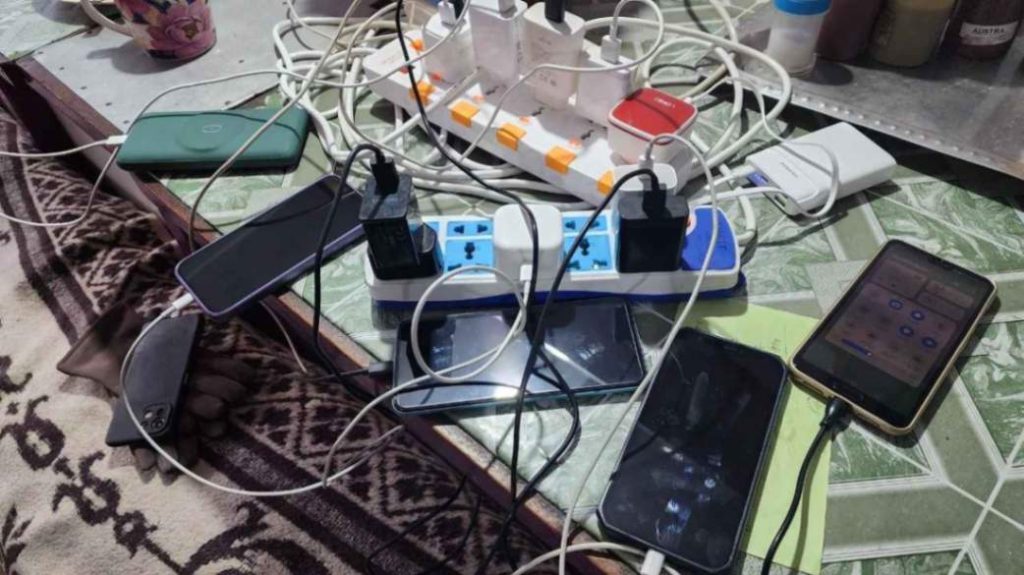
Today, the higher teahouses are basic, and you should not expect hotel-style comfort. Bedrooms are not heated, but you can have meals, electricity and other basic facilities along much of the route.
For more information about rooms, bathrooms, showers, charging and internet, see our Annapurna Base Camp Trek Accommodation Guide.
Annapurna Base Camp Is Suitable for Beginners With Preparation
Annapurna Base Camp can be a first trek in Nepal if you prepare properly. You do not need previous mountaineering or technical climbing experience, but you should be ready for real mountain walking, long stair sections and significant elevation gain.
The teahouse system makes the logistics easier than the camping trek I experienced in 1996. You do not need to carry a tent or cooking equipment, and you can buy meals and basic supplies along the route.
That convenience should not be confused with an easy trail. You still need to walk for several hours, climb many stairs and adjust to increasing altitude.
If this is your first Himalayan trek, our Annapurna Base Camp Trek for Beginners guide covers the preparation and practical points in more detail.
ABC Is Higher and More Demanding Than Poon Hill
ABC is a longer and higher commitment than Poon Hill because Annapurna Base Camp reaches about 4,130 metres, while Poon Hill is around 3,210 metres. The additional elevation and longer route make altitude and endurance more important on ABC.
Poon Hill is often used as a shorter introduction to trekking in the Annapurna region. ABC takes you much deeper into the mountains and requires more sustained walking.
Previous Poon Hill experience can be useful, but it does not mean you are automatically prepared for ABC. The higher altitude and longer walking days still require specific preparation.
For trekkers considering both routes, see our Annapurna Base Camp Trek via Poon Hill guide.
ABC Reaches a Lower Elevation Than Everest Base Camp
ABC reaches approximately 4,130 metres, while Everest Base Camp is around 5,364 metres. The altitude exposure is therefore substantially different, although ABC still reaches an elevation where trekkers need to take altitude seriously.
The physical difficulty is not determined by altitude alone. The number of walking days, trail design, elevation gain, stairs and itinerary all affect how a trek feels.
Someone who has completed EBC should not automatically assume every section of ABC will feel easy, and a first-time trekker should not assume ABC is beyond their ability simply because it reaches above 4,000 metres.
If you are comparing the two routes, our Everest Base Camp Trek guide gives more information about the EBC route and its walking demands.
Preparation Should Start With Regular Walking
The most useful preparation for ABC is simple: walk regularly, include hills and stairs, and gradually increase the amount of time you can spend on your feet. You do not need an extreme training programme.
If you have several weeks before the trek, build your walking gradually rather than suddenly increasing your distance. Include longer walks on some days and easier days in between so your body has time to recover.
Use your preparation period to test the equipment you will actually take. Your trekking shoes should be comfortable, and your backpack should feel manageable before you arrive on the trail.
Comfortable Shoes Matter More Than Expensive Shoes
Your trekking shoes should be comfortable, properly fitted and suitable for uneven mountain trails rather than simply being expensive or highly technical. You will spend many hours walking on stone steps, rocks and uneven surfaces, so comfort and grip matter.
Break your shoes in before the trek. Do not bring a brand-new pair and expect them to be comfortable immediately during a long Himalayan walking day.
Good socks also make a difference. If your feet are developing hot spots or discomfort during training walks, fix the problem before you start the trek.
The Mental Side of the Trek Matters Too
A long Himalayan trek can be tiring mentally as well as physically. The best approach is to focus on your own pace rather than trying to match another trekker who may have a different level of fitness or altitude response.
Some sections can feel repetitive because you are walking through forest or climbing one staircase after another. Instead of thinking about the entire distance ahead, concentrate on reaching the next rest point, village or overnight stop.
There is no prize for arriving first at ABC. A steady pace that allows you to continue comfortably is more useful than a fast start followed by exhaustion.
Age Alone Does Not Decide Trekking Ability
Age by itself does not determine whether someone can complete ABC. Walking ability, preparation, general fitness and individual response to altitude are more useful factors to consider than simply looking at someone’s age.
I have seen people of different ages perform very differently on the same trail. Someone who regularly walks and prepares properly may handle the route comfortably, while a younger person with little walking experience may find the stairs much harder.
If you have concerns about whether you are ready for a trek at 4,130 meters, discuss them with an appropriate medical professional before travelling.
What Makes ABC Hardest for Most Trekkers
For most trekkers, there is not one single “hardest” point on the route. The combination of repeated stone steps, accumulated fatigue and increasing altitude is what makes the upper part of the trek demanding.
The lower trail tests your legs through repeated climbing and descending. By the time you reach Deurali and MBC, you have already completed several days of walking, while the altitude is adding another factor.
The final approach to ABC therefore needs patience. If you have prepared well and maintain a sensible pace, the difficulty is manageable for many people, but it should still be treated as a proper Himalayan trek.
How the Trek Has Changed Since I First Went in 1996
When I first went to Annapurna Base Camp in 1996 as a porter, it was a camping trek. We carried the tents, food, cooking equipment and other supplies, then set up camp along the route.
Over the years, more teahouses were built and the way trekkers travelled changed. Today, ABC is a complete teahouse trek, so you can stay in accommodation along the route, eat hot meals and avoid carrying camping equipment.
This has made the logistics much easier, but it has not removed the physical challenge. The trail still has long stairs, steep sections, cold higher elevations and the need to adjust to altitude.
My Advice for Making ABC More Manageable
The best way to make the Annapurna Base Camp Trek manageable is to prepare your legs, keep your backpack light, walk at a steady pace and respect the altitude. You do not need to train like a professional athlete, but you should arrive ready for several hours of walking and many stairs.
Before the trek, concentrate on regular walking, hills and stairs rather than complicated training routines. Make sure your shoes are comfortable, your backpack is not unnecessarily heavy and you have clothing suitable for changing temperatures.
Once you are on the trail, do not compare your pace with other trekkers. Walk slowly enough that you can continue, take proper breaks, eat and drink regularly, and give your body time to adjust as you climb higher.
The Annapurna Base Camp Trek has become easier to organise since I first went there in 1996 because of the teahouses and improved facilities. The mountain environment is still demanding, but with sensible preparation, the route is achievable for many first-time Himalayan trekkers.
Final Advice from My Experience
If you ask me how hard the Annapurna Base Camp Trek really is, my answer is simple: it is a moderate trek that requires proper preparation, but you do not need to be an experienced mountaineer to complete it.
The stone steps will test your legs, the downhill sections will test your knees, and the altitude will become important as you move toward MBC and ABC. These are the parts you should prepare for before arriving in Nepal.
I first travelled to ABC in 1996 as a porter, when we still carried camping equipment and set up tents along the route. Today, the teahouses have made the trek much easier to organise, but the walking remains a mountain trek.
Prepare your legs, keep your backpack light, wear comfortable shoes, walk at your own pace and respect the altitude. If you do those things, you will be much better prepared for what the Annapurna Base Camp trail actually asks from you.